
Disclosure
Generative AI was used in the development of this game, including programming, translation, and graphics. No content is generated by AI during gameplay.
- Creator
- TADAIMA WORKS
- Reviews
- -
- Added
- Nov 6, 2026
Public Steam disclosure research 27,109 disclosures tracked
Search developers’ Steam disclosures, compare classified AI use across games, and follow recorded changes. This index adds cross-game classifications and statistics to statements published on individual store pages.
Code help, debugging and other development work.
Capsule art, trailers and promotional material.
Pre-made art, audio, writing and other game assets.
Interactive or runtime AI features disclosed by the developer.
Groups reflect automatic analysis of public disclosures; mature records are excluded. These counts do not measure AI use across all of Steam. Missing or unclear statements cannot establish whether a game uses AI.
Generative AI was used in the development of this game, including programming, translation, and graphics. No content is generated by AI during gameplay.
Graphics, music, and sound effects are generated procedurally: 3D scenes are rendered in Blender, and sounds are synthesized within the game; The code and scripts for this were written with the help of AI No image or audio generation models were used. Creative direction and all design decisions remain with the developer. No content is generated by AI during gameplay.
Real No-Limit Texas Hold’em with your friends — live webcam and voice chat right at the table. Seat up to 7 friends online, or play solo against Easy, Medium and Hard bots anytime.
Some programming, visuals and audio have been augmented with AI tools during development.
본 게임에는 AI로 사전 생성한 리소스가 포함되어 있습니다.
Pre-generated content (made during development; nothing is generated while you play): - Cards: the game has two looks, and Settings switches between them. Scans: the surviving cards as digitised by the Beinecke Library, Yale University. The in-game museum always shows these. Restoration, the default on the table: the 40 number cards restored with generative AI from those scans, for easier reading in play. In both looks, 16 of the 78 cards in the game (13 trumps, the Fool, the King of Batons and the Queen of Cups) have no surviving original. We reconstructed them with generative AI after the iconography of related 15th-century decks, and the museum marks each of them as an AI reconstruction. - Hall and objects: the wall painting, hearth, carpet, tablecloth, seal, writing box, hourglass, books, brass plate, purse, jeton, bone plaque and card back are AI-made images after 15th-century museum models, credited in the game as reconstructions, not genuine objects. - One opponent portrait, the medal of Sigismondo Malatesta, is an AI reconstruction after Pisanello's medal of 1445. - Store art and the game icon use these restored and reconstructed images. - Text: the game's Russian text was written with AI under our direction, and the English text was translated from it with AI. - Code: the game's code was written with AI under our direction and review. Live-generated content: none.
We used AI to create the music for the trailer and to help write the game's code.
A small number of in-game art assets were created with the help of generative AI to add flavor, and a small portion of the algorithmic code was written with generative AI assistance. All art assets and code were reviewed and verified by our team before release.
Callback Crew was built with AI assistance in development: AI helped write and debug game code, create UI and some in-game text such as item descriptions and job notes, all directed and reviewed by the developer. Very little AI generated art, audio, music, or voice is used; 3D assets are over 90% licensed Synty packs. The game does not generate any content with AI while you play.
LLMs were used to generate translations and code.
I used a mixed-media technique (hand drawings followed by generative AI for color and animated loops) to create the scene backgrounds. The code was based on my own JavaScript code, and I then used Claude to create an editor based on a tree of JSON objects. All animations and illustrations are my own, and all pixel art is 100% hand-drawn by me. I wrote every word of the text myself; I did not use AI for writing because I find AI writing terrible.
The Wee Pier was made by one person working with AI tools. All of the pixel art (the scene, the boats, the characters, the fish, the interface, the icon and the store art) was made for the game, drawn pixel by pixel by scripts written with AI coding tools, in one shared palette. No image generation model was used. The sound effects and the music were synthesised by code written with AI tools. The sea, the gulls, the foghorn, the rain and some splashes are built from CC0 recordings on Freesound. The in-game text and the store page text were written with AI tools to the developer's direction. The code was written with AI coding assistants. To our knowledge nothing in the game infringes anyone's rights.
I generated some game code and scripts using AI, as well as some scripts that created procedural music
Generative AI was used during development only. The game's assets (art, textures, icons and the store images) began as AI-generated images that we then selected, edited and finished by hand. Part of the code was written with AI coding assistants under the developer's direction, and all of it was reviewed and tested by us. The sounds are free CC0 recordings, not AI. Nothing is generated while you play.
AI Creation Statement: The places where AI (deepseekV4.1flash) was used in this project are: Multilingual translation (100%): Apart from the Simplified Chinese text, which the author typed manually, all translations into other languages were completed by AI. Movie reviews (100%): Characters’ movie reviews. Script structure optimization (0.5%–1%): Bugs in the code that were difficult to fix were optimized by AI. Name of AI model included with the game: deepseek V4.1 FLASH
Generative AI tools were used during development to help create the pixel art, general portraits, map art, program code, music and sound effects, and translations. All content was planned, selected and playtested by the developer. The game does not use any AI while running and does not require an internet connection.
Most of the code and imagery in this game were generated by artificial intelligence.
No AI image, sound or music generators were used, and no AI runs during play. Illustrations are drawn procedurally by code, following the solo developer's sketches and art direction. An AI assistant helped write and debug that code, and helps translate the game and its store page.
Some content was made with the help of generative AI tools and then reviewed and edited by our team: The key art used for the store capsules, library images and game icon was generated with an AI image tool and then cropped, composed and finished by us. In-game screenshots are real gameplay. The interface translations (15 languages besides English) were produced with AI assistance. AI assistants helped write parts of the game’s code and procedural 3D models, and helped draft store text. The 3D environment and characters are licensed asset packs (Synty Studios), and the interface art is by Kenney (CC0). No AI generates content while the game is running.
DeckFarm was born from the passion of a tiny independent team of friends. To bring our very first game to life from scratch with no external funding, we chose to leverage every tool available to us, including generative AI for coding support and initial visual assets. Later in development, an illustrator and graphic designer joined our team. His hands-on human craftsmanship was essential: he took those base visuals and radically reworked, modified, and polished them to give the game a cohesive, crafted artistic identity. Using AI was the key that allowed us to achieve a dream that otherwise would have remained out of reach. With our expanded team and in-house artist, our approach for future projects will naturally shift toward an increasingly hand-crafted art direction, while continuing to use technology wherever it supports our independent workflow.
使用了AI生成的美术和程序内容
We used generative AI tools while making the game, and some of its content comes from them: textures and some 2D images were made with OpenAI's image models (GPT), several 3D models with Tripo, and character animations with Kimodo (text to motion) and from short AI videos (Kling) whose movement NVIDIA's GEM-X turned into skeleton motion that we clean up by hand. Much of the code was written with AI assistance (Claude). The store artwork (the logo and capsules) was painted with GPT from our own game's screenshots. We direct, choose and edit everything that goes into the game. No AI generates content while you play.
Some of the store page assets were generated by GenAI, GenAI was also used to help test and deploy the code.
AI was used to assist in this project. Its final output was explicitly never used without human editing and verification. AI was used to suggest some text and layouts in the game and on this steam page. All of the text was edited by a human to make it correct for this game and was taken as suggestions, not final output. AI was not used to create any of the artwork. The cards, characters, logo, and backgrounds were drawn by human artists. AI was not used to create any of the audio. The music is licensed, and the sound effects are either CC0, or tones synthesised in house. AI was used to assist in programming. None of the code in this game is the sole final output of a generative AI. AI was used to double check work, fix bugs, and fill in small pieces where appropriate. All of this code was checked by, edited by, and verified by a human. Thank you for your kind understanding. The last thing we want to do is hide anything from you. If you have further questions, please contact FakeName Games for details.
The characters and art of the game are hand-drawn pixel art made by the developer. AI tools helped with programming the game, and some visuals and effects were enhanced with AI assistance, always starting from the developer's own drawings and reviewed by hand.
Generative AI was used to create some game assets and assist with coding during development.
The game's code and artistic materials are generated by AI. Name of AI model included with the game: Claude
Parts of the source code have been developed by artificial intelligence agents.
AI was used in the creation of this game, and its important to be clear about this as a solo dev. But every aspect of the game that AI was used as a helper/producer was reviewed by me, and thoroughly edited, tested, reworked, perfected and placed with intention by me. AI was used to generate assets, code and tools to help me be able to finish this game working as a solo dev.
To deliver high-quality products at an affordable price for our customers, we use AI tools to support parts of our creative and development process. All artwork is designed by hand by our art team, with approximately 25% of our game art incorporating Photoshop’s generative AI tools for editing and refinement. Every piece is carefully checked by our team to ensure it meets our creative vision and quality standards. We also use AI tools to support marketing activities and Rider’s built-in AI code completion tool to assist with development. Our team retains creative control and responsibility for the final work.
AI tools were used during development for coding, brainstorming, and asset iteration. The game's primary artwork, music, and sound design will be swapped out gradually before release.
The character, enemy and background artwork, their animations, the icons and the music were created with generative AI tools (Google Gemini and Lyria), then selected, cleaned up, cut out and checked by hand. Sound effects are synthesized in code. The game's code and texts were written with the help of an AI assistant, under the direction of the developer who designed the game. No AI content is generated while you play.
Push Their Buttons uses generative AI in two ways. During development, we used AI tools to help write the characters' dialogue and parts of the source code, and the background songs were made with an AI music generator. We chose, reviewed and tested all of it before it shipped. The characters, the city and the animals come from licensed 3D asset packs on the Fab marketplace, and the sound effects, visual effects and menus are made by our own code and scripts. While you play, the characters speak their lines through a text-to-speech model that ships inside the game and runs entirely on your own computer. It only reads the lines that ship with the game and never makes up dialogue. It needs no internet connection, sends nothing anywhere, and never records or listens to you. Name of AI model included with the game: Supertonic
We used generative AI tools during development to assist with coding and programming. We also used AI to help create, write, and refine the Steam store page description and marketing text. Name of AI model included with the game: OpenAI ChatGPT
This game was developed using AI-assisted coding, and all music featured in the game was created using generative AI. All characters, backgrounds, and other visual artwork were created by the developer without the use of generative AI.
AI tools were used during development to prepare the game icon and some store artwork, synthesize prerecorded foreman dialogue, and assist with localization. Speech was generated in advance using Piper and is shipped as audio files; the models and synthesizer do not run on the player's device. The trailer's backing music uses procedural synthesis implemented with AI-assisted code. The game does not use generative AI services during gameplay.
AI coding tools used for backend development efficiency and scripts.
Generative AI tools were used during development to create images, code, and audio. No content or code is generated by AI during gameplay.
The developer used generative AI tools during development for C# code, Blender scripts, 3D models and textures, 2D art and illustrations, the opening film and other video, character voice-over, and in-game text. All content was reviewed, edited and tested before release. No content is generated by AI while you play.
Artificial intelligence has been used to translate texts into different languages and optimize existing code. Note: Some assets are generated in game through code and artificial intelligence was used to help improve this code.
Generative AI was used as a development aid for portions of the in-game text, English localization, UI and visual elements, and program code. All generated content was reviewed and edited by the developer. The game does not generate AI content during gameplay.
Generative AI tools are used to assist 3D modeling and code development
Vibe Together’s concept, music engine, and key systems grew out of 3+ years of my own work before AI coding assistance became a part of development. Its in-game visuals are built through procedural geometry and shaders, not generated assets. Recently, coding agent tools play a role in implementation, debugging, porting, testing, and UI/UX consistency across input devices. I created the branding, design system, and storyboards but use AI assistance for trailer and social media video editing. AI has also assisted with brainstorming promotional artwork and instrument placeholder icons, which I’m replacing with custom artwork before release.
Foldbound was made with the help of an AI coding assistant. The game's code was written with it, and that code generates the game's art, animation, sound effects and music procedurally. No AI image, audio, voice or video generators were used, and there is no scraped or third-party artwork; the only outside assets are openly licensed fonts. The game does not generate any content with AI while it runs.
I used generative AI tools to speed up my coding, art, and animation work. I hope this information helps you decide whether the game is right for you. Thank you for your understanding.
This free game was developed by a human developer with the support of AI-assisted programming tools (used for learning, code review, debugging, optimization, refactoring, and cleanup). No AI-generated artwork, music, dialogue, game design, or gameplay content is included in the game. All creative decisions and game content were created by the developers and/or artists credited.
Generative AI models were used in the game’s development to create 3D models, textures, code, and audio content.
Burn It Back is a solo project, designed and directed entirely by me. I use Claude as a coding assistant: I plan the systems, the AI helps write the code, and I review and debug everything myself. This includes the procedural scripts that build the game’s 3D models in Blender and some of the vector-based UI elements, so no AI image or 3D-model generators are used. Some unit voice lines are currently placeholder text-to-speech, and I plan to replace them with a real voice actor before release.
Generative AI tools were used during development to assist with coding and content creation. All AI-generated content was reviewed and edited by our development team. No generative AI is used during gameplay.
Generative AI tools were used during development to assist with parts of the game's production, including programming support and the creation and refinement of visual assets. Some AI-assisted images are included in the final game, and additional AI-assisted artwork is used for Steam promotional and Library assets. All AI-assisted content was reviewed, selected, and adjusted by the developer before being included in the game or its marketing materials. No content is generated by AI while the game is running, and the game does not connect to any generative AI service during gameplay.
| Title⇅ | Disclosure | Creator⇅ | Src | Reviews⇅ | Added↓ |
|---|---|---|---|---|---|
 Midnight Yakiniku | 深夜焼肉 In-game content codetextart | Generative AI was used in the development of this game, including programming, translation, and graphics. No content is generated by AI during gameplay. | TADAIMA WORKS | - | Nov 6, 2026 | |
 Hushwell In-game content artaudiocode | Graphics, music, and sound effects are generated procedurally: 3D scenes are rendered in Blender, and sounds are synthesized within the game; The code and scripts for this were written with the help of AI
No image or audio generation models were used.
Creative direction and all design decisions remain with the developer.
No content is generated by AI during gameplay. | Off the Clock Hermit | - | Nov 6, 2026 | |
 Poker Night Live code | Real No-Limit Texas Hold’em with your friends — live webcam and voice chat right at the table. Seat up to 7 friends online, or play solo against Easy, Medium and Hard bots anytime. | GuinnessStache | - | Nov 6, 2026 | |
 Apocalypse LootRunner In-game content artaudiocode | Some programming, visuals and audio have been augmented with AI tools during development. | Avarus Games | - | Nov 6, 2026 | |
 The Silver Witch In-game content artaudiocodetext | 본 게임에는 AI로 사전 생성한 리소스가 포함되어 있습니다. | Reinfree | - | Nov 6, 2026 | |
 Trionfi In-game content arttextcode | Pre-generated content (made during development; nothing is generated while you play):
- Cards: the game has two looks, and Settings switches between them.
Scans: the surviving cards as digitised by the Beinecke Library, Yale University. The in-game museum always shows these.
Restoration, the default on the table: the 40 number cards restored with generative AI from those scans, for easier reading in play.
In both looks, 16 of the 78 cards in the game (13 trumps, the Fool, the King of Batons and the Queen of Cups) have no surviving original. We reconstructed them with generative AI after the iconography of related 15th-century decks, and the museum marks each of them as an AI reconstruction.
- Hall and objects: the wall painting, hearth, carpet, tablecloth, seal, writing box, hourglass, books, brass plate, purse, jeton, bone plaque and card back are AI-made images after 15th-century museum models, credited in the game as reconstructions, not genuine objects.
- One opponent portrait, the medal of Sigismondo Malatesta, is an AI reconstruction after Pisanello's medal of 1445.
- Store art and the game icon use these restored and reconstructed images.
- Text: the game's Russian text was written with AI under our direction, and the English text was translated from it with AI.
- Code: the game's code was written with AI under our direction and review.
Live-generated content: none. | Petri Games | - | Nov 6, 2026 | |
 Spotlight tennis In-game content audiocode | We used AI to create the music for the trailer and to help write the game's code. | SIA BASE LOGIC | - | Nov 6, 2026 | |
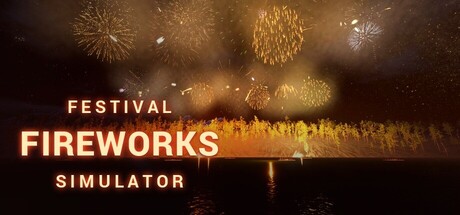 Festival Fireworks Simulator In-game content artcode | A small number of in-game art assets were created with the help of generative AI to add flavor, and a small portion of the algorithmic code was written with generative AI assistance. All art assets and code were reviewed and verified by our team before release. | lc85 | - | Nov 6, 2026 | |
 Callback Crew In-game content textcode | Callback Crew was built with AI assistance in development: AI helped write and debug game code, create UI and some in-game text such as item descriptions and job notes, all directed and reviewed by the developer. Very little AI generated art, audio, music, or voice is used; 3D assets are over 90% licensed Synty packs. The game does not generate any content with AI while you play. | B.S. Studios | - | Nov 6, 2026 | |
 Low Space Race In-game content textcode | LLMs were used to generate translations and code. | Yuri Pourre | 10 | Nov 6, 2026 | |
 Sr Fox In-game content artcodetext | I used a mixed-media technique (hand drawings followed by generative AI for color and animated loops) to create the scene backgrounds. The code was based on my own JavaScript code, and I then used Claude to create an editor based on a tree of JSON objects. All animations and illustrations are my own, and all pixel art is 100% hand-drawn by me. I wrote every word of the text myself; I did not use AI for writing because I find AI writing terrible. | Juan Lautaro Martin | - | Nov 6, 2026 | |
 The Wee Pier In-game content artaudiotextcode | The Wee Pier was made by one person working with AI tools. All of the pixel art (the scene, the boats, the characters, the fish, the interface, the icon and the store art) was made for the game, drawn pixel by pixel by scripts written with AI coding tools, in one shared palette. No image generation model was used. The sound effects and the music were synthesised by code written with AI tools. The sea, the gulls, the foghorn, the rain and some splashes are built from CC0 recordings on Freesound. The in-game text and the store page text were written with AI tools to the developer's direction. The code was written with AI coding assistants. To our knowledge nothing in the game infringes anyone's rights. | Peatstack | - | Nov 5, 2026 | |
 SpaceGolf In-game content codeaudio | I generated some game code and scripts using AI, as well as some scripts that created procedural music | SpaceGolfDevTeam | - | Nov 5, 2026 | |
 Pickfall In-game content artcode | Generative AI was used during development only. The game's assets (art, textures, icons and the store images) began as AI-generated images that we then selected, edited and finished by hand. Part of the code was written with AI coding assistants under the developer's direction, and all of it was reviewed and tested by us. The sounds are free CC0 recordings, not AI. Nothing is generated while you play. | Overcapacity Studios | - | Nov 5, 2026 | |
 Return to college In-game content textcode | AI Creation Statement:
The places where AI (deepseekV4.1flash) was used in this project are:
Multilingual translation (100%): Apart from the Simplified Chinese text, which the author typed manually, all translations into other languages were completed by AI.
Movie reviews (100%): Characters’ movie reviews.
Script structure optimization (0.5%–1%): Bugs in the code that were difficult to fix were optimized by AI.
Name of AI model included with the game: deepseek V4.1 FLASH | 千琅邪 | - | Nov 5, 2026 | |
 Three Kingdoms: Devour the World In-game content artaudiocodetext | Generative AI tools were used during development to help create the pixel art, general portraits, map art, program code, music and sound effects, and translations. All content was planned, selected and playtested by the developer. The game does not use any AI while running and does not require an internet connection. | htpeng | - | Nov 5, 2026 | |
 Facial Expression Variety Show In-game content artcode | Most of the code and imagery in this game were generated by artificial intelligence. | Chang Lin | - | Nov 5, 2026 | |
 NO HUMANS LEFT In-game content arttextcode | No AI image, sound or music generators were used, and no AI runs during play. Illustrations are drawn procedurally by code, following the solo developer's sketches and art direction. An AI assistant helped write and debug that code, and helps translate the game and its store page. | Mr. Zapato Studio | - | Nov 5, 2026 | |
 Tidy Mall Together In-game content artcodetext | Some content was made with the help of generative AI tools and then reviewed and edited by our team:
The key art used for the store capsules, library images and game icon was generated with an AI image tool and then cropped, composed and finished by us. In-game screenshots are real gameplay.
The interface translations (15 languages besides English) were produced with AI assistance.
AI assistants helped write parts of the game’s code and procedural 3D models, and helped draft store text.
The 3D environment and characters are licensed asset packs (Synty Studios), and the interface art is by Kenney (CC0). No AI generates content while the game is running. | NewGen | - | Nov 5, 2026 | |
 Deckfarm In-game content artcode | DeckFarm was born from the passion of a tiny independent team of friends. To bring our very first game to life from scratch with no external funding, we chose to leverage every tool available to us, including generative AI for coding support and initial visual assets.
Later in development, an illustrator and graphic designer joined our team. His hands-on human craftsmanship was essential: he took those base visuals and radically reworked, modified, and polished them to give the game a cohesive, crafted artistic identity.
Using AI was the key that allowed us to achieve a dream that otherwise would have remained out of reach. With our expanded team and in-house artist, our approach for future projects will naturally shift toward an increasingly hand-crafted art direction, while continuing to use technology wherever it supports our independent workflow. | Shynet | - | Nov 5, 2026 | |
 西游刮刮乐 In-game content artcode | 使用了AI生成的美术和程序内容 | 灵山街道办 | - | Nov 5, 2026 | |
 No Trail Back In-game content artcode | We used generative AI tools while making the game, and some of its content comes from them: textures and some 2D images were made with OpenAI's image models (GPT), several 3D models with Tripo, and character animations with Kimodo (text to motion) and from short AI videos (Kling) whose movement NVIDIA's GEM-X turned into skeleton motion that we clean up by hand. Much of the code was written with AI assistance (Claude). The store artwork (the logo and capsules) was painted with GPT from our own game's screenshots. We direct, choose and edit everything that goes into the game. No AI generates content while you play. | CanItCode | - | Nov 5, 2026 | |
 Eat Everything in a Supermarket Store/marketing artcode | Some of the store page assets were generated by GenAI, GenAI was also used to help test and deploy the code. | BetDev | - | Nov 5, 2026 | |
 Unstable Explosives Store/marketing textcode | AI was used to assist in this project. Its final output was explicitly never used without human editing and verification.
AI was used to suggest some text and layouts in the game and on this steam page. All of the text was edited by a human to make it correct for this game and was taken as suggestions, not final output.
AI was not used to create any of the artwork. The cards, characters, logo, and backgrounds were drawn by human artists.
AI was not used to create any of the audio. The music is licensed, and the sound effects are either CC0, or tones synthesised in house.
AI was used to assist in programming. None of the code in this game is the sole final output of a generative AI. AI was used to double check work, fix bugs, and fill in small pieces where appropriate. All of this code was checked by, edited by, and verified by a human.
Thank you for your kind understanding. The last thing we want to do is hide anything from you. If you have further questions, please contact FakeName Games for details. | FakeName Games | - | Nov 5, 2026 | |
 Surfin' Landes In-game content artcode | The characters and art of the game are hand-drawn pixel art made by the developer. AI tools helped with programming the game, and some visuals and effects were enhanced with AI assistance, always starting from the developer's own drawings and reviewed by hand. | Benjamin G | - | Nov 5, 2026 | |
 Liminal Space But You Have to Kabaddi In-game content artcode | Generative AI was used to create some game assets and assist with coding during development. | Daruma The Factory, Inc. | - | Nov 5, 2026 | |
 Idle of Eternity In-game content codeart | The game's code and artistic materials are generated by AI.
Name of AI model included with the game: Claude | NBLab | - | Nov 5, 2026 | |
 Babel Rising Reborn Dev only code | Parts of the source code have been developed by artificial intelligence agents. | Cosmic Oddity Studio | - | Nov 5, 2026 | |
 NanoPets In-game content artcode | AI was used in the creation of this game, and its important to be clear about this as a solo dev.
But every aspect of the game that AI was used as a helper/producer was reviewed by me, and thoroughly edited, tested, reworked, perfected and placed with intention by me.
AI was used to generate assets, code and tools to help me be able to finish this game working as a solo dev. | OtonPaiva | - | Nov 5, 2026 | |
 Death & Deadlines In-game content artcode | To deliver high-quality products at an affordable price for our customers, we use AI tools to support parts of our creative and development process.
All artwork is designed by hand by our art team, with approximately 25% of our game art incorporating Photoshop’s generative AI tools for editing and refinement. Every piece is carefully checked by our team to ensure it meets our creative vision and quality standards.
We also use AI tools to support marketing activities and Rider’s built-in AI code completion tool to assist with development. Our team retains creative control and responsibility for the final work. | Deathtrap Games | - | Nov 4, 2026 | |
 Hot Sauce Survivor Dev only codeartaudio | AI tools were used during development for coding, brainstorming, and asset iteration. The game's primary artwork, music, and sound design will be swapped out gradually before release. | Jamcraft | - | Nov 3, 2026 | |
 Vapeur & Rouages In-game content artaudiotextcode | The character, enemy and background artwork, their animations, the icons and the music were created with generative AI tools (Google Gemini and Lyria), then selected, cleaned up, cut out and checked by hand. Sound effects are synthesized in code. The game's code and texts were written with the help of an AI assistant, under the direction of the developer who designed the game. No AI content is generated while you play. | Dretz Studio | - | Nov 3, 2026 | |
 Push Their Buttons Live AI textaudiocode | Push Their Buttons uses generative AI in two ways.
During development, we used AI tools to help write the characters' dialogue and parts of the source code, and the background songs were made with an AI music generator. We chose, reviewed and tested all of it before it shipped. The characters, the city and the animals come from licensed 3D asset packs on the Fab marketplace, and the sound effects, visual effects and menus are made by our own code and scripts.
While you play, the characters speak their lines through a text-to-speech model that ships inside the game and runs entirely on your own computer. It only reads the lines that ship with the game and never makes up dialogue. It needs no internet connection, sends nothing anywhere, and never records or listens to you.
Name of AI model included with the game: Supertonic | Aixceptional | - | Nov 3, 2026 | |
 Task Bar Quest Store/marketing textcode | We used generative AI tools during development to assist with coding and programming. We also used AI to help create, write, and refine the Steam store page description and marketing text.
Name of AI model included with the game: OpenAI ChatGPT | Berleus Studio | - | Nov 3, 2026 | |
 Samsara Hallway In-game content audiocode | This game was developed using AI-assisted coding, and all music featured in the game was created using generative AI. All characters, backgrounds, and other visual artwork were created by the developer without the use of generative AI. | TalewalkerStudio | - | Nov 3, 2026 | |
 So... Another Shift? In-game content artaudiotextcode | AI tools were used during development to prepare the game icon and some store artwork, synthesize prerecorded foreman dialogue, and assist with localization. Speech was generated in advance using Piper and is shipped as audio files; the models and synthesizer do not run on the player's device. The trailer's backing music uses procedural synthesis implemented with AI-assisted code. The game does not use generative AI services during gameplay. | WERGO APPS | - | Nov 3, 2026 | |
 Rally the Realm Dev only code | AI coding tools used for backend development efficiency and scripts. | Goolzstudios | - | Nov 3, 2026 | |
 Oceans Empire: Twilight of Sail Dev only artcodeaudio | Generative AI tools were used during development to create images, code, and audio. No content or code is generated by AI during gameplay. | 팬텀게임즈 | - | Nov 3, 2026 | |
 The Hidden Lot: Bid. Salvage. Restore. In-game content arttextaudiocode | The developer used generative AI tools during development for C# code, Blender scripts, 3D models and textures, 2D art and illustrations, the opening film and other video, character voice-over, and in-game text. All content was reviewed, edited and tested before release. No content is generated by AI while you play. | RustCrown | - | Nov 3, 2026 | |
 Directive: Deforest In-game content textcode | Artificial intelligence has been used to translate texts into different languages and optimize existing code.
Note: Some assets are generated in game through code and artificial intelligence was used to help improve this code. | zFhresh | - | Nov 3, 2026 | |
 ONE FLICK ~ COIN CLASH ~ In-game content textartcode | Generative AI was used as a development aid for portions of the in-game text, English localization, UI and visual elements, and program code. All generated content was reviewed and edited by the developer. The game does not generate AI content during gameplay. | TEAM DHA | - | Nov 3, 2026 | |
 The Guiding Light Dev only artcode | Generative AI tools are used to assist 3D modeling and code development | YiFangTongXing | - | Nov 3, 2026 | |
 Vibe Together In-game content artaudiotextcode | Vibe Together’s concept, music engine, and key systems grew out of 3+ years of my own work before AI coding assistance became a part of development. Its in-game visuals are built through procedural geometry and shaders, not generated assets.
Recently, coding agent tools play a role in implementation, debugging, porting, testing, and UI/UX consistency across input devices. I created the branding, design system, and storyboards but use AI assistance for trailer and social media video editing. AI has also assisted with brainstorming promotional artwork and instrument placeholder icons, which I’m replacing with custom artwork before release. | The Music Unc | - | Nov 3, 2026 | |
 Foldbound In-game content artaudiocode | Foldbound was made with the help of an AI coding assistant. The game's code was written with it, and that code generates the game's art, animation, sound effects and music procedurally. No AI image, audio, voice or video generators were used, and there is no scraped or third-party artwork; the only outside assets are openly licensed fonts. The game does not generate any content with AI while it runs. | CodeLikeMe | - | Nov 3, 2026 | |
 Coming Through! Dev only artcode | I used generative AI tools to speed up my coding, art, and animation work.
I hope this information helps you decide whether the game is right for you. Thank you for your understanding. | Renka | - | Nov 3, 2026 | |
 KING 4 A DAY Dev only code | This free game was developed by a human developer with the support of AI-assisted programming tools (used for learning, code review, debugging, optimization, refactoring, and cleanup). No AI-generated artwork, music, dialogue, game design, or gameplay content is included in the game. All creative decisions and game content were created by the developers and/or artists credited. | Stelex Software | - | Nov 3, 2026 | |
 TreeShapers: Cozy Botany Sim In-game content artcodeaudio | Generative AI models were used in the game’s development to create 3D models, textures, code, and audio content. | RexxNorilsk | - | Nov 3, 2026 | |
 Burn It Back Dev only codeart | Burn It Back is a solo project, designed and directed entirely by me. I use Claude as a coding assistant: I plan the systems, the AI helps write the code, and I review and debug everything myself. This includes the procedural scripts that build the game’s 3D models in Blender and some of the vector-based UI elements, so no AI image or 3D-model generators are used. Some unit voice lines are currently placeholder text-to-speech, and I plan to replace them with a real voice actor before release. | Birich Studio | - | Nov 3, 2026 | |
 TBS: TASK BAR SURVIVOR Dev only code | Generative AI tools were used during development to assist with coding and content creation. All AI-generated content was reviewed and edited by our development team. No generative AI is used during gameplay. | ComeBackIsReal Studio | - | Nov 3, 2026 | |
 V:ALIGN In-game content artcode | Generative AI tools were used during development to assist with parts of the game's production, including programming support and the creation and refinement of visual assets. Some AI-assisted images are included in the final game, and additional AI-assisted artwork is used for Steam promotional and Library assets.
All AI-assisted content was reviewed, selected, and adjusted by the developer before being included in the game or its marketing materials. No content is generated by AI while the game is running, and the game does not connect to any generative AI service during gameplay. | Iron Gorgonops | - | Nov 3, 2026 |


