Public Steam disclosure research24,658 disclosures tracked
Where do games disclose AI use?
Search developers’ Steam disclosures, compare classified AI use across
games, and follow recorded changes.
This index adds cross-game classifications and statistics to
statements published on individual store pages.
Groups reflect automatic analysis of public disclosures; mature records are excluded. These counts do not measure AI use across all of Steam.
Missing or unclear statements cannot establish whether a game uses AI.
The pixel art was created with the help of AI image tools, then cleaned up, animated and assembled by hand. Sound effects and music were made with AI audio tools and edited for the game. Nothing is generated by AI while you play.
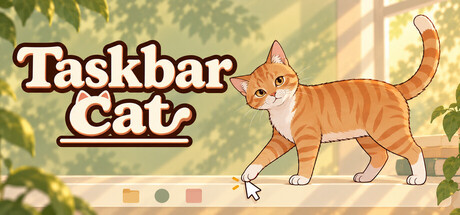
Taskbar Cat uses pre-generated AI-assisted artwork, cat and prop animation sprites, some cat sound effects, and promotional artwork. These assets were edited and assembled during development. The game does not generate AI content or connect to an AI service during gameplay.
I used the help of AI to supplement me in areas, where my talent lacks to bring my ideas to live.
I am no great musician, I am no graphics designer and partly colorblind. I used these modern tools to create what I've dreamt of.
Generative AI tools were used in a supporting role for parts of our art, sound, and translation work. For art assets in particular, we avoid using AI-generated output as-is; AI serves mainly as a starting point and reference, and much of the final artwork is reworked and finalized by our team.
All character and monster art is hand-drawn pixel art (MiniKyara by Atelier Pixerelia), not AI-generated. AI helped with the text, translations and sound. Nothing is generated by AI while you play.
We use generative AI to assist in creating art images, adding more details to our work and speeding up the production process. AI-generated images are primarily used for backgrounds and certain CG details.
Character art, backgrounds, interface graphics and store artwork were created with the help of generative image tools and then selected, edited and assembled by the developer. Game design, code and writing are our own work. The game does not generate any content while you play.
We used AI tools to help create artwork, music, and text, including translations. We selected and refined the visuals to fit Desktop Theme Park’s cartoon style.
Parts of this game were made with the help of AI tools: the store page text, the Turkish and Simplified Chinese translations, and some of the 3D models, UI graphics and store images. The game does not generate any content with AI while you play.
Some of the game's pre-rendered assets were created with generative AI tools during development and then reviewed, edited and integrated by the developer: parts of the pixel art, parts of the sound effects, and the translations from the English original. Nothing is generated while you play: the game uses no AI at runtime and collects no player data for AI training.
Some sprite artwork was pre-generated with AI assistance, then manually selected, edited, and integrated into the shipped game. No AI-generated content is created during gameplay.
The in-game text and the store page text, including the Korean, Japanese and Simplified Chinese translations, were written with the help of AI. Nothing is generated by AI while you play.
Generative AI tools were used to help create some store and promotional artwork, including capsule images and Steam library artwork. These assets were prepared before release. The game does not generate AI content during gameplay or connect to external AI services.
Generative AI was used as a development tool while making this game, for code assistance only. All dialogue and in-game text was written by hand.
No AI-generated images, audio or text are included, and no content is generated by AI while the game is running.
Visual Arts: Generative AI tools were used solely to create early-concept drafts and visual inspiration for certain art assets. All final in-game graphics, UI, and pixel art were manually redesigned, drawn, and polished by human artists.
Localization: Generative AI tools were used to assist with the initial translation of supported non-primary languages. While we have conducted basic checks, these translations may still contain errors or awkward phrasing. We warmly welcome community feedback to help us improve localization over time!
Generative AI was used to assist in creating some store promotional images with manual post-compositing. Generative AI was also used to produce part of the 2D assets within the game, and to assist with translation and localization for portions of the game text. All AI-assisted content has been reviewed, edited and refined by our development team.
Generative AI was used to assist with English texts, localizations, and some pre-generated 3D character models, with all content manually reviewed and edited by the developer.
Some visual assets used on the Steam store page were created with the assistance of generative AI. The game itself does not contain AI-generated content and does not include any live-generated AI features.
Some of the artwork and text in this game and on its store page, including the translations, were created with the assistance of AI tools and reviewed by the developer.
Generative AI tools were used during development to create some visual assets, including character skins and store artwork. These assets were reviewed and edited by the developer. The game does not generate AI content during gameplay or connect to a third-party AI service during gameplay.
Generative AI assisted with programming. The game artwork, music, and sound effects were human made. The game does not generate AI content during gameplay or connect to an AI service.
Generative AI tools were used during development to assist with the creation and iteration of certain visual assets, artwork, and promotional/store materials for Magic Cursor. AI tools were also used as development assistance for portions of the code. All final content was reviewed, selected, edited where necessary, and integrated by the developer. No AI-generated content is created while the application is running.
Generative AI was used to create base images for some visual assets. These images were subsequently selected, edited, refined, and integrated into the game and store materials by the developer. The game does not use generative AI at runtime.
Q-Rely uses locally running artificial intelligence to provide interactive AI-generated responses during use. The AI can generate text responses based on the user's input and, depending on the user's configuration, can also generate voice output using locally installed Text-to-Speech (TTS) engines.
Generative AI was used during development to assist in creating the application's logo. The logo is a fixed visual asset and is not generated or modified by generative AI during use of the application.
Q-Rely does not use generative AI to create the application's default character artwork, backgrounds, or other visual assets during use. The application's AI-generated content is primarily conversational text and, when voice output is enabled, synthesized speech.
Q-Rely is designed to allow users to run AI models locally on their own computer. Users can select and install compatible AI models and configure the application's AI and voice settings according to their preferences.
Art assets (backgrounds, capybara and object sprites, capsules, icon), the store trailer footage, sound effects, ambience and music were generated with AI tools (image and video generation, PixelLab, ElevenLabs) from the developer's own references and direction, then cropped, scaled, palette-snapped and composed by hand-written code. The translations of the game and store texts into languages other than Portuguese and English were produced with AI and reviewed by the developer. All code, game design, writing and the original Portuguese and English texts are human-made. The game does not generate any content at runtime.
Some art assets and marketing images were created or assisted with generative AI during development, then curated and edited for the final game. The game does not generate AI content in real time during play.
Some in-game models and music were created with generative AI. Our original cover illustrations and title lettering are handmade; selected store-art adaptations and the app icon used AI tools. Optional chat uses a lightweight AI model running entirely on your computer to answer small everyday questions. You can turn chat off at any time.
Generative AI was used during development to assist in creating some pre-generated visual assets and marketing materials. All AI-assisted content was reviewed, selected, and adjusted by the developer before being included in the game or on its Steam store page. The game does not use generative AI to create content during gameplay.
Some assets in Keepwatch were created with the assistance of generative AI
tools. This includes portions of the icon set, UI elements, a number of sound
effects, and some character animations.
All AI-assisted output is reviewed, edited and integrated by hand to match the
game's hand-painted art direction, and none of it ships in the state it was
generated in.
Game code, systems design, economy balance and all written content are
authored entirely by hand.
Keepwatch does not use any AI systems at runtime. Nothing is generated on the
player's machine while the game is running.
AI-generated content is used during development as temporary placeholder material. Nearly all of it has already been replaced, and the final game will contain only original artwork created by human artists.
Generative AI tools were used to assist with certain code, UI elements, and visual effect assets. All AI-assisted content was reviewed and ultimately approved by actual humans on the development team. The game’s environments, NPCs, and related artwork were handcrafted by our artist. All gameplay design, creative direction, and final content decisions were made by the development team.
Lumi uses generative AI to create dynamic conversations and spoken responses in real time. AI inference, speech recognition and speech synthesis run locally on the player's PC. AI model files are downloaded during setup, but player conversations and generated responses are not sent to an external AI service. Available capabilities may vary depending on the locally selected model.