Public Steam disclosure research24,658 disclosures tracked
Where do games disclose AI use?
Search developers’ Steam disclosures, compare classified AI use across
games, and follow recorded changes.
This index adds cross-game classifications and statistics to
statements published on individual store pages.
Groups reflect automatic analysis of public disclosures; mature records are excluded. These counts do not measure AI use across all of Steam.
Missing or unclear statements cannot establish whether a game uses AI.
Generative AI tools were used during development to assist with portions of the game’s pre-generated 2D character and promotional artwork, localization drafts, and code. All AI-assisted material was reviewed, selected, and edited by the developer before inclusion. The game does not generate AI content during gameplay.
Pre-generated AI was used to assist with some pre-rendered cutscene artwork, in-game art, music, and selected store/library promotional images. All AI-assisted content was reviewed and edited by the developer. The game does not generate AI content during play.
Pre-generated AI tools assisted with development, including code, interface copy and localization, in-game comic illustrations, and promotional key art, logo, and icon drafts. The developer reviewed and edited all AI-assisted output before inclusion. The game does not generate AI content while running.
Some background music in this game was created with the assistance of generative AI tools. The final selection, editing, and implementation of the music were handled by the developer.
Three non-playable characters, the Celestial narrator and the antagonists Vexaroth and Valdris, are voiced with AI-generated voices. All playable characters are voiced by human actors. A small number of sound effects were also created with AI tools. No content is generated by AI while you play.
Game music was pre-generated using AI tools and edited during development. Select non-English/German text localizations were pre-translated using AI translation tools and reviewed.
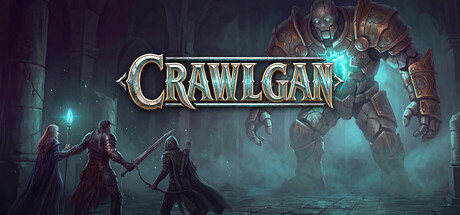
Crawlgan uses generative AI for pre-made content only. All artwork, music and sound effects in the game and on this store page were created with generative AI tools, then selected and edited by the developer. The game text and store page are translated into other languages with AI assistance. Nothing is generated by AI while you play.
Generative AI tools were used during development to create pre-generated character voices, music, and store artwork, and to assist with writing. These assets are prepared in advance. The game does not generate AI content or connect to third-party AI services during gameplay.
Generative AI tools were used during development to create and refine some pre-generated visual assets, music, sound effects, and promotional artwork. No text or narrative content was generated using AI. All AI-assisted materials were reviewed, edited, and integrated by the development team. The game does not use generative AI at runtime, and no player input or personal data is sent to any AI service.
This game uses generative AI to create some of its audio content. Background music tracks were generated using Suno, and sound effects (SFX) for menus were generated using ElevenLabs. All AI-generated audio was reviewed and curated by the developer. No gameplay code or puzzle logic is generated by AI at runtime; the use of AI is limited to pre-generated audio content included in the build.
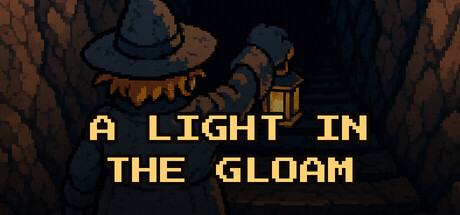
A Light in the Gloam uses pre-generated AI content. Nothing is generated while the game is running, and the game makes no network calls of any kind.
Visual art: all in-game art was generated with OpenAI's image model (gpt-image-1) from prompts written by hand, then processed by our own scripts, which downscale it, quantise it to a fixed palette and trim it before it is placed in the game. This covers 14 character portraits, 43 enemy and boss sprites, 63 item icons, 27 wall, floor and ceiling textures, 10 dungeon props, 21 achievement emblems, and 14 town and title backdrops. The store capsules and the client icons are crops of the title-screen generation rather than new images.
Music and sound: all 14 music tracks were generated with ElevenLabs' music model and all 47 sound effects with ElevenLabs' sound-effects model, both from written prompts and both post-processed by our own scripts for level and length. There is no voice acting and no synthesised speech anywhere in the game.
Writing and translation: the game's text, meaning item and monster descriptions, dialogue, menus and the story, was written with the assistance of a large language model and then edited by hand. The Brazilian Portuguese translation was produced the same way and reviewed against the English.
Portraits of characters and creatures are generated using Stable Diffusion. They appear in-game and in store page materials. I plan to replace all generated portraits with hand-drawn art.
Some in-game labels and text descriptions are placeholders generated by an LLM. I am gradually rewriting them by hand.
Generative AI was used during development to assist with the creation and refinement of some visual assets, including character artwork, environmental artwork, icons, and promotional imagery. AI-assisted assets were reviewed, edited, and integrated by the developer to maintain a consistent visual style. Generative AI is not used during gameplay and does not generate content in real time.
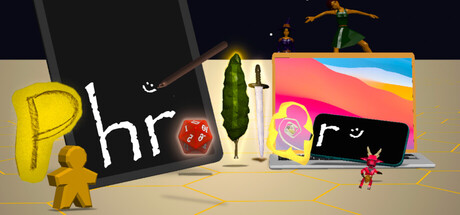
As with most VTT systems, users are welcome to import assets made anywhere. Phroller makes it easier than ever. You can just drag the image or model files into the VTT directly from your browser or file system!
I want to encourage supporting real artists where we can though. As such I do my best to collaborate with real creatives on the vast Phroller libraries. Each one of the assets in the library has a field showing the artist behind it. If you like their work, please consider checking them out. Many of them are open for commissions as well! However, I cannot guarantee that assets or part of those assets were created with no AI use at all. A large amount of the assets are made before 2022 though, so we should be safe there.
While I do my best to make Phroller as user friendly as possible, it does still require a ton of instructions and manuals. Frontier models are used to keep some of the text up to date across rapid early access development. Sorry if it sounds robotic!
Generative AI was used during development for a small number of visual assets and background music. All AI-generated content was carefully directed, reviewed, and edited by the developer to maintain the game's quality, consistency, and artistic vision. No AI-generated content is created during gameplay.
Generative AI tools assisted with pre-generated artwork, including Steam store capsules and library images, and some localization text. The game does not generate AI content during play or connect to external AI services.
The music in this game was created using the Suno AI music generation tool. All other content — including all art and pixel art, level and puzzle design, mechanics, writing, — was created by hand by the developer, without generative AI.
Generative AI tools were used during development to help create some visual assets and localized text, including Steam store artwork and achievement icons. This content is prepared in advance and included as fixed assets and text. Crownspat does not use generative AI to create content during gameplay and does not connect to external AI services.
During development, generative artificial intelligence tools were used to create some pre-rendered static images featured in the game and in the Store page materials (illustrations and promotional graphics).
All content was selected, reviewed and integrated manually by the developer.
The game does not use generative AI during gameplay and does not generate content in real time.
Generative AI tools were used to assist with the translation and localization of the Steam store page text. All AI-assisted content was reviewed and edited before publication. No AI-generated content is created during gameplay.
The music in Ammerow: Lands Beyond was created with Claude Compose, a bespoke composition system built for this project. Rather than a generative music model, it works like a tireless studio composer: an AI assistant (Anthropic's Claude) writes and runs code that composes each piece note by note — melody, harmony, counterpoint and orchestration derived from music theory — and performs it through real, licensed virtual instruments in a professional DAW (Ableton Live). It then "listens back" by analysing the rendered audio to refine the balance. No generative audio/music model was used, no AI was trained on other artists' recordings, and no track was produced from a prompt. Every note is placed deliberately, and every piece is directed, reviewed and approved by a human. The result is authored, not generated.
The sound effects are an original, human-directed procedural synthesis library. Claude Code assisted in writing custom Python DSP software and individual cue recipes; every waveform was deterministically rendered from mathematical models and recorded seeds. No recordings, performers, samples, stock audio, sample libraries or generative-audio service were used.
Ammerow is designed primarily as a coloured ASCII game. Selected creature, item and shopkeeper illustrations began as AI-generated source images and are converted through a deterministic ASCII-art pipeline. The optional tile mode is a work-in-progress secondary presentation. Its small atlases were programmatically drawn in a custom SDL application using natural-language Codex direction. No generative-image model, inherited tileset, traced artwork or third-party graphical asset was used.
Some narrative, gameplay data and other player-facing material were also developed with AI assistance under human direction and review.
Some Steam marketing backgrounds were created using OpenAI image-generation tools and then selected, reviewed and combined with deterministic Ammerow branding by the developer.
No AI runs while the game is being played.
Generative AI was used during development for visual assets, music, and small portions of text, as well as the store artwork. These are pre-generated assets included with the game. No content is generated by AI during play, and the game does not connect to an AI service.
EVER BELOW was created with the assistance of generative AI across parts of its content creation and development process, including visual assets and marketing materials. All AI-assisted content was manually reviewed, selected, edited where necessary, and all final creative and development decisions were made by the developer.
Some store-page and marketing artwork for AVALANCHE was created or edited using generative AI. The game does not generate content during gameplay and does not connect to external AI services.
Most of Stackade's code was written with generative AI coding tools, working to the developer's direction. Everything you see on the board is drawn by that code; the game contains no AI-generated images. The ten translations besides English were produced with AI. Parts of this store page, its marketing images and its trailer were also made with AI assistance. The sound effects and music are recordings made by people and are credited in the game. Nothing is generated by AI while you play, and the game never connects to an AI service.
Some pre-rendered visual assets and music were created with generative AI tools, then curated, edited, and integrated by the developer. No AI content is generated during gameplay, and the game does not connect to external AI services.
Some of the assets in this game were created using generative AI tools. Generated assets were reviewed by the developer and edited where necessary before use. The game itself does not use AI to generate content or code while it is running, and it does not connect to any external AI service.
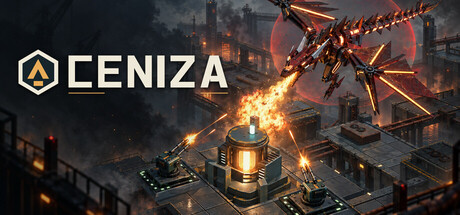
CENIZA is created using AI tools under human creative direction. Pre-generated content includes environmental textures, interface artwork, game text and translations, promotional art, and assets produced through AI-assisted modeling, coding and audio workflows. The base game does not generate content with generative AI while you play and does not connect to an AI service. Mod authors may optionally use external AI tools; manual editing and conventional tools are equally welcome.
I use AI as a "better search engine" for code snippets and design research, and to create examples I can mark up to show artists what I am looking for. Paid artists create the monsters, backgrounds and UI icons, and everything else is hand-created or downloaded from asset packs or is available from free art sites. The artists also use AI in their workflows.
Some of the text in this game was created with the help of generative AI tools.
- In-game text: Korean dialogue, stage narration and help text were drafted with an AI assistant, then rewritten and reviewed by the developer.
- Localization: the English text was produced with AI assistance and reviewed by the developer.
All artwork and UI icons are hand-authored by the developer, the sound effects are synthesized procedurally in code, and the background music is a licensed stock track. No AI runs during gameplay — all content is fixed at build time.
- Store page: the store description text was drafted with AI assistance and edited by the developer.
Generative AI was used during development to assist with some visual assets, text, and audio. No generative AI is used to generate content during gameplay.