Public Steam disclosure research24,658 disclosures tracked
Where do games disclose AI use?
Search developers’ Steam disclosures, compare classified AI use across
games, and follow recorded changes.
This index adds cross-game classifications and statistics to
statements published on individual store pages.
Groups reflect automatic analysis of public disclosures; mature records are excluded. These counts do not measure AI use across all of Steam.
Missing or unclear statements cannot establish whether a game uses AI.
This game was developed with extensive use of generative AI (Anthropic's Claude and OpenAI's GPT). The game code, the 3D models (generated by AI-written scripts), procedurally generated visuals, synthesized sound effects and music (produced by AI-written synthesis code), in-game text and translations, and the store page text and trailer were all created with AI assistance. No AI content is generated while the game is running, and the game does not connect to any external AI service.
The game's three music tracks were generated with Suno (a generative AI tool) from prompts written for the game. The game's text and this store page were written with the help of an AI assistant, then reviewed by the team. No AI generates content while you play.
AI was used in the production of some visual assets in the game. All AI-assisted content was carefully reviewed and refined to ensure quality, consistency, and suitability for the game.
Generative AI tools were used during development to create selected visual assets and music. All generated content was reviewed, selected, edited where necessary, and integrated by the developer.
I've wanted to make games for as long as I can remember but could never learn to code, so AI helped write the code. Some 3D models started as AI-generated base meshes that were then reshaped and repainted by hand, and the arena announcer is an AI voice reading lines we wrote. Everything else is hand-made or licensed.
Generative AI tools were used during development to assist with the creation of certain 2D visual assets, animations and sound effects. AI tools were also used as development assistance for programming and implementation. All generated content was reviewed and curated by the developer before inclusion in the final game.
Generative AI was used to assist with writing and translating in-game text and Steam store page descriptions. It was not used to generate artwork, music, sound effects, voice acting, or promotional visuals.
Some visual and audio assets were generated with AI tools during development and edited for use in Dead Last. No AI content is generated during gameplay.
Some assets in this game were created with generative AI during development: 3D models of characters and props (including some of their animations), and images such as textures and illustrations. All of them were selected and adjusted by the developers before being used in the game. No content is generated by AI while the game is running.
AI-assisted tools were used during development for selected artwork and audio, store page text, and localization. All content is included in the game or its promotional materials in a pre-generated form. No generative AI runs during gameplay, and the game does not connect to external AI services.
Every part of this game's concept, design, and features was created by humans. The ideas, the gameplay, the look and feel, and every decision about how it all fits together came from us.
For the programming itself, we use AI coding agents to help us write code. They speed up development and let us focus our time on what matters most: making the game fun to play.
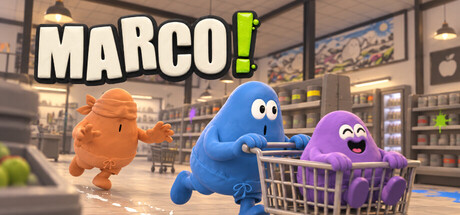
MARCO is made by a solo developer. Its characters, core concepts, and art direction are my original work.
I used AI tools, guided by my own artwork and creative direction, to help create additional 3D models, props, textures, concept art, and some store-page and marketing images. I reviewed, selected, and refined these assets to fit MARCO’s style before including them.
No content is generated by AI during gameplay.
As a solo developer with limited time and resources, these tools helped me turn a game I’d imagined for years into something people can actually play.
Some visual assets were created with the help of generative AI and then edited by the developer. A few sprite animations (doors opening, the ghost, the dynamite fuse and explosion, the turret turning) were generated with PixelLab from our own hand-made sprites, and some store artwork was made with AI image tools. Parts of the in-game text were written with AI assistance and reviewed by the developer. The game does not generate any content with AI while you play.
Our logo and key art were created with the help of AI image generation tools and edited by us. All gameplay, 3D models, and audio were made by our team.
Generative AI was used during development to help create some pre-generated quiz questions and visual artwork used in the game and its promotional materials. These are fixed assets prepared before release. The game does not generate content with AI during gameplay.
Generative AI tools were used during development to create or assist with some pre-generated visual assets, such as ability icons. All AI-assisted content is reviewed and edited by the developer before being included in the game. The game does not generate AI content during gameplay.
Generative AI tools were used during development to create some of the game’s 3D models, artwork, and audio, as well as promotional artwork. This content is pre-generated and integrated into the game or its marketing materials. The game does not generate AI content during gameplay.
This was created by a developer who used AI to assist with concept images, 3D model creation, and assets. Each piece was meticulously placed by an actual person. We're comedians, not professional artists.
Generative AI tools were used during development to assist in the creation of selected visual, audio, and text assets. All AI-assisted content was reviewed, curated, and integrated by the development team. The game does not generate AI content during gameplay.
Generative AI helped create some artwork, UI icons, audio assets and store graphics during development. Store graphics use our original cat designs as references. No content is generated during play, and the game does not connect to an AI service.
Generative AI tools helped create selected 2D artwork, including in-game branding, decorative art, and store and marketing illustrations, and assisted with translations of the store page text. This content is pre-generated; the game does not generate AI content during gameplay.
Some assets in this game were created with generative AI tools during development and then selected and edited by hand: the store key art and capsule images, some in-game images (UI decorations, stage backgrounds and some illustrations), and the background music and jingles. No generative AI is used while you play: the stats and skills of your drawing are decided by deterministic on-device image processing, and nothing is sent to an AI service.
Generative AI tools were used to assist in creating some pre-generated decorative in-game artwork, including wall posters, as well as selected promotional and Steam store artwork. All generated content was reviewed and edited before inclusion. The game does not use live-generated AI content during gameplay.
Pre-generated AI-assisted art and text are used. Tencent Hunyuan 3D helped create initial models and textures; OpenAI image tools helped create UI art and reference images. Assets were edited and optimized for the game. Some fixed UI text, incident captions and translations were drafted with AI assistance. No AI content is generated during gameplay.
Generative AI tools were used during development to help create some of the game's visual assets, including 3D props and environments, as well as localized text and store page descriptions. The main cat character model is a purchased third-party asset. The game does not generate AI content or connect to external AI services during gameplay.
Generative AI was used to create some images, music, sound effects, and prerecorded synthetic chant voices. The game also uses on-device AI speech recognition to transcribe player recordings.
Generative AI tools were used to create and refine promotional artwork and startup/loading artwork based on our game’s character designs. The startup artwork is included in the game.
Some of the game's 3D models, some of its music tracks and parts of the user interface were created with the help of generative AI tools, then selected, edited and integrated by our team. Some of the artwork on this store page (capsule and promotional images) was also created with the help of generative AI and edited by our team. AI coding assistants were also used during programming, with all code reviewed and directed by our team. Everything else (game design, level design and the remaining art, music and sound effects) was made by the Domp Studio team. No AI is used to generate content while you play.
The game's code, which procedurally generates all 3D models, textures, sound effects and music at runtime, was written with the help of an AI coding assistant, as were the store description, marketing images and trailer. No AI generation happens while the game is running.
During development we use AI assistance in certain tasks, such as generative fill to extend artist drawn artwork. All major art has been drawn by human artists.
The game has optional computer generated voice overs.
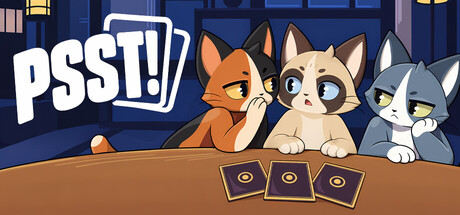
Psst! uses generative AI in two ways, and both run entirely on your own PC. Nothing you say or type is sent to a server, stored, or used to train anything.
Live voices: Bot players and the host speak their hints and table talk out loud through a text-to-speech model (Supertonic) that runs on your computer. The spoken lines come from the game's own writing and word lists. The AI only turns that text into audio.
Speech recognition: If you choose to play with your voice, a speech-to-text model (NVIDIA Parakeet) turns what you say into text so the game can read your hint or guess. This is optional, and you can always type instead.
All artwork, writing and game design were made by the developer or bought as assets with licenses.