Public Steam disclosure research24,658 disclosures tracked
Where do games disclose AI use?
Search developers’ Steam disclosures, compare classified AI use across
games, and follow recorded changes.
This index adds cross-game classifications and statistics to
statements published on individual store pages.
Groups reflect automatic analysis of public disclosures; mature records are excluded. These counts do not measure AI use across all of Steam.
Missing or unclear statements cannot establish whether a game uses AI.
Generative AI tools assisted with creating content for FluxFall and its promotional materials. The developer revied and refined the results, guiding the creative direction, gameplay design, and final presentation.
The player portraits, mascots, team emblems, box paintings and a few event images were generated with image models from the developer's prompts, then hand-keyed and placed. All other art is drawn in the game's own code. No live generation: the game contacts no service.
The music is synthesized from hand-written scores and is not AI audio.
Swarm Below was built with help from an AI assistant. Its 3D models (built by scripts in Blender), its synthesized music and sound effects, and parts of the store page text and art were created with AI assistance under the developer's direction. Nothing is generated by AI while you play.
Generative AI tools were used during development to create visual assets, including images and artwork, as well as sound assets. AI tools were also used to assist with localization and the creation of store page descriptions and marketing materials. These assets and texts are prepared in advance. The game does not generate AI content during gameplay.
Some of the promotional and storefront images were created with AI tools and then refined by hand. All of the in-game assets were designed by a Pixel Art artist.
Art assets (card, mode and boss illustrations, backgrounds and store art) were created with generative AI tools and edited by the developer. No AI-generated content is created live during play.
Generative AI assisted with portions of the artwork, audio, code, and store promotional materials during development. These outputs were reviewed, adjusted, and integrated by the development team.
The game's characters, environment tiles, and totem were created by the developer in Aseprite. Additional enemy variants and animation frames were produced with the help of an AI coding assistant that draws sprites programmatically from authored pixel data. The menu music was created with the help of AI music tools. All promotional and store artwork was created by a human artist. No content is generated by AI while the game is running.
Generative AI was used to translate the game's text from Japanese into the other supported languages (English, Simplified Chinese, Traditional Chinese, Russian, German and French). The original Japanese text was written by a human.
During development, generative AI tools including OpenAI image generation and Higgsfield assisted with pre-generated visual source material for characters, enemies, bosses, animation strips, world props and floors, menu and capsule art, icons, and achievement art. AI coding assistants also contributed to production code, QA tooling, documentation, player-facing copy, and localization drafts. The developer selected, edited, cleaned, composited, animated, integrated, and QA-reviewed the resulting material. All player-visible content is fixed in the shipped build: no prompt, generative model, or external generation service runs at runtime, and the game has no live-generated AI feature.
Various visual and audio assets, translations, and promotional materials were created with the assistance of generative AI tools. All AI-assisted content was selected, reviewed, and integrated by the developer.
No generative AI is used during gameplay, and the game does not generate content in real time.
The track announcer and color commentator voices, including the horse-name calls, use AI text-to-speech voices (ElevenLabs), pre-generated during development and built into the game - no AI voice generation happens while you play. All game design, race simulation, wagering math, career systems, UI, code, and the horse and track roster were built by the developer.
Game music was pre-generated using AI tools and edited during development. Select non-English/German text localizations were pre-translated using AI translation tools and reviewed.
Some content in this game was created with the help of AI tools during development: the English and Japanese translations, the store page text, and parts of the pixel art, which is drawn in code written with an AI coding assistant. The game does not use AI to generate any content while you play.
Yes, AI helped make this game. Here's exactly how:
• I built it with an AI coding assistant. The design and direction are mine; the AI did a lot of the typing.
• The narrator's lines and item descriptions were drafted with AI and edited by me. So was this page.
• No image, music or voice generators. The art and sound are drawn and synthesized by code.
• Nothing is AI-generated while you play.
Generative AI tools assisted with LOADPATH’s development and the creation of game content, under the developer’s creative direction. The game was shaped through extensive iteration, selection and hands-on playtesting. The promotional trailer also uses AI-generated narration and music. All AI-generated content is prepared in advance; no generative AI runs during gameplay.
Part of the game were created with the help of generative AI tools, then reviewed, edited and assembled by the developer:
• visual art — the ambient background images and the animated background loop
• audio — background music and sound effects
Generative AI is used only during development to produce these assets. The game does NOT use any AI at runtime — there is no live AI generation while you play.
Puzzles and word lists are hand-curated, and level layouts are produced by our own deterministic algorithm (not AI).
The English and German localization of in-game text was generated with the help of an AI language model (Claude) and reviewed by the developer. Store page texts were also drafted with AI assistance. All art, music and sound are made by humans or taken from licensed CC0/CC BY asset packs. No AI content is generated live while playing.
Glyphtrip is made by a studio of three: one human and two silicon genius-toddlers. The soundtrack stems were generated with AI and mixed and mastered by hand. The translations and custom font were made with AI.
AI was used to generate the art, music, sound effects, the captains' short vocal reactions, the game text and the translations, all curated and reviewed by hand. Nothing is generated at runtime.
The text you read in Crystalysis is written in English and Spanish, then machine-translated into the other eleven languages.
The visuals are drawn procedurally in code, the audio is synthesized while you play. The interface icons were designed with an AI design tool and edited by the developer, and the remaining small bitmaps come from the open Twemoji and Kenney sets..
The game's code and the text on this store page were written with the help of an AI assistant and edited by the developer.
Some sprites, event card illustrations, background music and sound effects were created with locally-run generative AI models (Stable Diffusion XL, ACE-Step, Stable Audio Open) and then edited by the developer. No generative AI is used while the game is running.
Lethal Geometry's written content and level design were made with generative AI assistance: the in-game text, the upgrade and milestone descriptions, the map hints, the layout and waves of the maps, and this store page.
Nothing you see or hear is generated by an AI model. The board, the interface and the icons are drawn by the game's own code, so the build contains no image files, and every sound effect is synthesised by a script from mathematical waveforms. Nothing is generated while you play: there is no AI model in the game and no calls out to one.
CS
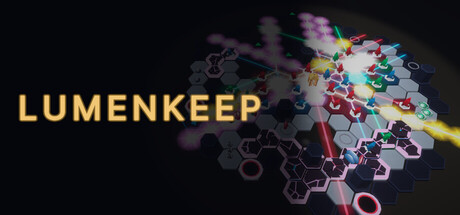
LUMENKEEP was built by a solo developer working with AI development tools. AI assisted in generating the game's code, procedural geometry, shaders, and audio during development, under direct human direction and review; there is no hand-drawn art, hand-animation, or human-recorded audio in the game. LUMENKEEP does not use AI to generate content live during gameplay, and does not connect to any third-party AI service while you play.
The translations of this game into English, Spanish, Portuguese, Russian and Chinese were produced with the help of a large language model, working from the German original. The Spanish, Portuguese, Russian and Chinese versions are machine-made and are marked as beta inside the game. The text of this store page and the captions in the trailer were written the same way.
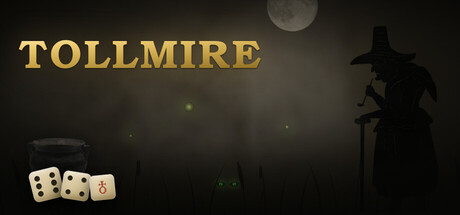
No image, no sound and no music in this game is AI-generated. The symbols come from historical alchemical plates, the witches from the Wellcome Collection, the cauldron from the Smithsonian, the reeds from an 1885 plant atlas.
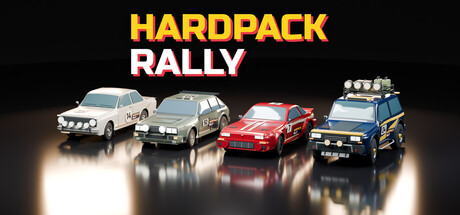
Hardpack Rally is made by solo developer Andre Gomes with assistance from AI tools, including Claude, ChatGPT and Codex. These tools help write game code and scripts that create the cars and scenery. No AI generates content while you play.
Pre-generated content only; nothing is generated while the game runs.
- Localization: the game and store page were translated into 9 languages (Portuguese, Spanish, French, German, Polish, Russian, Japanese, Korean, Simplified Chinese) with AI assistance.
- Writing: story, tutorial and store text were drafted with AI assistance and edited and approved by the developer.
- Visuals are drawn procedurally by the game's own code; no AI image generators were used. Sound effects and music are licensed CC0 recordings chosen by the developer.
Trivia Mania was designed, directed, reviewed and tested by a solo developer. AI tools supported the drafting, editing and fact-checking of the questions and answers, and helped make the game's art and sound. No AI is embedded in the game and nothing is generated while you play.
Some of the in-game and store page text was written with the help of AI tools and edited by the developer. No AI image, music or voice generators were used.
The current soundtrack and its album-cover artwork were generated with AI music and image tools and selected by the developer. I am looking to commission original music from human artists; if you make music and would like to hear your tracks in BrickAmp, get in touch at team@brickamp.com. Some level layouts and visual effects were drafted with AI-assisted coding tools and hand-reviewed. All of this content is pre-generated and ships with the game. Nothing is generated live during play, and the game does not connect to any AI service.
The altered paintings ("forgeries") were made by editing public-domain museum scans with generative AI image tools. Each one was reviewed by hand, colour-matched to its original scan and, where possible, composited back onto that scan so that only the altered detail differs. Some in-game English text (the questions that appear beside the paintings) and parts of this store description were drafted with an AI writing assistant and edited by the developer. The capsule art and screenshots are frames rendered by the game itself; the capsule art shows one of the AI-edited paintings. Nothing is generated by AI while the game runs.
I'm a solo developer with a full-time job and a dad with two wonderful little kids. Full Count Club is a game I've wanted to make for a long time. AI tools are how I fit it into the time I have: they helped create the illustrated art, some sound effects, and some in-game writing such as newspaper headlines. I direct, select and edit all of it. The game does not generate any AI content while you play.
Trapoint is made by a single developer. 3D models, 2D art, sound, music, UI text, and the English localization were generated with AI tools from the developer's own prompts and then edited and integrated by hand; game design, systems, and level data are the developer's own work.
This game is a solo-developed hobby project. Generative AI tools were used as part of the production workflow, including assistance with code, audio, and base visual assets. No generative AI output is used as a final in-game asset; all assets were manually edited, and integrated by the developer. The story, dialogue, and all other written in-game content were written by the developer. All gameplay design, creative direction, balancing, and final content decisions were made by the developer.
Some UI icons were generated using AI, then refined by our artists to suit the UI. All other artwork was created by hand. No AI content is generated during gameplay.
Generative AI was used to create the 2D artwork and sprites used inside the game , as well as the promotional capsule images on the store page. Additionally, AI tools were used to assist with programming and code generation during development.
Some of the game's content was created with the help of generative AI tools and then edited, cleaned up, rigged, animated and integrated by the developer. This includes 3D models of characters and enemies, 2D art such as ability icons, UI elements and some store page artwork, sound effects, and parts of the store page text. All gameplay, design, balance and final assembly were done by the developer.
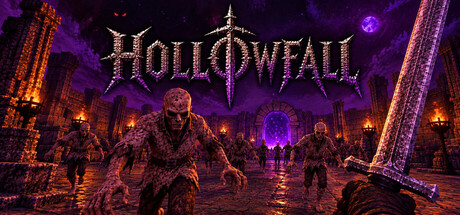
Generative AI tools were used during development to assist with the creation of certain pre-generated visual and 3D art assets used in the game. AI-assisted content is reviewed, selected, edited, and integrated by the developer. Hollowfall does not generate AI content during gameplay.
During development, this game used generative AI tools to assist in creating some content: some card illustrations, character art, and scene images were initially generated by AI, then manually selected, redrawn, and post-processed by the developer. Some music, sound effects, and text were also created with AI assistance and finalized after item-by-item revisions by the developer. Some assets used on the store page and promotional images were also produced with the assistance of the above tools. The game does not contain any AI content generated in real time at runtime, and does not use any third-party copyrighted characters, assets, or trademarks.
Character, enemy and environment art were generated with AI tools, then curated, edited and integrated by the developer. Music and sound are procedurally composed in-engine (not AI-generated). Code was written by the developer with AI assistance. The game contains no live/runtime AI generation.