Public Steam disclosure research24,658 disclosures tracked
Where do games disclose AI use?
Search developers’ Steam disclosures, compare classified AI use across
games, and follow recorded changes.
This index adds cross-game classifications and statistics to
statements published on individual store pages.
Groups reflect automatic analysis of public disclosures; mature records are excluded. These counts do not measure AI use across all of Steam.
Missing or unclear statements cannot establish whether a game uses AI.
During the development of FOOTBALL EXECUTIVE 27, generative AI tools were used to assist with parts of the program code, localization, and the editorial review of user interface and in-game text. All AI-assisted content was manually reviewed and revised before being included in the game. No content is generated by generative AI during gameplay, and no player input is transmitted to any external AI service.
Three non-playable characters, the Celestial narrator and the antagonists Vexaroth and Valdris, are voiced with AI-generated voices. All playable characters are voiced by human actors. A small number of sound effects were also created with AI tools. No content is generated by AI while you play.
Generative AI tools were used during production to create character artwork, portraits, and some of the game's illustrations and visual assets. AI tools also assisted with the story, dialogue, and store-page copy, including its English version. These are pre-generated materials; the game does not use generative AI to create new content during gameplay.
Generative AI is used throughout the development of PenRogue, including code, character artwork, backgrounds, UI assets, music, sound effects, and text. AI-generated content is reviewed, selected, and integrated by the developer.
Some in-game visual assets were generated or modified with generative AI tools during development. The game also includes pre-recorded AI-generated combat voice lines. The developer selected and integrated these as fixed game assets before release.
AI was used as a support tool during development (code assistance and initial image generation). All artwork was individually reworked by hand, and no content is generated live during gameplay.
Generative AI tools were used during the development of this game to help create some store artwork, user interface (UI) concepts, and cover designs. All AI-generated content was reviewed, edited, and finalized by humans. The game does not generate any AI content dynamically or in real time during gameplay.
Character, monster, and item artwork in this game was pre-generated using AI image generation tools (FLUX.1). No AI-generated content is created live during gameplay, and the game does not connect to any third-party AI service at runtime.
Generative AI tools were used during development to assist with the localization of in-game text into multiple languages. All AI-assisted translations were reviewed, edited and integrated manually by the developer. No generative AI is used during gameplay. Visual and audio assets were not generated using AI.
Black Banner Company is made by one person.
What is mine: the design, the rules, the balance, the world, and every decision of tone. Nothing ships that I have not read, corrected or rewritten.
What is AI-assisted:
— the illustrations and part of the interface art;
— the entire English translation;
No AI runs while you play. All content is fixed at build time. No data is sent anywhere.
The English may read awkwardly in places. Tell me where and I'll fix it.
If these tools are a problem for you, I would rather you knew before buying than after.
This game includes content created with the assistance of generative AI tools. Some character and UI artwork was produced using AI image generation (ChatGPT) and then edited by the developer, and the background music was generated using Suno. All AI-assisted assets were reviewed by the developer to ensure they do not infringe the intellectual property of third parties. No AI is used at runtime—all generation occurred during development (pre-generated).
As with most VTT systems, users are welcome to import assets made anywhere. Phroller makes it easier than ever. You can just drag the image or model files into the VTT directly from your browser or file system!
I want to encourage supporting real artists where we can though. As such I do my best to collaborate with real creatives on the vast Phroller libraries. Each one of the assets in the library has a field showing the artist behind it. If you like their work, please consider checking them out. Many of them are open for commissions as well! However, I cannot guarantee that assets or part of those assets were created with no AI use at all. A large amount of the assets are made before 2022 though, so we should be safe there.
While I do my best to make Phroller as user friendly as possible, it does still require a ton of instructions and manuals. Frontier models are used to keep some of the text up to date across rapid early access development. Sorry if it sounds robotic!
Tamagong uses generative AI in three places during development:
Translation: the game's eight languages were translated with AI assistance.
Audio: some sound effects and ambient tracks were produced with AI assisted tools.
Art & Visuals: some art work began from AI generated output, which was then edited by hand for style consistency. Concept images were also generated as reference while designing monsters and locations.
Detonator Squad was developed almost entirely using AI tools, under extensive human direction, ongoing refinement and review. The game is built on my own custom 3D engine that I have been working on for a while, using AI coding tools. AI was also used to create interface and promotional artwork and to author or assist with code, 3D assets, level layouts, game text, music and sound effects. The original core game logic was handwritten for an earlier project, then ported and adapted using AI. All content is supplied with the game; no content is generated by an AI service during gameplay.
AI tools were used in the creation of some of the game's artwork. All AI-generated assets were subsequently reviewed, edited, and refined by me or a family member before being incorporated into the game.
No AI-generated content was added to the game without prior human review and editing.
During the development of this game, AI tools were used to assist in creating some game assets and promotional materials for the store, as well as to assist in writing and optimizing some program codes. All the AI-assisted content was manually screened, adjusted, integrated, tested, and finally reviewed by the developers.
I use generative technologies strictly in a supporting role, including: brain-storming; editing text; altering images; research; transcription…
Generated assets are never the first seed nor the last product of any content in my games.
I use generative technologies strictly in a supporting role, including: brain-storming; editing text; altering images; research; transcription…
Generated assets are never the first seed nor the last product of any content in my games.
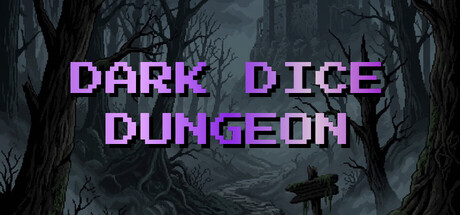
The content of Dark Dice Dungeon was produced with the help of generative AI tools: the illustrations, the music and sound effects, the in-game writing, and the English and Spanish translations. All of it was then selected, edited and assembled by hand by the developer. Nothing is generated while you play: the game ships with fixed assets and never connects to any service.
Voice lines and sound effects were produced with AI voice synthesis
(ElevenLabs) during development. Some character portraits and UI/VFX
textures were created with AI-assisted tools. All assets were reviewed,
edited and integrated by the developer.
No generative AI runs at runtime — the game ships only pre-generated,
fixed assets.
Generative AI tools were used during development to assist in creating some visual assets, music, sound effects, and voice-over content. All AI-generated content was created and reviewed prior to its inclusion in the game. The game does not generate AI content during gameplay.
Some of the artwork in Clash of Crests was produced with generative AI image tools and then cropped, composited, retouched and finished by the developer. This includes unit and character portraits, faction crests, campaign banners and key art, and some environment and prop art. Parts of the in-game lore and flavour text were drafted with AI assistance and then edited by the developer. Nothing is generated by AI while you play: all content ships with the game as fixed, pre-made assets.
Pre-generated content: part of the game's art (backgrounds, character and enemy sprites, portraits, props, key art and capsule images) was created with generative image tools (Google Gemini, PixelLab) and then reviewed, cut, edited and assembled by hand by the developer. Some sound effects were produced with AI audio tools (ElevenLabs). Parts of the source code were written with the assistance of an AI coding assistant (Anthropic Claude) under the developer's direction and review. The story, game design, world, dialogue and puzzles are the developer's own work.
Live-generated content: none. The game does not generate any content with AI while it is running.
Generative AI was used during development for visual assets, music, and small portions of text, as well as the store artwork. These are pre-generated assets included with the game. No content is generated by AI during play, and the game does not connect to an AI service.
Deepwood Valley uses a generative AI language model to power conversations with the
characters who live in the valley. The model runs entirely on your own computer — no
account is required, and nothing you type is sent to us or to any third party.
Every line of AI-generated dialogue passes through a deterministic content filter
before it is displayed. This filter is compiled into the game, runs on all generated
speech without exception, and cannot be turned off by the player or by mods.
Character personalities, story, world design, and all art and audio are authored by
our team.
Some of the 2D art in Cidle Online was created with the help of generative AI
image tools. This includes parts of the sprite work for buildings, points of
interest and item icons, as well as some store page artwork. Every generated
image was reviewed, edited and adjusted by hand before it went into the game,
and assets are checked so they do not reproduce existing works.
All of this art is produced during development. Nothing is generated by AI
while you play, and the game does not send any of your data to an AI service.
Some auxiliary art assets (the overworld map background) used AI tools for concept assistance in the early stage of creation. The developer then conducted extensive manual secondary design and reconstruction, including hand-drawn routes, level node layout, color unification, and UI interaction design.
The core gameplay, unit system, combat numerical balance, battle log system, and all strategic logic are purely hand-designed by the developer and do not use AI generation. This is a solo-developed strategy game; AI was only used to improve the efficiency of specific art assets. Thank you for your understanding
AI was used to create write parts of the game code and scripting, to refine mech textures, and for voiceover and audio content - to be used as placeholders while in playtests.