Public Steam disclosure research24,658 disclosures tracked
Where do games disclose AI use?
Search developers’ Steam disclosures, compare classified AI use across
games, and follow recorded changes.
This index adds cross-game classifications and statistics to
statements published on individual store pages.
Groups reflect automatic analysis of public disclosures; mature records are excluded. These counts do not measure AI use across all of Steam.
Missing or unclear statements cannot establish whether a game uses AI.
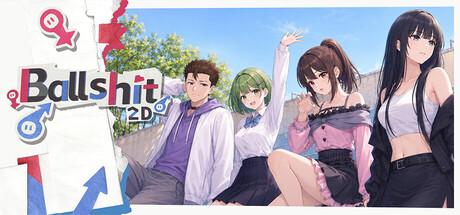
Generative AI was used during development to create character and environment artwork, comic illustrations, achievement-card artwork, store artwork, music, and English pronunciation audio, and to assist with learning dialogue and localization. This content is prepared in advance and included with the game. The game does not generate AI content or connect to third-party AI services during gameplay. Custom chapters use the device’s available text-to-speech voices.
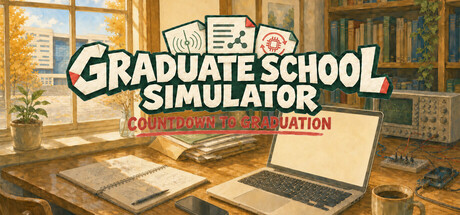
Art assets (card, mode and boss illustrations, backgrounds and store art) were created with generative AI tools and edited by the developer. No AI-generated content is created live during play.
NPC dialogue in Ruiwen’s Romance of the Three Kingdoms: The Life of a Persuader is generated in real‑time by a locally‑running AI model. All content is computed offline on your own device, with no data uploaded to external servers.
The game’s story framework, directed plotlines, numerical judgement rules and ending conditions are all hand‑crafted. The AI is only responsible for generating character conversations.
Multiple safety guardrails are built‑in: automatic profanity detection, historical timeline checks to avoid anachronisms, character‑stance locking and fallback responses. These ensure every line of dialogue fits the character’s identity and historical context.
The option to disabled images created with AI can be found inside of the options menu of the game. This game has some images that used AI in their creation.
Generative AI was used during development for the following:
- Music: The background music was created with an AI music generation tool (Suno).
- Word definitions: The definitions shown in the game were written with the assistance of AI, using the public dictionary data JMdict as a reference, and were reviewed and corrected by the developer.
- Programming: AI was used as a development aid.
No content is generated by AI during gameplay. All puzzles, word data, and visuals are pre-made.
Part of the game were created with the help of generative AI tools, then reviewed, edited and assembled by the developer:
• visual art — the ambient background images and the animated background loop
• audio — background music and sound effects
Generative AI is used only during development to produce these assets. The game does NOT use any AI at runtime — there is no live AI generation while you play.
Puzzles and word lists are hand-curated, and level layouts are produced by our own deterministic algorithm (not AI).
Our visual style relies on a blend of commissioned artwork, curated assets, and custom designs. We occasionally use AI generation as a tool in our creative process, but never as a final product. Every AI-assisted asset is either fully redrawn or heavily refined by human artists before making its way into the game.
AI writing assistants were used to draft and refine in-game text during development; all text has been manually proofread, edited, and verified by the developers.
Generative AI was used to create some images, music, sound effects, and prerecorded synthetic chant voices. The game also uses on-device AI speech recognition to transcribe player recordings.
Psst! uses generative AI in two ways, and both run entirely on your own PC. Nothing you say or type is sent to a server, stored, or used to train anything.
Live voices: Bot players and the host speak their hints and table talk out loud through a text-to-speech model (Supertonic) that runs on your computer. The spoken lines come from the game's own writing and word lists. The AI only turns that text into audio.
Speech recognition: If you choose to play with your voice, a speech-to-text model (NVIDIA Parakeet) turns what you say into text so the game can read your hint or guess. This is optional, and you can always type instead.
All artwork, writing and game design were made by the developer or bought as assets with licenses.
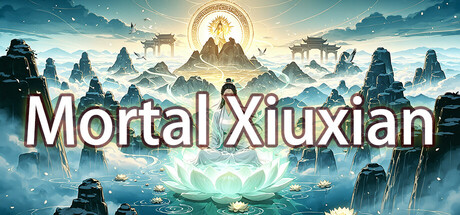
This game uses pre-generated AI-assisted visual content. Generative AI tools were used during development to help create and refine some 2D artwork and Steam store materials, including Chinese ink-style backgrounds, capsule images, UI/marketing artwork, icons, and related visual elements. All AI-assisted assets were reviewed and edited by the developer before being included. The game does not use live generative AI during gameplay, and no player input is sent to an AI service to generate content.
Generative AI was used during development to create artwork, music, sound effects, and translations, as well as store and promotional artwork. The game does not generate AI content during gameplay or connect to external AI services.
Generative AI tools were used during development to assist with localization, programming, and store/marketing text. All AI-assisted output was reviewed, edited, and integrated by the developer. The game does not use generative AI at runtime and does not generate live AI content.
Scriptura uses pre-generated AI content for ambient music, sound effects, and some artwork used on the store page and in marketing. The Race Friends trailer includes AI-generated music and sound effects. Certain optional DLC texts include AI-generated translations, identified in their edition information. Scriptura does not generate AI content during gameplay or connect to an AI service while you play.
Runecast’s illustrations were generated with AI tools, then curated, edited and integrated by hand. The soundtrack was generated with Suno under a commercial license. The game’s design and code were developed with AI assistance, directed and reviewed by the developer.
During development, Google Gemini and OpenAI GPT were primarily used for programming assistance, debugging, and development workflow support. Nano Banana was used to generate some character sprite artwork and to redraw or adjust certain facial-expression variants of existing character sprites. All AI-assisted art assets were manually reviewed, selected, and edited by the developer before being included in the game.
Generative AI tools were used during development to create some visual assets, including character skins and store artwork. These assets were reviewed and edited by the developer. The game does not generate AI content during gameplay or connect to a third-party AI service during gameplay.
Some visual and art assets in the game were created with the assistance of generative AI, combined with live-action materials and human-created artwork and editing.
This game was developed with the assistance of generative AI tools during development. AI was used to assist with source code generation, modification, debugging, and refactoring. No generative AI is used at runtime, and the game does not provide any AI-generated content or AI generation features to players.
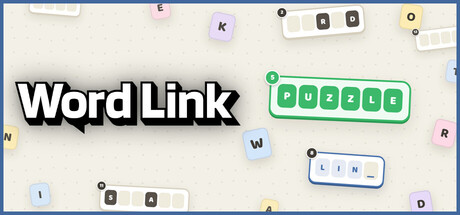
AI was used to help generate the store page capsule and background artwork. The visuals are procedurally constructed vector graphics built with AI-assisted code, not raster images from an image-generation model. The wordmark and color palette were designed by the developer.
The word catalog (word lists, definitions, hints, fun facts and emoji clues) was drafted with the help of AI tools and then reviewed and edited by the developers. No AI-generated content is created at runtime, and the game contains no AI-generated art, voice, or music.
1. This game uses AI to interact with the input text commands.
2. Some of the art resources and music assets in the game are generated by AI during the development stage.
The story outline, the characters, and the five branching endings were created by hand. On that basis, the script prose, the 357 background illustrations, the soundtrack and the sound effects were generated with AI and individually reviewed by the developer before inclusion; candidates that did not pass were discarded and are not in the game. The English and Japanese translations were produced with AI and spot-checked by the developer. The store artwork and trailer also use AI-generated images.
No AI runs while you play. All content is fixed at release.
Some of the in-game background images and the store Capsule image art assets in this game were created using pre-rendered generative AI tools. These assets were then reviewed, refined, and integrated by our development team to fit the game's artistic vision
本作在开发过程中使用生成式 AI 辅助制作部分视觉素材,主要用于部分背景图像的生成、构图参考及初步素材制作。相关素材均经过制作组人工筛选、修改、修正或进一步加工后用于游戏。
游戏的主要剧本、角色设定、原创音乐、程序及核心美术设计均由制作组成员完成。游戏运行过程中不会调用生成式 AI,也不存在由玩家输入内容后实时生成文本、图像、音频或其他内容的功能。
Some pre-rendered visual assets and music were created with generative AI tools, then curated, edited, and integrated by the developer. No AI content is generated during gameplay, and the game does not connect to external AI services.
Graphics & Concepts: Generative AI was used to design and refine initial concept art, textures, and UI elements.
Texts & Dialogues: Portions of the lore, background stories, and dialogue scripts were conceptualized using AI language models and subsequently revised manually.
Code & Optimization: AI-assisted tools were utilized to optimize programming code and assist in debugging.
Note: All final assets in the game have been thoroughly reviewed, edited, and curated by the developer.
Puzzle grids are constructed using Crossword Compiler, a conventional (non-AI) crossword construction tool. AI tools were used to assist in drafting clue text, which was then rewritten and reviewed by hand before inclusion. Every clue and answer that ships in the game has been checked by an individual human for accuracy, solvability, and quality. No content is generated during gameplay.
Xuanji · Diaochan uses a live generative AI to produce Diaochan's dialogue and spoken responses in real time. Every line of conversation and every spoken reply is generated by the model during play, not pre-written.
The character artwork, scene illustrations, music, and sound effects in this game are created by our team without generative AI.
Guardrails in place:
A historical-fiction persona that keeps Diaochan in character as a 2nd-century figure and prevents her from speaking as a modern AI assistant.
Retrieval-augmented responses grounded in a curated corpus of Han dynasty historical texts, so factual claims can be checked against primary sources.
Pre-filtering of user inputs and post-filtering of model outputs against blocklists for sexual, violent, and politically sensitive content.
An in-product report button on every response, plus mute and memory-reset controls.
Players can also report any in-game AI response they consider inappropriate through the Steam overlay.
All code and art assets in this game are created with generative‑AI assistance and manually modified. Thanks to AI, I can realize my ideas without programming or art skills.
Generative AI tools were used during development to assist with some 2D background artwork and decorative visual assets. All AI-assisted assets were reviewed and edited before inclusion. The game does not use generative AI during gameplay, and no player input or data is sent to generative AI services. Puzzles and answers are not generated by AI.