Public Steam disclosure research25,376 disclosures tracked
Where do games disclose AI use?
Search developers’ Steam disclosures, compare classified AI use across
games, and follow recorded changes.
This index adds cross-game classifications and statistics to
statements published on individual store pages.
Groups reflect automatic analysis of public disclosures; mature records are excluded. These counts do not measure AI use across all of Steam.
Missing or unclear statements cannot establish whether a game uses AI.
The game is made by a single developer, with help from two friends. I used generative AI for some of the artwork (backgrounds, portraits, icons, book covers, record sleeves, skies) and for some of the music, selecting, editing and integrating every asset by hand. 3D models were bought from their creators, taken from free libraries or made in Blender, and sound effects come from free sound libraries: all authors are credited in the game.
Se han utilizado herramientas de inteligencia artificial generativa durante el desarrollo para ayudar en la creación y adaptación de algunos recursos del juego, como modelos 3D, imágenes, audio y otros elementos gráficos. Todo el contenido generado con IA ha sido revisado y preparado previamente antes de incluirse en el juego. El juego no genera contenido mediante IA en tiempo real ni se conecta a servicios externos de IA durante la partida.
Generative AI was used to create some pre-generated 3D models, artwork, audio, and voice assets used in the game and marketing materials. No AI-generated content is created during gameplay.
Three non-playable characters, the Celestial narrator and the antagonists Vexaroth and Valdris, are voiced with AI-generated voices. All playable characters are voiced by human actors. A small number of sound effects were also created with AI tools. No content is generated by AI while you play.
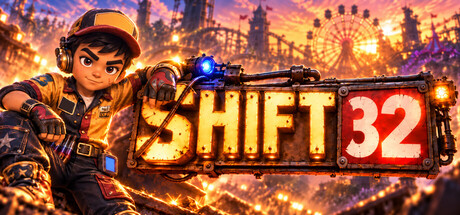
Shift32 is being developed by a solo developer. Generative AI tools were used selectively during development to create and iterate on some in-game assets, including certain 3D models and textures, as well as some promotional and Steam store artwork. No generative AI is used during gameplay, and the game does not connect to external AI services while running.
Generative AI tools are used during development to create some 3D assets as Place Holders and assist with Art/ music Content. These materials are prepared in advance and incorporated into the game or its store page. The game does not generate content using generative AI during gameplay.
Some character voice recordings are also created using generative AI.
Some of the game's 3D models and artwork were created with the help of generative AI tools and then cleaned up and edited by hand. Parts of the store page text were drafted with AI assistance. The game does not generate any AI content while you play.
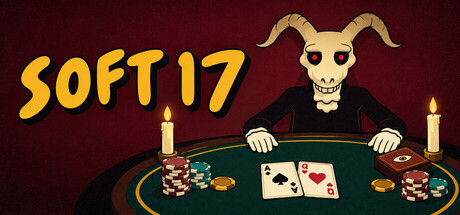
SOFT 17's visuals and audio are generated procedurally from code: the dealers, the
cards, the table and every sound are drawn and synthesized while you play, rather than
imported as files.
Generative AI contributed to some of the content that ships with the game: eight
interface icons in the main menu, the artwork used on this store page, and part of the
in-game text and its English translation. All of it was produced from written briefs,
then reviewed, edited and assembled by hand.
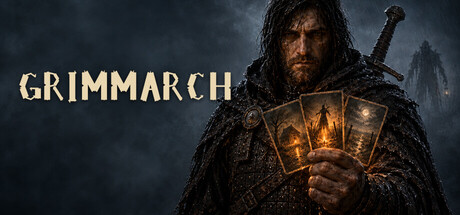
Grimmarch's art, music, voice and sound effects are created or edited with generative AI tools, then selected, edited and approved by a human before shipping. That covers card and interface art, character portraits, map and scene art, the cinematic, music, character voice lines and sound effects.
Nothing is generated while you play: the game contacts no AI service at runtime, and nothing you do is sent to one.
During development, generative AI is used to explore visual concepts and create prototype. Also used on Translation. Textures, animations, and 3D models are created manually. The game does not generate AI content during gameplay.
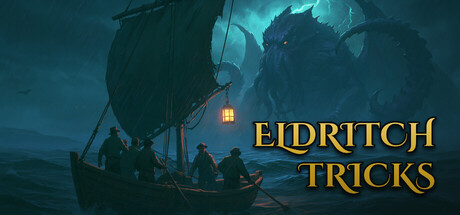
Eldritch Tricks was not dealt by human hands alone: we lean on procedural and AI-assisted tools during development to help draft what you see and hear. Every card that reaches the table is chosen, shaped, and finished by the Iron Tower Press team, and the game you play is ours.
The game's icon and the promotional images were made with generative AI; the store page text and its translations were drafted with an AI assistant and checked by the developer. Nothing is generated by AI while you play.
Generative AI was used during development for visual assets, music, and small portions of text, as well as the store artwork. These are pre-generated assets included with the game. No content is generated by AI during play, and the game does not connect to an AI service.
During the development of the game, AI tools have been used selectively and in a controlled manner to support certain creative and technical processes. Their use has always been guided, reviewed, and supervised by humans, with all final decisions remaining under the direction of the design and technical teams. AI has been used as a supporting tool, never as a replacement for human creativity, judgment, or development work
Some visual assets used in the game and/or its promotional materials were created with the assistance of generative AI tools and were reviewed and edited by the developer before use.
As a small development team of just two people, we used generative AI tools in limited cases to assist with the production of certain visual assets and help manage the scope of development.
All AI-assisted assets were carefully reviewed, edited, refined, and finalized by us to fit the game's established art style and direction. Generative AI was used as a supporting tool during development, rather than to define the creative direction of the game.
Generative AI tools were used in a limited capacity to assist with the creation and enhancement of certain 2D images and audio assets. No 3D models, animations, gameplay systems, or other game content were generated using AI.
We build Last Treasure Online with AI tools. Much of the code is written with AI, including shaders, scripts that model props and furniture in Blender, and scripts that synthesize sound effects and ambience. Most text in the game is AI generated, but all names, personalities, schedules, stories, lore, knowledge, etc is strongly scaffolded and enforced by us as designers. In play, NPCs speak through an AI language model on our server in order to talk about hundreds of subjects in different ways depending on what they know about them, you, the world, etc.... The model only rewords lines and facts we wrote: it cannot invent places, items, prices or quests, and players never type text into it. No images, textures, 3D models, music or sounds come from diffusion image, 3D or audio models. Characters and clothing are hand-painted, and the world's textures are photographs.
Some of this game's content was created with the assistance of generative AI tools and was then reviewed, edited and curated by the developer. This includes a portion of the 3D shoe models (generated with AI 3D tools and hand-adjusted), the game logo and store/marketing artwork (AI image tools), and the translation of interface text into languages other than Turkish and English. No content is generated by AI at runtime and the game does not connect to any AI service.
I use generative AI for some of the game’s visual assets, mainly things like ability icons, and for some of the promotional images on the Steam store page. I review and choose what actually gets used in the game. Nothing is generated by AI while the game is running.
This game is made by a single person. As a solo developer, I use AI tools to speed up certain stages of production, mainly for optimization, generation and assistance tasks: cleaning up and optimizing complex meshes, and sometimes generating them, producing texture bases or shape variations, preparing visual elements for the store page, and handling some repetitive technical passes.
These tools let me produce faster and better, on my own, what would normally take an entire team. They do not replace the creative work. Every element that makes up the game is chosen, directed, reworked and finalized by hand. The ideas, the design, the writing, the assembly and the final decisions are entirely my own.
In other words: AI helps me build, never to decide in my place. Because in the end, only one thing matters: delivering a real game, and the most intense experience possible in your hands.
Generative AI tools were used to assist in the creation of some visual assets, 3D assets, and music used in the game. All AI-assisted content was reviewed, edited, and integrated by the developer before being included in the final game.
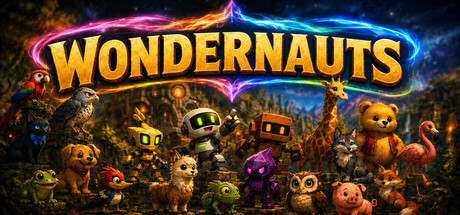
Some visual assets, sound effects, and music in Wondernauts were created with the help of generative AI tools during development, then refined, validated, and integrated by the development team. All gameplay logic and game systems are human-authored.
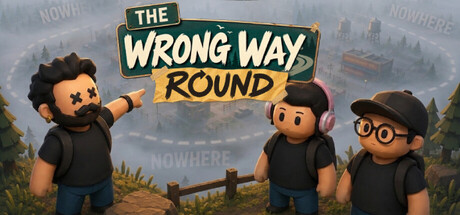
We’d like to be transparent about the localization of THE WRONG WAY ROUND.
Some of the game’s translations have been created with the assistance of AI and then reviewed and adjusted by us. This allows us to make the game available to more players and support more languages than we could otherwise manage.
We’re continuously improving the translations and really appreciate any feedback from native speakers.
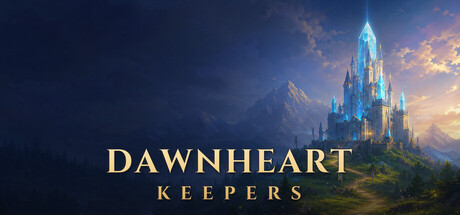
Some of the content in Dawnheart Keepers was created with the help of generative AI tools during development. All of it was made before release: the game does not generate anything with AI while you play, and it never connects to an AI service.
What that covers:
- Illustrated art - menu and story backgrounds, story scenes, the world map, character and tower portraits, and the upgrade-card plates - was made with image-generation models run locally on the developer's own machine, from prompts the developer wrote.
- The English and Hebrew voice-over was generated with ElevenLabs from scripts written by the developer.
- Sound effects were generated from written prompts, or synthesised procedurally in code.
All of it was reviewed, edited, curated and tested by the developer before it shipped, and the same applies to the trailer and store art.
The music is not AI-generated. It is written as code and synthesised by the game itself while you play, the way game soundtracks were built before recorded audio.
AI-enabled tools were used during development to assist with asset creation. Some visual and audio assets in the finished game incorporate AI-assisted or AI-generated source material. For more information, visit https://jetgrave.com/ai-use/
This game was created by an independent developer. Generative AI tools were used during development to assist with programming, debugging, text editing, and the initial localization of Simplified Chinese, Traditional Chinese, English, Japanese, and Korean. All AI-assisted content was manually reviewed, edited, and approved by the developer. The game does not use generative AI to create content during gameplay, and player data is not used for AI training.
A small number of textures in this game were generated with the assistance of AI tools. These are placeholders intended to be replaced with hand-made assets in future updates. As for the rest of the assets, they were hand made using 3D modelling and texturing software.
AI tools (LLMs) were used solely for programming assistance, brainstorming, and writing Unreal Engine Blueprint logic. All visual assets, 3D models, and gameplay systems were entirely created and implemented manually by the solo developer.
During the development process, we may use procedural- and AI-based tools to assist with content creation. In all such cases, the final product reflects the creativity and expression of our own development team.
I use generative AI as a tool during development:
• Some 3D models (characters, creatures and props) were created with AI generation tools, then edited, rigged and animated by hand for use in the game.
• Some sound effects were generated with AI audio tools, then edited and mixed by hand.
• Some store page and marketing artwork was created with AI image generation.
Everything produced this way is reviewed and reworked by me before it ships. The game generates no content while you play and connects to no AI service at runtime.
The game is made by a single developer, with help from two friends. I used generative AI for some of the artwork (backgrounds, portraits, icons, book covers, record sleeves, skies) and for some of the music, selecting, editing and integrating every asset by hand. 3D models were bought from their creators, taken from free libraries or made in Blender, and sound effects come from free sound libraries: all authors are credited in the game.
Se han utilizado herramientas de inteligencia artificial generativa durante el desarrollo para ayudar en la creación y adaptación de algunos recursos del juego, como modelos 3D, imágenes, audio y otros elementos gráficos. Todo el contenido generado con IA ha sido revisado y preparado previamente antes de incluirse en el juego. El juego no genera contenido mediante IA en tiempo real ni se conecta a servicios externos de IA durante la partida.
Generative AI was used to create some pre-generated 3D models, artwork, audio, and voice assets used in the game and marketing materials. No AI-generated content is created during gameplay.
Three non-playable characters, the Celestial narrator and the antagonists Vexaroth and Valdris, are voiced with AI-generated voices. All playable characters are voiced by human actors. A small number of sound effects were also created with AI tools. No content is generated by AI while you play.
Shift32 is being developed by a solo developer. Generative AI tools were used selectively during development to create and iterate on some in-game assets, including certain 3D models and textures, as well as some promotional and Steam store artwork. No generative AI is used during gameplay, and the game does not connect to external AI services while running.
Generative AI tools are used during development to create some 3D assets as Place Holders and assist with Art/ music Content. These materials are prepared in advance and incorporated into the game or its store page. The game does not generate content using generative AI during gameplay.
Some character voice recordings are also created using generative AI.
Some of the game's 3D models and artwork were created with the help of generative AI tools and then cleaned up and edited by hand. Parts of the store page text were drafted with AI assistance. The game does not generate any AI content while you play.
SOFT 17's visuals and audio are generated procedurally from code: the dealers, the
cards, the table and every sound are drawn and synthesized while you play, rather than
imported as files.
Generative AI contributed to some of the content that ships with the game: eight
interface icons in the main menu, the artwork used on this store page, and part of the
in-game text and its English translation. All of it was produced from written briefs,
then reviewed, edited and assembled by hand.
Grimmarch's art, music, voice and sound effects are created or edited with generative AI tools, then selected, edited and approved by a human before shipping. That covers card and interface art, character portraits, map and scene art, the cinematic, music, character voice lines and sound effects.
Nothing is generated while you play: the game contacts no AI service at runtime, and nothing you do is sent to one.
During development, generative AI is used to explore visual concepts and create prototype. Also used on Translation. Textures, animations, and 3D models are created manually. The game does not generate AI content during gameplay.
Eldritch Tricks was not dealt by human hands alone: we lean on procedural and AI-assisted tools during development to help draft what you see and hear. Every card that reaches the table is chosen, shaped, and finished by the Iron Tower Press team, and the game you play is ours.
The game's icon and the promotional images were made with generative AI; the store page text and its translations were drafted with an AI assistant and checked by the developer. Nothing is generated by AI while you play.
Generative AI was used during development for visual assets, music, and small portions of text, as well as the store artwork. These are pre-generated assets included with the game. No content is generated by AI during play, and the game does not connect to an AI service.
During the development of the game, AI tools have been used selectively and in a controlled manner to support certain creative and technical processes. Their use has always been guided, reviewed, and supervised by humans, with all final decisions remaining under the direction of the design and technical teams. AI has been used as a supporting tool, never as a replacement for human creativity, judgment, or development work
Some visual assets used in the game and/or its promotional materials were created with the assistance of generative AI tools and were reviewed and edited by the developer before use.
As a small development team of just two people, we used generative AI tools in limited cases to assist with the production of certain visual assets and help manage the scope of development.
All AI-assisted assets were carefully reviewed, edited, refined, and finalized by us to fit the game's established art style and direction. Generative AI was used as a supporting tool during development, rather than to define the creative direction of the game.
Generative AI tools were used in a limited capacity to assist with the creation and enhancement of certain 2D images and audio assets. No 3D models, animations, gameplay systems, or other game content were generated using AI.
We build Last Treasure Online with AI tools. Much of the code is written with AI, including shaders, scripts that model props and furniture in Blender, and scripts that synthesize sound effects and ambience. Most text in the game is AI generated, but all names, personalities, schedules, stories, lore, knowledge, etc is strongly scaffolded and enforced by us as designers. In play, NPCs speak through an AI language model on our server in order to talk about hundreds of subjects in different ways depending on what they know about them, you, the world, etc.... The model only rewords lines and facts we wrote: it cannot invent places, items, prices or quests, and players never type text into it. No images, textures, 3D models, music or sounds come from diffusion image, 3D or audio models. Characters and clothing are hand-painted, and the world's textures are photographs.
Some of this game's content was created with the assistance of generative AI tools and was then reviewed, edited and curated by the developer. This includes a portion of the 3D shoe models (generated with AI 3D tools and hand-adjusted), the game logo and store/marketing artwork (AI image tools), and the translation of interface text into languages other than Turkish and English. No content is generated by AI at runtime and the game does not connect to any AI service.
I use generative AI for some of the game’s visual assets, mainly things like ability icons, and for some of the promotional images on the Steam store page. I review and choose what actually gets used in the game. Nothing is generated by AI while the game is running.
This game is made by a single person. As a solo developer, I use AI tools to speed up certain stages of production, mainly for optimization, generation and assistance tasks: cleaning up and optimizing complex meshes, and sometimes generating them, producing texture bases or shape variations, preparing visual elements for the store page, and handling some repetitive technical passes.
These tools let me produce faster and better, on my own, what would normally take an entire team. They do not replace the creative work. Every element that makes up the game is chosen, directed, reworked and finalized by hand. The ideas, the design, the writing, the assembly and the final decisions are entirely my own.
In other words: AI helps me build, never to decide in my place. Because in the end, only one thing matters: delivering a real game, and the most intense experience possible in your hands.
Generative AI tools were used to assist in the creation of some visual assets, 3D assets, and music used in the game. All AI-assisted content was reviewed, edited, and integrated by the developer before being included in the final game.
Some visual assets, sound effects, and music in Wondernauts were created with the help of generative AI tools during development, then refined, validated, and integrated by the development team. All gameplay logic and game systems are human-authored.
We’d like to be transparent about the localization of THE WRONG WAY ROUND.
Some of the game’s translations have been created with the assistance of AI and then reviewed and adjusted by us. This allows us to make the game available to more players and support more languages than we could otherwise manage.
We’re continuously improving the translations and really appreciate any feedback from native speakers.
Some of the content in Dawnheart Keepers was created with the help of generative AI tools during development. All of it was made before release: the game does not generate anything with AI while you play, and it never connects to an AI service.
What that covers:
- Illustrated art - menu and story backgrounds, story scenes, the world map, character and tower portraits, and the upgrade-card plates - was made with image-generation models run locally on the developer's own machine, from prompts the developer wrote.
- The English and Hebrew voice-over was generated with ElevenLabs from scripts written by the developer.
- Sound effects were generated from written prompts, or synthesised procedurally in code.
All of it was reviewed, edited, curated and tested by the developer before it shipped, and the same applies to the trailer and store art.
The music is not AI-generated. It is written as code and synthesised by the game itself while you play, the way game soundtracks were built before recorded audio.
AI-enabled tools were used during development to assist with asset creation. Some visual and audio assets in the finished game incorporate AI-assisted or AI-generated source material. For more information, visit https://jetgrave.com/ai-use/
This game was created by an independent developer. Generative AI tools were used during development to assist with programming, debugging, text editing, and the initial localization of Simplified Chinese, Traditional Chinese, English, Japanese, and Korean. All AI-assisted content was manually reviewed, edited, and approved by the developer. The game does not use generative AI to create content during gameplay, and player data is not used for AI training.
A small number of textures in this game were generated with the assistance of AI tools. These are placeholders intended to be replaced with hand-made assets in future updates. As for the rest of the assets, they were hand made using 3D modelling and texturing software.
AI tools (LLMs) were used solely for programming assistance, brainstorming, and writing Unreal Engine Blueprint logic. All visual assets, 3D models, and gameplay systems were entirely created and implemented manually by the solo developer.
During the development process, we may use procedural- and AI-based tools to assist with content creation. In all such cases, the final product reflects the creativity and expression of our own development team.
I use generative AI as a tool during development:
• Some 3D models (characters, creatures and props) were created with AI generation tools, then edited, rigged and animated by hand for use in the game.
• Some sound effects were generated with AI audio tools, then edited and mixed by hand.
• Some store page and marketing artwork was created with AI image generation.
Everything produced this way is reviewed and reworked by me before it ships. The game generates no content while you play and connects to no AI service at runtime.