Public Steam disclosure research26,959 disclosures tracked
Where do games disclose AI use?
Search developers’ Steam disclosures, compare classified AI use across
games, and follow recorded changes.
This index adds cross-game classifications and statistics to
statements published on individual store pages.
Groups reflect automatic analysis of public disclosures; mature records are excluded. These counts do not measure AI use across all of Steam.
Missing or unclear statements cannot establish whether a game uses AI.
AI was used for tooling and localization. Some of the decorative banners with text include AI-produced localization strings in the rendered images. Non-English localizations of this AI content disclosure text are also AI-produced.
Otherwise all in-game content, including original(English) text, background/foreground & texture art, audio effects, music, icons & in-game assets (maps, characters, weapons, parallax backgrounds, cutscenes) are entirely human-produced.
The game design and most of the in-game assets in Zombie Destroyer were created directly by our development team. During production, some 2D image assets were created with the assistance of generative AI image tools. All AI-assisted content included in the game was reviewed, edited, and quality-checked directly by the development team. We confirm that this content does not infringe upon any third-party intellectual property rights.
- Graphics in the game are human-made, however, some of those are color-graded and re-coloured with AI tools.
- All in-game text is proof-read by AI to safeguard against typos and grammar issues.
- Sound and music volume(db) balance, as well as mixer balance, was handled by AI tools.
Generative artificial intelligence has been used as an assistive tool to create the static 2D portraits of the gladiators and the background illustrations for the user interface. All generated assets have been manually supervised, filtered, and edited by the developer to ensure they perfectly fit the historical setting and the visual style of the game.
Generative AI tools were used during development as part of the production pipeline for visual assets and localization.
AI-assisted visual material undergoes manual curation, editing, compositing, and final integration in image-editing software by the development team. AI-assisted localization goes through a multi-stage workflow that includes terminology and consistency checks, human proofreading, and final verification.
Generative AI is used during development to assist with some art assets, promotional artwork, and written content. These materials are selected and reviewed by the developer before release.
To deliver high-quality products at an affordable price for our customers, we use AI tools to support parts of our creative and development process.
All artwork is designed by hand by our art team, with approximately 25% of our game art incorporating Photoshop’s generative AI tools for editing and refinement. Every piece is carefully checked by our team to ensure it meets our creative vision and quality standards.
We also use AI tools to support marketing activities and Rider’s built-in AI code completion tool to assist with development. Our team retains creative control and responsibility for the final work.
This game uses generative AI to assist in the creation of various assets, including environments, environmental objects, creatures, textures, and sound effects. The generated assets are selected, refined, and integrated into the game by the developer to fit the game's atmosphere and artistic vision.
No content is generated by AI in real time during gameplay.
The music in this game was created with the AI music tool Suno. The game’s visuals were not generated by AI. The game does not generate any content with AI during gameplay.
We combine human-created and AI-generated content, including maps, skins, textures and other artwork. Some third-party audio may also be AI-generated. No content is generated by AI during gameplay.
Galactic Tenebris Company believes in being transparent with the people who play our games. Here is an honest account of where AI tools contributed to this production:
— Some icons and UI elements, texturres
— Organizing and structuring text and documents.
— Translation
All 3D models were handcrafted by the developer. The music and sound effects were composed and not generated by AI tools.
Our position as a company is simple — we use AI only where we have no other means or resources available. Where human craft was possible, human craft was used.
Every creative decision — the story, the world, the characters, the quests, the writing — was made by the developer. The scenario and dialogues were authored by the developer and organised with AI assistance. The foundation of this game is firsthand experience. That part was not written by any tool.
— Mr. M., Owner of Galactic Tenebris Company
AI tools were used during development for coding, brainstorming, and asset iteration. The game's primary artwork, music, and sound design will be swapped out gradually before release.
The developer wrote the game text together with AI tools and translated it into 14 other languages with AI assistance. Every line is reviewed by the developer before release. The background music and some floor textures started as generative AI output; the textures were then reworked by the developer. Nothing in the game is generated by AI while you play.
The character, enemy and background artwork, their animations, the icons and the music were created with generative AI tools (Google Gemini and Lyria), then selected, cleaned up, cut out and checked by hand. Sound effects are synthesized in code. The game's code and texts were written with the help of an AI assistant, under the direction of the developer who designed the game. No AI content is generated while you play.
AI-assisted tools were used during development to create some visual assets, including the toy piano's decorative decal, and to assist with localization. This content is prepared before release; no AI content is generated during play.
Push Their Buttons uses generative AI in two ways.
During development, we used AI tools to help write the characters' dialogue and parts of the source code, and the background songs were made with an AI music generator. We chose, reviewed and tested all of it before it shipped. The characters, the city and the animals come from licensed 3D asset packs on the Fab marketplace, and the sound effects, visual effects and menus are made by our own code and scripts.
While you play, the characters speak their lines through a text-to-speech model that ships inside the game and runs entirely on your own computer. It only reads the lines that ship with the game and never makes up dialogue. It needs no internet connection, sends nothing anywhere, and never records or listens to you.
Name of AI model included with the game: Supertonic
Emotional Baggage is designed, directed and play-tested by Neon Bulldog. We used generative AI for some of its content, always to our direction and checked by hand. The 3D models (planes, vehicles, characters and props) were generated with Meshy from our own simple designs, then fitted and adjusted for the game. The music and sound effects were generated with ElevenLabs, and we picked every track and sound. AI tools also helped write the in-game text and this store page, which we edited. Nothing is generated by AI while you play.
We used generative AI tools during development to assist with coding and programming. We also used AI to help create, write, and refine the Steam store page description and marketing text.
Name of AI model included with the game: OpenAI ChatGPT
Generative AI tools were used during development to create images, 3D models and voices included in the game. The Steam version uses prerecorded voices only and does not generate AI content during gameplay.
100,000 Tickets is a solo project. I used AI tools to help make some of the art and text and to translate the game into other languages. I chose and edited everything that went into the game myself. Nothing is generated by AI while you play.
This game was developed using AI-assisted coding, and all music featured in the game was created using generative AI. All characters, backgrounds, and other visual artwork were created by the developer without the use of generative AI.
AI tools were used during development to prepare the game icon and some store artwork, synthesize prerecorded foreman dialogue, and assist with localization. Speech was generated in advance using Piper and is shipped as audio files; the models and synthesizer do not run on the player's device. The trailer's backing music uses procedural synthesis implemented with AI-assisted code. The game does not use generative AI services during gameplay.
Some assets were created with AI tools during development and reviewed and edited by the team: background paintings, character portraits, table and building art, achievement and cosmetic icons, and music, sound effects and the trailer narration. Parts of the in-game writing were drafted with AI and edited by the developer. No generative AI runs while you play.
Here's where I used AI. The music was generated with Suno, then picked, trimmed and levelled for the game. About half the sound effects started as ElevenLabs generations that were cut and retuned to fit, and the rest, including the tone under every hit, are synthesised from scratch. I used Claude, an AI assistant, for most of the code and most of the writing, in the game and on its store pages. The translations into 13 languages were made with AI too. No image in the game or on its pages is AI-generated. Every picture, the store art included, is rendered by the game.
The gameplay, levels and difficulty are designed and tuned by us. AI tools were used for the taunt and warning voices, some taunt lines (picked and edited by us), level backgrounds, some character skins, and our app icon and logo. All of it was made in advance and reviewed by us; nothing is generated while you play.
The developer used generative AI tools during development for C# code, Blender scripts, 3D models and textures, 2D art and illustrations, the opening film and other video, character voice-over, and in-game text. All content was reviewed, edited and tested before release. No content is generated by AI while you play.
Artificial intelligence has been used to translate texts into different languages and optimize existing code.
Note: Some assets are generated in game through code and artificial intelligence was used to help improve this code.
My AI Game Studio uses local generative AI (via Ollama) to power your studio’s employees. Each employee’s personality, skills, and role shape how the AI drives their dialogue, decisions, and work. This includes what they say when you talk to them one-on-one or call a meeting, how they react to changes in the studio, and how they contribute to the game your team is building. The playable game your studio develops, the bug reports you file, your marketing results, and your studio’s growth all change over time based on these AI-driven decisions.
All AI processing runs entirely on the player’s machine. No data is sent to external servers.
Because dialogue is generated live, employees may occasionally say unexpected things. The AI runs with instructions that keep employees in character and on topic, and that restrict inappropriate content.
We used AI tools during development to help create the game's characters, companions, buildings and props, and a few textures. Every asset was reviewed and finished by hand before release. The landscapes, water and lighting were built by hand in Blender, and the trees, plants, rocks and skies come from Poly Haven. Some shots in our trailers are AI-generated video with synthetic voices.
World itself generates nothing and sends nothing to any AI service. If you install and run AI coding agents through Agent Guild, under your own accounts, their code and text show up in their own terminals, as you'd see it anywhere else; World only displays them.
Connects to 3rd-Party Service for AI Content Generation: None built in. Players may install and run their own Claude Code (Anthropic), Codex CLI (OpenAI), Antigravity CLI (Google), Grok Build (xAI) or Docker Agent through Agent Guild.
Generative AI assisted in creating level illustrations, main menu backgrounds, monster animations, background music, some interface and store text and translations, and promotional artwork, logos, and icons. These materials were prepared during development for the game and its Steam store and marketing assets. No AI content is generated during gameplay, and the game does not connect to third-party AI services.
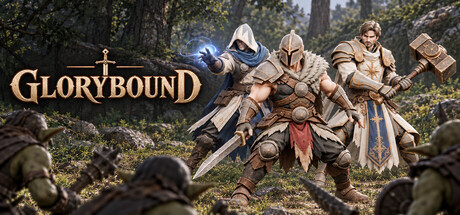
Glorybound was made with the help of generative AI tools during development. All 2D art (interface art, icons, portraits and store images) was created with AI image generation. The 3D models of the characters, monsters and bosses were generated with AI, then rigged, animated and adjusted by the developer. The music and sound effects were also generated with AI. Parts of the in-game and store text were written with AI assistance, and the Chinese, Russian, German and Spanish translations were made with AI. All AI content was created during development and checked by the developer. No AI is used while the game is running.
Generative AI was used as a development aid for portions of the in-game text, English localization, UI and visual elements, and program code. All generated content was reviewed and edited by the developer. The game does not generate AI content during gameplay.
Generative AI tools were used during development to help create selected artwork and 3D assets, and to draft and revise some dialogue and descriptive text. Some spoken dialogue uses AI-generated voice recordings. Selected instrumental music was composed with AI assistance and rendered into audio during development. These assets are prepared in advance and included with the game. The game does not generate AI content or connect to AI services during gameplay.
Portions of the artwork in this game (including card faces, backgrounds and promotional illustrations) were created with assistance from AI tools. All assets have undergone design, selection and post-editing by the development team. No original works from Touhou Project or works by other creators were used as reference images. The game does not generate any AI content during runtime.
Generative AI was used during development to create artwork, text, and translations, including store page materials. All such content was created in advance. The game does not generate content or connect to external AI services during gameplay.
Generative AI was used to translate and localize the game's original Japanese text and Steam store page into other languages.
All scenarios and dialogue were written by the developer. No generative AI was used to create the game's artwork.
CO-OP Comms uses a small on-device neural network, RNNoise, for its noise suppression. It runs entirely on the host PC, removes background noise from the microphone as you talk, and creates no content of its own; no audio leaves your local network. Generative AI was also used to produce this store page's artwork and trailer (footage, voice-over and music).