Public Steam disclosure research24,658 disclosures tracked
Where do games disclose AI use?
Search developers’ Steam disclosures, compare classified AI use across
games, and follow recorded changes.
This index adds cross-game classifications and statistics to
statements published on individual store pages.
Groups reflect automatic analysis of public disclosures; mature records are excluded. These counts do not measure AI use across all of Steam.
Missing or unclear statements cannot establish whether a game uses AI.
We use AI tools to make some of the game's art, sound, voices and writing. Every result was reviewed and edited before it went into the game.
- 3D models: most creature and character bodies (dinosaurs, Ice Age animals, wildlife, the infected, the customisable human bodies, hairstyles and hats) and some props and plants were generated with Tripo through Unity AI, from reference images made with OpenAI GPT Image. They were then cleaned up, rigged and fitted to the game's style.
- Textures: the dinosaur hides and the human characters' faces, skin, clothing and infection damage were painted with the help of GPT Image.
- Illustrations: the field guide's species plates were generated with GPT Image from renders of the in-game models.
- Sound: the calls of the mammoths, giant elk, ground sloths and sauropods were generated with Unity AI sound generation.
- Voices: the radio voices (the island broadcasts, the voice on the collection frequency and the facility's recorded messages) and the skipper's two lines in the opening scene are AI voices, made with ElevenLabs Eleven v4 text-to-speech from the game's own script. Face-to-face dialogue and the tapes are not voiced.
- Writing: in-game text (dialogue, records and descriptions) and this store page were drafted with AI writing assistance and edited by the developer.
- Store art: the capsule and library artwork and the logo were generated with GPT Image. They are illustrations, not screenshots. The screenshots, trailers and About clips are in-engine footage with licensed music and sound effects; any voices, herd calls, logo or artwork in the trailers are the AI content listed above.
Buildings, vehicles, weapons, most props, the music, most sound effects and all animation come from licensed asset packs (a few animation clips are adapted from them). The interface was built for the game. The game generates no AI content while you play.
Pre-generated content: Parts of the pixel art in this game were created with the AI tool PixelLab – including enemy characters and their animations, the modified boss creatures (based on licensed CC BY 4.0 dinosaur sprites), world backgrounds, story cutscene images, item and skill icons, and the logo emblem. In-game text and the English translation were written with the help of an AI language model and reviewed by hand. All music and sound effects are licensed and not AI-generated. The game does not generate any content with AI while you play. Some characters and their animation frames were subsequently redrawn or refined using OpenAI ImageGen during development.
Made by an ordinary person building a game for the first time, with generative AI tools helping throughout.
The card illustrations, 3D models, music and sound effects, game code, and the localized text translated from the original Korean were all produced with AI tools. I picked through the results and edited them by hand before putting them in the game.
Everything was generated ahead of time and shipped inside the build. Nothing is generated live while you play.
We used AI-assisted tools to help create and refine a small selection of visual assets. Each one was reviewed and adjusted by hand before it was used.
AI also helped us tidy up the grammar and wording in a small amount of in-game and store-page text. We checked and edited every final line ourselves.
For us, AI is simply a supporting tool. Dino Dome: Tidy Up! is still shaped by our own ideas, judgement, and hands-on creative work.
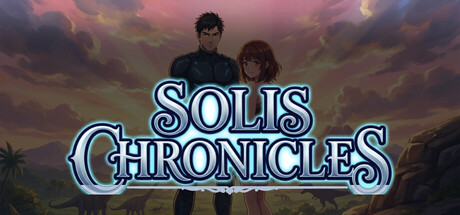
Solis Chronicles uses generative AI for pre-rendered content. Character art, backgrounds, event illustrations, video sequences, the title artwork, and the logo were created with generative AI tools (Flux, Nano Banana, Seedream, PixVerse, WAN) under human art direction, with reference-locked character designs. The music was generated locally with ACE-Step under human direction. The story, characters, and game design are human-authored. Dialogue was written with substantial AI assistance and edited by the developer. No AI content is generated during gameplay; everything is pre-rendered and human-reviewed.
Pre-generated generative AI tools were used during development to assist with some UI assets, text, and localization. All AI-assisted content was reviewed and edited by the developer before inclusion in the game or store materials. No generative AI is used at runtime.
Generative AI tools were used during development to create pre-generated artwork
and visual assets used in the game and its Steam store materials.
All AI-generated assets included in the final game were reviewed and selected by
the developer before use.
No generative AI content is created during gameplay, and the game does not connect
to any external AI services.
Some questions and answers in our quiz game are generated using AI. Additionally, we utilized pre-generated AI images included in the capsules and for in-game assets.
We are actively working to replace all placeholder AI art before launch. While we aim for a fully human-crafted experience, a few minor assets may still remain at release.
AI tools were also used to assist with localizing the game and store page.
All 3D in-game art was created by human artists or derived from real-world museum photoscans. (See the credits menu for full attributions.)
This game was developed with substantial help from generative AI: the pixel art (in-game art, capsules and icons), the code, much of the text, and the translations were produced with AI assistance and then reviewed, refined, and directed by the developer.
Some of the assets in this game were created with the help of generative AI tools: part of the background music and sound effects, some of the 2D images and textures used in the game and on the store page, some of the 3D models, and part of the source code. Every AI-assisted asset was reviewed and adjusted by the developer before it was included in the game, and we do not knowingly use material that infringes the rights of third parties. This game does not generate any content with AI while it is running; NPC dialogue is randomly selected from text written in advance by the developer.
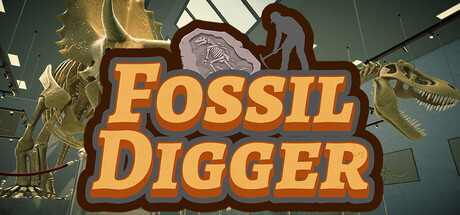
Generative AI tools were used during development to create and refine some pre-generated 2D artwork used in the game and its marketing, including environmental backgrounds, character and item art, fossil and museum visuals, capsule and library artwork, and achievement imagery. All AI-assisted assets were selected, edited, and integrated by the developer before shipping. The game does not generate AI content during gameplay and does not connect to a live AI service.
Some Steam store, library, icon, and marketing images for this game were created with generative AI and then reviewed and edited for the dinosaur museum theme. The game does not use real-time generative AI during gameplay.
Generative AI tools were used during development to create and manually refine some illustrations, store page artwork, and music tracks, as well as to assist with text preparation and localization. The game does not generate any AI content in real time.
Parts of development (coding assistance) and the store/marketing page's text and graphics were created using AI-assisted tools (including Anthropic Claude). In-game graphics and audio come from licensed asset packs or were assembled manually; no content is generated by AI at runtime within the game.
Some in-game UI artwork was created with the assistance of generative AI. All AI-assisted assets were reviewed, edited, and curated by the developer before being included in the game. The game does not use live AI-generated content during gameplay.
This game uses generative artificial intelligence as part of the development process. AI tools were used to assist with creating certain visual assets and design elements. All AI-generated content has been reviewed, edited, and integrated by the developer to ensure quality and consistency.
No AI is used during gameplay, and the player experience is entirely handcrafted.
This game includes pre-generated assets created with the assistance of generative AI tools. AI-assisted content may include selected store capsule artwork, promotional artwork, UI-related graphics, and selected music/audio elements. All AI-assisted content is reviewed and edited by the developer before being included in the game or store presentation. The game does not use live generative AI during gameplay.
Generative AI was used to assist with the localization of some in-game text in some languages. All AI-generated translations are reviewed and edited by the developer before being included in the game.
AI-assisted tools were used during development to support some early exploration and temporary development content. Any AI-assisted assets were either replaced or refined by humans in order to maintain the creative and artistic vision of the development team.
We're a small indie team, and we used generative AI to help make some of the art in Last Ember — card illustrations, backgrounds, character portraits, and a few short animations. We also used it on a handful of sound effects. Everything you see and hear in the game was picked, edited, and signed off by us. The game itself doesn't run any AI while you play — what ships is what you get.
Generative AI tools were used in a limited capacity to assist with marketing materials and early concept visuals during development. All AI-assisted content was reviewed and approved by the development team. The final shipped game contains no generative AI content.
Some visual assets such as fictional product packaging, posters, decorative graphics, icons and marketing materials were created with the help of generative AI and then reviewed/edited before being included in the game.
We use generative AI tools to assist with some game audio assets, such as dinosaur sounds and other sound effects, as well as some store page, marketing, and promotional artwork. These assets are reviewed, selected, edited, and integrated by the developer before use. Generative AI is not currently used to create live gameplay content during play.
Mystic Grove uses generative AI in a limited supporting role for certain pre-rendered content, including music and some 2D visual assets such as skill images, spec node images, and related artwork. The core game itself — including gameplay systems, programming, combat, level design, map creation, and overall development — is solely created by the developer. Mystic Grove does not use live-generated AI content during gameplay.
We use AI tools as a support system for our small development team to enhance the quality and balance of the game. Specifically:
Balancing & Math: We use AI to help calculate and balance the game ecosystem (drop rates, damage scaling, and economy).
Concepting: AI is used to generate reference images and mood boards to inspire our artists. The final in-game visual assets are hand-crafted or manually refined based on these concepts.
Drafting: AI assists in drafting initial marketing copy and lore structures, which are then finalized by our writers.
"The Strongest Evolution: EVO Card" utilizes Generative AI not as a shortcut, but as a core "Mutation Engine" to fit the game's biopunk theme.
Visual Assets: The creature mutations, body parts, and UI elements are generated using AI tools. However, they are not raw outputs; every asset has been heavily curated, retouched, and assembled by human developers to ensure a consistent and unique art style.
Concept: The infinite possibilities of evolution in the game mirror the generative nature of AI. We treat AI as the "Mad Scientist" inside the lab, allowing for a volume of biological variations that would be impossible with traditional methods.
Safety: All AI-generated content is manually reviewed to ensure it complies with copyright laws and contains no illegal or offensive material.
We use AI tools as a support system for our small development team to enhance the quality and balance of the game. Specifically:
Balancing & Math: We use AI to help calculate and balance the game ecosystem (drop rates, damage scaling, and economy).
Concepting: AI is used to generate reference images and mood boards to inspire our artists. The final in-game visual assets are hand-crafted or manually refined based on these concepts.
Drafting: AI assists in drafting initial marketing copy and lore structures, which are then finalized by our writers.
Marketing materials, pre-rendered in-game visual effects, textures and materials for characters, props, and environments and translations are partly or completly AI-generated.