Public Steam disclosure research25,376 disclosures tracked
Where do games disclose AI use?
Search developers’ Steam disclosures, compare classified AI use across
games, and follow recorded changes.
This index adds cross-game classifications and statistics to
statements published on individual store pages.
Groups reflect automatic analysis of public disclosures; mature records are excluded. These counts do not measure AI use across all of Steam.
Missing or unclear statements cannot establish whether a game uses AI.
Generative AI tools were used throughout this game's production pipeline, alongside traditional development tools and techniques, to speed up iteration and expand what our team can make. AI-assisted content that ships in the game includes 2D artwork, voice narration, sound effects, music and in-game text. Every asset in the final product was selected, reviewed, modified where appropriate, and integrated by the development team. No generative AI content is created during gameplay.
We are a team of 3 developers and everything you see in the game including 3D models, textures, and environments were crafted entirely by human hands. We used Generative AI for store capsule images, translations, and the soundtrack.
The background music tracks were created with the help of generative AI, and the translated in-game text for some languages was produced with AI assistance. The game does not use AI while you play.
The voices, music and sound effects were generated with AI audio tools (ElevenLabs) and then edited and mixed by the developer. The 3D world and the game itself were built with the help of an AI coding assistant. The trailers' narration also uses AI-generated voices. Nothing is generated by AI while you play.
Generative AI tools were used during development to assist with some visual and audio assets in Fishing Trawler. All AI-assisted content is reviewed, edited, and integrated by the developer.
Some artwork and localized text were created with generative AI assistance. Optional AI chat generates text replies through a service chosen and configured by the player: OpenAI, Claude, Gemini, DeepSeek, Kimi or a custom compatible endpoint.
Some game artwork was created with the assistance of AI-generated concept art or reference images during development. These were used solely as creative references, and all artwork used in the final game was manually redrawn and processed. AI-generated images are not used directly.
Some game text and its corresponding localized translations were generated using AI.
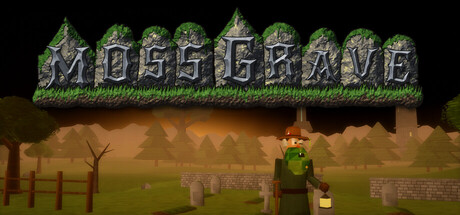
Mossgrave was built with an AI coding assistant, directed and reviewed by the developer. The AI wrote the game's code, including the procedural code that generates the 3D models, textures, pixel-art interface, music and sound effects. It also drafted the in-game text (dialogue, quest and item descriptions) and the text on this store page. Store images are captured from the game itself. No AI image or music generation models were used. The trailer's narration is an AI-generated voice; the game itself has no voice acting, and nothing is generated by AI while you play.
I used an AI coding assistant while building the game, and it helped come up with the achievement names and descriptions, and some events which I edited. Nothing else in the game is AI generated: the soundtrack is licensed from its creators, the radio voices are my own recordings, and the art and sounds are produced by the game's code.
Sound effects and music were created with AI audio tools (ElevenLabs) and selected and edited by the developer. Parts of the in-game text, villager dialogue and translations were written with the help of AI and reviewed by the developer. AI coding assistants were used during development, including scripts that build the game's 3D models. No AI generates content while you play.
Generative AI was used to create some pre-rendered artwork, including store and promotional art and selected in-game visuals such as terrain, resources, animals, and characters, as well as some music and audio assets. These assets are prepared before play. Arid Frontiers does not generate content with AI during gameplay or connect to a third-party generative AI service during play; pawn behavior, colony simulation, combat, wildlife, and events are driven by programmed game systems.
Korsaros Online uses a hybrid creative workflow combining generative AI tools with manual editing and integration for some artwork, 3D models, and music, including Steam marketing assets. These assets are reviewed before inclusion.
I used the help of AI to supplement me in areas, where my talent lacks to bring my ideas to live.
I am no great musician, I am no graphics designer and partly colorblind. I used these modern tools to create what I've dreamt of.
AI tools were used during development to create some sound effects and voice audio, and to assist with store-page text. These assets and text are prepared in advance.
AI-assisted scripting was used to create visual and audio assets. AI tools also assisted with text and localization. No generative AI is used during gameplay.
An AI assistant (Claude) was used during development. It wrote the in-game text translations, the store page text, and the scripts that build many of the game's 3D models, animations and textures, all under the developer's direction and review. Nothing is generated by AI while you play. All sounds are real recordings from CC0 libraries.
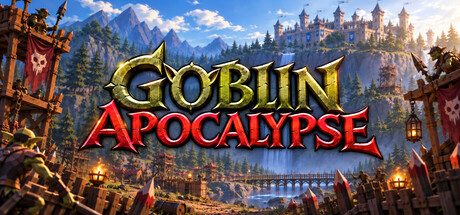
AI is used to assist with the localization and translation of the game's store page and in game text. It is also used to assist with some simple voice interactions, such as goblin growls and battle cries, as well as basic texture adjustments that fit the game's low poly visual style.
Generative AI was used as a development tool for selected visual assets and concept artwork, as well as for assistance during development. All AI-assisted content was reviewed, edited, and integrated by the developer.
Generative AI was used during development to create pre-generated artwork, including backgrounds, characters, fish, food, icons, and some UI and store images. AI was also used to prepare store descriptions and translations. No content is generated by AI during gameplay.
Parts of this game were made with the help of AI tools: the store page text, the Turkish and Simplified Chinese translations, and some of the 3D models, UI graphics and store images. The game does not generate any content with AI while you play.
Generative AI was used to assist in the creation of some in-game images, textures, dialogue, store page text, and localization. All AI-assisted content was reviewed, edited, and implemented by the developer. No live-generated AI content is used during gameplay.
Generative AI was used during development to assist in the creation of some 3D models and visual assets. These assets are used alongside content created manually by the developer.
Generative AI tools were used to assist with localization during development. All in-game art assets were hand-drawn, manually edited, and refined by the creator. No generative AI is used while the game is running.
Some in-game artwork, such as fish, poles and quest art, is made with the help of AI image tools, then selected and edited by our team. Some forum replies from in-game characters are AI-assisted and reviewed before they are posted. Nothing is generated live during gameplay.
Visual Arts: Generative AI tools were used solely to create early-concept drafts and visual inspiration for certain art assets. All final in-game graphics, UI, and pixel art were manually redesigned, drawn, and polished by human artists.
Localization: Generative AI tools were used to assist with the initial translation of supported non-primary languages. While we have conducted basic checks, these translations may still contain errors or awkward phrasing. We warmly welcome community feedback to help us improve localization over time!
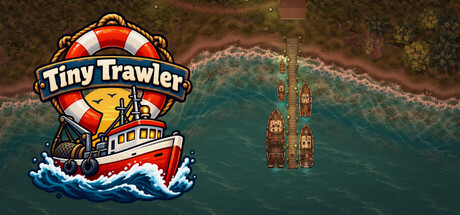
Some of this game's pixel art was generated with AI tools (PixelLab) and then edited by hand — the boats, the fauna, the bosses and the hats. The backgrounds come from licensed art packs by human artists, credited in the game's Credits screen. All audio is from human-made sound packs, also credited. No AI runs while you play: everything was generated ahead of time.
Generative AI was used for part of this game's content production (background art, music, and text), as well as for part of this store page's text (description and translation).
Generative AI tools were used during the development of Forgotten Horizons to assist with the creation of some content. AI-generated content was reviewed and edited by the development team before being included in the game or its store and marketing materials. The game does not generate AI content in real time during gameplay.
Generative AI was used as a design assistant for the title logo. The generated layout was reviewed, edited, and incorporated by the developer. No content is generated during gameplay.
The music in Ammerow: Lands Beyond was created with Claude Compose, a bespoke composition system built for this project. Rather than a generative music model, it works like a tireless studio composer: an AI assistant (Anthropic's Claude) writes and runs code that composes each piece note by note — melody, harmony, counterpoint and orchestration derived from music theory — and performs it through real, licensed virtual instruments in a professional DAW (Ableton Live). It then "listens back" by analysing the rendered audio to refine the balance. No generative audio/music model was used, no AI was trained on other artists' recordings, and no track was produced from a prompt. Every note is placed deliberately, and every piece is directed, reviewed and approved by a human. The result is authored, not generated.
The sound effects are an original, human-directed procedural synthesis library. Claude Code assisted in writing custom Python DSP software and individual cue recipes; every waveform was deterministically rendered from mathematical models and recorded seeds. No recordings, performers, samples, stock audio, sample libraries or generative-audio service were used.
Ammerow is designed primarily as a coloured ASCII game. Selected creature, item and shopkeeper illustrations began as AI-generated source images and are converted through a deterministic ASCII-art pipeline. The optional tile mode is a work-in-progress secondary presentation. Its small atlases were programmatically drawn in a custom SDL application using natural-language Codex direction. No generative-image model, inherited tileset, traced artwork or third-party graphical asset was used.
Some narrative, gameplay data and other player-facing material were also developed with AI assistance under human direction and review.
Some Steam marketing backgrounds were created using OpenAI image-generation tools and then selected, reviewed and combined with deterministic Ammerow branding by the developer.
No AI runs while the game is being played.
FishyFox includes pre-generated visual assets created with the assistance of generative AI tools. These assets were selected, edited, refined, composited, and integrated by the developer. No content is generated by AI while the game is running.
All fish models are fully human made in blender.
Generative AI tools were used during development to create logic and some visual assets. These assets are included with the game as pre-generated content.
The game does not use live generative AI during gameplay. Fish breeding combines existing parent textures locally through procedural image processing; it does not use an AI model or an external AI service.
We use generative AI to support the creation of promotional materials, translations, selected artwork, music, and sound effects. These tools help bring our ideas to life, while the game’s creative direction and final decisions will always remain in human hands.
Usage of AI-assisted coding tools were used to help debug, and write some lengthy aspects of the game. But all creative work (art, animation, music, sound effects, and all writing and dialogue) is made by hand, without any generative AI whatsoever.
Art assets in this game - the fish, environments, UI icons, achievement icons
and store page artwork - were created with the help of generative AI tools.
Every asset was then hand-picked, edited, resized and colour-corrected before
being brought into the game, and all of it was checked against a fixed art
direction and a locked colour palette.
Some of the code was written with AI assistance. All of it was reviewed by the
developer and is covered by automated tests.
The game itself never generates anything while you play, and never connects to
an AI service. Everything you see ships with the build and is the same for
every player.
Generative AI tools were used throughout this game's production pipeline, alongside traditional development tools and techniques, to speed up iteration and expand what our team can make. AI-assisted content that ships in the game includes 2D artwork, voice narration, sound effects, music and in-game text. Every asset in the final product was selected, reviewed, modified where appropriate, and integrated by the development team. No generative AI content is created during gameplay.
We are a team of 3 developers and everything you see in the game including 3D models, textures, and environments were crafted entirely by human hands. We used Generative AI for store capsule images, translations, and the soundtrack.
The background music tracks were created with the help of generative AI, and the translated in-game text for some languages was produced with AI assistance. The game does not use AI while you play.
The voices, music and sound effects were generated with AI audio tools (ElevenLabs) and then edited and mixed by the developer. The 3D world and the game itself were built with the help of an AI coding assistant. The trailers' narration also uses AI-generated voices. Nothing is generated by AI while you play.
Generative AI tools were used during development to assist with some visual and audio assets in Fishing Trawler. All AI-assisted content is reviewed, edited, and integrated by the developer.
Some artwork and localized text were created with generative AI assistance. Optional AI chat generates text replies through a service chosen and configured by the player: OpenAI, Claude, Gemini, DeepSeek, Kimi or a custom compatible endpoint.
Some game artwork was created with the assistance of AI-generated concept art or reference images during development. These were used solely as creative references, and all artwork used in the final game was manually redrawn and processed. AI-generated images are not used directly.
Some game text and its corresponding localized translations were generated using AI.
Mossgrave was built with an AI coding assistant, directed and reviewed by the developer. The AI wrote the game's code, including the procedural code that generates the 3D models, textures, pixel-art interface, music and sound effects. It also drafted the in-game text (dialogue, quest and item descriptions) and the text on this store page. Store images are captured from the game itself. No AI image or music generation models were used. The trailer's narration is an AI-generated voice; the game itself has no voice acting, and nothing is generated by AI while you play.
I used an AI coding assistant while building the game, and it helped come up with the achievement names and descriptions, and some events which I edited. Nothing else in the game is AI generated: the soundtrack is licensed from its creators, the radio voices are my own recordings, and the art and sounds are produced by the game's code.
Sound effects and music were created with AI audio tools (ElevenLabs) and selected and edited by the developer. Parts of the in-game text, villager dialogue and translations were written with the help of AI and reviewed by the developer. AI coding assistants were used during development, including scripts that build the game's 3D models. No AI generates content while you play.
Generative AI was used to create some pre-rendered artwork, including store and promotional art and selected in-game visuals such as terrain, resources, animals, and characters, as well as some music and audio assets. These assets are prepared before play. Arid Frontiers does not generate content with AI during gameplay or connect to a third-party generative AI service during play; pawn behavior, colony simulation, combat, wildlife, and events are driven by programmed game systems.
Korsaros Online uses a hybrid creative workflow combining generative AI tools with manual editing and integration for some artwork, 3D models, and music, including Steam marketing assets. These assets are reviewed before inclusion.
I used the help of AI to supplement me in areas, where my talent lacks to bring my ideas to live.
I am no great musician, I am no graphics designer and partly colorblind. I used these modern tools to create what I've dreamt of.
AI tools were used during development to create some sound effects and voice audio, and to assist with store-page text. These assets and text are prepared in advance.
AI-assisted scripting was used to create visual and audio assets. AI tools also assisted with text and localization. No generative AI is used during gameplay.
An AI assistant (Claude) was used during development. It wrote the in-game text translations, the store page text, and the scripts that build many of the game's 3D models, animations and textures, all under the developer's direction and review. Nothing is generated by AI while you play. All sounds are real recordings from CC0 libraries.
AI is used to assist with the localization and translation of the game's store page and in game text. It is also used to assist with some simple voice interactions, such as goblin growls and battle cries, as well as basic texture adjustments that fit the game's low poly visual style.
Generative AI was used as a development tool for selected visual assets and concept artwork, as well as for assistance during development. All AI-assisted content was reviewed, edited, and integrated by the developer.
Generative AI was used during development to create pre-generated artwork, including backgrounds, characters, fish, food, icons, and some UI and store images. AI was also used to prepare store descriptions and translations. No content is generated by AI during gameplay.
Parts of this game were made with the help of AI tools: the store page text, the Turkish and Simplified Chinese translations, and some of the 3D models, UI graphics and store images. The game does not generate any content with AI while you play.
Generative AI was used to assist in the creation of some in-game images, textures, dialogue, store page text, and localization. All AI-assisted content was reviewed, edited, and implemented by the developer. No live-generated AI content is used during gameplay.
Generative AI was used during development to assist in the creation of some 3D models and visual assets. These assets are used alongside content created manually by the developer.
Generative AI tools were used to assist with localization during development. All in-game art assets were hand-drawn, manually edited, and refined by the creator. No generative AI is used while the game is running.
Some in-game artwork, such as fish, poles and quest art, is made with the help of AI image tools, then selected and edited by our team. Some forum replies from in-game characters are AI-assisted and reviewed before they are posted. Nothing is generated live during gameplay.
Visual Arts: Generative AI tools were used solely to create early-concept drafts and visual inspiration for certain art assets. All final in-game graphics, UI, and pixel art were manually redesigned, drawn, and polished by human artists.
Localization: Generative AI tools were used to assist with the initial translation of supported non-primary languages. While we have conducted basic checks, these translations may still contain errors or awkward phrasing. We warmly welcome community feedback to help us improve localization over time!
Some of this game's pixel art was generated with AI tools (PixelLab) and then edited by hand — the boats, the fauna, the bosses and the hats. The backgrounds come from licensed art packs by human artists, credited in the game's Credits screen. All audio is from human-made sound packs, also credited. No AI runs while you play: everything was generated ahead of time.
Generative AI was used for part of this game's content production (background art, music, and text), as well as for part of this store page's text (description and translation).
Generative AI tools were used during the development of Forgotten Horizons to assist with the creation of some content. AI-generated content was reviewed and edited by the development team before being included in the game or its store and marketing materials. The game does not generate AI content in real time during gameplay.
Generative AI was used as a design assistant for the title logo. The generated layout was reviewed, edited, and incorporated by the developer. No content is generated during gameplay.
The music in Ammerow: Lands Beyond was created with Claude Compose, a bespoke composition system built for this project. Rather than a generative music model, it works like a tireless studio composer: an AI assistant (Anthropic's Claude) writes and runs code that composes each piece note by note — melody, harmony, counterpoint and orchestration derived from music theory — and performs it through real, licensed virtual instruments in a professional DAW (Ableton Live). It then "listens back" by analysing the rendered audio to refine the balance. No generative audio/music model was used, no AI was trained on other artists' recordings, and no track was produced from a prompt. Every note is placed deliberately, and every piece is directed, reviewed and approved by a human. The result is authored, not generated.
The sound effects are an original, human-directed procedural synthesis library. Claude Code assisted in writing custom Python DSP software and individual cue recipes; every waveform was deterministically rendered from mathematical models and recorded seeds. No recordings, performers, samples, stock audio, sample libraries or generative-audio service were used.
Ammerow is designed primarily as a coloured ASCII game. Selected creature, item and shopkeeper illustrations began as AI-generated source images and are converted through a deterministic ASCII-art pipeline. The optional tile mode is a work-in-progress secondary presentation. Its small atlases were programmatically drawn in a custom SDL application using natural-language Codex direction. No generative-image model, inherited tileset, traced artwork or third-party graphical asset was used.
Some narrative, gameplay data and other player-facing material were also developed with AI assistance under human direction and review.
Some Steam marketing backgrounds were created using OpenAI image-generation tools and then selected, reviewed and combined with deterministic Ammerow branding by the developer.
No AI runs while the game is being played.
FishyFox includes pre-generated visual assets created with the assistance of generative AI tools. These assets were selected, edited, refined, composited, and integrated by the developer. No content is generated by AI while the game is running.
All fish models are fully human made in blender.
Generative AI tools were used during development to create logic and some visual assets. These assets are included with the game as pre-generated content.
The game does not use live generative AI during gameplay. Fish breeding combines existing parent textures locally through procedural image processing; it does not use an AI model or an external AI service.
We use generative AI to support the creation of promotional materials, translations, selected artwork, music, and sound effects. These tools help bring our ideas to life, while the game’s creative direction and final decisions will always remain in human hands.
Usage of AI-assisted coding tools were used to help debug, and write some lengthy aspects of the game. But all creative work (art, animation, music, sound effects, and all writing and dialogue) is made by hand, without any generative AI whatsoever.
Art assets in this game - the fish, environments, UI icons, achievement icons
and store page artwork - were created with the help of generative AI tools.
Every asset was then hand-picked, edited, resized and colour-corrected before
being brought into the game, and all of it was checked against a fixed art
direction and a locked colour palette.
Some of the code was written with AI assistance. All of it was reviewed by the
developer and is covered by automated tests.
The game itself never generates anything while you play, and never connects to
an AI service. Everything you see ships with the build and is the same for
every player.