Public Steam disclosure research25,376 disclosures tracked
Where do games disclose AI use?
Search developers’ Steam disclosures, compare classified AI use across
games, and follow recorded changes.
This index adds cross-game classifications and statistics to
statements published on individual store pages.
Groups reflect automatic analysis of public disclosures; mature records are excluded. These counts do not measure AI use across all of Steam.
Missing or unclear statements cannot establish whether a game uses AI.
No AI is used to generate content or code while the game is running, and the game does not connect to any AI service. Sound effects and music are synthesized by the game itself and are not AI-generated.
The game development started around 2019/2025, my official Initial commit on Github was on Jun 7, 2023, means most work has been done without knowing AI.
AI Usage:
AI has been used as mathematician and bughunter - which you really need as one (wo or man) studio - and to generate some small graphics such as achievements. 90% of work has been done by me over the years, I decided now to finish this game after doing it as side project for many years. AI helped me to handle the complexity the data by simulating the game play 100 of times, which would be not possible as single developer having a life outside of the cave. One last: Majority of the shop and ingame translations have been done by AI.
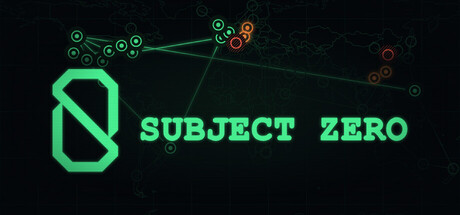
Subject Zero was made with an AI assistant. Its code, its written content (the headlines, incidents, exams, the codex and every interface string) and the translations of the interface and the manual were written with Claude (Anthropic) under the developer's direction and review.
The achievement icons on this store page are AI-generated images (Midjourney). The teaser trailer's video clips were generated with Google Veo, its narration was synthesised with ElevenLabs, and its subtitles were machine-translated.
Nothing is generated while you play: the game contains no AI model and calls no online service. Every headline, incident and outcome comes from fixed tables written in advance, and the same seed always plays out the same way.
The store page texts and the pixel-art game logo and icon (also used in the game) were created with the help of an AI assistant and reviewed by the developer. Screenshots and capsule backgrounds are rendered directly from the game.
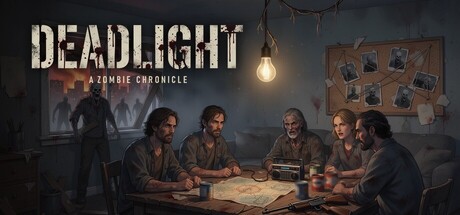
Some of Deadlight's artwork was created with the help of generative AI. This includes the key art, the store and library capsules, and the ten location paintings on the expedition screen. The images were generated with a locally run image model, then chosen, cleaned up and colour-graded by hand. The store page text and its translations were drafted with AI assistance and edited by the developer. No content is generated by AI while you play.
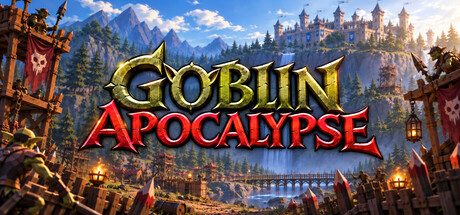
AI is used to assist with the localization and translation of the game's store page and in game text. It is also used to assist with some simple voice interactions, such as goblin growls and battle cries, as well as basic texture adjustments that fit the game's low poly visual style.
We use AI tools to help with localization and to rework or resize some visual assets. Our team carefully reviews and refines the results before they make it into the game. It’s still the same team behind our games for the past 15 years, making the creative decisions and taking care of the details.
AI assistance was limited to Python programming, including code that helps to draw environments and visual effects in Pygame. These visuals are rendered in code entirely in Python.
Sprite artwork and sound effects were created without generative AI and are sourced from licensed third-party assets.
The soundtrack for the game and trailer was composed specifically for the project in FL Studio.
No generative AI models run in the game or generate content during gameplay.
Generative AI was used to assist with the creation of some promotional artwork, Steam store page copy, and translations. These materials were prepared during development, before being presented to players.
Store descriptions, in-game text (the hive's log) and their translations are drafted with an AI assistant and reviewed and edited by the developer.
No AI-generated images, audio or 3D assets: all visuals are captured from the game, built on licensed third-party assets.
Generative AI tools were used during the development of LOCKDOWN to assist in the creation of some artwork and music featured in the game. All AI-assisted content was reviewed, selected, edited, and integrated by the development team. Generative AI is not used to generate content in real time during gameplay.
OVERRIDE ships some assets that were created with generative AI tools during development and are included pre-rendered in the game: part of the 2D artwork (store and library capsules, background images, and stylized fictional character portraits) and parts of the music/soundtrack. All game design, simulation, code, and in-game text are authored by the developer. The game does not generate any content live during play and does not connect to any external AI service.
Generative AI tools were used during development to assist with creating some concept art, graphical assets, and text for the game and its Steam store page. All generated content was reviewed, edited, and integrated by the developer. No generative AI is used during gameplay.
Solvizz was designed, written, and hand-crafted by a small team, but generative AI played a supporting role in parts of production. Specifically, some placeholder art (achievement icons, region glyph references) and placeholder audio (background music tracks and sound effects) were generated with AI tooling to prototype the game's mood before final assets. AI was also used as a coding assistant during development. All puzzle design, game mechanics, story, level content, and code decisions were authored and reviewed by humans. No player-submitted data is sent to any AI system at runtime — the game is fully offline.
(This text was also generated with the help of AI)
AI tools were used in a limited capacity during the development of the game, primarily to assist with certain programming tasks and the creation of temporary assets.
No AI-generated content is created in real time while playing the game.
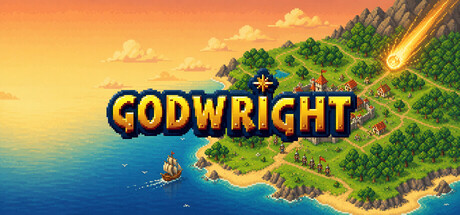
Godwright ships some generative-AI content, all pre-rendered (baked into the build, never live-generated):
Localization: the non-English UI text (Simplified Chinese, Spanish, Portuguese-BR, Russian, German, French, Japanese, Korean, Turkish, Indonesian) was machine-translated.
The game itself is made entirely by human hands. All in-game art, music, sound design, and writing are created or directed by human authors without generative AI. All gameplay footage shown on this store page is real, captured from the actual game.
Generative AI is used for some marketing materials — including promotional images, social media assets, and capsule art — to support a small independent studio's marketing within budget constraints. These AI-generated images are intended to represent the game's existing hand-made art style.
No AI-generated content is shipped inside the game itself. If Echo Pandemic recovers its development costs, capsule images and marketing material will be replaced with commissioned human work.
The game uses generative AI solely for the creation of certain visual and text assets.
AI does not affect gameplay, player behavior, or core game mechanics.
Generative AI tools were used during development to create selected promotional graphics and visual materials. The game does not use generative AI during gameplay.
- Two in-game images have been upscaled/enhanced using generative AI: the NeuroLink portrait and one UI border asset.
- Achievement icon art is AI assisted.
While we prefer to avoid the use of generative AI, its limited use helped improve presentation given the constraints of our team.
This game's development used generative AI in three specific areas:
1. Source code: Portions of the source code were authored with assistance from large language model (LLM) coding tools.
2. Localization: In-game text translations for 10 languages (English, Simplified Chinese, Traditional Chinese, Korean, Russian, German, French, Spanish, Brazilian Portuguese, and Italian) were generated
using LLM-based tools from the original Japanese source text.
3. Visual assets (UI graphics and logo): Generative AI was used in some cases to assist with creating certain in-game UI icons and the game logo. These AI-assisted assets are limited to generic UI elements
(icons, indicators) and abstract logo designs, and do not depict real-world characters, brands, or copyrighted materials.
LLM was used for translation to languages except English and Russian.
Pixelated character portraits were made based on generative pictures from this person does not exist web site
This game includes some pre-generated visual assets created or assisted with generative AI (including certain promotional images on the Steam store page and library).
All AI-generated content is static and was reviewed and edited by the development team before release.
The game does not generate AI content in real time during gameplay and does not connect to external AI services while playing.
Some visual assets and development processes for this game were created with the assistance of generative AI tools. These tools were used during development to help generate certain images, concepts, and code prototypes, which were then reviewed, edited, and integrated by the developer.
As a small, two-person independent development team, we utilized generative AI tools to create some of our character visuals and background artworks due to budget constraints. To ensure originality and maintain our artistic vision, these AI tools were guided by our own artist's original work, with their explicit permission. Please note that these AI-generated assets are currently serving as placeholders. As development continues and our resources grow, we plan to replace them with original, hand-drawn artwork in future updates. The game does not feature any live AI content generation during gameplay.
As I'm the only one designing all aspects of the game and have no budget, I've only used AI to translate the text. If you encounter any problems or if anyone wants to help me with the translation, I'd be very grateful.
I make use of AI-powered tools during the promotional process of my game. Additionally, the in-game background music was created with the assistance of generative AI. All content produced with the help of AI is reviewed and refined by me before being finalized.
No AI is used to generate content or code while the game is running, and the game does not connect to any AI service. Sound effects and music are synthesized by the game itself and are not AI-generated.
The game development started around 2019/2025, my official Initial commit on Github was on Jun 7, 2023, means most work has been done without knowing AI.
AI Usage:
AI has been used as mathematician and bughunter - which you really need as one (wo or man) studio - and to generate some small graphics such as achievements. 90% of work has been done by me over the years, I decided now to finish this game after doing it as side project for many years. AI helped me to handle the complexity the data by simulating the game play 100 of times, which would be not possible as single developer having a life outside of the cave. One last: Majority of the shop and ingame translations have been done by AI.
Subject Zero was made with an AI assistant. Its code, its written content (the headlines, incidents, exams, the codex and every interface string) and the translations of the interface and the manual were written with Claude (Anthropic) under the developer's direction and review.
The achievement icons on this store page are AI-generated images (Midjourney). The teaser trailer's video clips were generated with Google Veo, its narration was synthesised with ElevenLabs, and its subtitles were machine-translated.
Nothing is generated while you play: the game contains no AI model and calls no online service. Every headline, incident and outcome comes from fixed tables written in advance, and the same seed always plays out the same way.
The store page texts and the pixel-art game logo and icon (also used in the game) were created with the help of an AI assistant and reviewed by the developer. Screenshots and capsule backgrounds are rendered directly from the game.
Some of Deadlight's artwork was created with the help of generative AI. This includes the key art, the store and library capsules, and the ten location paintings on the expedition screen. The images were generated with a locally run image model, then chosen, cleaned up and colour-graded by hand. The store page text and its translations were drafted with AI assistance and edited by the developer. No content is generated by AI while you play.
AI is used to assist with the localization and translation of the game's store page and in game text. It is also used to assist with some simple voice interactions, such as goblin growls and battle cries, as well as basic texture adjustments that fit the game's low poly visual style.
We use AI tools to help with localization and to rework or resize some visual assets. Our team carefully reviews and refines the results before they make it into the game. It’s still the same team behind our games for the past 15 years, making the creative decisions and taking care of the details.
AI assistance was limited to Python programming, including code that helps to draw environments and visual effects in Pygame. These visuals are rendered in code entirely in Python.
Sprite artwork and sound effects were created without generative AI and are sourced from licensed third-party assets.
The soundtrack for the game and trailer was composed specifically for the project in FL Studio.
No generative AI models run in the game or generate content during gameplay.
Generative AI was used to assist with the creation of some promotional artwork, Steam store page copy, and translations. These materials were prepared during development, before being presented to players.
Store descriptions, in-game text (the hive's log) and their translations are drafted with an AI assistant and reviewed and edited by the developer.
No AI-generated images, audio or 3D assets: all visuals are captured from the game, built on licensed third-party assets.
Generative AI tools were used during the development of LOCKDOWN to assist in the creation of some artwork and music featured in the game. All AI-assisted content was reviewed, selected, edited, and integrated by the development team. Generative AI is not used to generate content in real time during gameplay.
OVERRIDE ships some assets that were created with generative AI tools during development and are included pre-rendered in the game: part of the 2D artwork (store and library capsules, background images, and stylized fictional character portraits) and parts of the music/soundtrack. All game design, simulation, code, and in-game text are authored by the developer. The game does not generate any content live during play and does not connect to any external AI service.
Generative AI tools were used during development to assist with creating some concept art, graphical assets, and text for the game and its Steam store page. All generated content was reviewed, edited, and integrated by the developer. No generative AI is used during gameplay.
Solvizz was designed, written, and hand-crafted by a small team, but generative AI played a supporting role in parts of production. Specifically, some placeholder art (achievement icons, region glyph references) and placeholder audio (background music tracks and sound effects) were generated with AI tooling to prototype the game's mood before final assets. AI was also used as a coding assistant during development. All puzzle design, game mechanics, story, level content, and code decisions were authored and reviewed by humans. No player-submitted data is sent to any AI system at runtime — the game is fully offline.
(This text was also generated with the help of AI)
AI tools were used in a limited capacity during the development of the game, primarily to assist with certain programming tasks and the creation of temporary assets.
No AI-generated content is created in real time while playing the game.
Godwright ships some generative-AI content, all pre-rendered (baked into the build, never live-generated):
Localization: the non-English UI text (Simplified Chinese, Spanish, Portuguese-BR, Russian, German, French, Japanese, Korean, Turkish, Indonesian) was machine-translated.
The game itself is made entirely by human hands. All in-game art, music, sound design, and writing are created or directed by human authors without generative AI. All gameplay footage shown on this store page is real, captured from the actual game.
Generative AI is used for some marketing materials — including promotional images, social media assets, and capsule art — to support a small independent studio's marketing within budget constraints. These AI-generated images are intended to represent the game's existing hand-made art style.
No AI-generated content is shipped inside the game itself. If Echo Pandemic recovers its development costs, capsule images and marketing material will be replaced with commissioned human work.
The game uses generative AI solely for the creation of certain visual and text assets.
AI does not affect gameplay, player behavior, or core game mechanics.
Generative AI tools were used during development to create selected promotional graphics and visual materials. The game does not use generative AI during gameplay.
- Two in-game images have been upscaled/enhanced using generative AI: the NeuroLink portrait and one UI border asset.
- Achievement icon art is AI assisted.
While we prefer to avoid the use of generative AI, its limited use helped improve presentation given the constraints of our team.
This game's development used generative AI in three specific areas:
1. Source code: Portions of the source code were authored with assistance from large language model (LLM) coding tools.
2. Localization: In-game text translations for 10 languages (English, Simplified Chinese, Traditional Chinese, Korean, Russian, German, French, Spanish, Brazilian Portuguese, and Italian) were generated
using LLM-based tools from the original Japanese source text.
3. Visual assets (UI graphics and logo): Generative AI was used in some cases to assist with creating certain in-game UI icons and the game logo. These AI-assisted assets are limited to generic UI elements
(icons, indicators) and abstract logo designs, and do not depict real-world characters, brands, or copyrighted materials.
LLM was used for translation to languages except English and Russian.
Pixelated character portraits were made based on generative pictures from this person does not exist web site
This game includes some pre-generated visual assets created or assisted with generative AI (including certain promotional images on the Steam store page and library).
All AI-generated content is static and was reviewed and edited by the development team before release.
The game does not generate AI content in real time during gameplay and does not connect to external AI services while playing.
Some visual assets and development processes for this game were created with the assistance of generative AI tools. These tools were used during development to help generate certain images, concepts, and code prototypes, which were then reviewed, edited, and integrated by the developer.
As a small, two-person independent development team, we utilized generative AI tools to create some of our character visuals and background artworks due to budget constraints. To ensure originality and maintain our artistic vision, these AI tools were guided by our own artist's original work, with their explicit permission. Please note that these AI-generated assets are currently serving as placeholders. As development continues and our resources grow, we plan to replace them with original, hand-drawn artwork in future updates. The game does not feature any live AI content generation during gameplay.
As I'm the only one designing all aspects of the game and have no budget, I've only used AI to translate the text. If you encounter any problems or if anyone wants to help me with the translation, I'd be very grateful.
I make use of AI-powered tools during the promotional process of my game. Additionally, the in-game background music was created with the assistance of generative AI. All content produced with the help of AI is reviewed and refined by me before being finalized.