Public Steam disclosure research25,376 disclosures tracked
Where do games disclose AI use?
Search developers’ Steam disclosures, compare classified AI use across
games, and follow recorded changes.
This index adds cross-game classifications and statistics to
statements published on individual store pages.
Groups reflect automatic analysis of public disclosures; mature records are excluded. These counts do not measure AI use across all of Steam.
Missing or unclear statements cannot establish whether a game uses AI.
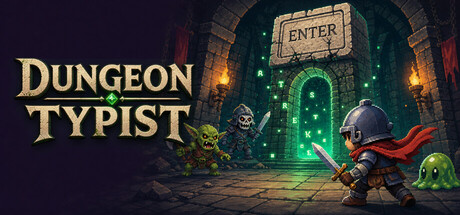
The images in this game (in-game assets and store artwork) were created with image-generation AI, then selected and edited by a human. The original draft of the scenario and dialogue was written with Google Gemini, and the implementation and dialogue revisions were done with Claude Code (Anthropic). All of it was supervised and tested by a human. No content is generated by AI while the game is running.
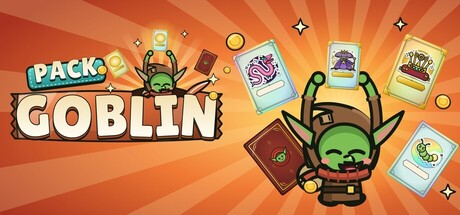
I used AI tools to turn my sketches into clean vector (SVG) art: the goblin, the cards, the decorations, the logo and the store images.
The text of this store page was written with AI help, from my own notes and my own story, and edited by me.
The game does not create any AI content while you play: everything you see was made before release.
STTS uses AI speech models while you use it. Text you type is turned into speech by text-to-speech models (gTTS, Qwen3-TTS, Supertonic), including voice cloning from a short recording you provide. Speech you hear is transcribed into captions by Whisper. No AI-generated content is pre-rendered or shipped with the app.
We utilize generative AI tools during the development process to assist in creating certain game assets. Specifically, AI image generation is used to produce some 2D graphical assets, such as item icons, UI backgrounds, or character portraits.
Generative AI was used during development to create character and environment artwork, comic illustrations, achievement-card artwork, store artwork, music, and English pronunciation audio, and to assist with learning dialogue and localization. This content is prepared in advance and included with the game. The game does not generate AI content or connect to third-party AI services during gameplay. Custom chapters use the device’s available text-to-speech voices.
NPC dialogue in Ruiwen’s Romance of the Three Kingdoms: The Life of a Persuader is generated in real‑time by a locally‑running AI model. All content is computed offline on your own device, with no data uploaded to external servers.
The game’s story framework, directed plotlines, numerical judgement rules and ending conditions are all hand‑crafted. The AI is only responsible for generating character conversations.
Multiple safety guardrails are built‑in: automatic profanity detection, historical timeline checks to avoid anachronisms, character‑stance locking and fallback responses. These ensure every line of dialogue fits the character’s identity and historical context.
The option to disabled images created with AI can be found inside of the options menu of the game. This game has some images that used AI in their creation.
Generative AI assisted in creating some artwork, dialogue, descriptions, and translations during development. No AI content is generated during gameplay.
Our visual style relies on a blend of commissioned artwork, curated assets, and custom designs. We occasionally use AI generation as a tool in our creative process, but never as a final product. Every AI-assisted asset is either fully redrawn or heavily refined by human artists before making its way into the game.
Pre-generated: The game's code, the drawing code for its characters and scenery (all art is
drawn by code at runtime, with no image files), and parts of the story text and store
description were created with the help of an AI assistant, then reviewed, edited and
directed by the developer.
Live-generated: None. The game does not use AI to generate anything while it is being played.
Trivia Mania was designed, directed, reviewed and tested by a solo developer. AI tools supported the drafting, editing and fact-checking of the questions and answers, and helped make the game's art and sound. No AI is embedded in the game and nothing is generated while you play.
Some background environment props and their textures (signage, lamps,
surfaces, decals and small set-dressing objects) were generated with AI
assistance, using AI written procedural code rather than an image or mesh
generator. They ship with the game as scenery.
Everything else is the developer's own work: all writing and in-game text,
game design, game code, audio and sound design, the visual identity, and all
store page art.
No AI generated content is produced while the game is running.
Generative AI was used as a development tool while making this game, for code assistance only. All dialogue and in-game text was written by hand.
No AI-generated images, audio or text are included, and no content is generated by AI while the game is running.
Scriptura uses pre-generated AI content for ambient music, sound effects, and some artwork used on the store page and in marketing. The Race Friends trailer includes AI-generated music and sound effects. Certain optional DLC texts include AI-generated translations, identified in their edition information. Scriptura does not generate AI content during gameplay or connect to an AI service while you play.
Some in-app text (character dialogue) and translations were drafted with AI writing assistance and edited by the developer. All graphics are drawn at runtime by hand-written code, and all sounds and music are synthesised by code; no AI image, voice or music models are used, and nothing is AI-generated while you use the app.
Generative AI tools were used during development to create some visual assets, including character skins and store artwork. These assets were reviewed and edited by the developer. The game does not generate AI content during gameplay or connect to a third-party AI service during gameplay.
Generative AI tools were used during development to assist with parts of concept art, character drafts, draft store assets, localization drafts, and operational copy drafts. All AI-assisted content was manually reviewed, edited, integrated, and approved by the development team before being included in the game or store page.
The game does not use generative AI at runtime to create dialogue, story content, images, audio, or other player-facing content.
The word catalog (word lists, definitions, hints, fun facts and emoji clues) was drafted with the help of AI tools and then reviewed and edited by the developers. No AI-generated content is created at runtime, and the game contains no AI-generated art, voice, or music.
This game contains pre-generated visual and audio assets created with generative AI tools and edited by the developer. No content is generated during gameplay.
Art assets in this game - the fish, environments, UI icons, achievement icons
and store page artwork - were created with the help of generative AI tools.
Every asset was then hand-picked, edited, resized and colour-corrected before
being brought into the game, and all of it was checked against a fixed art
direction and a locked colour palette.
Some of the code was written with AI assistance. All of it was reviewed by the
developer and is covered by automated tests.
The game itself never generates anything while you play, and never connects to
an AI service. Everything you see ships with the build and is the same for
every player.
All code and art assets in this game are created with generative‑AI assistance and manually modified. Thanks to AI, I can realize my ideas without programming or art skills.
Generative AI was used during development to create and assist with pre-generated 2D artwork, character portraits, selected UI and background artwork, achievement icons, Steam store and library marketing artwork, and portions of localization and text. All AI-assisted content was reviewed, selected, edited, and integrated by the developer. The game does not generate AI content during gameplay and does not connect to external AI services.
Generative AI tools were used during development to assist with some 2D background artwork and decorative visual assets. All AI-assisted assets were reviewed and edited before inclusion. The game does not use generative AI during gameplay, and no player input or data is sent to generative AI services. Puzzles and answers are not generated by AI.
AI-generated content is used during development as temporary placeholder material. Nearly all of it has already been replaced, and the final game will contain only original artwork created by human artists.
English: This game uses generative AI to create case stories, suspect dialogues, and investigative clues in real time during play. AI is provided by third-party services — you bring your own API key (entered in the in-game settings). No microtransactions.
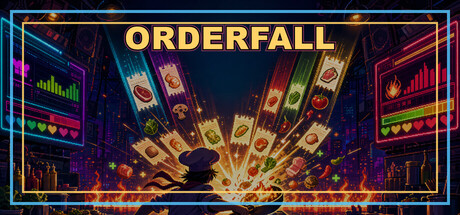
Generative AI tools were used for pre-rendered character portraits, title/key artwork and other game illustrations, portions of promotional video and audio, marketing artwork, and assistance with localized text. These assets and text were reviewed and edited for the game. Orderfall does not generate AI content during gameplay or connect to an external AI service. The live-action-style Captain Cook teaser is dramatized promotional footage; the game itself uses pixel-art graphics.
Generative AI tools were used during development to assist with brainstorming and editing some mission and other written content. All generated suggestions were reviewed and edited by me before inclusion in the game.
Generative AI tools were used during development to assist with programming and the creation of portions of the game's source code. The game does not use generative AI during gameplay and does not connect to external AI services.
The game uses static images and UI elements (including a cryptocurrency exchange chart) generated with AI tools. These assets were manually post-processed and integrated into the game. All game code, mechanics, audio, and original level design were created by the studio without AI generation.
The AI coworkers in this game are voiced by a machine (TTS), and their dialogue was really written by AI together with self portraits, on purpose and under human review. The slop is diegetic. The code was written with AI agents and reviewed by the last human in that loop, the developer. That is also the plot. No AI runs at runtime. Everything was baked and reviewed before shipping.
The images in this game (in-game assets and store artwork) were created with image-generation AI, then selected and edited by a human. The original draft of the scenario and dialogue was written with Google Gemini, and the implementation and dialogue revisions were done with Claude Code (Anthropic). All of it was supervised and tested by a human. No content is generated by AI while the game is running.
I used AI tools to turn my sketches into clean vector (SVG) art: the goblin, the cards, the decorations, the logo and the store images.
The text of this store page was written with AI help, from my own notes and my own story, and edited by me.
The game does not create any AI content while you play: everything you see was made before release.
STTS uses AI speech models while you use it. Text you type is turned into speech by text-to-speech models (gTTS, Qwen3-TTS, Supertonic), including voice cloning from a short recording you provide. Speech you hear is transcribed into captions by Whisper. No AI-generated content is pre-rendered or shipped with the app.
We utilize generative AI tools during the development process to assist in creating certain game assets. Specifically, AI image generation is used to produce some 2D graphical assets, such as item icons, UI backgrounds, or character portraits.
Generative AI was used during development to create character and environment artwork, comic illustrations, achievement-card artwork, store artwork, music, and English pronunciation audio, and to assist with learning dialogue and localization. This content is prepared in advance and included with the game. The game does not generate AI content or connect to third-party AI services during gameplay. Custom chapters use the device’s available text-to-speech voices.
NPC dialogue in Ruiwen’s Romance of the Three Kingdoms: The Life of a Persuader is generated in real‑time by a locally‑running AI model. All content is computed offline on your own device, with no data uploaded to external servers.
The game’s story framework, directed plotlines, numerical judgement rules and ending conditions are all hand‑crafted. The AI is only responsible for generating character conversations.
Multiple safety guardrails are built‑in: automatic profanity detection, historical timeline checks to avoid anachronisms, character‑stance locking and fallback responses. These ensure every line of dialogue fits the character’s identity and historical context.
The option to disabled images created with AI can be found inside of the options menu of the game. This game has some images that used AI in their creation.
Generative AI assisted in creating some artwork, dialogue, descriptions, and translations during development. No AI content is generated during gameplay.
Our visual style relies on a blend of commissioned artwork, curated assets, and custom designs. We occasionally use AI generation as a tool in our creative process, but never as a final product. Every AI-assisted asset is either fully redrawn or heavily refined by human artists before making its way into the game.
Pre-generated: The game's code, the drawing code for its characters and scenery (all art is
drawn by code at runtime, with no image files), and parts of the story text and store
description were created with the help of an AI assistant, then reviewed, edited and
directed by the developer.
Live-generated: None. The game does not use AI to generate anything while it is being played.
Trivia Mania was designed, directed, reviewed and tested by a solo developer. AI tools supported the drafting, editing and fact-checking of the questions and answers, and helped make the game's art and sound. No AI is embedded in the game and nothing is generated while you play.
Some background environment props and their textures (signage, lamps,
surfaces, decals and small set-dressing objects) were generated with AI
assistance, using AI written procedural code rather than an image or mesh
generator. They ship with the game as scenery.
Everything else is the developer's own work: all writing and in-game text,
game design, game code, audio and sound design, the visual identity, and all
store page art.
No AI generated content is produced while the game is running.
Generative AI was used as a development tool while making this game, for code assistance only. All dialogue and in-game text was written by hand.
No AI-generated images, audio or text are included, and no content is generated by AI while the game is running.
Scriptura uses pre-generated AI content for ambient music, sound effects, and some artwork used on the store page and in marketing. The Race Friends trailer includes AI-generated music and sound effects. Certain optional DLC texts include AI-generated translations, identified in their edition information. Scriptura does not generate AI content during gameplay or connect to an AI service while you play.
Some in-app text (character dialogue) and translations were drafted with AI writing assistance and edited by the developer. All graphics are drawn at runtime by hand-written code, and all sounds and music are synthesised by code; no AI image, voice or music models are used, and nothing is AI-generated while you use the app.
Generative AI tools were used during development to create some visual assets, including character skins and store artwork. These assets were reviewed and edited by the developer. The game does not generate AI content during gameplay or connect to a third-party AI service during gameplay.
Generative AI tools were used during development to assist with parts of concept art, character drafts, draft store assets, localization drafts, and operational copy drafts. All AI-assisted content was manually reviewed, edited, integrated, and approved by the development team before being included in the game or store page.
The game does not use generative AI at runtime to create dialogue, story content, images, audio, or other player-facing content.
The word catalog (word lists, definitions, hints, fun facts and emoji clues) was drafted with the help of AI tools and then reviewed and edited by the developers. No AI-generated content is created at runtime, and the game contains no AI-generated art, voice, or music.
This game contains pre-generated visual and audio assets created with generative AI tools and edited by the developer. No content is generated during gameplay.
Art assets in this game - the fish, environments, UI icons, achievement icons
and store page artwork - were created with the help of generative AI tools.
Every asset was then hand-picked, edited, resized and colour-corrected before
being brought into the game, and all of it was checked against a fixed art
direction and a locked colour palette.
Some of the code was written with AI assistance. All of it was reviewed by the
developer and is covered by automated tests.
The game itself never generates anything while you play, and never connects to
an AI service. Everything you see ships with the build and is the same for
every player.
All code and art assets in this game are created with generative‑AI assistance and manually modified. Thanks to AI, I can realize my ideas without programming or art skills.
Generative AI was used during development to create and assist with pre-generated 2D artwork, character portraits, selected UI and background artwork, achievement icons, Steam store and library marketing artwork, and portions of localization and text. All AI-assisted content was reviewed, selected, edited, and integrated by the developer. The game does not generate AI content during gameplay and does not connect to external AI services.
Generative AI tools were used during development to assist with some 2D background artwork and decorative visual assets. All AI-assisted assets were reviewed and edited before inclusion. The game does not use generative AI during gameplay, and no player input or data is sent to generative AI services. Puzzles and answers are not generated by AI.
AI-generated content is used during development as temporary placeholder material. Nearly all of it has already been replaced, and the final game will contain only original artwork created by human artists.
English: This game uses generative AI to create case stories, suspect dialogues, and investigative clues in real time during play. AI is provided by third-party services — you bring your own API key (entered in the in-game settings). No microtransactions.
Generative AI tools were used for pre-rendered character portraits, title/key artwork and other game illustrations, portions of promotional video and audio, marketing artwork, and assistance with localized text. These assets and text were reviewed and edited for the game. Orderfall does not generate AI content during gameplay or connect to an external AI service. The live-action-style Captain Cook teaser is dramatized promotional footage; the game itself uses pixel-art graphics.
Generative AI tools were used during development to assist with brainstorming and editing some mission and other written content. All generated suggestions were reviewed and edited by me before inclusion in the game.
Generative AI tools were used during development to assist with programming and the creation of portions of the game's source code. The game does not use generative AI during gameplay and does not connect to external AI services.
The game uses static images and UI elements (including a cryptocurrency exchange chart) generated with AI tools. These assets were manually post-processed and integrated into the game. All game code, mechanics, audio, and original level design were created by the studio without AI generation.
The AI coworkers in this game are voiced by a machine (TTS), and their dialogue was really written by AI together with self portraits, on purpose and under human review. The slop is diegetic. The code was written with AI agents and reviewed by the last human in that loop, the developer. That is also the plot. No AI runs at runtime. Everything was baked and reviewed before shipping.