Public Steam disclosure research25,376 disclosures tracked
Where do games disclose AI use?
Search developers’ Steam disclosures, compare classified AI use across
games, and follow recorded changes.
This index adds cross-game classifications and statistics to
statements published on individual store pages.
Groups reflect automatic analysis of public disclosures; mature records are excluded. These counts do not measure AI use across all of Steam.
Missing or unclear statements cannot establish whether a game uses AI.
Generative AI tools were used during development to assist with some visual and audio assets in Fishing Trawler. All AI-assisted content is reviewed, edited, and integrated by the developer.
The visuals, music, sound effects, store art, trailer and text for CYBERBIKES were made with the help of AI under my direction, built in code with Blender and Godot. LINK's voice is pre-recorded text-to-speech from the open Kokoro model. Nothing is generated while you play.
Everything you see and hear in this game - the graphics, the sound effects, the music and the built-in tracks - is produced by our own hand-written generators: drawn and synthesised in code. No generative AI is involved in any of it, and nothing is generated by an AI while the game is running. The computer drivers race on ordinary, hand-written driving logic, not on an AI model.
Generative AI was used during development, as an assistant for code and for text: in writing the program code and those generators, in the menu and interface text, in the names of the computer drivers, and in the translation between German and English. Every line of it was reviewed and reworked before it went into the game.
The images and the video on this store page are captured from the running game.
Generative AI tools were used during development to create selected visual assets and music. All generated content was reviewed, selected, edited where necessary, and integrated by the developer.
Some content in this game was created with the help of generative AI during development.
- Drafts of in-game text such as news articles, interviews and guidance messages
- Translations into languages other than Korean
- Some graphic elements, such as karts and maps
Generative AI was used during development to create background music and sound effects, and to assist with store text and translations. These assets are prepared before release. The game does not generate content or connect to AI services during gameplay.
Generative AI was used to assist in creating one or two background 3D assets during the development process. All other 3D models, visual effects, and environmental assets were custom-made or sourced entirely from standard digital asset marketplaces like Fab.
The sound effects, engine sounds and the race announcer's voice were generated with ElevenLabs (sound effects, text-to-speech and voice design) and then edited, mixed and processed by the developer. Parts of the store page text were drafted with AI assistance.
Generative AI tools were used to create some pre-generated static artwork displayed as mission images in the campaign menu. All gameplay visuals, screenshots, and gameplay footage are rendered directly from the game. No AI-generated content is created during gameplay
Generative AI was used to assist in creating promotional artwork for the Steam store page and marketing assets. No live-generated AI content is used during gameplay.
We cautiously use AI for extending our 2D elements such as icons. We always start with OUR art first. All in game 3D art is created by artists or uses asset packs from various asset stores.
WarpRacer may include pre-generated visual assets created with assistance from generative AI tools. It does not use generative AI to create content or code during gameplay, and it does not connect to external AI services during gameplay.
Neon Chase is solo developer game. Every environment, menu, lighting model, weapon, and enemy vehicles were built as 3D models using Blender. The game design, system mechanics, style, gameplay, bug fixing and features of the game are mine.
AI tools were used for some of the audio, this includes the sound effects, spoken dialogue and music which were edited and integrated by me but developed with the help of Suno for the music and Elevenlabs for the sound effects.
No content is generated using AI whilst running the game.
Some of the art, music, voice-over and cinematic clips in Synapse Grid were produced with generative AI tools during development, then edited, curated and directed for release. Nothing is generated while you play.
The tools used, and what each produced:
Google Gemini - concept art and texture reference
ACE-Step - original music tracks
MiniMax-Music3 - original music tiles
IndexTTS - cast voice-over
MiniMax H3 (via ComfyUI) - tutorial and transmission video clips
All of this content was generated for this project. No third party's personal media, voice or likeness is used. The same list is shown in the game's own credits screen.
Separately, the opponent riders use a neural network trained by self-play. That system decides how a bike steers; it does not generate any art, audio or text that you see or hear.
This game was developed with the assistance of generative AI tools during the development process. Generative AI was used to help produce elements of the game's code, artwork, and music. All AI-assisted output was reviewed, edited, and curated by our team before being included in the final game, ensuring it met our creative and quality standards.
This game was developed with the assistance of generative AI tools. AI was used during development to help write and refactor portions of the game's code, and to assist with design iteration. Some in-game assets (such as placeholder art, sound effects, or text) may have been created or refined with AI assistance. All AI-assisted content was reviewed and edited by the developer before inclusion. The game does not generate any content using AI at runtime, and no live AI features are present in the released product.
We used AI-assisted tools during development to help create and iterate on internal game code, UI sprites, and some 3D model assets. All AI-assisted outputs were reviewed, edited, and approved by the development team before being included in the game. The game does not allow players to generate AI content during gameplay.
We may use AI-based tools during development to assist with content creation. In all such cases, the final game mirrors our dev team's creativity and expression.
No Generative AI art was used in-game or in any of the promotional material. However, ai-assisted tools were used in development for coding assistance and image editing tasks such as upscaling and cleanup of screenshots to be used in capsule arts.
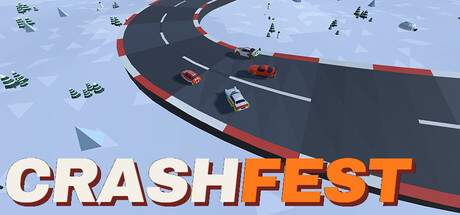
CrashFest is a one-person game, built in Unity between coffee and complaints from playtesters. It started as a physics experiment about shoving a low-poly car off a ledge and got out of hand once six controllers were plugged in.
I’m a software engineer, not an artist. So a good chunk of CrashFest was made together with Claude AI — art direction, shaders, menus, the visual bits I’d never have drawn on my own — and the soundtrack comes out of Suno. The code, the physics and every questionable design decision are mine.
Generative AI was used to assist with drafting and editing portions of the Steam store page description and marketing copy. All AI-assisted text was reviewed, revised, and approved by the development team before publication. No AI-generated content is used during gameplay.
I am a solo developer balancing this project with another job. To make this game a reality, I have used generative AI tools as an assistant during development, as well as to generate various pre-rendered assets: 2D visual elements (such as item icons, textures, and interface art) and the composition of the orchestral soundtrack.
Some pre-generated 2D illustrations (menu backgrounds, mode card images, app icon, and store capsule artwork) were created with AI image generation tools and reviewed by a human. The game itself contains no live-generated AI content — all gameplay, 3D models, audio, and code are human-made.
Some of this game's assets were made with the assistance of generative AI tools and were reviewed, curated and hand-finished by the developer. No content is generated while you play.
All visual assets, audio, course designs / implementations are human created. The aim was to ensure all creative elements were human created with the majority coming from the original Xbox Indie Game.
Generative AI was used to port between the now defunct Xbox Indie (XGFW) platform to a modern platform (MonoGame) and to move to modern graphics cards (shaders). It was also used to add additional, optional, CRT visual modes and to do non-creative changes including identifying and resolving bugs and optimising play to improve framerate and minimum requirements.
Some of this game's assets were made with generative AI tools: the music, the store artwork, and the French translation. Everything ships as fixed files that were generated, chosen, and edited by the developer. Nothing is generated while you play, and the game never connects to an AI service.
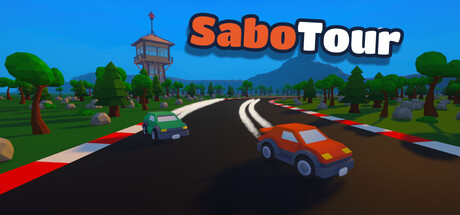
The observation tower model in SaboTour was initially created using an
AI-based 3D generation tool, then manually repaired, retopologized and
finished in Blender. No other AI-generated content is included, and the
game does not generate any content using AI while it is running.
We use generative AI tools during the pre-production phase to create specific pre-rendered assets for the final game build. Specifically, AI assistance was utilized to generate elements of the instrumental soundtrack, ambient sound effects, and select minor environment/prop assets within the game world. No AI content is generated live or dynamically during gameplay, and all assets have been thoroughly reviewed to ensure they do not infringe on existing copyrights.
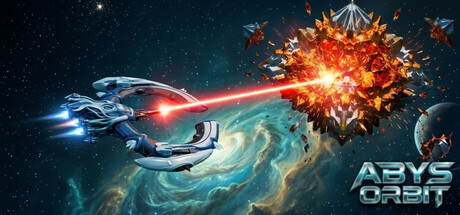
Most of the 2D art in Abys Orbit is AI-assisted, generated with Google Gemini
during development. Ship and NPC sprite sheets begin as Gemini concept images,
are converted to 3D meshes with Meshy.ai, and are then rendered to 2D sprites
in Blender. One dashboard background is a NASA public-domain photograph revised
with AI. All AI-generated assets are reviewed and edited by us before shipping.
The following content is NOT AI-generated: rank insignia (drawn by hand in
Adobe Illustrator), the Scout ship model (a commercially licensed 3D asset
rendered in 3ds Max), UI and research icons (licensed from CraftPix under their
commercial license), two NASA public-domain images, and all audio, which we
produced ourselves.
No AI-generated content is created at runtime; all generation happens during
development.
Power Pony Drift uses AI-generated content that was created during development, and every piece was reviewed, edited, and curated by the developer before being included:
- Character models: The base 3D pony models were generated with AI tools, then hand-rigged, animated, and tuned for the game.
- Audio: The music tracks and some sound effects and voice lines were generated with AI audio tools.
No content is generated while you play — the game contains no runtime AI systems, AI chatbots, or live-generated content. Store page artwork is composited from in-game footage.
Some 2D art assets in this game — such as menu UI textures (buttons and panels) and background images — were created with the help of generative AI image tools during development. All AI-generated assets were reviewed and edited by the developer before being included in the game. No AI-generated content is created live during gameplay.
This game was created in collaboration with my friend Claude Code.
Listen.. I know AI is hated by the community, but I am a single developer with limited time and i wanted to make my progress during that time more efficient.
The direction comes from my side and the passion for this project is still real.
Color Cup Racing uses generative AI tools as part of the development and content creation process.
AI-assisted tools were used to help create or refine some game content, including development support, visual concepts, marketing materials, and/or music assets. All content included in the game is reviewed, selected, edited, and implemented by the developer before release.
The game does not generate AI content during gameplay. Players do not enter prompts, the game does not create live AI-generated images, audio, text, or code while running, and the game does not connect to external AI services during play.
Generative AI tools were used during development to assist with some visual and audio assets in Fishing Trawler. All AI-assisted content is reviewed, edited, and integrated by the developer.
The visuals, music, sound effects, store art, trailer and text for CYBERBIKES were made with the help of AI under my direction, built in code with Blender and Godot. LINK's voice is pre-recorded text-to-speech from the open Kokoro model. Nothing is generated while you play.
Everything you see and hear in this game - the graphics, the sound effects, the music and the built-in tracks - is produced by our own hand-written generators: drawn and synthesised in code. No generative AI is involved in any of it, and nothing is generated by an AI while the game is running. The computer drivers race on ordinary, hand-written driving logic, not on an AI model.
Generative AI was used during development, as an assistant for code and for text: in writing the program code and those generators, in the menu and interface text, in the names of the computer drivers, and in the translation between German and English. Every line of it was reviewed and reworked before it went into the game.
The images and the video on this store page are captured from the running game.
Generative AI tools were used during development to create selected visual assets and music. All generated content was reviewed, selected, edited where necessary, and integrated by the developer.
Some content in this game was created with the help of generative AI during development.
- Drafts of in-game text such as news articles, interviews and guidance messages
- Translations into languages other than Korean
- Some graphic elements, such as karts and maps
Generative AI was used during development to create background music and sound effects, and to assist with store text and translations. These assets are prepared before release. The game does not generate content or connect to AI services during gameplay.
Generative AI was used to assist in creating one or two background 3D assets during the development process. All other 3D models, visual effects, and environmental assets were custom-made or sourced entirely from standard digital asset marketplaces like Fab.
The sound effects, engine sounds and the race announcer's voice were generated with ElevenLabs (sound effects, text-to-speech and voice design) and then edited, mixed and processed by the developer. Parts of the store page text were drafted with AI assistance.
Generative AI tools were used to create some pre-generated static artwork displayed as mission images in the campaign menu. All gameplay visuals, screenshots, and gameplay footage are rendered directly from the game. No AI-generated content is created during gameplay
Generative AI was used to assist in creating promotional artwork for the Steam store page and marketing assets. No live-generated AI content is used during gameplay.
We cautiously use AI for extending our 2D elements such as icons. We always start with OUR art first. All in game 3D art is created by artists or uses asset packs from various asset stores.
WarpRacer may include pre-generated visual assets created with assistance from generative AI tools. It does not use generative AI to create content or code during gameplay, and it does not connect to external AI services during gameplay.
Neon Chase is solo developer game. Every environment, menu, lighting model, weapon, and enemy vehicles were built as 3D models using Blender. The game design, system mechanics, style, gameplay, bug fixing and features of the game are mine.
AI tools were used for some of the audio, this includes the sound effects, spoken dialogue and music which were edited and integrated by me but developed with the help of Suno for the music and Elevenlabs for the sound effects.
No content is generated using AI whilst running the game.
Some of the art, music, voice-over and cinematic clips in Synapse Grid were produced with generative AI tools during development, then edited, curated and directed for release. Nothing is generated while you play.
The tools used, and what each produced:
Google Gemini - concept art and texture reference
ACE-Step - original music tracks
MiniMax-Music3 - original music tiles
IndexTTS - cast voice-over
MiniMax H3 (via ComfyUI) - tutorial and transmission video clips
All of this content was generated for this project. No third party's personal media, voice or likeness is used. The same list is shown in the game's own credits screen.
Separately, the opponent riders use a neural network trained by self-play. That system decides how a bike steers; it does not generate any art, audio or text that you see or hear.
This game was developed with the assistance of generative AI tools during the development process. Generative AI was used to help produce elements of the game's code, artwork, and music. All AI-assisted output was reviewed, edited, and curated by our team before being included in the final game, ensuring it met our creative and quality standards.
This game was developed with the assistance of generative AI tools. AI was used during development to help write and refactor portions of the game's code, and to assist with design iteration. Some in-game assets (such as placeholder art, sound effects, or text) may have been created or refined with AI assistance. All AI-assisted content was reviewed and edited by the developer before inclusion. The game does not generate any content using AI at runtime, and no live AI features are present in the released product.
We used AI-assisted tools during development to help create and iterate on internal game code, UI sprites, and some 3D model assets. All AI-assisted outputs were reviewed, edited, and approved by the development team before being included in the game. The game does not allow players to generate AI content during gameplay.
We may use AI-based tools during development to assist with content creation. In all such cases, the final game mirrors our dev team's creativity and expression.
No Generative AI art was used in-game or in any of the promotional material. However, ai-assisted tools were used in development for coding assistance and image editing tasks such as upscaling and cleanup of screenshots to be used in capsule arts.
CrashFest is a one-person game, built in Unity between coffee and complaints from playtesters. It started as a physics experiment about shoving a low-poly car off a ledge and got out of hand once six controllers were plugged in.
I’m a software engineer, not an artist. So a good chunk of CrashFest was made together with Claude AI — art direction, shaders, menus, the visual bits I’d never have drawn on my own — and the soundtrack comes out of Suno. The code, the physics and every questionable design decision are mine.
Generative AI was used to assist with drafting and editing portions of the Steam store page description and marketing copy. All AI-assisted text was reviewed, revised, and approved by the development team before publication. No AI-generated content is used during gameplay.
I am a solo developer balancing this project with another job. To make this game a reality, I have used generative AI tools as an assistant during development, as well as to generate various pre-rendered assets: 2D visual elements (such as item icons, textures, and interface art) and the composition of the orchestral soundtrack.
Some pre-generated 2D illustrations (menu backgrounds, mode card images, app icon, and store capsule artwork) were created with AI image generation tools and reviewed by a human. The game itself contains no live-generated AI content — all gameplay, 3D models, audio, and code are human-made.
Some of this game's assets were made with the assistance of generative AI tools and were reviewed, curated and hand-finished by the developer. No content is generated while you play.
All visual assets, audio, course designs / implementations are human created. The aim was to ensure all creative elements were human created with the majority coming from the original Xbox Indie Game.
Generative AI was used to port between the now defunct Xbox Indie (XGFW) platform to a modern platform (MonoGame) and to move to modern graphics cards (shaders). It was also used to add additional, optional, CRT visual modes and to do non-creative changes including identifying and resolving bugs and optimising play to improve framerate and minimum requirements.
Some of this game's assets were made with generative AI tools: the music, the store artwork, and the French translation. Everything ships as fixed files that were generated, chosen, and edited by the developer. Nothing is generated while you play, and the game never connects to an AI service.
The observation tower model in SaboTour was initially created using an
AI-based 3D generation tool, then manually repaired, retopologized and
finished in Blender. No other AI-generated content is included, and the
game does not generate any content using AI while it is running.
We use generative AI tools during the pre-production phase to create specific pre-rendered assets for the final game build. Specifically, AI assistance was utilized to generate elements of the instrumental soundtrack, ambient sound effects, and select minor environment/prop assets within the game world. No AI content is generated live or dynamically during gameplay, and all assets have been thoroughly reviewed to ensure they do not infringe on existing copyrights.
Most of the 2D art in Abys Orbit is AI-assisted, generated with Google Gemini
during development. Ship and NPC sprite sheets begin as Gemini concept images,
are converted to 3D meshes with Meshy.ai, and are then rendered to 2D sprites
in Blender. One dashboard background is a NASA public-domain photograph revised
with AI. All AI-generated assets are reviewed and edited by us before shipping.
The following content is NOT AI-generated: rank insignia (drawn by hand in
Adobe Illustrator), the Scout ship model (a commercially licensed 3D asset
rendered in 3ds Max), UI and research icons (licensed from CraftPix under their
commercial license), two NASA public-domain images, and all audio, which we
produced ourselves.
No AI-generated content is created at runtime; all generation happens during
development.
Power Pony Drift uses AI-generated content that was created during development, and every piece was reviewed, edited, and curated by the developer before being included:
- Character models: The base 3D pony models were generated with AI tools, then hand-rigged, animated, and tuned for the game.
- Audio: The music tracks and some sound effects and voice lines were generated with AI audio tools.
No content is generated while you play — the game contains no runtime AI systems, AI chatbots, or live-generated content. Store page artwork is composited from in-game footage.
Some 2D art assets in this game — such as menu UI textures (buttons and panels) and background images — were created with the help of generative AI image tools during development. All AI-generated assets were reviewed and edited by the developer before being included in the game. No AI-generated content is created live during gameplay.
This game was created in collaboration with my friend Claude Code.
Listen.. I know AI is hated by the community, but I am a single developer with limited time and i wanted to make my progress during that time more efficient.
The direction comes from my side and the passion for this project is still real.
Color Cup Racing uses generative AI tools as part of the development and content creation process.
AI-assisted tools were used to help create or refine some game content, including development support, visual concepts, marketing materials, and/or music assets. All content included in the game is reviewed, selected, edited, and implemented by the developer before release.
The game does not generate AI content during gameplay. Players do not enter prompts, the game does not create live AI-generated images, audio, text, or code while running, and the game does not connect to external AI services during play.