Public Steam disclosure research25,376 disclosures tracked
Where do games disclose AI use?
Search developers’ Steam disclosures, compare classified AI use across
games, and follow recorded changes.
This index adds cross-game classifications and statistics to
statements published on individual store pages.
Groups reflect automatic analysis of public disclosures; mature records are excluded. These counts do not measure AI use across all of Steam.
Missing or unclear statements cannot establish whether a game uses AI.
This game uses AI as a writing assistant during development. The story, characters, world, game systems, and overall creative direction are original work by the developer, drawn from personal experience and extensive planning. AI was used to help draft, translate, edit, and refine dialogue based on the developer's outlines, ideas, and direction, with the developer reviewing, revising, and making final creative decisions on all text that appears in the game. AI was not used to generate any art, music, or audio assets.
Tirona's development used AI tools for much of its 2D artwork (character portraits, card and scene illustrations, quest illustrations), some 3D models, the music (ElevenLabs) and the character voice performers' reference voices. All of it was selected, edited and placed by the developer, and ships as fixed game content.
While you play, a third-party large language model writes the narration and the dialogue of non-player characters in response to what you type or say. Character voices are synthesised locally on your PC from the generated text. You can optionally generate a portrait for your character from your creation choices.
The AI never decides the rules: dice, hit points, gold, items, experience, spells and quest progress change only through the game's own systems. Romance is opt-in, and anything sexual fades to black.
Pre-generated content: AI tools assisted during development. Some in-game text (commentary, TV show dialogue), the translations and the store page text were written with AI assistance, and the pixel art, music and sound effects are generated by scripts written with AI assistance. All of this content has been reviewed, approved and modified by the developer. No content is generated by AI while the game is running.
Some images in the game were generated using AI tools and then refined by the game's developer. All the music in the game was written by the game's developer, but the mastering was done using AI tools. The 3D character models (all except the zombie mutants) were initially generated via AI and later refined and adapted by the game's developer.
Generative AI tools were used during development. Some of the game's 3D models and parts of its programming code were created with AI assistance, then reviewed and refined by the developer. No content is generated by AI while the game is running.
The scenes, portraits and item pictures in this game, and the store art, were made with AI image-generation tools under the developer's direction. The paper and dark of the screens and the guild's red seal come from public-domain prints of the 15th to 17th centuries. Most of the written text, including the Japanese translation, was drafted with an AI model under the developer's direction and revised by hand. Music and sound effects were synthesised procedurally without AI. Nothing is generated by AI while you play.
Generative AI tools were used during development to assist with the creation and refinement of certain in-game visual assets, promotional artwork, and portions of text/localization. All AI-assisted content was reviewed, edited, and integrated by the developer. No generative AI is used during gameplay, and no content is generated live for players.
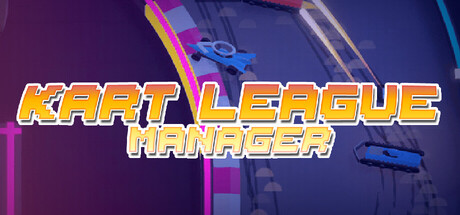
Some content in this game was created with the help of generative AI during development.
- Drafts of in-game text such as news articles, interviews and guidance messages
- Translations into languages other than Korean
- Some graphic elements, such as karts and maps
StoryNow uses generative AI locally during gameplay. Llama.cpp generates prompts that ComfyUI uses to create visual-novel artwork on the player's device. The game does not connect to an external AI generation service.
Pre-generated AI tools were used to create selected voice-over performances and selected promotional artwork. All AI-assisted materials are reviewed, edited, and finalized by the development team before use. The game does not generate AI content during gameplay.
Our AI assistance is mainly focused on copy polishing (e.g., correcting typos and logical errors), a small amount of scene refinement and VFX for the second part of the game (the second part is a redesign of some original scenes from ICEY; after handcrafting the concept design and finishing the demo, we use AI to batch-reduce repetitive work), and some programming implementation and test cases.
In all other areas—such as concept design, character design (character illustrations), scene design and related design work, combat animation and VFX, and scene implementation (from hand-drawn 2D animation to final implementation)—there is no AI content at all. The specific iteration details are basically all in the development VLOG; if you're interested, feel free to look through it.
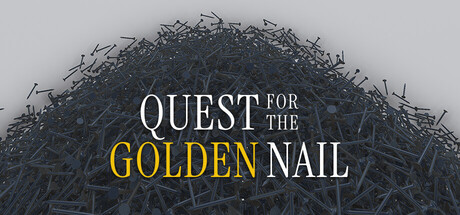
Quest for the Golden Nail was made with extensive use of generative AI. All creative, design and production decisions were made by a human developer.
Generative AI was used for:
Code and implementation support: OpenAI Codex and Anthropic Claude
3D Art & Textures: Codex, ChatGPT / Imagen, Meshy.ai
Writing and translation support: ChatGPT
Sounds and voices were recorded by humans.
Every part of the game was directed, reviewed, tested and refined by hand.
Some visual assets and promotional artwork included in the game were created or assisted with generative AI tools during development. These assets were subsequently edited, adjusted, animated, and integrated by the developer. The game does not use generative AI to create content during gameplay.
This game has a lot of assets; as a solo developer, AI-assisted tools were used to help create some of the audio and sound files. I'm sharing this openly so players can make an informed choice. If the game finds an audience, I'd love to invest in commissioning original art to replace these assets down the line.
Some visual art assets were created using AI-assisted collage techniques, combining and compositing multiple generated elements into final scenes. Some character voices use AI voice modulation applied to original voice performances to modify and enhance those performances. Music is originally composed, with AI tools assisting in instrumentation and production.
AI tools were used only to check visual concepts, translate text into some languages, and create music placeholders. All such materials are currently significantly reworked by humans. By release, we plan to replace the music placeholders with original compositions and have the translations reviewed by human editors.
This game uses generative AI for some pre-produced visual assets, including character artwork and backgrounds, and for text generated during gameplay. A language model running locally on your computer generates VTuber dialogue and responses based on player input, character settings, and the current game situation. Generated dialogue can vary between playthroughs.
A message from The Narrator:
“The developer already had the rooms, layouts, colour schemes and designs in mind before using generative AI to help turn those ideas into visual starting points. He then edited and modified the results himself to create the final environments used in the game. The creative direction, game design, writing, narration and voice acting are his own. No AI-generated content is created during gameplay
In the interest of transparency, illustrations were created with the help of AI-assisted tools, used as creative support within a human-led artistic process.
Generative AI tools were used to assist in the creation of some pre-generated visual assets, character elements, voice-over, music, localization and promotional text. Some of these assets were further edited and refined by the developer before being included in the final game.
Pre-generated: Some 2D illustrations and the pre-recorded narration were produced with AI tools and reviewed by the developers before inclusion.
Live-generated: An on-device language model (no internet connection) writes in-game text such as narration, dialogue, and the names and lore of items, relics and skills, and selects among game-defined options for certain run content. Damage, stats, difficulty and progression are governed by the game's own rules. Generated text is checked before it is shown, and no art or audio is generated at runtime.
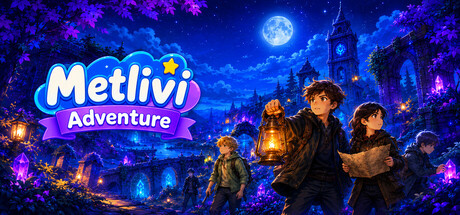
Metlivi Adventure uses generative AI to create certain in-game content, including narrative text, visual elements, and, where applicable, music. AI-generated content is used to support dynamic, player-driven adventures.
The game uses AI tools to assist in generating background graphics and supporting the artistic process. AI is also used to aid in translation and localization, making the game available in multiple regions and languages.
Generative AI tools were used during development to assist in creating and refining some pre-generated narrative, text, and visual content. All such content is created prior to release and reviewed by the developer. The game does not generate AI content during gameplay.
Take a Joke uses generative AI in a few clearly defined places.
Created during development and shipped as fixed files:
• Artwork — the game's logo, icon, and character avatars were created using AI image-generation tools, then selected, edited, and assembled by hand.
• Narrator voice — the spoken introduction is a synthesized voice performance created with ElevenLabs, reading a script we wrote.
• Cards — the great majority of the prompt and answer deck was written by hand. A small number of cards were drafted with AI assistance. Every card in the game was read and approved by a person before it shipped.
Generated during play (optional features):
• The narrator occasionally reacts to what is happening in a round. The lines come from a fixed, human-written library; a player's name is inserted and the line is voiced with ElevenLabs.
• The optional end-of-game awards ceremony writes a short, custom awards show about the game you just played — the award titles and descriptions are AI-written from that game's results, then voiced.
When those optional features are on, the game sends player nicknames and submitted answers to the services that generate them. With them off, nothing is generated while you play.
Selected pre-generated visual and audio assets used in Tracked and its store materials were created with the assistance of generative AI tools during development. Every AI-assisted asset was selected, reviewed, and edited by the development team before use. No content is generated during gameplay, and the game does not connect to external AI services.
Some visual assets and portions of the game’s code were created with the assistance of generative AI. All AI-assisted content was reviewed and edited by the developer before being included in the game. The game does not generate AI content during gameplay.
All visual art in SagoCat — characters, animation, and visual design — is hand-crafted, with no AI used.
Generative AI is used as follows: the pet's conversational replies are generated in real time by a third-party AI service and require an internet connection (use the built-in free quota or your own API key); during development, AI tools also assisted with parts of the code, some in-app text, and some sound effects.
ORACLE uses generative AI in two ways: some marketing artwork was created with generative tools, and an optional bundled local language model can generate short, context-aware ORACLE narration during play. Live generation runs locally on the player's PC and is limited to text; it does not generate code, images, audio, or gameplay rules.
This game utilizes AI during gameplay to dynamically generate partial narrative texts and character dialogue in real time based on game progress, character status, and player choices, which may result in varying text content across different playthroughs. To mitigate the risk of inappropriate output, the game enforces rule constraints, sensitive content detection, and keyword filtering on both AI prompts and generated responses. Any non-compliant content will be blocked or replaced accordingly.
Generative AI-assisted tools were used in the creation and development of some 3D models, audio, and visual content in the game. All such content was generated in advance during the development process and added to the game as pre-made assets. No content is generated in real time using generative AI during gameplay.
We used generative AI on fighter portraits for deeper immersion and as a pre-production tool for early concept layouts. From there, all character assets and visual elements were extensively edited and manually hand-painted by human artists to ensure high visual quality and artistic control.
Generative AI was used selectively during development for certain materials; all final content was refined by the developer. No real-time AI generation is used.
This game uses an open-source language model (Qwen2.5) bundled with the game to generate real-time NPC dialogue and ambient chatter entirely offline on the player's own machine via llama.cpp. No external server, no third-party API, and no internet connection are required. Players can toggle this feature on or off. The model runs locally using the player's CPU — no data is uploaded, collected, stored, or used for training.
AI-assisted tools were used during development to help create and refine some visual assets, text, and audio content. All AI-assisted content was reviewed, edited, and curated by the developer before being included in the game. The game does not generate AI content dynamically during gameplay.
During the development of Valdivia AllStars, we used generative artificial intelligence tools to assist with specific parts of the content creation process.
These tools were primarily used to assist in the creation and exploration of certain visual assets, including concept art, visual references, textures, and some graphical elements used during the development of the game. Content created with the assistance of these tools was subsequently selected, modified, adapted, and reviewed by our team before being incorporated into the final product.
Generative AI was used as a supporting tool for our developers and artists, rather than as an autonomous system for creating the game. Character and environment design, gameplay mechanics, programming, 3D modeling, animation, content integration, and the overall artistic direction of the game were created and supervised by our development team.
Valdivia AllStars does not use generative AI to dynamically create content during gameplay, nor does it require players to submit content to be processed by generative AI systems.
This game utilizes adaptive AI technology during gameplay to power the police interrogator's responses. Player input is evaluated live to generate dynamic, context-aware dialogue and push the interrogation forward.
This game uses AI as a writing assistant during development. The story, characters, world, game systems, and overall creative direction are original work by the developer, drawn from personal experience and extensive planning. AI was used to help draft, translate, edit, and refine dialogue based on the developer's outlines, ideas, and direction, with the developer reviewing, revising, and making final creative decisions on all text that appears in the game. AI was not used to generate any art, music, or audio assets.
Tirona's development used AI tools for much of its 2D artwork (character portraits, card and scene illustrations, quest illustrations), some 3D models, the music (ElevenLabs) and the character voice performers' reference voices. All of it was selected, edited and placed by the developer, and ships as fixed game content.
While you play, a third-party large language model writes the narration and the dialogue of non-player characters in response to what you type or say. Character voices are synthesised locally on your PC from the generated text. You can optionally generate a portrait for your character from your creation choices.
The AI never decides the rules: dice, hit points, gold, items, experience, spells and quest progress change only through the game's own systems. Romance is opt-in, and anything sexual fades to black.
Pre-generated content: AI tools assisted during development. Some in-game text (commentary, TV show dialogue), the translations and the store page text were written with AI assistance, and the pixel art, music and sound effects are generated by scripts written with AI assistance. All of this content has been reviewed, approved and modified by the developer. No content is generated by AI while the game is running.
Some images in the game were generated using AI tools and then refined by the game's developer. All the music in the game was written by the game's developer, but the mastering was done using AI tools. The 3D character models (all except the zombie mutants) were initially generated via AI and later refined and adapted by the game's developer.
Generative AI tools were used during development. Some of the game's 3D models and parts of its programming code were created with AI assistance, then reviewed and refined by the developer. No content is generated by AI while the game is running.
The scenes, portraits and item pictures in this game, and the store art, were made with AI image-generation tools under the developer's direction. The paper and dark of the screens and the guild's red seal come from public-domain prints of the 15th to 17th centuries. Most of the written text, including the Japanese translation, was drafted with an AI model under the developer's direction and revised by hand. Music and sound effects were synthesised procedurally without AI. Nothing is generated by AI while you play.
Generative AI tools were used during development to assist with the creation and refinement of certain in-game visual assets, promotional artwork, and portions of text/localization. All AI-assisted content was reviewed, edited, and integrated by the developer. No generative AI is used during gameplay, and no content is generated live for players.
Some content in this game was created with the help of generative AI during development.
- Drafts of in-game text such as news articles, interviews and guidance messages
- Translations into languages other than Korean
- Some graphic elements, such as karts and maps
StoryNow uses generative AI locally during gameplay. Llama.cpp generates prompts that ComfyUI uses to create visual-novel artwork on the player's device. The game does not connect to an external AI generation service.
Pre-generated AI tools were used to create selected voice-over performances and selected promotional artwork. All AI-assisted materials are reviewed, edited, and finalized by the development team before use. The game does not generate AI content during gameplay.
Our AI assistance is mainly focused on copy polishing (e.g., correcting typos and logical errors), a small amount of scene refinement and VFX for the second part of the game (the second part is a redesign of some original scenes from ICEY; after handcrafting the concept design and finishing the demo, we use AI to batch-reduce repetitive work), and some programming implementation and test cases.
In all other areas—such as concept design, character design (character illustrations), scene design and related design work, combat animation and VFX, and scene implementation (from hand-drawn 2D animation to final implementation)—there is no AI content at all. The specific iteration details are basically all in the development VLOG; if you're interested, feel free to look through it.
Quest for the Golden Nail was made with extensive use of generative AI. All creative, design and production decisions were made by a human developer.
Generative AI was used for:
Code and implementation support: OpenAI Codex and Anthropic Claude
3D Art & Textures: Codex, ChatGPT / Imagen, Meshy.ai
Writing and translation support: ChatGPT
Sounds and voices were recorded by humans.
Every part of the game was directed, reviewed, tested and refined by hand.
Some visual assets and promotional artwork included in the game were created or assisted with generative AI tools during development. These assets were subsequently edited, adjusted, animated, and integrated by the developer. The game does not use generative AI to create content during gameplay.
This game has a lot of assets; as a solo developer, AI-assisted tools were used to help create some of the audio and sound files. I'm sharing this openly so players can make an informed choice. If the game finds an audience, I'd love to invest in commissioning original art to replace these assets down the line.
Some visual art assets were created using AI-assisted collage techniques, combining and compositing multiple generated elements into final scenes. Some character voices use AI voice modulation applied to original voice performances to modify and enhance those performances. Music is originally composed, with AI tools assisting in instrumentation and production.
AI tools were used only to check visual concepts, translate text into some languages, and create music placeholders. All such materials are currently significantly reworked by humans. By release, we plan to replace the music placeholders with original compositions and have the translations reviewed by human editors.
This game uses generative AI for some pre-produced visual assets, including character artwork and backgrounds, and for text generated during gameplay. A language model running locally on your computer generates VTuber dialogue and responses based on player input, character settings, and the current game situation. Generated dialogue can vary between playthroughs.
A message from The Narrator:
“The developer already had the rooms, layouts, colour schemes and designs in mind before using generative AI to help turn those ideas into visual starting points. He then edited and modified the results himself to create the final environments used in the game. The creative direction, game design, writing, narration and voice acting are his own. No AI-generated content is created during gameplay
In the interest of transparency, illustrations were created with the help of AI-assisted tools, used as creative support within a human-led artistic process.
Generative AI tools were used to assist in the creation of some pre-generated visual assets, character elements, voice-over, music, localization and promotional text. Some of these assets were further edited and refined by the developer before being included in the final game.
Pre-generated: Some 2D illustrations and the pre-recorded narration were produced with AI tools and reviewed by the developers before inclusion.
Live-generated: An on-device language model (no internet connection) writes in-game text such as narration, dialogue, and the names and lore of items, relics and skills, and selects among game-defined options for certain run content. Damage, stats, difficulty and progression are governed by the game's own rules. Generated text is checked before it is shown, and no art or audio is generated at runtime.
Metlivi Adventure uses generative AI to create certain in-game content, including narrative text, visual elements, and, where applicable, music. AI-generated content is used to support dynamic, player-driven adventures.
The game uses AI tools to assist in generating background graphics and supporting the artistic process. AI is also used to aid in translation and localization, making the game available in multiple regions and languages.
Generative AI tools were used during development to assist in creating and refining some pre-generated narrative, text, and visual content. All such content is created prior to release and reviewed by the developer. The game does not generate AI content during gameplay.
Take a Joke uses generative AI in a few clearly defined places.
Created during development and shipped as fixed files:
• Artwork — the game's logo, icon, and character avatars were created using AI image-generation tools, then selected, edited, and assembled by hand.
• Narrator voice — the spoken introduction is a synthesized voice performance created with ElevenLabs, reading a script we wrote.
• Cards — the great majority of the prompt and answer deck was written by hand. A small number of cards were drafted with AI assistance. Every card in the game was read and approved by a person before it shipped.
Generated during play (optional features):
• The narrator occasionally reacts to what is happening in a round. The lines come from a fixed, human-written library; a player's name is inserted and the line is voiced with ElevenLabs.
• The optional end-of-game awards ceremony writes a short, custom awards show about the game you just played — the award titles and descriptions are AI-written from that game's results, then voiced.
When those optional features are on, the game sends player nicknames and submitted answers to the services that generate them. With them off, nothing is generated while you play.
Selected pre-generated visual and audio assets used in Tracked and its store materials were created with the assistance of generative AI tools during development. Every AI-assisted asset was selected, reviewed, and edited by the development team before use. No content is generated during gameplay, and the game does not connect to external AI services.
Some visual assets and portions of the game’s code were created with the assistance of generative AI. All AI-assisted content was reviewed and edited by the developer before being included in the game. The game does not generate AI content during gameplay.
All visual art in SagoCat — characters, animation, and visual design — is hand-crafted, with no AI used.
Generative AI is used as follows: the pet's conversational replies are generated in real time by a third-party AI service and require an internet connection (use the built-in free quota or your own API key); during development, AI tools also assisted with parts of the code, some in-app text, and some sound effects.
ORACLE uses generative AI in two ways: some marketing artwork was created with generative tools, and an optional bundled local language model can generate short, context-aware ORACLE narration during play. Live generation runs locally on the player's PC and is limited to text; it does not generate code, images, audio, or gameplay rules.
This game utilizes AI during gameplay to dynamically generate partial narrative texts and character dialogue in real time based on game progress, character status, and player choices, which may result in varying text content across different playthroughs. To mitigate the risk of inappropriate output, the game enforces rule constraints, sensitive content detection, and keyword filtering on both AI prompts and generated responses. Any non-compliant content will be blocked or replaced accordingly.
Generative AI-assisted tools were used in the creation and development of some 3D models, audio, and visual content in the game. All such content was generated in advance during the development process and added to the game as pre-made assets. No content is generated in real time using generative AI during gameplay.
We used generative AI on fighter portraits for deeper immersion and as a pre-production tool for early concept layouts. From there, all character assets and visual elements were extensively edited and manually hand-painted by human artists to ensure high visual quality and artistic control.
Generative AI was used selectively during development for certain materials; all final content was refined by the developer. No real-time AI generation is used.
This game uses an open-source language model (Qwen2.5) bundled with the game to generate real-time NPC dialogue and ambient chatter entirely offline on the player's own machine via llama.cpp. No external server, no third-party API, and no internet connection are required. Players can toggle this feature on or off. The model runs locally using the player's CPU — no data is uploaded, collected, stored, or used for training.
AI-assisted tools were used during development to help create and refine some visual assets, text, and audio content. All AI-assisted content was reviewed, edited, and curated by the developer before being included in the game. The game does not generate AI content dynamically during gameplay.
During the development of Valdivia AllStars, we used generative artificial intelligence tools to assist with specific parts of the content creation process.
These tools were primarily used to assist in the creation and exploration of certain visual assets, including concept art, visual references, textures, and some graphical elements used during the development of the game. Content created with the assistance of these tools was subsequently selected, modified, adapted, and reviewed by our team before being incorporated into the final product.
Generative AI was used as a supporting tool for our developers and artists, rather than as an autonomous system for creating the game. Character and environment design, gameplay mechanics, programming, 3D modeling, animation, content integration, and the overall artistic direction of the game were created and supervised by our development team.
Valdivia AllStars does not use generative AI to dynamically create content during gameplay, nor does it require players to submit content to be processed by generative AI systems.
This game utilizes adaptive AI technology during gameplay to power the police interrogator's responses. Player input is evaluated live to generate dynamic, context-aware dialogue and push the interrogation forward.