Public Steam disclosure research25,376 disclosures tracked
Where do games disclose AI use?
Search developers’ Steam disclosures, compare classified AI use across
games, and follow recorded changes.
This index adds cross-game classifications and statistics to
statements published on individual store pages.
Groups reflect automatic analysis of public disclosures; mature records are excluded. These counts do not measure AI use across all of Steam.
Missing or unclear statements cannot establish whether a game uses AI.
Some visual assets and promotional materials for this game were created with the assistance of generative AI and were reviewed, edited, and integrated by the developer. The game does not use live AI generation during gameplay.
Some visual assets and promotional materials for this game were created with the assistance of generative AI and were reviewed, edited, and integrated by the developer. The game does not use live AI generation during gameplay.
The art, animation, voice acting and music in this game were pre-generated with generative AI tools, then selected, edited and corrected shot by shot by hand. The script, all dialogue and the story structure are human-written. No AI generation happens at runtime.
Generative AI was used during development to create character and environment artwork, comic illustrations, achievement-card artwork, store artwork, music, and English pronunciation audio, and to assist with learning dialogue and localization. This content is prepared in advance and included with the game. The game does not generate AI content or connect to third-party AI services during gameplay. Custom chapters use the device’s available text-to-speech voices.
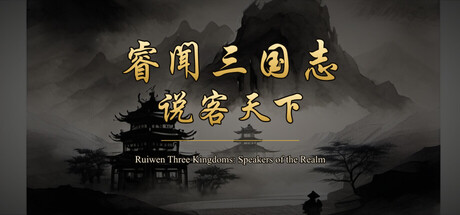
NPC dialogue in Ruiwen’s Romance of the Three Kingdoms: The Life of a Persuader is generated in real‑time by a locally‑running AI model. All content is computed offline on your own device, with no data uploaded to external servers.
The game’s story framework, directed plotlines, numerical judgement rules and ending conditions are all hand‑crafted. The AI is only responsible for generating character conversations.
Multiple safety guardrails are built‑in: automatic profanity detection, historical timeline checks to avoid anachronisms, character‑stance locking and fallback responses. These ensure every line of dialogue fits the character’s identity and historical context.
Generative AI was used during development for the following:
- Music: The background music was created with an AI music generation tool (Suno).
- Word definitions: The definitions shown in the game were written with the assistance of AI, using the public dictionary data JMdict as a reference, and were reviewed and corrected by the developer.
- Programming: AI was used as a development aid.
No content is generated by AI during gameplay. All puzzles, word data, and visuals are pre-made.
Kana Cross uses generative AI in the following ways, all reviewed by a person before release:
• Music: the game's background music was created using generative AI music tools.
• Localization: some of the Visual Novel and game's dictionary word meanings and translations.
Our visual style relies on a blend of commissioned artwork, curated assets, and custom designs. We occasionally use AI generation as a tool in our creative process, but never as a final product. Every AI-assisted asset is either fully redrawn or heavily refined by human artists before making its way into the game.
Some of the pre-made content in this game (such as artwork, audio and/or text) was created with the help of generative AI tools and was reviewed and edited by the developer. No AI content is generated during gameplay.
ComfyTrans uses an on-device AI language model to translate on-screen text into your language in real time. All AI processing runs locally on your PC — your screen content is not sent to external servers for translation.
This utility app uses artificial intelligence models to perform real-time speech-to-text transcription (ASR), live subtitle translation (MT), and local text-to-speech synthesis (TTS) based on the user's voice or PC audio stream.
Some pre-rendered visual assets and music were created with generative AI tools, then curated, edited, and integrated by the developer. No AI content is generated during gameplay, and the game does not connect to external AI services.
Lost Gaijin uses generative AI during development and gameplay. Selected pre-generated visual and audio assets used in the game and its Steam materials were created or edited with generative AI tools and reviewed by the developer. During play, text-generating AI responds to player input and game state to create dynamic story content and personalized Japanese-language coaching. Live-generated text is provided through OpenRouter and may vary between playthroughs.
All images on the store page and game library are
derived from AI-generated source images.
The game contains images that were generated by the AI during the development process.
The developer designed a specific prompt for each image that was requested from the AI
and the generated images were stored in the game.
No AI is used during the game and no internet connection is used.
Generative AI tools were used to assist in creating some store page artwork and marketing materials, as well as parts of the game's word content. All AI-assisted content was reviewed, edited, and integrated by the developer. Game design, programming, and final implementation were created by the developer.
Generative AI was used as a writing and translation aid during development, always under human direction and review: in-game lesson and interface text, their translations into the supported languages, achievement text, and this store page. All of it was reviewed by the developer. The game itself does not use AI at runtime — nothing is generated while you play, and every level is deterministic.
The characters in Conversation Simulator are played live by an AI language model that runs entirely on your computer — no cloud AI service is involved. All character dialogue and end-of-session feedback is generated locally during play. A built-in safety policy that cannot be disabled keeps generated content within a PG/PG-13 boundary: no sexual content, no content involving minors, no impersonation of real people, no voice cloning, and no claims to be a real therapist, doctor, or lawyer. Self-harm and crisis topics are intercepted and answered with a resource message instead of AI-generated content.
The quiz content (questions, answer choices, and explanations) was authored with the assistance of large language models, then validated by automated checks (every citation resolves against the canonical text) and human review passes. The scripture text itself is NOT AI-generated — it is the public-domain JPS 1917 translation sourced from Sefaria.org. Decorative chapter art and store capsule art were produced by our own procedural generation scripts with AI-assisted design; store copy was written with AI assistance and human-edited. The game contains no live/runtime AI generation.
This software uses generative AI to transcribe speech, translate live voice and text between languages, and optionally generate translated speech output. Depending on the mode selected by the user, these features may run through third-party online AI services or local models included with or configured for the software.
This game uses AI-assisted tools during development, including assistance with coding and the creation or iteration of some promotional and visual art assets.
During gameplay, AI may be used to help interpret the player’s spoken spell commands and map them to predefined in-game spell actions.
Penko Vox: Japanese uses local generative AI to power its immersive language learning experience. An integrated Large Language Model (LLM) acts as a native Japanese tutor, generating real-time dialogue based on user input, while a Neural Text-to-Speech (TTS) engine synthesizes high-fidelity Japanese audio for listening practice.
This application utilizes local, offline Artificial Intelligence (AI) models as its primary infrastructure:
1. Speech-to-Text (ASR) using the offline Glint AI engine.
2. Neural Machine Translation (NMT) using the offline Glint AI engine.
3. Optional Local AI Translation Integration: Users can optionally activate and download local LLM models (such as Gemma and Qwen via the Ollama engine) to perform offline translations.
All AI models and libraries, including the optional local LLM integrations, are executed entirely locally on the user's hardware. The application DOES NOT require or connect to any third-party cloud services or external AI generators.
Playto uses AI models (LLMs) to generate real-time translations of on-screen game text. All AI processing runs entirely on your machine using local models — no data is sent to external servers. The AI is also used for OCR (optical character recognition) to read text from game screens. No pre-generated AI content is included; all translations are generated live during use.
This game uses generative AI to produce real-time, dialogue-based explanations, narrative content, and key summaries during gameplay (with optional AI-generated voice output).
The generated content dynamically adapts based on player inputs, such as uploaded papers or text, as well as in-game choices, and is used solely for in-game presentation.
Players are advised not to input sensitive personal information and to independently verify any important information.
LingoHUD's output is strictly limited to language translation and speech-to-text
transcription of content already present on the user's screen or audio. It does not
generate creative, original, or open-ended content.
Content moderation: The translation and recognition models process only user-initiated
input that the user explicitly captures via a hotkey. The software does not produce
novel content; it converts existing content from one language to another, or from
speech and images to text. All processing is deterministic and bounded to the captured
input.
AI was used in the coding of this game, the asset generation, brainstorming practical solutions (knowledge about opensource tts options, distribution options), and in helping problem solve most steps in the development, and application process. It allowed one developer to create a high quality, low cost educational product to greatly assist in language learning worldwide.
Some sounds and visual assets in PLAYNESE were enhanced using generative AI tools during development and are reviewed for quality and consistency. All AI generated content is pre-rendered and static, with no live AI generation during gameplay.
The vast majority of the artwork in the game was created by our team of artists, hired freelancers or purchased on market places. In some cases, AI was used to generate reference images to assist with the creative process, but all final assets were either fully redrawn or significantly refined by human artists to ensure quality and originality.
Some visual assets and promotional materials for this game were created with the assistance of generative AI and were reviewed, edited, and integrated by the developer. The game does not use live AI generation during gameplay.
Some visual assets and promotional materials for this game were created with the assistance of generative AI and were reviewed, edited, and integrated by the developer. The game does not use live AI generation during gameplay.
The art, animation, voice acting and music in this game were pre-generated with generative AI tools, then selected, edited and corrected shot by shot by hand. The script, all dialogue and the story structure are human-written. No AI generation happens at runtime.
Generative AI was used during development to create character and environment artwork, comic illustrations, achievement-card artwork, store artwork, music, and English pronunciation audio, and to assist with learning dialogue and localization. This content is prepared in advance and included with the game. The game does not generate AI content or connect to third-party AI services during gameplay. Custom chapters use the device’s available text-to-speech voices.
NPC dialogue in Ruiwen’s Romance of the Three Kingdoms: The Life of a Persuader is generated in real‑time by a locally‑running AI model. All content is computed offline on your own device, with no data uploaded to external servers.
The game’s story framework, directed plotlines, numerical judgement rules and ending conditions are all hand‑crafted. The AI is only responsible for generating character conversations.
Multiple safety guardrails are built‑in: automatic profanity detection, historical timeline checks to avoid anachronisms, character‑stance locking and fallback responses. These ensure every line of dialogue fits the character’s identity and historical context.
Generative AI was used during development for the following:
- Music: The background music was created with an AI music generation tool (Suno).
- Word definitions: The definitions shown in the game were written with the assistance of AI, using the public dictionary data JMdict as a reference, and were reviewed and corrected by the developer.
- Programming: AI was used as a development aid.
No content is generated by AI during gameplay. All puzzles, word data, and visuals are pre-made.
Kana Cross uses generative AI in the following ways, all reviewed by a person before release:
• Music: the game's background music was created using generative AI music tools.
• Localization: some of the Visual Novel and game's dictionary word meanings and translations.
Our visual style relies on a blend of commissioned artwork, curated assets, and custom designs. We occasionally use AI generation as a tool in our creative process, but never as a final product. Every AI-assisted asset is either fully redrawn or heavily refined by human artists before making its way into the game.
Some of the pre-made content in this game (such as artwork, audio and/or text) was created with the help of generative AI tools and was reviewed and edited by the developer. No AI content is generated during gameplay.
ComfyTrans uses an on-device AI language model to translate on-screen text into your language in real time. All AI processing runs locally on your PC — your screen content is not sent to external servers for translation.
This utility app uses artificial intelligence models to perform real-time speech-to-text transcription (ASR), live subtitle translation (MT), and local text-to-speech synthesis (TTS) based on the user's voice or PC audio stream.
Some pre-rendered visual assets and music were created with generative AI tools, then curated, edited, and integrated by the developer. No AI content is generated during gameplay, and the game does not connect to external AI services.
Lost Gaijin uses generative AI during development and gameplay. Selected pre-generated visual and audio assets used in the game and its Steam materials were created or edited with generative AI tools and reviewed by the developer. During play, text-generating AI responds to player input and game state to create dynamic story content and personalized Japanese-language coaching. Live-generated text is provided through OpenRouter and may vary between playthroughs.
All images on the store page and game library are
derived from AI-generated source images.
The game contains images that were generated by the AI during the development process.
The developer designed a specific prompt for each image that was requested from the AI
and the generated images were stored in the game.
No AI is used during the game and no internet connection is used.
Generative AI tools were used to assist in creating some store page artwork and marketing materials, as well as parts of the game's word content. All AI-assisted content was reviewed, edited, and integrated by the developer. Game design, programming, and final implementation were created by the developer.
Generative AI was used as a writing and translation aid during development, always under human direction and review: in-game lesson and interface text, their translations into the supported languages, achievement text, and this store page. All of it was reviewed by the developer. The game itself does not use AI at runtime — nothing is generated while you play, and every level is deterministic.
The characters in Conversation Simulator are played live by an AI language model that runs entirely on your computer — no cloud AI service is involved. All character dialogue and end-of-session feedback is generated locally during play. A built-in safety policy that cannot be disabled keeps generated content within a PG/PG-13 boundary: no sexual content, no content involving minors, no impersonation of real people, no voice cloning, and no claims to be a real therapist, doctor, or lawyer. Self-harm and crisis topics are intercepted and answered with a resource message instead of AI-generated content.
The quiz content (questions, answer choices, and explanations) was authored with the assistance of large language models, then validated by automated checks (every citation resolves against the canonical text) and human review passes. The scripture text itself is NOT AI-generated — it is the public-domain JPS 1917 translation sourced from Sefaria.org. Decorative chapter art and store capsule art were produced by our own procedural generation scripts with AI-assisted design; store copy was written with AI assistance and human-edited. The game contains no live/runtime AI generation.
This software uses generative AI to transcribe speech, translate live voice and text between languages, and optionally generate translated speech output. Depending on the mode selected by the user, these features may run through third-party online AI services or local models included with or configured for the software.
This game uses AI-assisted tools during development, including assistance with coding and the creation or iteration of some promotional and visual art assets.
During gameplay, AI may be used to help interpret the player’s spoken spell commands and map them to predefined in-game spell actions.
Penko Vox: Japanese uses local generative AI to power its immersive language learning experience. An integrated Large Language Model (LLM) acts as a native Japanese tutor, generating real-time dialogue based on user input, while a Neural Text-to-Speech (TTS) engine synthesizes high-fidelity Japanese audio for listening practice.
This application utilizes local, offline Artificial Intelligence (AI) models as its primary infrastructure:
1. Speech-to-Text (ASR) using the offline Glint AI engine.
2. Neural Machine Translation (NMT) using the offline Glint AI engine.
3. Optional Local AI Translation Integration: Users can optionally activate and download local LLM models (such as Gemma and Qwen via the Ollama engine) to perform offline translations.
All AI models and libraries, including the optional local LLM integrations, are executed entirely locally on the user's hardware. The application DOES NOT require or connect to any third-party cloud services or external AI generators.
Playto uses AI models (LLMs) to generate real-time translations of on-screen game text. All AI processing runs entirely on your machine using local models — no data is sent to external servers. The AI is also used for OCR (optical character recognition) to read text from game screens. No pre-generated AI content is included; all translations are generated live during use.
This game uses generative AI to produce real-time, dialogue-based explanations, narrative content, and key summaries during gameplay (with optional AI-generated voice output).
The generated content dynamically adapts based on player inputs, such as uploaded papers or text, as well as in-game choices, and is used solely for in-game presentation.
Players are advised not to input sensitive personal information and to independently verify any important information.
LingoHUD's output is strictly limited to language translation and speech-to-text
transcription of content already present on the user's screen or audio. It does not
generate creative, original, or open-ended content.
Content moderation: The translation and recognition models process only user-initiated
input that the user explicitly captures via a hotkey. The software does not produce
novel content; it converts existing content from one language to another, or from
speech and images to text. All processing is deterministic and bounded to the captured
input.
AI was used in the coding of this game, the asset generation, brainstorming practical solutions (knowledge about opensource tts options, distribution options), and in helping problem solve most steps in the development, and application process. It allowed one developer to create a high quality, low cost educational product to greatly assist in language learning worldwide.
Some sounds and visual assets in PLAYNESE were enhanced using generative AI tools during development and are reviewed for quality and consistency. All AI generated content is pre-rendered and static, with no live AI generation during gameplay.
The vast majority of the artwork in the game was created by our team of artists, hired freelancers or purchased on market places. In some cases, AI was used to generate reference images to assist with the creative process, but all final assets were either fully redrawn or significantly refined by human artists to ensure quality and originality.