Public Steam disclosure research27,951 disclosures tracked
Where do games disclose AI use?
Search developers’ Steam disclosures, compare classified AI use across
games, and follow recorded changes.
This index adds cross-game classifications and statistics to
statements published on individual store pages.
Groups reflect automatic analysis of public disclosures; mature records are excluded. These counts do not measure AI use across all of Steam.
Missing or unclear statements cannot establish whether a game uses AI.
Some content was created with the help of AI tools and reviewed by the developer, including parts of the text, translations, voice, sound and music. No AI content is generated during gameplay.
Some of the visual assets, animations, sound effects and music in Tome of Ruin were created with the help of generative AI tools. Every asset was reviewed and edited by hand to meet the game’s quality standards, and many were remade by hand from scratch. Some store page translations were also produced with AI assistance. The game does not generate any content with AI during gameplay.
Generative AI tools were used during development to assist with portions of the pre-generated pixel-art visuals, early text drafts, and Steam promotional artwork. All generated material was reviewed, edited, arranged, and integrated by the developer before release. The game does not use generative AI at runtime, generate content in real time, or send player input to external AI services.
Ember uses generative AI in two ways. Its art combines AI-generated images with pieces we drew by hand. And its replies are written in real time by a language model (Google's Gemma 4) that runs 100% on your PC, offline: it chats with you, summarizes and translates text, and answers questions about the documents in your library. It can make mistakes; when it quotes your library, it shows you the source so you can check.
All AI-generated content in Hanzen is pre-generated before release; nothing is generated at runtime. Word pronunciations are synthesized with a neural text-to-speech model, and each clip was individually listened to, with unsatisfactory ones regenerated. Pinyin and English translations were AI-generated, then checked entry by entry with AI assistance; flagged items were reviewed and corrected by the developer. Background music and landscape artwork were generated with AI tools, then selected and integrated by the developer.
Generative AI tools were used to assist in creating selected illustrations, graphical assets, and promotional materials for Słownikowa Wyspa.
The game's concept, gameplay mechanics, level design, and integration of individual elements were developed by the creators. Artificial intelligence was used as a tool to support the creative process.
Generative AI was used during development to create character and environment artwork, comic illustrations, achievement-card artwork, store artwork, music, and English pronunciation audio, and to assist with learning dialogue and localization. This content is prepared in advance and included with the game. The game does not generate AI content or connect to third-party AI services during gameplay. Custom chapters use the device’s available text-to-speech voices.
Art assets (card, mode and boss illustrations, backgrounds and store art) were created with generative AI tools and edited by the developer. No AI-generated content is created live during play.
Our visual style relies on a blend of commissioned artwork, curated assets, and custom designs. We occasionally use AI generation as a tool in our creative process, but never as a final product. Every AI-assisted asset is either fully redrawn or heavily refined by human artists before making its way into the game.
Runecast’s illustrations were generated with AI tools, then curated, edited and integrated by hand. The soundtrack was generated with Suno under a commercial license. The game’s design and code were developed with AI assistance, directed and reviewed by the developer.
Some pre-rendered visual assets and music were created with generative AI tools, then curated, edited, and integrated by the developer. No AI content is generated during gameplay, and the game does not connect to external AI services.
Lost Gaijin uses generative AI during development and gameplay. Selected pre-generated visual and audio assets used in the game and its Steam materials were created or edited with generative AI tools and reviewed by the developer. During play, text-generating AI responds to player input and game state to create dynamic story content and personalized Japanese-language coaching. Live-generated text is provided through OpenRouter and may vary between playthroughs.
Puzzle grids are constructed using Crossword Compiler, a conventional (non-AI) crossword construction tool. AI tools were used to assist in drafting clue text, which was then rewritten and reviewed by hand before inclusion. Every clue and answer that ships in the game has been checked by an individual human for accuracy, solvability, and quality. No content is generated during gameplay.
All code and art assets in this game are created with generative‑AI assistance and manually modified. Thanks to AI, I can realize my ideas without programming or art skills.
Generative AI tools were used during development to assist with some 2D background artwork and decorative visual assets. All AI-assisted assets were reviewed and edited before inclusion. The game does not use generative AI during gameplay, and no player input or data is sent to generative AI services. Puzzles and answers are not generated by AI.
Generative AI tools (OpenAI ChatGPT and Anthropic Claude) were used during development to help create or transform some visual assets and to assist in designing the procedural audio recipes used for the game’s background music and most sound effects. All AI-assisted materials were reviewed, selected, edited, and integrated by the developer, who made all final creative decisions. The game does not use generative AI during gameplay, and no player input or data is sent to AI services.
Generative AI tools were used during development to assist with the creation of some visual and audio assets. All AI-assisted content was substantially edited by the developers and paid artists.
Generative AI was used to draft this game's localized interface text (English, Japanese and Simplified Chinese); every line was reviewed and edited by the developer before shipping. The Han character data, spell descriptions and store artwork are not AI-generated: the characters come from Unicode IDS and public dictionary data, the spell descriptions are assembled by a deterministic algorithm from hand-written word pools, and the store images and trailer are drawn programmatically from real in-game captures. No AI runs during gameplay, and the game does not connect to any external AI service.
Some of the art assets in TETWORD were created with the help of generative AI tools. Certain textures and 2D artwork were produced using AI image-generation tools, and some 3D models were generated using Meshy AI. Generative AI assistants (ChatGPT and Claude) were also used during development. All AI-assisted assets were reviewed, edited, and curated by the developer before being included in the game. The game's design, code, gameplay, and word content were created by the developer.
We use AI as a coding assistant during development, and as a drafting tool to help generate candidate crossword clues from our word bank. Every single clue is reviewed and edited by a human before it ships. AI generated images were used during prototyping as early placeholders. All final visual art assets that ship with the game have been created by the developer.
The announcer voice audio is generated using text-to-speech technology. The game's phrase pool was written with AI assistance and human review.
Some commissioned store and library artwork may include AI-generated elements.
Parts of Word Puzzle Master were created with the help of generative AI tools,
then reviewed, edited and assembled by the developer:
• visual art — the ambient background images and the animated background loop
• audio — background music and sound effects
Generative AI is used only during development to produce these assets. The game
does NOT use any AI at runtime — there is no live AI generation while you play.
Puzzle word lists are hand-curated, and level layouts are produced by our own
deterministic algorithm (not AI).
Some puzzle illustrations and promotional visual assets were created with AI-assisted tools and then edited/curated by the developer. No real-time generative AI is used during gameplay.
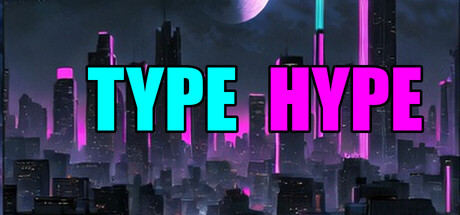
TYPE HYPE's static visual assets — the main-menu skyline background, achievement icons (34 color + 34 grayscale variants = 68 PNGs), exhibition-level theme backgrounds (15 themes × 6 layer files = 90 PNGs), and Steam capsule backgrounds — were created with the assistance of generative AI image tools (primarily OpenAI's GPT image generation). All AI-generated assets were curated, selected, and approved by the developer. No AI runs at runtime in the shipped product. Music (59 tracks) is human-composed and sourced from Pixabay under the Pixabay Content License. Code was written collaboratively by the developer with an AI coding assistant. The game contains no AI-generated content shown to players during gameplay (procedural music layering is rule-based, not AI).
Some visual assets and parts of the development workflow for Forest of Numbers were created with the assistance of generative artificial intelligence tools. All content was curated, reviewed, and refined by the developer before being included in the final game.
This application uses local AI technology for interaction, although the chosen TTS and STT plugins have not yet been selected because the word game is still under development.
However, it is confirmed that plugins from the FAB marketplace will be used. And AI processing will run offline on player's device. No internet connection will be required.
I'm a solo developer. Without AI tools, this game would not exist — the art, music, and copy would have been unaffordable to commission and impossible for me to produce alone. AI let me focus on what I actually built by hand: the game design, the mechanics, the 181 tomes, the scoring engine, the balance, the words.
What's AI-generated:
• Visual art (backgrounds, character portraits, tome/scroll/blessing illustrations, store page art) — generated with AI image tools, curated and selected by me
• Music — generated with AI audio tools, curated and selected by me
• Some flavor text and descriptive copy — drafted with AI assistance, edited by me
What's not AI:
• The game itself — every system, mechanic, balance number, character design, and core decision is mine
• The dictionary, the tile distributions, the scoring math, the run structure, the boss fights — hand-built
• The code — written by me with the help of AI assistants the same way any modern developer uses them
No AI runs at runtime. Nothing is generated for you on the fly during play. Everything you see was reviewed before it shipped.
This game uses generative AI tools during development.
All voice-over audio is generated using AI tools.
The game does not use live generative AI during gameplay.
Generative Artificial Intelligence was used to assist in the development of this game, including support with aspects of the game's code.
AI tools were also used to create some graphical assets, including selected images used for promotional material and the Steam store page.
The developer utilized AI tools to assist in the development process. AI was used to help generate concept art, some minor 2D environmental textures/UI elements, and to assist with structuring the game's programming framework. All AI-assisted content has been reviewed, heavily modified, and manually integrated by the developer to match the game's specific artistic vision and mechanics.