Public Steam disclosure research24,658 disclosures tracked
Where do games disclose AI use?
Search developers’ Steam disclosures, compare classified AI use across
games, and follow recorded changes.
This index adds cross-game classifications and statistics to
statements published on individual store pages.
Groups reflect automatic analysis of public disclosures; mature records are excluded. These counts do not measure AI use across all of Steam.
Missing or unclear statements cannot establish whether a game uses AI.
Generative AI tools were used during development to create visual references and assist with the creation of some 3D assets. AI-generated outputs used as source material were further edited, refined, or integrated by the developer before inclusion in the game. Generative AI may also be used to create or assist with some music, sound, and localization assets, with outputs reviewed and edited before inclusion. No generative AI is used at runtime.
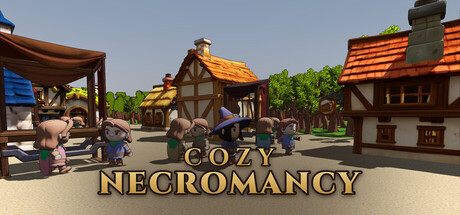
A small language model (Google's Gemma 3 270M) runs entirely on the player's computer, with no network connection. It writes short lines of villager small talk, the ritual oracle's one- or two-sentence hint after a failed ritual, and routine filler records in the in-game archive, and it chooses which of our pre-written dialogue lines fits the moment.
Guardrails: the player never types to the model — there is no text input anywhere in the game. Every prompt is a fixed template we wrote, filled in from game state such as a character's name, the time of day and the current quest. Output is short by construction (hard token caps, and lines over a few words are cut or discarded); lines that read as narration, stage directions or an assistant speaking are rejected; dialogue choices are constrained to our own authored lines. Any failure falls back to written lines. Players can turn the model off in Settings, and the game plays identically on written lines alone.
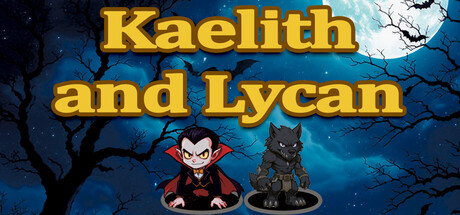
All characters, creatures and the world of Vampus are designed and art-directed by the developer, a visual artist. Many designs started from the developer's own drawings and paintings. Generative AI tools (Microsoft Copilot and Meshy) were used to develop some of the designs and to turn them into 3D models and textures. Story and music are made by the developer.
Some of this game's art assets and store page text were created with the help of generative AI tools. All AI-assisted material is pre-rendered and reviewed by the developer before release. No content is generated by AI while the game is running.
This game uses AI-assisted art assets generated prior to release for character art, scene backgrounds and store promotional materials. All AI-generated content was completed before the game's launch; no real-time AI content generation or connections to external AI services will occur during gameplay.
Some visual assets in the game were created with the assistance of generative AI tools. All gameplay systems, mechanics, and interactive content were developed by the team.
Generative AI was used during development to create or refine pre-generated visual assets, music and audio, and localization drafts included in the game and its marketing materials. All such content was reviewed and curated by the developer before release. The game does not generate AI content during play and does not send player data to external AI services.
“AI tools were used to upscale/enhance original artwork created by the developer. The resulting assets were subsequently manually reworked and edited to match the game's intended art direction.”
I'm a solo developer, and I'd rather be upfront about where AI tools were used.
The character base meshes and some of their textures were generated with AI.
Every one of them was then brought into Blender and worked over by hand. Cleaned up, edited, re-textured and animated before it went anywhere near the game.
They're all rendered with a toon shader I wrote myself.
Everything else is made by hand.
The tavern, the props and the whole environment are hand modeled.
Other than that, everything else in the game was made by me.
Some of the visual material for this game was created with the help of generative AI tools. Specifically, the opening cinematic and several of the promotional images on this store page were produced using AI-assisted image generation, followed by manual editing, compositing and art direction by our team. All gameplay, code, design and audio were created without generative AI.
This work is fully developed and produced with the assistance of AI: character animations, scene maps, interface UI, sound effects, music and other art and audio materials are all generated by AI; The core gameplay mechanism of the game relies on manual planning to complete the development outline, and the implementation of segmented content and function building are all assisted by AI to complete the development work.
"We utilized generative AI tools to assist in the creation of 2D art assets, including in-game enemy portraits, familiar graphics, and the background illustrations, banners, and logo artwork displayed on our Steam Store page and library graphics."
Generative AI tools were used during development to create or assist with some visual assets, audio, and 3D assets used in the game and its promotional materials. No AI-generated content is created during gameplay, and the game does not connect to external AI services.
Regent City uses generative AI in parts of its production pipeline, including some character artwork and voice performances. All shipped assets are selected, edited, and art-directed by the solo developer to maintain a consistent visual and narrative identity.
The game was made only by me and my friend, we are starting out in this endeavor, and AI helped us a lot.
The programming code was assisted by artificial intelligence.
Some music might have been altered using artificial intelligence.
Images outside of gameplay used to promote the game were adjusted using artificial intelligence.
Some promotional artwork and achievement icons were created using generative AI and then manually edited by the developer. No gameplay content is generated by AI.
"We used generative AI tools during the development of this game. Specifically, pre-generated AI tools were utilized to create and refine some of the 2D visual assets, including concept art, UI elements, and promotional store graphics. All AI-generated content was reviewed, edited, and curated by our team to ensure quality and compliance with Steam's content policies. The game itself does not generate any live AI content during runtime."
Chessferatu Graphics were generated using AI tools. Codex was used in the process of creating and refining code and in the porting of the code to different systems (Mobile to PC).
The demo version contains temporary AI (generated music and promotional artwork only). These assets will be replaced with original content in the final version of the game.
Some of the in-game 2D textures and visual effects were created using AI-based tools. These elements are modified in terms of art and development throughout the production process to ensure they meet our quality standards and creative vision.
The Steam store page banners and promotional creatives for the app were created with the assistance of generative AI tools. The in-game assets were either created manually or edited afterwards, but the visual materials used for marketing (such as header images, capsules, and promotional banners) include AI-generated elements.
A small number of icons and one minor 3D model were generated with AI tools and then edited by the developer. All AI-assisted assets were reviewed and refined before inclusion. No content is generated at runtime.
One developer. AI tools helped with images and text because some things are bigger than one pair of hands. Everything you see reflects my own creative decisions.
AI-powered image generation tools were used to create the game's visual elements, including character and environment images. AI tools were also used to support translations into multiple languages.
The vast majority of assets in this game were created from scratch by our team, including hand-crafted models, textures, animations, environments, and gameplay systems. However, to support our creative process and speed up certain production stages, we used generative AI tools for a limited portion of the assets. This includes some 2D/3D art elements (via AI art models), a selection of animation sequences, and certain text inscriptions or UI elements. All AI-generated content was carefully reviewed, edited, and integrated by our team to ensure quality, consistency, and compliance with our vision. No live AI generation occurs during gameplay. We remain committed to delivering a polished, human-directed experience.