Public Steam disclosure research25,981 disclosures tracked
Where do games disclose AI use?
Search developers’ Steam disclosures, compare classified AI use across
games, and follow recorded changes.
This index adds cross-game classifications and statistics to
statements published on individual store pages.
Groups reflect automatic analysis of public disclosures; mature records are excluded. These counts do not measure AI use across all of Steam.
Missing or unclear statements cannot establish whether a game uses AI.
Some visual assets in this game were created with the assistance of generative AI tools.
AI-assisted content includes some capsule images and promotional images used on the Steam store page, as well as some in-game background images, item icons, and UI images. The generated results were selected, edited, and adjusted by the developer to match the game's atmosphere and content.
The game does not use live-generated AI during gameplay. It does not include any feature where AI generates text, images, voice, music, or other content in response to player input while the game is running.
Some visual assets in the game were created or assisted using AI-based tools during development. All generated content has been reviewed, modified, and integrated to fit the game's style and design.
Generative AI was used as an assistive tool during development to draft text and translations, and to create some 2D images and graphical assets. As there is currently no budget to hire a dedicated artist, certain visual elements are initially generated with AI and then manually modified and refined. No AI content is generated live at runtime.
AI Usage Disclosure
AI tools were used to assist in writing and reviewing portions of the game’s code, as well as for generating early marketing materials. All AI-generated content was reviewed, modified, and finalized by the developer.
Some of the playable character and enemy models currently in the game were made with help from generative AI tools. I’m still working on these assets during development, and some or all of them may be replaced before release. I’ll update this disclosure if that changes.
Character portraits were created using AI. As well, as modification to existing character portraits to create different expressions.
AI was not used for writing or audio purposes.
Some of the visuals and text in this game were initially created using generative AI tools as part of the development process. All content was subsequently reviewed, edited, and adapted manually by the team to ensure its quality, consistency, and suitability for the final gaming experience.
We use AI tools where appropriate to streamline our workflow, specifically for pre-generating certain in-game assets such as images and music, as well as assisting with translations
AI was used to fix, format, and translate Steam Store Page assets and in-game text to various languages; to generate products icons (other sprites and textures are handmade)
SurfaceBox uses generative artificial intelligence to create some selected visual assets, including certain promotional images from the store page and some in-game graphic elements. Most of the assets, as well as programming, game design and final integration, were created and reviewed manually by the developer. No artificial intelligence is used to generate content in real time during the game.
This game uses generative AI tools to assist in creating some art assets, sound effects, and text content. All generated content has been reviewed and edited by humans to ensure compliance and quality.
This game contains pre-generated content created with the assistance of generative artificial intelligence (AI).
Some or all character illustrations, background scenes, visual assets, story content, character dialogue, voice content, and background music were created or assisted using generative AI technologies during development. All such content was reviewed, refined, and integrated into the final version of the game by the development team.
Generative AI video tools were used to assist in creating some trailer and marketing video materials. The game itself does not use live-generated AI content.
Some in-game images and user interface (UI) elements were created with generative AI assistance, then reviewed and edited by our team for use in the game and store materials.
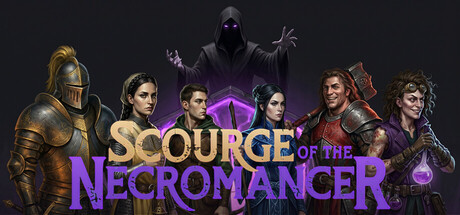
Scourge of the Necromancer makes significant use of generative AI in its production. We want to be fully upfront about it.
Visual assets (2D images + video) — all AI-generated, then human-curated and human-edited. Every shipped image and video in the game and on the Steam store page was produced with AI tools, then reviewed, edited, and selected by hand by the developer. This covers: Steam store capsules and library art, the store-page background, all in-game achievement icons, hero portraits, the Necromancer concept art, decorative UI elements, all real-time cinematics (the defeat sequence and all victory variants), and the marketing trailer's atmospheric segments. Image models used: Google Imagen 4, Google Veo 3.1 (video), Nano Banana Pro / Gemini 3 Pro Image (Google), Black Forest Labs FLUX.2, Recraft V4 Pro, Ideogram V3, and Bria RMBG-2.0 (background removal). Final assets received human editing — compositing, color correction, retouching, frame extraction, masking, and rejection of unusable outputs.
3D models — AI-generated base meshes, then human-edited in Blender. The in-game hero character models (Knight, Cleric, Ranger, Wizard, Warrior, Alchemist) started as outputs from Tripo AI's generative 3D model service (FBX + texture PNGs), but each model was then opened in Blender by the developer for hand editing — mesh cleanup, geometry adjustments, and texture fixes — before being exported for use in the game. Each finished model was imported into Unity with hand-tuned scale, rotation, material configuration, and import-setting curation. Unsatisfactory generations were discarded and re-prompted; the Blender editing step is substantial enough that the shipped models are not pure AI output.
Music — AI-generated, then human-curated and post-processed. All music tracks in the game (menu, gameplay layers, boss phases, victory, defeat) were produced with Google Gemini's music generation, then human-selected, trimmed, looped, and mixed by the developer.
Necromancer voice — AI-generated, then human-edited. The Necromancer's spoken syllables were synthesized with ElevenLabs Text-to-Speech (Eleven Multilingual v2 model), then pitch-shifted, EQ'd, and processed with reverb in Audacity by the developer to produce the final in-game delivery. No other character has spoken voice lines in the shipped game.
Sound effects — all AI-generated. Every SFX in the game (ability sounds, ambient layers, UI sounds, footsteps, kill/spawn cues, tile state cues, boss audio) was produced with ElevenLabs Sound Effects, then human-selected, trimmed, processed, and mixed by the developer. The Necromancer voice lines use ElevenLabs Text-to-Speech (covered separately above).
Runtime behavior. The game does NOT use live-generated AI content at runtime. Every shipped asset is a fixed, pre-rendered file. Player-facing text, dialogue, narrative, lore, and game design were written by the developer without AI generation.
Code. Code development used Claude (Anthropic) as an AI coding assistant. This is behind-the-scenes efficiency tooling not consumed by players, but we mention it here for full transparency.
Some of the artwork shown in our store screenshots, trailer, and on the app's in-game screen is placeholder media created with an AI image-generation tool (Google's Gemini image model). This includes the example movie posters, album covers, TV-series key art, and the cinematic "now playing" stills.
These images depict entirely fictional films, albums, and shows. They exist only as copyright-safe demo content so we can show the app's interface without displaying real, copyrighted media that the user does not own the rights to publish. They do not represent any real title.
Reel Room is a media player for the user's own library (Jellyfin server, local files, and network shares). The app performs no AI generation at runtime — all media a player sees in normal use is their own content. This is pre-generated content only; there is no live/runtime-generated AI.
Yes, some environment elements and decorative assets in the game were created with the assistance of generative AI. All AI-generated content has been manually edited and polished to ensure it fits the game's overall art style and to guarantee the absence of any prohibited content.
Some visual assets (pixel art backgrounds, card sprites) and marketing copy (store descriptions) were created with the assistance of generative AI tools. All AI-generated content was reviewed, curated, and refined by the developer.
We believe that no person should be replaced by AI. All Primals — their models, animation, rigging, textures, SFX, and VFX — have been handcrafted by skilled artists.
Our developers may choose to use generative AI as part of an iterative, exploratory development process, but how and when is left to individual team members, and the final product always reflects the creativity and expression of our own development team.
As a small team, we have licensed some icons and 2D assets from external creators, and it is possible that some of these creators have used generative AI.
Generative AI was used to assist in the creation of promotional visual assets, including the game's logo and certain store page artwork. No gameplay content, code, story, dialogue, quests, characters, or game mechanics are generated by AI. All gameplay screenshots represent actual in-game content.
This game uses generative AI tools in limited ways to support development. Some music tracks were created using AI music generation tools, and certain marketing or store page visual assets were assisted by AI. All core gameplay and implementation were created by the developer.
Music in Keeping Up is AI-assisted: tracks generated with Suno from prompts written, selected and edited by the developer. Code was written with the help of an AI coding assistant, under the developer's direction and review. Most in-game artwork (character portraits, board art, store capsules) are human-made by the project's artists. There are some placeholder AI artwork images.
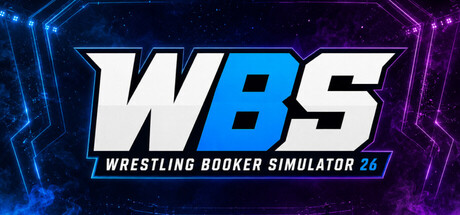
Generative AI tools may be used during the development and marketing of WBS26 to assist with concept art, promotional images, placeholder visual materials, character portraits, text editing, localization support, and production workflow.
Some character portraits or visual assets may be created or assisted by generative AI tools and then reviewed, selected, and edited by the developer before being included in the game.
The game does not use generative AI to create gameplay content in real time for the player. AI-assisted materials are reviewed and edited by the developer before being included in the game or on the Steam store page.
All visual assets, character art, backgrounds, music, sound effects, dialogue implementation, and programming assistance for this game were created with the help of generative AI tools. The original concept, story, characters, direction, and overall game design were created by the developer. AI was used as a creative production tool during development, while all final content selection, editing, and integration were directed by the developer.
Generative AI tools were used during development to assist in creating, texturing, and editing background elements for the promotional marketing materials, library assets, and store page capsules. No AI content is generated live during gameplay.
This game contains AI-generated content. Visual assets, sound effects, music, code, and various creative elements were created with the assistance of AI tools. The overall game concept, direction, gameplay ideas, and project design were created and directed by the developer.
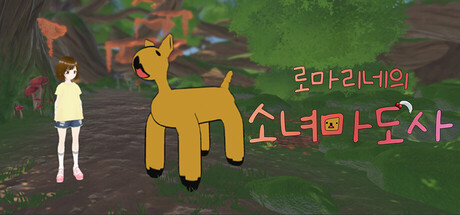
이 게임의 아래 항목은 생성형 인공지능을 활용해 제작되었습니다.
하기된 모델링은 생성형 인공지능을 활용해 제작되었습니다.
- 보스 1개체
하기된 사운드트랙은 제작된 사운드트랙을 Suno.ai를 활용해 리믹스 되었습니다.
- 06.Boss3_Night Of Fear_Rock Ver
- 07.Boss4_Time For Proof_Rock Ver
- 08.Final Boss_A Glorious Battle
- 09.Luminal Trace_Ending Ver
Some 2D static art in this game (for example component icons in the UI, backgrounds, or similar decorative assets) was created with assistance from generative AI tools during development. Those assets were reviewed, edited, recolored, and cropped by humans before being included in the shipped build. The game does not call generative AI while you play—there is no live AI-generated story, dialogue, or imagery shown at runtime; gameplay rules, levels, and balance are implemented by design and code. We will update this statement and its localizations if our use of generative AI changes.
We used AI to generate initial music tracks, concept art, and temporary translations into some languages.
All materials were then thoroughly edited, reworked, and finalized by humans.
Nothing went straight from the generator into the game.
This game was developed with the assistance of generative artificial intelligence (AI) tools to help a solo developer complete the project.
Specific uses of AI include:
1. Art Assets: Some visual assets in the game, such as background images and UI elements, were created with the assistance of AI image generation tools.
2. Code and Logic Assistance: The basic code framework and certain gameplay logic scripts were developed with the assistance of AI coding tools.
This game does not contain any real-time AI-generated content. All game assets and content were generated in advance, manually reviewed by the developer, and packaged as fixed content within the game.
Some visual assets in this game were created with the assistance of generative AI tools.
AI-assisted content includes some capsule images and promotional images used on the Steam store page, as well as some in-game background images, item icons, and UI images. The generated results were selected, edited, and adjusted by the developer to match the game's atmosphere and content.
The game does not use live-generated AI during gameplay. It does not include any feature where AI generates text, images, voice, music, or other content in response to player input while the game is running.
Some visual assets in the game were created or assisted using AI-based tools during development. All generated content has been reviewed, modified, and integrated to fit the game's style and design.
Generative AI was used as an assistive tool during development to draft text and translations, and to create some 2D images and graphical assets. As there is currently no budget to hire a dedicated artist, certain visual elements are initially generated with AI and then manually modified and refined. No AI content is generated live at runtime.
AI Usage Disclosure
AI tools were used to assist in writing and reviewing portions of the game’s code, as well as for generating early marketing materials. All AI-generated content was reviewed, modified, and finalized by the developer.
Some of the playable character and enemy models currently in the game were made with help from generative AI tools. I’m still working on these assets during development, and some or all of them may be replaced before release. I’ll update this disclosure if that changes.
Character portraits were created using AI. As well, as modification to existing character portraits to create different expressions.
AI was not used for writing or audio purposes.
Some of the visuals and text in this game were initially created using generative AI tools as part of the development process. All content was subsequently reviewed, edited, and adapted manually by the team to ensure its quality, consistency, and suitability for the final gaming experience.
We use AI tools where appropriate to streamline our workflow, specifically for pre-generating certain in-game assets such as images and music, as well as assisting with translations
AI was used to fix, format, and translate Steam Store Page assets and in-game text to various languages; to generate products icons (other sprites and textures are handmade)
SurfaceBox uses generative artificial intelligence to create some selected visual assets, including certain promotional images from the store page and some in-game graphic elements. Most of the assets, as well as programming, game design and final integration, were created and reviewed manually by the developer. No artificial intelligence is used to generate content in real time during the game.
This game uses generative AI tools to assist in creating some art assets, sound effects, and text content. All generated content has been reviewed and edited by humans to ensure compliance and quality.
This game contains pre-generated content created with the assistance of generative artificial intelligence (AI).
Some or all character illustrations, background scenes, visual assets, story content, character dialogue, voice content, and background music were created or assisted using generative AI technologies during development. All such content was reviewed, refined, and integrated into the final version of the game by the development team.
Generative AI video tools were used to assist in creating some trailer and marketing video materials. The game itself does not use live-generated AI content.
Some in-game images and user interface (UI) elements were created with generative AI assistance, then reviewed and edited by our team for use in the game and store materials.
Scourge of the Necromancer makes significant use of generative AI in its production. We want to be fully upfront about it.
Visual assets (2D images + video) — all AI-generated, then human-curated and human-edited. Every shipped image and video in the game and on the Steam store page was produced with AI tools, then reviewed, edited, and selected by hand by the developer. This covers: Steam store capsules and library art, the store-page background, all in-game achievement icons, hero portraits, the Necromancer concept art, decorative UI elements, all real-time cinematics (the defeat sequence and all victory variants), and the marketing trailer's atmospheric segments. Image models used: Google Imagen 4, Google Veo 3.1 (video), Nano Banana Pro / Gemini 3 Pro Image (Google), Black Forest Labs FLUX.2, Recraft V4 Pro, Ideogram V3, and Bria RMBG-2.0 (background removal). Final assets received human editing — compositing, color correction, retouching, frame extraction, masking, and rejection of unusable outputs.
3D models — AI-generated base meshes, then human-edited in Blender. The in-game hero character models (Knight, Cleric, Ranger, Wizard, Warrior, Alchemist) started as outputs from Tripo AI's generative 3D model service (FBX + texture PNGs), but each model was then opened in Blender by the developer for hand editing — mesh cleanup, geometry adjustments, and texture fixes — before being exported for use in the game. Each finished model was imported into Unity with hand-tuned scale, rotation, material configuration, and import-setting curation. Unsatisfactory generations were discarded and re-prompted; the Blender editing step is substantial enough that the shipped models are not pure AI output.
Music — AI-generated, then human-curated and post-processed. All music tracks in the game (menu, gameplay layers, boss phases, victory, defeat) were produced with Google Gemini's music generation, then human-selected, trimmed, looped, and mixed by the developer.
Necromancer voice — AI-generated, then human-edited. The Necromancer's spoken syllables were synthesized with ElevenLabs Text-to-Speech (Eleven Multilingual v2 model), then pitch-shifted, EQ'd, and processed with reverb in Audacity by the developer to produce the final in-game delivery. No other character has spoken voice lines in the shipped game.
Sound effects — all AI-generated. Every SFX in the game (ability sounds, ambient layers, UI sounds, footsteps, kill/spawn cues, tile state cues, boss audio) was produced with ElevenLabs Sound Effects, then human-selected, trimmed, processed, and mixed by the developer. The Necromancer voice lines use ElevenLabs Text-to-Speech (covered separately above).
Runtime behavior. The game does NOT use live-generated AI content at runtime. Every shipped asset is a fixed, pre-rendered file. Player-facing text, dialogue, narrative, lore, and game design were written by the developer without AI generation.
Code. Code development used Claude (Anthropic) as an AI coding assistant. This is behind-the-scenes efficiency tooling not consumed by players, but we mention it here for full transparency.
Some of the artwork shown in our store screenshots, trailer, and on the app's in-game screen is placeholder media created with an AI image-generation tool (Google's Gemini image model). This includes the example movie posters, album covers, TV-series key art, and the cinematic "now playing" stills.
These images depict entirely fictional films, albums, and shows. They exist only as copyright-safe demo content so we can show the app's interface without displaying real, copyrighted media that the user does not own the rights to publish. They do not represent any real title.
Reel Room is a media player for the user's own library (Jellyfin server, local files, and network shares). The app performs no AI generation at runtime — all media a player sees in normal use is their own content. This is pre-generated content only; there is no live/runtime-generated AI.
Yes, some environment elements and decorative assets in the game were created with the assistance of generative AI. All AI-generated content has been manually edited and polished to ensure it fits the game's overall art style and to guarantee the absence of any prohibited content.
Some visual assets (pixel art backgrounds, card sprites) and marketing copy (store descriptions) were created with the assistance of generative AI tools. All AI-generated content was reviewed, curated, and refined by the developer.
We believe that no person should be replaced by AI. All Primals — their models, animation, rigging, textures, SFX, and VFX — have been handcrafted by skilled artists.
Our developers may choose to use generative AI as part of an iterative, exploratory development process, but how and when is left to individual team members, and the final product always reflects the creativity and expression of our own development team.
As a small team, we have licensed some icons and 2D assets from external creators, and it is possible that some of these creators have used generative AI.
Generative AI was used to assist in the creation of promotional visual assets, including the game's logo and certain store page artwork. No gameplay content, code, story, dialogue, quests, characters, or game mechanics are generated by AI. All gameplay screenshots represent actual in-game content.
This game uses generative AI tools in limited ways to support development. Some music tracks were created using AI music generation tools, and certain marketing or store page visual assets were assisted by AI. All core gameplay and implementation were created by the developer.
Music in Keeping Up is AI-assisted: tracks generated with Suno from prompts written, selected and edited by the developer. Code was written with the help of an AI coding assistant, under the developer's direction and review. Most in-game artwork (character portraits, board art, store capsules) are human-made by the project's artists. There are some placeholder AI artwork images.
Generative AI tools may be used during the development and marketing of WBS26 to assist with concept art, promotional images, placeholder visual materials, character portraits, text editing, localization support, and production workflow.
Some character portraits or visual assets may be created or assisted by generative AI tools and then reviewed, selected, and edited by the developer before being included in the game.
The game does not use generative AI to create gameplay content in real time for the player. AI-assisted materials are reviewed and edited by the developer before being included in the game or on the Steam store page.
All visual assets, character art, backgrounds, music, sound effects, dialogue implementation, and programming assistance for this game were created with the help of generative AI tools. The original concept, story, characters, direction, and overall game design were created by the developer. AI was used as a creative production tool during development, while all final content selection, editing, and integration were directed by the developer.
Generative AI tools were used during development to assist in creating, texturing, and editing background elements for the promotional marketing materials, library assets, and store page capsules. No AI content is generated live during gameplay.
This game contains AI-generated content. Visual assets, sound effects, music, code, and various creative elements were created with the assistance of AI tools. The overall game concept, direction, gameplay ideas, and project design were created and directed by the developer.
이 게임의 아래 항목은 생성형 인공지능을 활용해 제작되었습니다.
하기된 모델링은 생성형 인공지능을 활용해 제작되었습니다.
- 보스 1개체
하기된 사운드트랙은 제작된 사운드트랙을 Suno.ai를 활용해 리믹스 되었습니다.
- 06.Boss3_Night Of Fear_Rock Ver
- 07.Boss4_Time For Proof_Rock Ver
- 08.Final Boss_A Glorious Battle
- 09.Luminal Trace_Ending Ver
Some 2D static art in this game (for example component icons in the UI, backgrounds, or similar decorative assets) was created with assistance from generative AI tools during development. Those assets were reviewed, edited, recolored, and cropped by humans before being included in the shipped build. The game does not call generative AI while you play—there is no live AI-generated story, dialogue, or imagery shown at runtime; gameplay rules, levels, and balance are implemented by design and code. We will update this statement and its localizations if our use of generative AI changes.
We used AI to generate initial music tracks, concept art, and temporary translations into some languages.
All materials were then thoroughly edited, reworked, and finalized by humans.
Nothing went straight from the generator into the game.
This game was developed with the assistance of generative artificial intelligence (AI) tools to help a solo developer complete the project.
Specific uses of AI include:
1. Art Assets: Some visual assets in the game, such as background images and UI elements, were created with the assistance of AI image generation tools.
2. Code and Logic Assistance: The basic code framework and certain gameplay logic scripts were developed with the assistance of AI coding tools.
This game does not contain any real-time AI-generated content. All game assets and content were generated in advance, manually reviewed by the developer, and packaged as fixed content within the game.