Public Steam disclosure research25,376 disclosures tracked
Where do games disclose AI use?
Search developers’ Steam disclosures, compare classified AI use across
games, and follow recorded changes.
This index adds cross-game classifications and statistics to
statements published on individual store pages.
Groups reflect automatic analysis of public disclosures; mature records are excluded. These counts do not measure AI use across all of Steam.
Missing or unclear statements cannot establish whether a game uses AI.
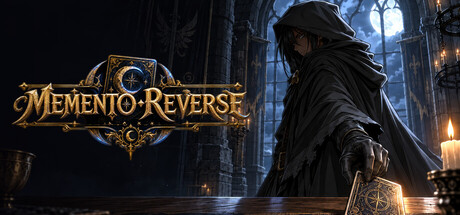
Some of the card illustrations, title art, UI elements, and character voices in this game, as well as the store capsule images, library artwork, and other promotional images, were created with generative AI, then selected and adjusted by the developer. The English text is based on AI translation and has been reviewed by the developer.
As an optional feature, players can connect their own Claude (Anthropic's AI assistant) through a Claude Desktop extension to play against it or watch it play against the CPU. Claude's lines shown in the game are written by the player's own Claude; the game itself does not generate text or communicate with any AI service.
Cheese Racers is designed, directed and reviewed by a solo developer and built with an AI assistant, which wrote the code and drafted much of the text. The visuals (maps, cheese skins, crates) are drawn by that code as the game runs, not by AI image generators. No AI-generated music or voices, and nothing is generated by AI while you play.
Ransom Wave uses generative AI during gameplay.
The game uses AI models to generate fictional victim dialogue, spoken voice responses, selected narrative text, and limited in-game guidance in real time. These outputs react to the player's typed input or optional microphone input and can vary between playthroughs.
The game's setting, characters, gameplay rules, scenario structure, safety constraints, and core narrative direction are created and controlled by the development team. AI-generated outputs are constrained by developer-authored character profiles, gameplay states, and content rules. Player microphone audio may be transcribed only to enable the current voice conversation. The game provides a text-input alternative when the microphone is disabled.
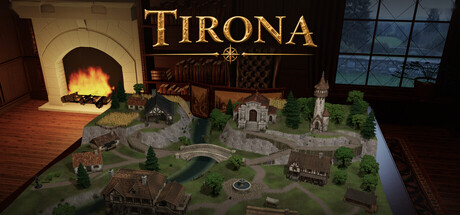
Tirona's development used AI tools for much of its 2D artwork (character portraits, card and scene illustrations, quest illustrations), some 3D models, the music (ElevenLabs) and the character voice performers' reference voices. All of it was selected, edited and placed by the developer, and ships as fixed game content.
While you play, a third-party large language model writes the narration and the dialogue of non-player characters in response to what you type or say. Character voices are synthesised locally on your PC from the generated text. You can optionally generate a portrait for your character from your creation choices.
The AI never decides the rules: dice, hit points, gold, items, experience, spells and quest progress change only through the game's own systems. Romance is opt-in, and anything sexual fades to black.
The game uses pre-generated AI-assisted artwork, including some game visuals and Steam promotional artwork. An optional local large language model generates character conversations, some fictional social text and short resident plans during play. Players can turn the local AI feature off and continue playing.
Elya uses generative AI for optional real-time character conversations and synthesized speech. AI-assisted tools were also used to prepare portions of the store localization and selected marketing artwork. The game includes bundled local models, and users may optionally connect compatible third-party AI services or configure their own providers. Live-generated content is based on user input and character settings.
Table Night has an optional AI LLM game master: if the host turns it on with their own AI account, a language model narrates the match and judges what players write, while the game rolls the dice and decides every result. The AI is instructed to keep everything suitable for teens. Players' text is sent to the host's AI provider, and any table can be played with a human game master or none instead.
This game contains no pre-generated content. Everything in the game is generated in real time by AI as you play. We want it to respond to every culinary idea a player has with something interesting and one of a kind. We use top-tier Claude models (such as Claude Fable 5.1) to deliver the best possible experience.
Some artwork and localized text were created with generative AI assistance. Optional AI chat generates text replies through a service chosen and configured by the player: OpenAI, Claude, Gemini, DeepSeek, Kimi or a custom compatible endpoint.
Nook uses generative AI for character artwork and video assets. During use, AI generates personalized dialogue, speech, and short video responses based on the player's conversation.
During use, the speech recognition and AI features connect to cloud services configured by you (Alibaba Cloud / Tencent Cloud / iFlytek / Volcano Engine speech recognition, or OpenAI-compatible LLM endpoints), and the resulting text is generated in real time by the selected service.
Doctrine Strike uses generative AI in its art pipeline. Unit models, structures, faction artwork, and the key art on this page were produced with AI image and 3D generation tools, then reviewed, edited and assembled by the team before shipping. Every asset that reaches the game passes human review.
While playing, players can also generate landmark models, units and faction artwork from their own text descriptions. This uses third-party AI services reached through our own server and costs credits bought in-game through Steam. The results are stored only on the player's own computer and are never shared with other players.
Generative AI was used to create some artwork and UI assets, summoning animation videos, and background music. Details of the tools used are listed under Settings > Credits in the game.
During gameplay, AI running on your PC uses the true name and essence you enter to generate Textus data, including abilities and moves, as well as artwork.
Generated results may vary. Depending on the outcome of the safety check, a placeholder explaining why the artwork is unavailable may appear instead of the generated image. The Textus's abilities and moves remain usable.
STTS uses AI speech models while you use it. Text you type is turned into speech by text-to-speech models (gTTS, Qwen3-TTS, Supertonic), including voice cloning from a short recording you provide. Speech you hear is transcribed into captions by Whisper. No AI-generated content is pre-rendered or shipped with the app.
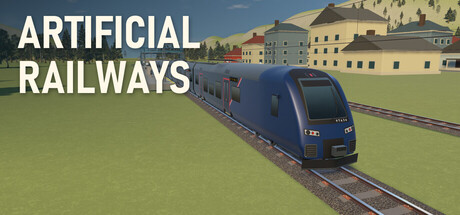
Artifical Railways was developed with extensive AI assistance, including programming and the creation of custom train models, procedural scenery, interface elements, and procedural sound effects. The game also incorporates third-party models, music, sound recordings, and fonts. Station announcements use AI-generated speech synthesized locally during gameplay from announcement templates and in-game railway information. This speech generation does not connect to an external AI service.
SoundGoat includes an optional real-time AI voice changer and offline dictation. Both run entirely on your own PC. One community RVC voice model ("Egirl") is included. Parts of the code and texts were written with AI assistance
AI SOUL uses generative AI for conversational text, synthesized speech and speech-driven facial animation. Character imagery and store artwork include AI-generated material. Core conversation models run locally. Xiaoya is a synthetic character, not a live human operator. Responses may be inaccurate.
Generative AI-assisted tools were used during development for parts of localization and written marketing content. During gameplay, automated translation may be used to translate player-written chat messages between supported languages. Original player messages are written by users and are not generated by AI.
Choban uses generative AI to power conversations and interactions with certain NPCs. AI-generated dialogue is used to create more natural, dynamic, and context-aware responses during gameplay. All core gameplay systems, quests, progression, world generation, and game mechanics are designed by the developers and are not generated by AI. AI is used solely to enhance NPC interactions and player immersion.
Some artwork, promotional images and translations were created with generative AI. Computer players generate short photo captions through an external AI service. Players can report inappropriate captions.
Realm utilizes generative artificial intelligence for various assets, including artwork, and audio. Additionally, the in-game map creator suite features an integrated AI assistant to help creators realize their vision.
3D models: the AfterPub models (plushies, items, props) come from an AI 3D generator; the files are named like Tripo exports.
2D assets: mix between AI and an Actual Human Designer and Artist.
Commentator voice: produced by Piper, an AI text-to-speech engine, while the game runs.
Music: Pixabay tracks.
HearthMoon uses AI to generate NPC dialogue during gameplay and synthesize NPC voices. Spoken input is transcribed so villagers and the dragon companion can respond to the player. AI-assisted artwork and writing are also used in development and in store-page marketing. Conversations are experimental and responses may be inconsistent.
NPC dialogue in Ruiwen’s Romance of the Three Kingdoms: The Life of a Persuader is generated in real‑time by a locally‑running AI model. All content is computed offline on your own device, with no data uploaded to external servers.
The game’s story framework, directed plotlines, numerical judgement rules and ending conditions are all hand‑crafted. The AI is only responsible for generating character conversations.
Multiple safety guardrails are built‑in: automatic profanity detection, historical timeline checks to avoid anachronisms, character‑stance locking and fallback responses. These ensure every line of dialogue fits the character’s identity and historical context.
AI tools assisted with static artwork, marketing images and localization. During play, a bundled language model running locally on your PC generates dialogue, narrative and diary text from your input, card instructions and conversation context. No external AI service or API key is required. No images or voices are generated during play. Output quality, response time and consistency vary with your hardware and input.
I’m developing FlyFuture as a solo developer and use AI tools to assist with troubleshooting, programming, design, and optimization. On top of this, there will be planes in the future that are commandable through OpenAi's Speech to command functions...similar to now and not so far future aerial combat usage of unmanned wingman jets.
I don’t agree with many of the ways AI is being used, and I understand why people have concerns about it. I believe AI should should be used as a tool and not to take over entire workloads, replace creative judgment, or become a shortcut for producing unoriginal work. Used thoughtfully, though, I think it can be a valuable tool...which is how I use it.
StoryNow uses generative AI locally during gameplay. Llama.cpp generates prompts that ComfyUI uses to create visual-novel artwork on the player's device. The game does not connect to an external AI generation service.
During development, we used generative AI tools to create some of the content included in the game, such as images, text, and audio.
During gameplay, generative AI may create audio content in response to race events. We have implemented safeguards to prevent or reduce the generation of illegal or inappropriate content.
Unwritten uses generative AI as part of its core gameplay. AI systems interpret the player's freely written actions and generate narrative responses within an authored world, story and set of rules. AI inference runs locally on the player's computer.
Software engineering is primarily by hand in C# and python, with local SLM's, run via Ollama, and occasional cloud-based LLM's used to research knowledge deficits and prototype code snippets for specific systems that map to those deficits. Any AI-generated code was reviewed line-by-line, hand-integrated and heavily modified.
The application requires local file access to files selected by the player from a standard operating system folder browser with permissions. It scans the user's system via the psutil and gputil standard python packages to ascertain the specifications of the user's system to select a model that will match their system's performance profile.
Pinocchio and Hunyuan were used to generate 3D models of mushrooms from 19th century public domain botanical illustrations, and the integrated SLM model is used to generate text labels and summaries at runtime.
The application has absolutely no chat interface. An SLM is integrated locally as a black-box system with robust system prompts to generate structured output in the form of JSON based on the player's file inputs. The JSON is consumed by the game to generate maps and levels.
Additional Specifications & Technical Notes:
- A localhost python server is back-compiled to a C executable and deployed with the main executable and invoked from its application domain to host the local model.
- The local model is downloaded from the Internet via Ollama.
- The end-user needs to have the Ollama client installed to run the model locally.
- The python server has robust internal system prompts to prevent violation of the Terms of Service on the Steam and Itch platforms regarding disallowed content.
- The python server is run from the main executable's application domain, in the same directory structure.
- The python server and main executable communicate via a local socket connection via IANA-approved port numbers according to RFC 6335. Ports are tested and iterated to ensure that they are available on the local system. If an IANA-approved port listed in RFC 6335 is not available, the application will not run.
Heaps adheres to the ARTS standard for AI labeling. A full accounting of our use of AI in this game can be found at:
droidknot.com/ARTS/Heaps_SIS_082726.pdf
Use of Generative AI & AI Credits
This game uses AI to generate in-game dialogue text and small gameplay extension modules ("evolution modules"). AI features consume AI credits.
You can get AI credits via small in-game purchases processed by Steam, or connect your own AI service at no extra cost — the settings menu lets you enter a custom API URL and key (any OpenAI-compatible endpoint), in which case usage is billed directly by your provider and no credits are consumed.
AI-generated code runs in a strictly sandboxed environment with a limited set of game APIs, and every output must pass the game's validation and test gates before taking effect. AI features can be disabled at any time.
Terafom was developed with the help of generative AI tools. Some of the artwork, 3D models, in-game text and translations, voice, music and sound effects were created with AI assistance and reviewed by the developer. During gameplay, the in-game AI helper character answers players' questions about the game using third-party AI services (Google Gemini, DeepSeek, OpenAI), and its answers are spoken with an AI-generated voice.
Some scenery, creature and equipment sprites, as well as some quest texts, were created with the help of generative AI tools, then manually edited and reviewed before integration. Playable characters (Liberated Pixel Cup), music and main texts are human-created works.
During play, some NPCs offer optional, private text conversations generated by external AI services through our game server. A short memory summary may be generated to help that NPC remember previous conversations with the same player. These conversations are separate from scripted quest dialogue and cannot grant quests, items or rewards. This feature has usage limits and carries no additional charge.
A small language model (Google's Gemma 3 270M) runs entirely on the player's computer, with no network connection. It writes short lines of villager small talk, the ritual oracle's one- or two-sentence hint after a failed ritual, and routine filler records in the in-game archive, and it chooses which of our pre-written dialogue lines fits the moment.
Guardrails: the player never types to the model — there is no text input anywhere in the game. Every prompt is a fixed template we wrote, filled in from game state such as a character's name, the time of day and the current quest. Output is short by construction (hard token caps, and lines over a few words are cut or discarded); lines that read as narration, stage directions or an assistant speaking are rejected; dialogue choices are constrained to our own authored lines. Any failure falls back to written lines. Players can turn the model off in Settings, and the game plays identically on written lines alone.
AI Park includes optional local AI workflows that can generate images and short videos on the user's own computer using separately installed compatible AI runtimes and models. Generation model weights are not included with the base application, and AI Park does not provide a bundled cloud AI generation service. AI generation is user initiated. AI Park does not support generating sexually explicit content: prompts are checked before generation, and generated media must pass local safety checks before it can be displayed, kept, or published. AI features are optional; browsing, viewing, importing, and organizing existing media do not require an AI model.
InteractiVR uses generative AI during play. The interviewer characters are driven by a large language model that generates their questions, follow up questions and responses live, in response to what the player says and to the job role and experience level the player selects. Player speech is transcribed by automatic speech recognition, and interviewer dialogue is spoken using synthesized voice. The written performance report at the end of a session is also AI generated.
The AI is constrained by a system prompt scoped to job interview conversation and to evaluating answers against the STAR method. It does not depict or impersonate real people. Interviewer characters are fictional.
The AI evaluates the structure and completeness of a player's answers against the STAR method. It is a practice and training tool and does not make hiring decisions.
We use our own created small local generative AI models to create Artworks in realtime. Local LLM's are used to interact with the NPC's Text based (Input / Output) in realtime.
Be aware that realtime AI can make mistakes. We put a lot of effort into to make it work properly, but there can still be issues. No external AI models needed so your data stays on your own Computer!
We generally used AI assistance to create Assets in the game, most Assets where highly edited from Human Authoring.
The game was created by strong directed human vision, so everything is unique and my own idea!
Artificial intelligence was used to assist in development, primarily for the front end, and AI generated content is used in game for text and voices via local models ran on the player's system or external models provided by the player.
Psst! uses generative AI in two ways, and both run entirely on your own PC. Nothing you say or type is sent to a server, stored, or used to train anything.
Live voices: Bot players and the host speak their hints and table talk out loud through a text-to-speech model (Supertonic) that runs on your computer. The spoken lines come from the game's own writing and word lists. The AI only turns that text into audio.
Speech recognition: If you choose to play with your voice, a speech-to-text model (NVIDIA Parakeet) turns what you say into text so the game can read your hint or guess. This is optional, and you can always type instead.
All artwork, writing and game design were made by the developer or bought as assets with licenses.
After a talk, audience questions are generated at runtime by a small open-weight language model (Qwen3) running locally on the player's computer, based on a transcript of what the player just said. Speech-to-text also runs locally (whisper.cpp). Nothing is sent to any server.
ARIA's dialogue and speech are generated on the player's own machine at runtime by a language model and a text-to-speech voice that ship with the game. Nothing is sent to an external service and no player data leaves the machine. What ARIA says is constrained to the station's fiction and to evidence the player has actually found in-game. Some art, audio and text assets in the game were produced with AI tools and reviewed by the developer before shipping.
DAWNBLOOM uses generative AI-assisted tools during the development of certain game content. The in-game “Dawnbloom Spirit” feature connects to a generative AI service to provide real-time text responses to players’ game-related questions, including game knowledge, gameplay explanations, and general guidance. This feature generates auxiliary text content only. It does not generate or modify game code, nor does it directly control game rules, character data, or player assets.
Powered by some of the most advanced chess engines ever created. It also uses two neural networks to recognize chess positions directly from game diagrams, turning images into playable positions in seconds.
Time Traveler: Divergence uses locally running generative AI to enable dynamic NPC conversations. AI-generated dialogue is constrained by the game's predefined rules, characters, world knowledge, and simulation state. AI is also used locally to generate voice-over for these dynamic conversations. No external AI service is required during gameplay.
This game uses generative AI for the translations into all languages other than Japanese, the background music and some sound effects, and some of the artwork and icons.
In the Comeback Challenge, an external AI service is used to judge whether an answer correctly names the prompt. The only player data sent to the AI is the text of the answer, and only a correct/incorrect result is returned. The AI does not generate or display any text or images during gameplay.
Generative AI was used to create and refine the game's store capsule art and logo. No other in-game assets were generated with generative AI, and to the best of my knowledge, the same is true of third-party assets. Separately, a model trained with reinforcement learning controls enemy behavior. It does not generate content.
Generative AI was used with human review to assist with portions of the store page text, promotional artwork, and illustrative building blueprint previews. These illustrations are development artwork; actual gameplay appearance may vary. During gameplay, a locally running language model generates text responses in the AI OS tablet and robot chat interfaces. Robot gathering and construction actions use programmed game systems. The language model runs on the player’s computer and does not require an external third-party AI service.
ComfyTrans uses an on-device AI language model to translate on-screen text into your language in real time. All AI processing runs locally on your PC — your screen content is not sent to external servers for translation.
Some of the card illustrations, title art, UI elements, and character voices in this game, as well as the store capsule images, library artwork, and other promotional images, were created with generative AI, then selected and adjusted by the developer. The English text is based on AI translation and has been reviewed by the developer.
As an optional feature, players can connect their own Claude (Anthropic's AI assistant) through a Claude Desktop extension to play against it or watch it play against the CPU. Claude's lines shown in the game are written by the player's own Claude; the game itself does not generate text or communicate with any AI service.
Cheese Racers is designed, directed and reviewed by a solo developer and built with an AI assistant, which wrote the code and drafted much of the text. The visuals (maps, cheese skins, crates) are drawn by that code as the game runs, not by AI image generators. No AI-generated music or voices, and nothing is generated by AI while you play.
Ransom Wave uses generative AI during gameplay.
The game uses AI models to generate fictional victim dialogue, spoken voice responses, selected narrative text, and limited in-game guidance in real time. These outputs react to the player's typed input or optional microphone input and can vary between playthroughs.
The game's setting, characters, gameplay rules, scenario structure, safety constraints, and core narrative direction are created and controlled by the development team. AI-generated outputs are constrained by developer-authored character profiles, gameplay states, and content rules. Player microphone audio may be transcribed only to enable the current voice conversation. The game provides a text-input alternative when the microphone is disabled.
Tirona's development used AI tools for much of its 2D artwork (character portraits, card and scene illustrations, quest illustrations), some 3D models, the music (ElevenLabs) and the character voice performers' reference voices. All of it was selected, edited and placed by the developer, and ships as fixed game content.
While you play, a third-party large language model writes the narration and the dialogue of non-player characters in response to what you type or say. Character voices are synthesised locally on your PC from the generated text. You can optionally generate a portrait for your character from your creation choices.
The AI never decides the rules: dice, hit points, gold, items, experience, spells and quest progress change only through the game's own systems. Romance is opt-in, and anything sexual fades to black.
The game uses pre-generated AI-assisted artwork, including some game visuals and Steam promotional artwork. An optional local large language model generates character conversations, some fictional social text and short resident plans during play. Players can turn the local AI feature off and continue playing.
Elya uses generative AI for optional real-time character conversations and synthesized speech. AI-assisted tools were also used to prepare portions of the store localization and selected marketing artwork. The game includes bundled local models, and users may optionally connect compatible third-party AI services or configure their own providers. Live-generated content is based on user input and character settings.
Table Night has an optional AI LLM game master: if the host turns it on with their own AI account, a language model narrates the match and judges what players write, while the game rolls the dice and decides every result. The AI is instructed to keep everything suitable for teens. Players' text is sent to the host's AI provider, and any table can be played with a human game master or none instead.
This game contains no pre-generated content. Everything in the game is generated in real time by AI as you play. We want it to respond to every culinary idea a player has with something interesting and one of a kind. We use top-tier Claude models (such as Claude Fable 5.1) to deliver the best possible experience.
Some artwork and localized text were created with generative AI assistance. Optional AI chat generates text replies through a service chosen and configured by the player: OpenAI, Claude, Gemini, DeepSeek, Kimi or a custom compatible endpoint.
Nook uses generative AI for character artwork and video assets. During use, AI generates personalized dialogue, speech, and short video responses based on the player's conversation.
During use, the speech recognition and AI features connect to cloud services configured by you (Alibaba Cloud / Tencent Cloud / iFlytek / Volcano Engine speech recognition, or OpenAI-compatible LLM endpoints), and the resulting text is generated in real time by the selected service.
Doctrine Strike uses generative AI in its art pipeline. Unit models, structures, faction artwork, and the key art on this page were produced with AI image and 3D generation tools, then reviewed, edited and assembled by the team before shipping. Every asset that reaches the game passes human review.
While playing, players can also generate landmark models, units and faction artwork from their own text descriptions. This uses third-party AI services reached through our own server and costs credits bought in-game through Steam. The results are stored only on the player's own computer and are never shared with other players.
Generative AI was used to create some artwork and UI assets, summoning animation videos, and background music. Details of the tools used are listed under Settings > Credits in the game.
During gameplay, AI running on your PC uses the true name and essence you enter to generate Textus data, including abilities and moves, as well as artwork.
Generated results may vary. Depending on the outcome of the safety check, a placeholder explaining why the artwork is unavailable may appear instead of the generated image. The Textus's abilities and moves remain usable.
STTS uses AI speech models while you use it. Text you type is turned into speech by text-to-speech models (gTTS, Qwen3-TTS, Supertonic), including voice cloning from a short recording you provide. Speech you hear is transcribed into captions by Whisper. No AI-generated content is pre-rendered or shipped with the app.
Artifical Railways was developed with extensive AI assistance, including programming and the creation of custom train models, procedural scenery, interface elements, and procedural sound effects. The game also incorporates third-party models, music, sound recordings, and fonts. Station announcements use AI-generated speech synthesized locally during gameplay from announcement templates and in-game railway information. This speech generation does not connect to an external AI service.
SoundGoat includes an optional real-time AI voice changer and offline dictation. Both run entirely on your own PC. One community RVC voice model ("Egirl") is included. Parts of the code and texts were written with AI assistance
AI SOUL uses generative AI for conversational text, synthesized speech and speech-driven facial animation. Character imagery and store artwork include AI-generated material. Core conversation models run locally. Xiaoya is a synthetic character, not a live human operator. Responses may be inaccurate.
Generative AI-assisted tools were used during development for parts of localization and written marketing content. During gameplay, automated translation may be used to translate player-written chat messages between supported languages. Original player messages are written by users and are not generated by AI.
Choban uses generative AI to power conversations and interactions with certain NPCs. AI-generated dialogue is used to create more natural, dynamic, and context-aware responses during gameplay. All core gameplay systems, quests, progression, world generation, and game mechanics are designed by the developers and are not generated by AI. AI is used solely to enhance NPC interactions and player immersion.
Some artwork, promotional images and translations were created with generative AI. Computer players generate short photo captions through an external AI service. Players can report inappropriate captions.
Realm utilizes generative artificial intelligence for various assets, including artwork, and audio. Additionally, the in-game map creator suite features an integrated AI assistant to help creators realize their vision.
3D models: the AfterPub models (plushies, items, props) come from an AI 3D generator; the files are named like Tripo exports.
2D assets: mix between AI and an Actual Human Designer and Artist.
Commentator voice: produced by Piper, an AI text-to-speech engine, while the game runs.
Music: Pixabay tracks.
HearthMoon uses AI to generate NPC dialogue during gameplay and synthesize NPC voices. Spoken input is transcribed so villagers and the dragon companion can respond to the player. AI-assisted artwork and writing are also used in development and in store-page marketing. Conversations are experimental and responses may be inconsistent.
NPC dialogue in Ruiwen’s Romance of the Three Kingdoms: The Life of a Persuader is generated in real‑time by a locally‑running AI model. All content is computed offline on your own device, with no data uploaded to external servers.
The game’s story framework, directed plotlines, numerical judgement rules and ending conditions are all hand‑crafted. The AI is only responsible for generating character conversations.
Multiple safety guardrails are built‑in: automatic profanity detection, historical timeline checks to avoid anachronisms, character‑stance locking and fallback responses. These ensure every line of dialogue fits the character’s identity and historical context.
AI tools assisted with static artwork, marketing images and localization. During play, a bundled language model running locally on your PC generates dialogue, narrative and diary text from your input, card instructions and conversation context. No external AI service or API key is required. No images or voices are generated during play. Output quality, response time and consistency vary with your hardware and input.
I’m developing FlyFuture as a solo developer and use AI tools to assist with troubleshooting, programming, design, and optimization. On top of this, there will be planes in the future that are commandable through OpenAi's Speech to command functions...similar to now and not so far future aerial combat usage of unmanned wingman jets.
I don’t agree with many of the ways AI is being used, and I understand why people have concerns about it. I believe AI should should be used as a tool and not to take over entire workloads, replace creative judgment, or become a shortcut for producing unoriginal work. Used thoughtfully, though, I think it can be a valuable tool...which is how I use it.
StoryNow uses generative AI locally during gameplay. Llama.cpp generates prompts that ComfyUI uses to create visual-novel artwork on the player's device. The game does not connect to an external AI generation service.
During development, we used generative AI tools to create some of the content included in the game, such as images, text, and audio.
During gameplay, generative AI may create audio content in response to race events. We have implemented safeguards to prevent or reduce the generation of illegal or inappropriate content.
Unwritten uses generative AI as part of its core gameplay. AI systems interpret the player's freely written actions and generate narrative responses within an authored world, story and set of rules. AI inference runs locally on the player's computer.
Software engineering is primarily by hand in C# and python, with local SLM's, run via Ollama, and occasional cloud-based LLM's used to research knowledge deficits and prototype code snippets for specific systems that map to those deficits. Any AI-generated code was reviewed line-by-line, hand-integrated and heavily modified.
The application requires local file access to files selected by the player from a standard operating system folder browser with permissions. It scans the user's system via the psutil and gputil standard python packages to ascertain the specifications of the user's system to select a model that will match their system's performance profile.
Pinocchio and Hunyuan were used to generate 3D models of mushrooms from 19th century public domain botanical illustrations, and the integrated SLM model is used to generate text labels and summaries at runtime.
The application has absolutely no chat interface. An SLM is integrated locally as a black-box system with robust system prompts to generate structured output in the form of JSON based on the player's file inputs. The JSON is consumed by the game to generate maps and levels.
Additional Specifications & Technical Notes:
- A localhost python server is back-compiled to a C executable and deployed with the main executable and invoked from its application domain to host the local model.
- The local model is downloaded from the Internet via Ollama.
- The end-user needs to have the Ollama client installed to run the model locally.
- The python server has robust internal system prompts to prevent violation of the Terms of Service on the Steam and Itch platforms regarding disallowed content.
- The python server is run from the main executable's application domain, in the same directory structure.
- The python server and main executable communicate via a local socket connection via IANA-approved port numbers according to RFC 6335. Ports are tested and iterated to ensure that they are available on the local system. If an IANA-approved port listed in RFC 6335 is not available, the application will not run.
Heaps adheres to the ARTS standard for AI labeling. A full accounting of our use of AI in this game can be found at:
droidknot.com/ARTS/Heaps_SIS_082726.pdf
Use of Generative AI & AI Credits
This game uses AI to generate in-game dialogue text and small gameplay extension modules ("evolution modules"). AI features consume AI credits.
You can get AI credits via small in-game purchases processed by Steam, or connect your own AI service at no extra cost — the settings menu lets you enter a custom API URL and key (any OpenAI-compatible endpoint), in which case usage is billed directly by your provider and no credits are consumed.
AI-generated code runs in a strictly sandboxed environment with a limited set of game APIs, and every output must pass the game's validation and test gates before taking effect. AI features can be disabled at any time.
Terafom was developed with the help of generative AI tools. Some of the artwork, 3D models, in-game text and translations, voice, music and sound effects were created with AI assistance and reviewed by the developer. During gameplay, the in-game AI helper character answers players' questions about the game using third-party AI services (Google Gemini, DeepSeek, OpenAI), and its answers are spoken with an AI-generated voice.
Some scenery, creature and equipment sprites, as well as some quest texts, were created with the help of generative AI tools, then manually edited and reviewed before integration. Playable characters (Liberated Pixel Cup), music and main texts are human-created works.
During play, some NPCs offer optional, private text conversations generated by external AI services through our game server. A short memory summary may be generated to help that NPC remember previous conversations with the same player. These conversations are separate from scripted quest dialogue and cannot grant quests, items or rewards. This feature has usage limits and carries no additional charge.
A small language model (Google's Gemma 3 270M) runs entirely on the player's computer, with no network connection. It writes short lines of villager small talk, the ritual oracle's one- or two-sentence hint after a failed ritual, and routine filler records in the in-game archive, and it chooses which of our pre-written dialogue lines fits the moment.
Guardrails: the player never types to the model — there is no text input anywhere in the game. Every prompt is a fixed template we wrote, filled in from game state such as a character's name, the time of day and the current quest. Output is short by construction (hard token caps, and lines over a few words are cut or discarded); lines that read as narration, stage directions or an assistant speaking are rejected; dialogue choices are constrained to our own authored lines. Any failure falls back to written lines. Players can turn the model off in Settings, and the game plays identically on written lines alone.
AI Park includes optional local AI workflows that can generate images and short videos on the user's own computer using separately installed compatible AI runtimes and models. Generation model weights are not included with the base application, and AI Park does not provide a bundled cloud AI generation service. AI generation is user initiated. AI Park does not support generating sexually explicit content: prompts are checked before generation, and generated media must pass local safety checks before it can be displayed, kept, or published. AI features are optional; browsing, viewing, importing, and organizing existing media do not require an AI model.
InteractiVR uses generative AI during play. The interviewer characters are driven by a large language model that generates their questions, follow up questions and responses live, in response to what the player says and to the job role and experience level the player selects. Player speech is transcribed by automatic speech recognition, and interviewer dialogue is spoken using synthesized voice. The written performance report at the end of a session is also AI generated.
The AI is constrained by a system prompt scoped to job interview conversation and to evaluating answers against the STAR method. It does not depict or impersonate real people. Interviewer characters are fictional.
The AI evaluates the structure and completeness of a player's answers against the STAR method. It is a practice and training tool and does not make hiring decisions.
We use our own created small local generative AI models to create Artworks in realtime. Local LLM's are used to interact with the NPC's Text based (Input / Output) in realtime.
Be aware that realtime AI can make mistakes. We put a lot of effort into to make it work properly, but there can still be issues. No external AI models needed so your data stays on your own Computer!
We generally used AI assistance to create Assets in the game, most Assets where highly edited from Human Authoring.
The game was created by strong directed human vision, so everything is unique and my own idea!
Artificial intelligence was used to assist in development, primarily for the front end, and AI generated content is used in game for text and voices via local models ran on the player's system or external models provided by the player.
Psst! uses generative AI in two ways, and both run entirely on your own PC. Nothing you say or type is sent to a server, stored, or used to train anything.
Live voices: Bot players and the host speak their hints and table talk out loud through a text-to-speech model (Supertonic) that runs on your computer. The spoken lines come from the game's own writing and word lists. The AI only turns that text into audio.
Speech recognition: If you choose to play with your voice, a speech-to-text model (NVIDIA Parakeet) turns what you say into text so the game can read your hint or guess. This is optional, and you can always type instead.
All artwork, writing and game design were made by the developer or bought as assets with licenses.
After a talk, audience questions are generated at runtime by a small open-weight language model (Qwen3) running locally on the player's computer, based on a transcript of what the player just said. Speech-to-text also runs locally (whisper.cpp). Nothing is sent to any server.
ARIA's dialogue and speech are generated on the player's own machine at runtime by a language model and a text-to-speech voice that ship with the game. Nothing is sent to an external service and no player data leaves the machine. What ARIA says is constrained to the station's fiction and to evidence the player has actually found in-game. Some art, audio and text assets in the game were produced with AI tools and reviewed by the developer before shipping.
DAWNBLOOM uses generative AI-assisted tools during the development of certain game content. The in-game “Dawnbloom Spirit” feature connects to a generative AI service to provide real-time text responses to players’ game-related questions, including game knowledge, gameplay explanations, and general guidance. This feature generates auxiliary text content only. It does not generate or modify game code, nor does it directly control game rules, character data, or player assets.
Powered by some of the most advanced chess engines ever created. It also uses two neural networks to recognize chess positions directly from game diagrams, turning images into playable positions in seconds.
Time Traveler: Divergence uses locally running generative AI to enable dynamic NPC conversations. AI-generated dialogue is constrained by the game's predefined rules, characters, world knowledge, and simulation state. AI is also used locally to generate voice-over for these dynamic conversations. No external AI service is required during gameplay.
This game uses generative AI for the translations into all languages other than Japanese, the background music and some sound effects, and some of the artwork and icons.
In the Comeback Challenge, an external AI service is used to judge whether an answer correctly names the prompt. The only player data sent to the AI is the text of the answer, and only a correct/incorrect result is returned. The AI does not generate or display any text or images during gameplay.
Generative AI was used to create and refine the game's store capsule art and logo. No other in-game assets were generated with generative AI, and to the best of my knowledge, the same is true of third-party assets. Separately, a model trained with reinforcement learning controls enemy behavior. It does not generate content.
Generative AI was used with human review to assist with portions of the store page text, promotional artwork, and illustrative building blueprint previews. These illustrations are development artwork; actual gameplay appearance may vary. During gameplay, a locally running language model generates text responses in the AI OS tablet and robot chat interfaces. Robot gathering and construction actions use programmed game systems. The language model runs on the player’s computer and does not require an external third-party AI service.
ComfyTrans uses an on-device AI language model to translate on-screen text into your language in real time. All AI processing runs locally on your PC — your screen content is not sent to external servers for translation.