Public Steam disclosure research26,078 disclosures tracked
Where do games disclose AI use?
Search developers’ Steam disclosures, compare classified AI use across
games, and follow recorded changes.
This index adds cross-game classifications and statistics to
statements published on individual store pages.
Groups reflect automatic analysis of public disclosures; mature records are excluded. These counts do not measure AI use across all of Steam.
Missing or unclear statements cannot establish whether a game uses AI.
Artificial intelligence was only used to generate book covers, as there were a huge number of them and they were only used on classic books, they were not used on the remaining unique and magical books.
This game makes significant use of pre-generated AI content.
Usage Details: Almost all visual 2D assets, specifically character sprites, enemy graphics, many environmental elements, and the title art, were created using generative AI software. The AI served as the primary tool for generating the foundational artwork.
Post-Processing: The generated images were curated and selected, then brought into a consistent format, scaled to the correct size for the game, and assembled into the final sprite sheets.
We confirm that all content used is free of illegal or copyright-infringing material.
The game does not generate content at runtime using AI.
Generative AI tools were used only during development to assist with the creation of visual assets.
All AI-assisted assets were reviewed, edited, and finalized by the development team to ensure originality and compliance with copyright laws.
Players cannot generate or upload AI-generated content within the game.
The text and materials of the community store were modified using AI. The cover images were also adjusted and referenced by AI. AI was also used to detect code errors. The assets in the game were all manually created by humans.
This game was developed with AI assistance for programming and code generation. Some marketing graphics and game pictures were created and edited using AI image generation tools. The game itself does not use AI to generate any live content during gameplay. All in-game text, data, and mechanics are pre-written and static.
AI was used to create some character and monster visuals, including sprites and poses.
If the game achieves sufficient success, these visuals are planned to be replaced with artwork made by human artists.
"Generative AI tools were used during the development of this game.
Code: AI was used as a coding assistant to improve development efficiency and debugging.
Art: AI tools were used to generate drafts for some character designs, icons, and background images. All AI-generated assets were manually reviewed, retouched, and polished by the developer to fit the game's style."
Generative AI was used only at early stages to create rough visual references for some artwork (including in-game visual effects and store page materials). All final assets were fully redrawn, edited, and created manually by the developer.
The game was programmed by the developer. AI was used as a code-reviewer and suggested changes were implemented within individual functions.
Some sound effects were AI generated. Others were legally sourced or recorded by the developer. All sound effects were edited by the developer.
To the best of my knowledge, no AI generated images exist in this game. Every animation in the game was made by the developer. Some of the background objects, tile sprites, and fire sprites were sourced from legally purchased asset packs and then modified by the developer.
Only certain visual assets such as the cover art, banners, and installation icons were created using AI. No in-game content, gameplay elements, or narrative assets were generated with AI.
Currently, AI-generated content is being used for the store page, marketing materials, and/or community center materials to showcase a general vision of the game's future during the early development phase (game screenshots are labeled as "Prototype"), but with the subsequent removal and implementation of original content.
Utilized for selected 2D visual assets (currently only 2D avatars in-game,Block Mods illustrations and around 4-5 icons), integrated alongside human-designed artwork. AI-gen assets will be fully replaced with full rollout of the game.
The game may utilize artificial intelligence technologies to generate or assist in generating certain visual materials or other multimedia assets for marketing and promotional purposes.
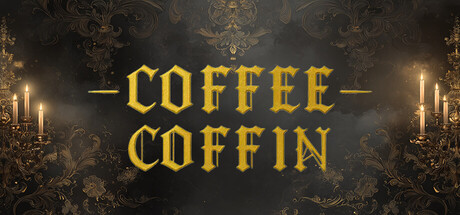
In Coffee Coffin, AI is used behind the scenes to enhance dialogue and audiovisual presentation for the player:
Reactive Dialogue:
AI is primarily used to generate real-time, context-aware dialogue lines between the player and in-game characters (wandering souls). These lines are created within fixed narrative frameworks and safety filters; players do not enter free-form prompts.
Art & Media Asset Generation:
Outside of dialogue, AI is mainly used to create and vary game art assets, including:
Character and illustration variants
Backgrounds and visual effects
Music and ambient soundscapes
Sound effects
Voice-over lines
Short in-game videos / cutscenes
All of these are delivered to the player as finished in-game content. Players never access AI models directly, cannot upload their own media, and do not interact with raw prompts or generation tools.
A portion of this game's art assets were initially generated using AI tools and subsequently edited and polished by the developer to fit the game's visual style.
You can place this directly in the Steam form.
This game does not use generative AI during gameplay. No in-game content is created, altered, or influenced by AI while the player is playing.
AI was used only during development to assist with the creation of store page images and marketing materials.
Some of the promotional and storefront images were created with AI tools and then refined by hand. All of the in-game assets were designed by a 3D artist.
🎮 About the Development of this game
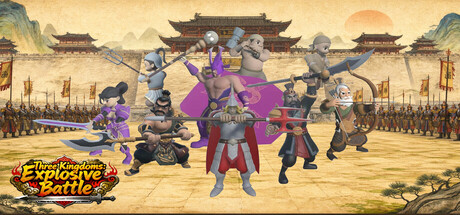
As a project developed by a solo creator with limited manpower, Explosive Battle is dedicated to delivering a battlefield that feels both familiar and freshly innovative. Here is our transparent disclosure regarding the game's content creation:
Character Concept Art: During the conceptual design phase, generative AI tools were used for style exploration, initial composition, and editing of key art (such as the store capsule images). This helped in finding a unique visual direction.
Pre-Generated AI was used for:
- Background artwork
- Character illustrations
All AI-generated content was reviewed and edited by the developer.
No Live-Generated AI is used in this game.
I created achievement logos with AI and store logos with Ai, all in game images are created with actual game play and does not use Ai, game privacy and manual were formatted and verified using Ai.
This game includes AI-generated and AI-assisted visual assets. All content has been reviewed and curated to ensure it fits the game’s intended style and presentation.
Some visual puzzle artwork in this game was created using AI-assisted tools during development. All content is pre-rendered and fixed, and no AI-generated content is created or modified during gameplay.
Some visual assets used in Static Watch were created with the assistance of generative AI tools and then manually edited and integrated by the developer.
Generative AI is not used during gameplay, and no content is generated dynamically or in real time for players.
I use AI to debug my existing code so I don't need to spend time looking at documentation. I also use AI to generate some of the art but not all of it.
Some of the promotional and storefront images were created with AI tools and then refined by hand. All of the in-game assets were designed by a 3D artist.