Public Steam disclosure research26,081 disclosures tracked
Where do games disclose AI use?
Search developers’ Steam disclosures, compare classified AI use across
games, and follow recorded changes.
This index adds cross-game classifications and statistics to
statements published on individual store pages.
Groups reflect automatic analysis of public disclosures; mature records are excluded. These counts do not measure AI use across all of Steam.
Missing or unclear statements cannot establish whether a game uses AI.
Some visual and textual elements used in the game's marketing materials were created with the assistance of artificial intelligence tools.
No AI is used during gameplay, and all in-game content is designed and implemented manually.
Trailer section and some of the game’s models were created with the assistance of AI. However, the overall content and design of the game were designed by us. AI was used only to support us in the visual aspects of the project.
We use AI to generate some pre-rendered visual assets for the game.
This includes the store banner, achievement icons, and the artwork used on the loading screen.
The developer utilized AI image generation tools to assist in the creation of specific static visual assets where professional human artist craft was not financially viable for a solo project. These assets include the store capsule art, menu background textures, and narrative event illustrations. All AI generated output was heavily curated, edited, and painfully amended by the developer to ensure consistency with the game's 1970s pulp fantasy aesthetic and pixel-art gameplay. No AI is used to generate content live during gameplay.
Some visual assets such as in-game posters were created using generative AI tools during development. All AI generated content was reviewed and edited manually to ensure originality and compliance with Steam guidelines.
Generative AI was used for images generation used in-game. Part of generated images was then corrected by a paid human worker. Another generated part is relatively low quality and is aimed to be replaced by proper art before the full release.
Images for the Steam page are including AI-generated graphical content from the game.
Generative AI was also partially used for programming help, with every generated line being reviewed by the actual developer.
"OpenAI ChatGPT" and "pixellab.ai" were used during development.
During development, some pre-generated assets were created using commercially licensed generative AI services. This includes a portion of the environmental art, character portraits, and character audio voice lines. The developer holds the appropriate commercial licenses for all tools used and owns the rights to all generated assets included in the game.
This game uses Artificial Intelligence tools only to generate pre-rendered content such as promotional images, concept art, and some non-essential visual elements. The music tracks are also AI-generated. No part of the gameplay uses AI in real time; no levels, code, or dynamic content are generated during play.
All gameplay, level design, programming, and mechanics were created manually, with AI assistance only used to solve specific issues and speed up the development process. Artificial Intelligence does not intervene in or modify the player’s experience during gameplay.
This game does not use AI during gameplay.
However, certain promotional images on the store page were partially created or enhanced using AI-based tools.
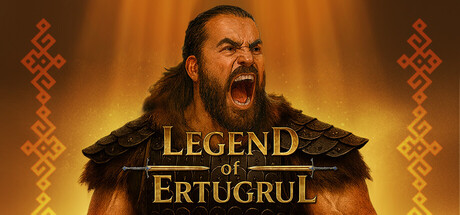
Legend of Ertuğrul is a story-driven action game featuring fixed content created by the development team.
During development, AI tools were used only for idea generation, text drafting, and the initial design stage of certain character visuals.
These visuals were then edited, repainted, or composited by the development team to create the final versions.
The game does not include any real-time AI content generation or user-created content features.
All texts, sounds, models, and code in the game were originally created by the developers or obtained from licensed sources.
Generative AI tools were used during development to assist with visual materials, texture design, localization, marketing texts, and partially for coding assistance. No AI is used during gameplay or for generating real-time content.
The developer describes how their game utilizes AI-generated content as follows:
Here’s how I use AI in this game: to generate images, music, and sound effects—mainly these three.
All characters and key artwork in this work were created entirely by hand by human artists. AI tools were used solely as an auxiliary tool during the coloring of backgrounds and user interface elements, with only public-domain images used as references. All content was completed through lawful production processes and does not infringe any third party’s copyright or related rights.
we use AI across multiple areas of our creative process. This includes generating and enhancing textures, videos, stories, logos, concepts and ideas, music, voice acting, sound effects, and even 3D models. AI tools help us experiment faster, explore new artistic directions, and bring our worlds to life with greater efficiency and creativity.
All visual assets within the application, including icons, backgrounds, and UI elements, were created using generative AI tools during the development process. These assets are pre-rendered and static. The application does not utilize AI to generate content in real-time.