Public Steam disclosure research25,394 disclosures tracked
Where do games disclose AI use?
Search developers’ Steam disclosures, compare classified AI use across
games, and follow recorded changes.
This index adds cross-game classifications and statistics to
statements published on individual store pages.
Groups reflect automatic analysis of public disclosures; mature records are excluded. These counts do not measure AI use across all of Steam.
Missing or unclear statements cannot establish whether a game uses AI.
AI has been used for graphics--assets, characters, and backgrounds, though these AI graphics have been extensively edited and color corrected. AI has also been used to generate background music in keeping with the time period and style of the 1930s.
Some graphic assets used in this game and its marketing materials were created with the help of generative AI tools. These primarily include the cartoon-style images, such as perks, characters, and items.
This game uses AI to generate character avatars and a little CG. The AI models used are Anything and QTea, and the generation tool StableDiffusion is used
For recipe art only:
Our artist used an AI assistant.
We made a hand-painted recipe base.
Then we used AI to add a detail layer.
Then we hand-painted all final details.
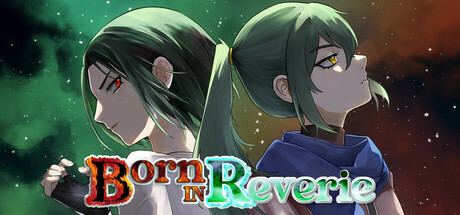
When Born In Reverie is released in full, around 5% of the code base will be AI generated snippets. All illustrations, UI elements, soundtracks, dialogue, sprite designs, etc. will be human-created.
-AI image generation was used for ideation on a small number of designs. What this actually means in practice is that AI images were created, modified, and then sent to real artists to serve as reference material in their work. The final illustrations and designs, were created by artists.
-To improve productivity, the development of Born in Reverie utilized AI tools for coding/programming support, and AI scaling algorithms to up/down sample a small number of human-created assets. Born in Reverie DOES NOT live produce anything in-game via AI generation.
-As an indie developer, I am unable to supervise the work of all the freelancers I work with and cannot guarantee their work is entirely AI free. If anyone I work with is found to produce content with significant AI usage, I will be removing their content and credits from the game and replacing their content with proper human artistry.
Above all else, Born in Reverie values human artistry and seeks to create something genuine and authentic for players to experience.
AI has been used in image generation for the portraits of the characters. These images are then post-processed through a quantizer, which lowers the resolution and quantizes the image into only having the colors from my color palette.
The backgrounds were generated using neural networks such as NijiJourney, LeonardoAI, and PlaygroundAI with some minor post-processing. The characters and storyline art were drawn by artists.
The game uses AI generated art for dragons, items, perks, landscapes and creatures.
Map, UI elements, battle effects and steam capsule are made by human beings.
AI tools have been like an extra set of hands (or brains) for our small indie dev team. They've played a quiet yet invaluable role in helping us draft initial concept art and brainstorm our way through tricky design challenges. Being Polish native speakers, AI has also been particularly helpful in fine-tuning our writing, ensuring our game's narrative is as engaging as possible.
Due to the meta-narrative about corporate greed, GPT-models and the regurgitation of modern media, AI was used as a tool for various in-game graphics and marketing phrases, to keep consistent with the theming of the game.
The actual story content, audio, gameplay and visual design does NOT use AI generated content.
This game utilizes AI technology to generate some of the background and store images. These AI-generated assets were carefully selected to enhance the overall aesthetic of the game. All AI-based content was created in compliance with legal requirements to prevent copyright infringements.
The game's card illustrations are a blend of AI-generated and manually restored images.
Certain game backgrounds, used for scenes and events, are a mix of AI-generated and manually restored designs.
Background images in some scenes are created using artificial intelligence with significant post-processing.
Some animations in the game are based on neural network animations with significant manual post-processing.
This is an experimental short prototype demo, so a few images are generated by AI. The AI-generated images include only:
1. Unimportant villager portraits.
2. The dream concept illustration at the beginning.
Some visual assets and promotional materials for Rimal were created or enhanced using generative AI tools during development.
All gameplay mechanics, progression systems, and core game logic are fully designed and controlled by the development team.
No AI-generated content is created dynamically during gameplay.
The game uses backgrounds (and a handful of characters) that were made using images generated from a Public Domain scraped data set. The background images have been altered very little but the character images are used as a basis and edited in a powerful editing suite called Microsoft Paint.
Art and Music was generated by AI.
Please note that we want to respect artists. No artist name or artist art have been used as reference for prompting. And the art used is very generic and doesn't not infringe any IP.
As a small, two-person startup studio, meeting the full graphical needs of our game is a challenge. To bring our cards to life, we use a combination of original artwork and AI-generated art, ensuring a balance between creativity and efficiency.
AI-generated content has been used and then edited by our team for certain parts of the in-game voices, music, and graphics.
This content is included in:
・Some parts of the background signboard textures
・Some parts of the Records images
・Some parts of the InfoCast videos
・Some parts of the voices and music
Apostle Games uses purchased & licensed AI assisted artwork for its in-game character portraits, occasional in-game environment backgrounds, and marketing materials on its Steam page.
All AI assisted artwork has been repainted by a human artist to work seamlessly within the game world, using the AI assisted artwork as a base only.
AI has been used for graphics--assets, characters, and backgrounds, though these AI graphics have been extensively edited and color corrected. AI has also been used to generate background music in keeping with the time period and style of the 1930s.
Some graphic assets used in this game and its marketing materials were created with the help of generative AI tools. These primarily include the cartoon-style images, such as perks, characters, and items.
This game uses AI to generate character avatars and a little CG. The AI models used are Anything and QTea, and the generation tool StableDiffusion is used
For recipe art only:
Our artist used an AI assistant.
We made a hand-painted recipe base.
Then we used AI to add a detail layer.
Then we hand-painted all final details.
When Born In Reverie is released in full, around 5% of the code base will be AI generated snippets. All illustrations, UI elements, soundtracks, dialogue, sprite designs, etc. will be human-created.
-AI image generation was used for ideation on a small number of designs. What this actually means in practice is that AI images were created, modified, and then sent to real artists to serve as reference material in their work. The final illustrations and designs, were created by artists.
-To improve productivity, the development of Born in Reverie utilized AI tools for coding/programming support, and AI scaling algorithms to up/down sample a small number of human-created assets. Born in Reverie DOES NOT live produce anything in-game via AI generation.
-As an indie developer, I am unable to supervise the work of all the freelancers I work with and cannot guarantee their work is entirely AI free. If anyone I work with is found to produce content with significant AI usage, I will be removing their content and credits from the game and replacing their content with proper human artistry.
Above all else, Born in Reverie values human artistry and seeks to create something genuine and authentic for players to experience.
AI has been used in image generation for the portraits of the characters. These images are then post-processed through a quantizer, which lowers the resolution and quantizes the image into only having the colors from my color palette.
The backgrounds were generated using neural networks such as NijiJourney, LeonardoAI, and PlaygroundAI with some minor post-processing. The characters and storyline art were drawn by artists.
The game uses AI generated art for dragons, items, perks, landscapes and creatures.
Map, UI elements, battle effects and steam capsule are made by human beings.
AI tools have been like an extra set of hands (or brains) for our small indie dev team. They've played a quiet yet invaluable role in helping us draft initial concept art and brainstorm our way through tricky design challenges. Being Polish native speakers, AI has also been particularly helpful in fine-tuning our writing, ensuring our game's narrative is as engaging as possible.
Due to the meta-narrative about corporate greed, GPT-models and the regurgitation of modern media, AI was used as a tool for various in-game graphics and marketing phrases, to keep consistent with the theming of the game.
The actual story content, audio, gameplay and visual design does NOT use AI generated content.
This game utilizes AI technology to generate some of the background and store images. These AI-generated assets were carefully selected to enhance the overall aesthetic of the game. All AI-based content was created in compliance with legal requirements to prevent copyright infringements.
The game's card illustrations are a blend of AI-generated and manually restored images.
Certain game backgrounds, used for scenes and events, are a mix of AI-generated and manually restored designs.
Background images in some scenes are created using artificial intelligence with significant post-processing.
Some animations in the game are based on neural network animations with significant manual post-processing.
This is an experimental short prototype demo, so a few images are generated by AI. The AI-generated images include only:
1. Unimportant villager portraits.
2. The dream concept illustration at the beginning.
Some visual assets and promotional materials for Rimal were created or enhanced using generative AI tools during development.
All gameplay mechanics, progression systems, and core game logic are fully designed and controlled by the development team.
No AI-generated content is created dynamically during gameplay.
The game uses backgrounds (and a handful of characters) that were made using images generated from a Public Domain scraped data set. The background images have been altered very little but the character images are used as a basis and edited in a powerful editing suite called Microsoft Paint.
Art and Music was generated by AI.
Please note that we want to respect artists. No artist name or artist art have been used as reference for prompting. And the art used is very generic and doesn't not infringe any IP.
As a small, two-person startup studio, meeting the full graphical needs of our game is a challenge. To bring our cards to life, we use a combination of original artwork and AI-generated art, ensuring a balance between creativity and efficiency.
AI-generated content has been used and then edited by our team for certain parts of the in-game voices, music, and graphics.
This content is included in:
・Some parts of the background signboard textures
・Some parts of the Records images
・Some parts of the InfoCast videos
・Some parts of the voices and music
Apostle Games uses purchased & licensed AI assisted artwork for its in-game character portraits, occasional in-game environment backgrounds, and marketing materials on its Steam page.
All AI assisted artwork has been repainted by a human artist to work seamlessly within the game world, using the AI assisted artwork as a base only.