Public Steam disclosure research25,383 disclosures tracked
Where do games disclose AI use?
Search developers’ Steam disclosures, compare classified AI use across
games, and follow recorded changes.
This index adds cross-game classifications and statistics to
statements published on individual store pages.
Groups reflect automatic analysis of public disclosures; mature records are excluded. These counts do not measure AI use across all of Steam.
Missing or unclear statements cannot establish whether a game uses AI.
The development of this game makes extensive use of generative AI. AI tools were used to help create the game's art and visual assets, sound and music, text and narrative, code, and localization. All AI-assisted content is reviewed by our team before release to ensure quality and appropriateness.
Generative AI was used to create of the music included in the game, as well as marketing and promotional materials for Steam.
AI tools were also used for programming and development.
There is no AI used in the gameplay - no content is dynamically generated.
Pre-rendered Content:
Generative AI tools and agentic AI development workflows were utilized during the creation of this game to assist in:
- Code & Systems: Writing and optimizing core gameplay logic, typescript structures, and simulation algorithms.
- Visual Assets: Creating and pre-rendering all visual assets used in-game, including boot screen artworks, drive interfaces, and graphical components.
- Localization: Translating and reviewing in-game text and UI labels.
Please note that all AI-assisted assets and code were pre-rendered and compiled during the development phase. The game runs entirely locally and does not perform any real-time (live) AI generation, nor does it connect to any external AI APIs or services during gameplay.
AI used to generate code, including code to procedurally generate graphics/sound.
Artists using Suno marked "(Suno)" after artist name.
AI used for localization.
Some pre-rendered assets were created with the help of generative AI during development: 2D line-art images (mascot sprites, badges, store artwork), portions of the game code, and drafts of store/in-game text (human-reviewed). Nothing is generated at runtime, and the game never connects to any AI service while you play. Sound effects are procedurally synthesized without AI.
AI-assisted tools were used for all of the game visuals, audio, and code. No AI generation occurs during gameplay, and no external AI services are used while playing.
SIDE OUT was built with AI-assisted development tools. No artwork, audio, text or other content in the game is generated by AI. All visuals are drawn procedurally in code, and all store text is written by hand.
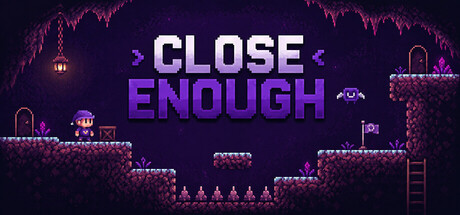
Close Enough was built with generative AI. The code, the in-game text, the level layouts and all seven translations were written by an AI assistant (Claude) working to the developer's direction, and most of what you see on screen — the objects, the whole interface — is drawn by that code rather than loaded from image files.
The doodle recognition inside the game is not generative. It is a small image classifier bundled with the game, trained on Google's Quick, Draw! dataset of human-drawn doodles. It runs entirely on your own computer, sorts each drawing into one of 100 pre-defined objects and creates nothing. Your drawings are never uploaded, and the release build contains no code that could upload them.
The sprites, tiles, music, sound effects and font are licensed assets made by people, not by AI. Every one of them is credited inside the game under Esc → Credits.
We are team of two with a design and development background. We have a combined decades experience shipping production-quality code and art. We use AI along with our other tools, like Blender, Substance, etc. to help us build our vision. We use AI in the early stage of concept development and prototyping, coding assistance, but everything that makes it in-game is hand-crafted and authored by us. The music is played by hand real instruments. All screen captures are 100% in-game with no alterations.
Este jogo foi desenvolvido por um único criador com o auxílio de Inteligência Artificial (IA) no processo de programação e na criação de alguns efeitos sonoros e áudios.
Todas as artes, imagens, sprites e frames dentro do jogo foram criados inteiramente à mão, sem qualquer uso de IA.
We used AI tools in two places during development, and in neither of them to replace creative work.
Our French, Spanish, Italian, Japanese and Korean localisations are made using AI. We also used AI assistance while writing and restructuring parts of our codebase.
Everything players see and hear — art, animation, sound, music, game design and all original writing — was made by people.
### Use of Generative Artificial Intelligence
During the development of this game, I used generative artificial intelligence tools to assist me with various aspects of its creation.
AI was mainly used to create and/or improve certain visual elements of the game, including images and PNG files used in different graphical elements.
It also assisted me in creating the game’s trailer, as well as with certain scripts and technical elements that were particularly complex to implement. In these situations, AI was used as an assistance tool to help me develop, adapt, and finalize certain elements.
The use of artificial intelligence does not mean that the game was entirely created by AI. The game’s design, artistic direction, gameplay, development, and final integration of the different elements were carried out and supervised by me.
I want to be transparent with players regarding the use of these technologies in the creation of the game.
AI was used in the coding and content creation for this game. That should not take away from this project the thousands of hours spent on its creation, honing and reshaping its style, direction and gameplay which was all done by a human.
This game was created by an independent developer. Generative AI tools were used during development to assist with programming, debugging, text editing, and the initial localization of Simplified Chinese, Traditional Chinese, English, Japanese, and Korean. All AI-assisted content was manually reviewed, edited, and approved by the developer. The game does not use generative AI to create content during gameplay, and player data is not used for AI training.
All art, music, and sound in TOWERPUNK are original to this project, produced by procedural code written specifically for the game. None of it is derived from generative media models. AI coding assistants were used during development to help write the game's source code and some functional interface text (menu labels, status readouts). All narrative and creative writing is authored by the developer.
Generative AI was used to help write portions of this game's text content, and parts of this store page. All game code, visuals, music, and sound design were created directly by the developer without generative AI. AI was used to help debug and troubleshoot code.
Generative AI tools were used during the development of Protocol as development assistance. AI was used to help with brainstorming, programming assistance, troubleshooting, and other development-related tasks. The final game content was reviewed, edited, and implemented by the developer.
The game is primarily developed using Houdini, VEX and Godot. Generative AI assists with concept/reference artwork, initial 3D asset generation, and programming. Assets are further processed, optimized, rigged and animated in Houdini before integration into the game.
Standard C++ game code, written during development with the assistance of an AI programming assistant, used as a pair-programming tool. This includes gameplay systems (crafting, inventory, world simulation), rendering and UI code, and development tooling. It is ordinary, static game logic.
AI assistance was used only during development, directed by myself through specific requests, with every change reviewed, tested, and committed to version control by myself.
The shipped game contains no AI models and does not execute or generate any code or content via AI at runtime. The game is a fully offline, single-player experience.
AI was used to assist with writing the game source code.
All visual assets are handmade pixel art by the author.
All audio assets are licensed from 3rd party sample banks.
Generative AI was used during development to assist with coding and the creation of pre-generated visual assets. No AI content is generated during gameplay.
Generative AI was used during development as a coding assistant and to assist with drafting and translating store-page and marketing text. Some pixel-art assets were rendered by deterministic drawing code written with AI assistance; the final images were not directly output by a text-to-image or diffusion model. All shipped and published content was reviewed and edited by the developer. No generative AI runs in the game, and no content is generated from player input.
Generative AI was used during development as a coding assistant and to assist with drafting and translating store-page and marketing text. Some pixel-art assets were rendered by deterministic drawing code written with AI assistance; the final images were not directly output by a text-to-image or diffusion model. All shipped and published content was reviewed and edited by the developer. No generative AI runs in the game, and no content is generated from player input.
All artwork (characters, monsters, environments, visual effects) and much of the game's code were created with generative AI tools. No content is AI-generated while the game runs.
This game was developed with the assistance of generative AI tools. Some graphical assets were created using AI and then reviewed, edited, and integrated by the developer. AI tools were also used to assist with writing code. All game design, gameplay mechanics, and final content decisions were made by the developer. The game does not generate AI content at runtime.
This game has been developed using AI programming agents, and also contains audio and image files generated by AI. No AI contents are generated during gameplay.
Ashen Wild was created almost exclusively with AI tools to generate the code and graphics, VFX, sound etc. The store page, website and other marketing materials were created using AI.
AI-assisted tools were used during the development of DarkDice in the following ways:
Code development — AI coding assistants helped write and refactor portions of the game's codebase.
Text editing — AI tools were used to proofread, polish, and tighten narrative and UI copy.
Localization & Editing — AI is used to assist with the translation, text expansion, polishing, and style adjustment of game text between English and Chinese (Traditional/Simplified).
Image generation — Some visual assets (case artwork, promotional images) were created using AI image-generation tools.
No content is generated in real time during gameplay — every case is a fixed, pre-authored story; nothing changes between playthroughs.
Generative AI tools were used to assist with portions of the game’s source code. All AI-assisted code was reviewed, modified, integrated and tested by the developer. The game’s models, artwork and other visual content were created or sourced separately and were not generated by AI. CoasterWorks does not generate AI content during gameplay or connect to external AI services.
Generative AI was used extensively throughout the development of **Crazy Fußball-Manager**. **ChatGPT Codex** and **Claude Code** were used primarily for programming, technical implementation, and textual content. Graphics and visual assets were created and edited with the assistance of generative AI tools. **Suno** and **Mureka** were used to create music, sound effects, and other audio content.
Nearly all content in the game – including code, graphics, text, music, and sounds – was created with the assistance of generative AI and subsequently integrated into the game.
The development of this game makes extensive use of generative AI. AI tools were used to help create the game's art and visual assets, sound and music, text and narrative, code, and localization. All AI-assisted content is reviewed by our team before release to ensure quality and appropriateness.
Generative AI was used to create of the music included in the game, as well as marketing and promotional materials for Steam.
AI tools were also used for programming and development.
There is no AI used in the gameplay - no content is dynamically generated.
Pre-rendered Content:
Generative AI tools and agentic AI development workflows were utilized during the creation of this game to assist in:
- Code & Systems: Writing and optimizing core gameplay logic, typescript structures, and simulation algorithms.
- Visual Assets: Creating and pre-rendering all visual assets used in-game, including boot screen artworks, drive interfaces, and graphical components.
- Localization: Translating and reviewing in-game text and UI labels.
Please note that all AI-assisted assets and code were pre-rendered and compiled during the development phase. The game runs entirely locally and does not perform any real-time (live) AI generation, nor does it connect to any external AI APIs or services during gameplay.
AI used to generate code, including code to procedurally generate graphics/sound.
Artists using Suno marked "(Suno)" after artist name.
AI used for localization.
Some pre-rendered assets were created with the help of generative AI during development: 2D line-art images (mascot sprites, badges, store artwork), portions of the game code, and drafts of store/in-game text (human-reviewed). Nothing is generated at runtime, and the game never connects to any AI service while you play. Sound effects are procedurally synthesized without AI.
AI-assisted tools were used for all of the game visuals, audio, and code. No AI generation occurs during gameplay, and no external AI services are used while playing.
SIDE OUT was built with AI-assisted development tools. No artwork, audio, text or other content in the game is generated by AI. All visuals are drawn procedurally in code, and all store text is written by hand.
Close Enough was built with generative AI. The code, the in-game text, the level layouts and all seven translations were written by an AI assistant (Claude) working to the developer's direction, and most of what you see on screen — the objects, the whole interface — is drawn by that code rather than loaded from image files.
The doodle recognition inside the game is not generative. It is a small image classifier bundled with the game, trained on Google's Quick, Draw! dataset of human-drawn doodles. It runs entirely on your own computer, sorts each drawing into one of 100 pre-defined objects and creates nothing. Your drawings are never uploaded, and the release build contains no code that could upload them.
The sprites, tiles, music, sound effects and font are licensed assets made by people, not by AI. Every one of them is credited inside the game under Esc → Credits.
We are team of two with a design and development background. We have a combined decades experience shipping production-quality code and art. We use AI along with our other tools, like Blender, Substance, etc. to help us build our vision. We use AI in the early stage of concept development and prototyping, coding assistance, but everything that makes it in-game is hand-crafted and authored by us. The music is played by hand real instruments. All screen captures are 100% in-game with no alterations.
Este jogo foi desenvolvido por um único criador com o auxílio de Inteligência Artificial (IA) no processo de programação e na criação de alguns efeitos sonoros e áudios.
Todas as artes, imagens, sprites e frames dentro do jogo foram criados inteiramente à mão, sem qualquer uso de IA.
We used AI tools in two places during development, and in neither of them to replace creative work.
Our French, Spanish, Italian, Japanese and Korean localisations are made using AI. We also used AI assistance while writing and restructuring parts of our codebase.
Everything players see and hear — art, animation, sound, music, game design and all original writing — was made by people.
### Use of Generative Artificial Intelligence
During the development of this game, I used generative artificial intelligence tools to assist me with various aspects of its creation.
AI was mainly used to create and/or improve certain visual elements of the game, including images and PNG files used in different graphical elements.
It also assisted me in creating the game’s trailer, as well as with certain scripts and technical elements that were particularly complex to implement. In these situations, AI was used as an assistance tool to help me develop, adapt, and finalize certain elements.
The use of artificial intelligence does not mean that the game was entirely created by AI. The game’s design, artistic direction, gameplay, development, and final integration of the different elements were carried out and supervised by me.
I want to be transparent with players regarding the use of these technologies in the creation of the game.
AI was used in the coding and content creation for this game. That should not take away from this project the thousands of hours spent on its creation, honing and reshaping its style, direction and gameplay which was all done by a human.
This game was created by an independent developer. Generative AI tools were used during development to assist with programming, debugging, text editing, and the initial localization of Simplified Chinese, Traditional Chinese, English, Japanese, and Korean. All AI-assisted content was manually reviewed, edited, and approved by the developer. The game does not use generative AI to create content during gameplay, and player data is not used for AI training.
All art, music, and sound in TOWERPUNK are original to this project, produced by procedural code written specifically for the game. None of it is derived from generative media models. AI coding assistants were used during development to help write the game's source code and some functional interface text (menu labels, status readouts). All narrative and creative writing is authored by the developer.
Generative AI was used to help write portions of this game's text content, and parts of this store page. All game code, visuals, music, and sound design were created directly by the developer without generative AI. AI was used to help debug and troubleshoot code.
Generative AI tools were used during the development of Protocol as development assistance. AI was used to help with brainstorming, programming assistance, troubleshooting, and other development-related tasks. The final game content was reviewed, edited, and implemented by the developer.
The game is primarily developed using Houdini, VEX and Godot. Generative AI assists with concept/reference artwork, initial 3D asset generation, and programming. Assets are further processed, optimized, rigged and animated in Houdini before integration into the game.
Standard C++ game code, written during development with the assistance of an AI programming assistant, used as a pair-programming tool. This includes gameplay systems (crafting, inventory, world simulation), rendering and UI code, and development tooling. It is ordinary, static game logic.
AI assistance was used only during development, directed by myself through specific requests, with every change reviewed, tested, and committed to version control by myself.
The shipped game contains no AI models and does not execute or generate any code or content via AI at runtime. The game is a fully offline, single-player experience.
AI was used to assist with writing the game source code.
All visual assets are handmade pixel art by the author.
All audio assets are licensed from 3rd party sample banks.
Generative AI was used during development to assist with coding and the creation of pre-generated visual assets. No AI content is generated during gameplay.
Generative AI was used during development as a coding assistant and to assist with drafting and translating store-page and marketing text. Some pixel-art assets were rendered by deterministic drawing code written with AI assistance; the final images were not directly output by a text-to-image or diffusion model. All shipped and published content was reviewed and edited by the developer. No generative AI runs in the game, and no content is generated from player input.
Generative AI was used during development as a coding assistant and to assist with drafting and translating store-page and marketing text. Some pixel-art assets were rendered by deterministic drawing code written with AI assistance; the final images were not directly output by a text-to-image or diffusion model. All shipped and published content was reviewed and edited by the developer. No generative AI runs in the game, and no content is generated from player input.
All artwork (characters, monsters, environments, visual effects) and much of the game's code were created with generative AI tools. No content is AI-generated while the game runs.
This game was developed with the assistance of generative AI tools. Some graphical assets were created using AI and then reviewed, edited, and integrated by the developer. AI tools were also used to assist with writing code. All game design, gameplay mechanics, and final content decisions were made by the developer. The game does not generate AI content at runtime.
This game has been developed using AI programming agents, and also contains audio and image files generated by AI. No AI contents are generated during gameplay.
Ashen Wild was created almost exclusively with AI tools to generate the code and graphics, VFX, sound etc. The store page, website and other marketing materials were created using AI.
AI-assisted tools were used during the development of DarkDice in the following ways:
Code development — AI coding assistants helped write and refactor portions of the game's codebase.
Text editing — AI tools were used to proofread, polish, and tighten narrative and UI copy.
Localization & Editing — AI is used to assist with the translation, text expansion, polishing, and style adjustment of game text between English and Chinese (Traditional/Simplified).
Image generation — Some visual assets (case artwork, promotional images) were created using AI image-generation tools.
No content is generated in real time during gameplay — every case is a fixed, pre-authored story; nothing changes between playthroughs.
Generative AI tools were used to assist with portions of the game’s source code. All AI-assisted code was reviewed, modified, integrated and tested by the developer. The game’s models, artwork and other visual content were created or sourced separately and were not generated by AI. CoasterWorks does not generate AI content during gameplay or connect to external AI services.
Generative AI was used extensively throughout the development of **Crazy Fußball-Manager**. **ChatGPT Codex** and **Claude Code** were used primarily for programming, technical implementation, and textual content. Graphics and visual assets were created and edited with the assistance of generative AI tools. **Suno** and **Mureka** were used to create music, sound effects, and other audio content.
Nearly all content in the game – including code, graphics, text, music, and sounds – was created with the assistance of generative AI and subsequently integrated into the game.