Public Steam disclosure research25,376 disclosures tracked
Where do games disclose AI use?
Search developers’ Steam disclosures, compare classified AI use across
games, and follow recorded changes.
This index adds cross-game classifications and statistics to
statements published on individual store pages.
Groups reflect automatic analysis of public disclosures; mature records are excluded. These counts do not measure AI use across all of Steam.
Missing or unclear statements cannot establish whether a game uses AI.
Parts of the game's code, interface art, store artwork and store text were created with the help of AI tools and then reviewed and edited by the developer. Nothing is generated by AI while you play.
Character art, portraits, monsters, backgrounds, item and skill icons, and story illustrations were created with AI image-generation tools, then selected, reviewed and laid out in the game by the developers. The background music was created with an AI music-generation tool (Suno). The code and text were written with AI assistance and reviewed by the developers. The game does not generate any AI content while it runs.
NBD2 is an AI game development studio. As a solo indie dev who is unlikely to ever make a dime from any of my games, there's no other way I could bring my ideas to life.
Order of the Crystalline Tortoise was created using generative AI throughout development, including its game code, 3D models, interface art, sound and text. The models were built by AI agents writing Blender scripts, the poster is drawn by code, and the music and sound effects were synthesized by code, with gull calls from a CC0 field recording. All AI generation took place during development. The game does not generate AI content or code during play or connect to an external AI service.
I recognize AI in game development is an extremely sensitive topic and I appreciate both sides. I only hope the game is fun.
The goal should always be making something that human beings will enjoy.
Generative AI tools were used for parts of this game during development: some story and dialogue text, the English localization, store page text, and some of the code that draws patterns and shapes. The developer directed all of it, chose what to keep, and reviewed and edited every piece. The music and sound effects were not made with AI, and nothing is generated by AI while you play.
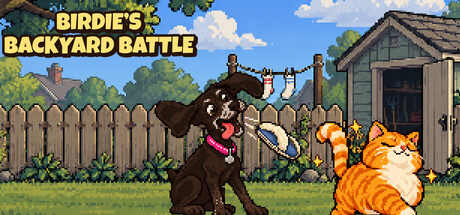
Character, enemy and background pixel art was created with AI image tools (ChatGPT, PixelLab) from photos of our real dog and cat and our own design notes, then edited, cut and arranged by the developer. Sprite animations were generated with PixelLab from that art. Game code was written with AI coding assistance (Claude) under the developer's direction. All game text was written or approved by the developer. The music is original, written note by note as code with AI coding assistance (Claude) and rendered with the free GeneralUser GS SoundFont; no AI audio generation and nothing sampled.
I use Codex as a programming assistant to help write, debug, and optimize portions of the game’s code. Everything else like artwork and stuff were made by humans.
Full disclaimer - Some code, artworks have been AI generated, through a custom model trained on images that were built specifically for the game with the kind assistance of a graphic designer friend of mine. I'm a solo dev with limited budget and I'm doing this out of passion - I just wouldn't have been able to build it without these tools
Generative AI tools were used during development to assist with the creation of some visual assets, text, audio, localization, and code. All AI-assisted content included in the game was reviewed and curated by the developer. No generative AI is used during gameplay.
Except for gameplay design and some sound effects and art assets, the game’s code, 3D models, localization text, and other content were generated by GPT during development. Development was carried out through direct conversations with the 6.0-Astra and 6.1sol large language models, without predefined workflows or external Skills. The 3D models were created from written descriptions and reference images, with GPT writing and executing Blender scripts.
All such content was created during development. The game does not use generative AI to create content in real time during gameplay.
In the future, we may use newer large language models to further improve the game’s art quality and visual presentation, while comparing how different large language models perform in game development.
Generative AI tools were used during development to assist with the creation of some artwork, music, and game code. All AI-assisted content was reviewed, edited, and integrated by the developer as part of the game’s creative and development process.
Generative AI was used during the development of this game. AI-assisted tools were used to create or assist with visual assets, UI elements, backgrounds, in-game text, localization, and portions of the game's code and development process. Music used in the game was not generated by AI.
All AI-assisted content was created during development. The game does not use generative AI to create content in real time during gameplay.
AI Disclosure:
Environment & Art: 20% AI-assisted — used for fixing minor 3D model anomalies and supplementing certain Unity assets.
Programming: 50% AI-assisted — used alongside custom coding to assist with code refactoring and feature development.
Music: 100% generated using SUNO AI.
Sound Effects: 20% generated via AI, with the majority sourced from licensed SFX libraries.
UI & User Interaction: 50% AI-assisted, 50% Unity Assets.
Some voices, music, sound effects, 3D models, images, text, translations and code were made with AI tools and then edited by the developer. Nothing is generated by AI while you play.
AI was used to help generate code and as a tool to troubleshoot it. The poker chip images on the seat badges, and the achievement icons built from them, were generated with an image model from prompts written for this game, then prepared and finished by hand. Nothing is generated while the game runs.
IDE Code assistant used to optimize parts of the game's code and resolve bugs.
Certain assets in this game were created or modified with the assistance of genAI tools, then reviewed and integrated by our team.
Pre-generated content: generative AI tools were used during development to help create some of the game's 3D models, concept art and illustrations, music, voice lines and sound effects, as well as part of the store artwork and trailer footage. All of this content was selected, edited, integrated and adjusted by hand by the developer. The game's design, writing, story, code and balance are human-made. No content is generated by AI while the game is running.
In the development of this game, artificial intelligence was used in the following areas:
Code and Logic: Game algorithms (including the autopilot systems and the mission generator) were developed with the assistance of AI-powered programming tools and assistants.
Graphics and Audio: Selected graphic/visual elements and the audio design were generated using artificial intelligence tools.
The game does not use generative artificial intelligence to create content in real time during actual gameplay—all assets were pre-generated and are part of the static game content.
Some of this game's code, art and music were made with the help of an AI assistant. Everything was reviewed, edited and assembled by hand, and no content is generated while you play.
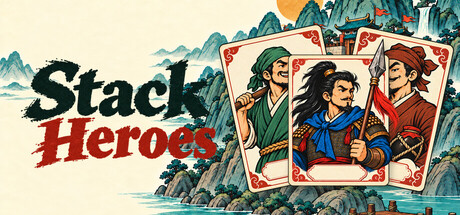
All content in Stack Heroes is generated using AI, including artwork, character and scene illustrations, UI graphics, music, sound effects, story and dialogue, other text, localization, and game program code. This content is generated during development and included in the game. The game does not generate AI content during gameplay or connect to external AI services.
AI tools are used to speed up coding and to generate the visual art you see in the game.
This is not the work of a "soul less machine" - It takes real human effort besides the generation of images.
Even if you dislike AI in games, I hope you will try my game demo when available and see for yourself if it is fun. Personally I think AI will let me respond to feedback faster and give you a better game.
Thank you!
The game's artwork, audio and other assets are not AI-generated. The game engine is written from scratch over the course of 8 months in C++ and Simple DirectMedia Layer 2; in which Codex assistance was used for programming. No content is generated by AI during gameplay. No AI service is used during gameplay. All AI actions in the game are classic decision tree based intelligence made.
Game source code, videos, images, and music in some parts of the game are initially generated using generative AI and then manually edited and refined.
Gemini app was used to assist in the Mandarin translations. Gemini app also assisted in reading through Godot's documentation and developing shader code.
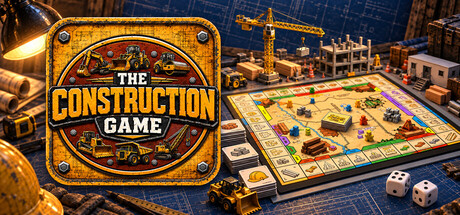
Generative AI tools assisted with programming and development of The Construction Game and were used to create some promotional images. The game does not use generative AI to create content during gameplay.
Some assets in this game were created with the assistance of generative AI tools. All AI-assisted assets were reviewed, edited, and integrated into the game by our team.
In the game itself, all graphics and sound effects are drawn and synthesized by the game's own code, which was also written with AI assistance. The game contains no AI-generated image, voice or music files, and nothing is generated by AI while you play.
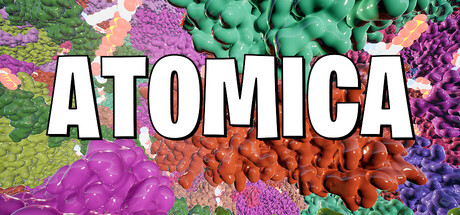
Atomica's translations into the thirteen languages other than English were made by an AI language model and have not yet been reviewed by native speakers. Much of the game's code and the store text were written with AI assistance. Nothing else is AI-generated. The cell is assembled by ordinary procedural code, not machine learning, from real data: Scripps Research's cellPACK model of Mycoplasma genitalium, protein structures from the Protein Data Bank (PDB), and ligands from the wwPDB Chemical Component Dictionary (CCD). The sounds are synthesized from the cell's real activity, and the store images are in-game screenshots.
Parts of this store page, as well as certain code elements of the game, were created with the assistance of AI tools. These tools helped speed up development and improve clarity, while all creative direction, design choices, and final implementation remain in the hands of the developer.
Generative AI tools were used during development to assist in the creation of 3D models and other visual assets. AI-assisted development tools were also used extensively for programming and implementation. All generated and AI-assisted content was reviewed, directed, and integrated by the developer. No generative AI is used at runtime.
The key art, story illustrations, kingdom portraits, music, opening film, menu video and its narration were produced with generative AI tools (Ideogram, Lyria, Seedance, Kling and ElevenLabs, through Artlist) and then selected, edited and assembled by the developer. The 3D map, units and buildings are procedural low-poly models built in code, and the sound effects are synthesised in the game. The game was written with the help of an AI coding assistant. No content is generated while the game is running; everything is pre-generated and shipped in the build. No real people's likenesses or voices are used.
Generative AI tools were used during development. Some of the game's 3D models and parts of its programming code were created with AI assistance, then reviewed and refined by the developer. No content is generated by AI while the game is running.
Generative AI tools were used extensively throughout development. Most of the game's visual content, user interface, written text, audio, narrative and localization, and program code were created with the assistance of generative AI, then selected, edited, integrated, and refined by the developer. Generative AI is used only during development. The game does not connect to AI services or generate content in real time during gameplay.
Generative AI was used to create or assist with game code, artwork, audio, written content, localization, and store marketing materials. Gameplay was designed by the developer. All content is prepared before release; no content or code is generated during gameplay, and no external AI services are used during gameplay.
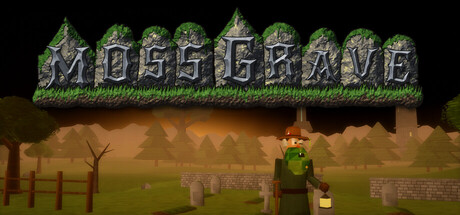
Mossgrave was built with an AI coding assistant, directed and reviewed by the developer. The AI wrote the game's code, including the procedural code that generates the 3D models, textures, pixel-art interface, music and sound effects. It also drafted the in-game text (dialogue, quest and item descriptions) and the text on this store page. Store images are captured from the game itself. No AI image or music generation models were used. The trailer's narration is an AI-generated voice; the game itself has no voice acting, and nothing is generated by AI while you play.
Parts of the game's code, interface art, store artwork and store text were created with the help of AI tools and then reviewed and edited by the developer. Nothing is generated by AI while you play.
Character art, portraits, monsters, backgrounds, item and skill icons, and story illustrations were created with AI image-generation tools, then selected, reviewed and laid out in the game by the developers. The background music was created with an AI music-generation tool (Suno). The code and text were written with AI assistance and reviewed by the developers. The game does not generate any AI content while it runs.
NBD2 is an AI game development studio. As a solo indie dev who is unlikely to ever make a dime from any of my games, there's no other way I could bring my ideas to life.
Order of the Crystalline Tortoise was created using generative AI throughout development, including its game code, 3D models, interface art, sound and text. The models were built by AI agents writing Blender scripts, the poster is drawn by code, and the music and sound effects were synthesized by code, with gull calls from a CC0 field recording. All AI generation took place during development. The game does not generate AI content or code during play or connect to an external AI service.
I recognize AI in game development is an extremely sensitive topic and I appreciate both sides. I only hope the game is fun.
The goal should always be making something that human beings will enjoy.
Generative AI tools were used for parts of this game during development: some story and dialogue text, the English localization, store page text, and some of the code that draws patterns and shapes. The developer directed all of it, chose what to keep, and reviewed and edited every piece. The music and sound effects were not made with AI, and nothing is generated by AI while you play.
Character, enemy and background pixel art was created with AI image tools (ChatGPT, PixelLab) from photos of our real dog and cat and our own design notes, then edited, cut and arranged by the developer. Sprite animations were generated with PixelLab from that art. Game code was written with AI coding assistance (Claude) under the developer's direction. All game text was written or approved by the developer. The music is original, written note by note as code with AI coding assistance (Claude) and rendered with the free GeneralUser GS SoundFont; no AI audio generation and nothing sampled.
I use Codex as a programming assistant to help write, debug, and optimize portions of the game’s code. Everything else like artwork and stuff were made by humans.
Full disclaimer - Some code, artworks have been AI generated, through a custom model trained on images that were built specifically for the game with the kind assistance of a graphic designer friend of mine. I'm a solo dev with limited budget and I'm doing this out of passion - I just wouldn't have been able to build it without these tools
Generative AI tools were used during development to assist with the creation of some visual assets, text, audio, localization, and code. All AI-assisted content included in the game was reviewed and curated by the developer. No generative AI is used during gameplay.
Except for gameplay design and some sound effects and art assets, the game’s code, 3D models, localization text, and other content were generated by GPT during development. Development was carried out through direct conversations with the 6.0-Astra and 6.1sol large language models, without predefined workflows or external Skills. The 3D models were created from written descriptions and reference images, with GPT writing and executing Blender scripts.
All such content was created during development. The game does not use generative AI to create content in real time during gameplay.
In the future, we may use newer large language models to further improve the game’s art quality and visual presentation, while comparing how different large language models perform in game development.
Generative AI tools were used during development to assist with the creation of some artwork, music, and game code. All AI-assisted content was reviewed, edited, and integrated by the developer as part of the game’s creative and development process.
Generative AI was used during the development of this game. AI-assisted tools were used to create or assist with visual assets, UI elements, backgrounds, in-game text, localization, and portions of the game's code and development process. Music used in the game was not generated by AI.
All AI-assisted content was created during development. The game does not use generative AI to create content in real time during gameplay.
AI Disclosure:
Environment & Art: 20% AI-assisted — used for fixing minor 3D model anomalies and supplementing certain Unity assets.
Programming: 50% AI-assisted — used alongside custom coding to assist with code refactoring and feature development.
Music: 100% generated using SUNO AI.
Sound Effects: 20% generated via AI, with the majority sourced from licensed SFX libraries.
UI & User Interaction: 50% AI-assisted, 50% Unity Assets.
Some voices, music, sound effects, 3D models, images, text, translations and code were made with AI tools and then edited by the developer. Nothing is generated by AI while you play.
AI was used to help generate code and as a tool to troubleshoot it. The poker chip images on the seat badges, and the achievement icons built from them, were generated with an image model from prompts written for this game, then prepared and finished by hand. Nothing is generated while the game runs.
IDE Code assistant used to optimize parts of the game's code and resolve bugs.
Certain assets in this game were created or modified with the assistance of genAI tools, then reviewed and integrated by our team.
Pre-generated content: generative AI tools were used during development to help create some of the game's 3D models, concept art and illustrations, music, voice lines and sound effects, as well as part of the store artwork and trailer footage. All of this content was selected, edited, integrated and adjusted by hand by the developer. The game's design, writing, story, code and balance are human-made. No content is generated by AI while the game is running.
In the development of this game, artificial intelligence was used in the following areas:
Code and Logic: Game algorithms (including the autopilot systems and the mission generator) were developed with the assistance of AI-powered programming tools and assistants.
Graphics and Audio: Selected graphic/visual elements and the audio design were generated using artificial intelligence tools.
The game does not use generative artificial intelligence to create content in real time during actual gameplay—all assets were pre-generated and are part of the static game content.
Some of this game's code, art and music were made with the help of an AI assistant. Everything was reviewed, edited and assembled by hand, and no content is generated while you play.
All content in Stack Heroes is generated using AI, including artwork, character and scene illustrations, UI graphics, music, sound effects, story and dialogue, other text, localization, and game program code. This content is generated during development and included in the game. The game does not generate AI content during gameplay or connect to external AI services.
AI tools are used to speed up coding and to generate the visual art you see in the game.
This is not the work of a "soul less machine" - It takes real human effort besides the generation of images.
Even if you dislike AI in games, I hope you will try my game demo when available and see for yourself if it is fun. Personally I think AI will let me respond to feedback faster and give you a better game.
Thank you!
The game's artwork, audio and other assets are not AI-generated. The game engine is written from scratch over the course of 8 months in C++ and Simple DirectMedia Layer 2; in which Codex assistance was used for programming. No content is generated by AI during gameplay. No AI service is used during gameplay. All AI actions in the game are classic decision tree based intelligence made.
Game source code, videos, images, and music in some parts of the game are initially generated using generative AI and then manually edited and refined.
Gemini app was used to assist in the Mandarin translations. Gemini app also assisted in reading through Godot's documentation and developing shader code.
Generative AI tools assisted with programming and development of The Construction Game and were used to create some promotional images. The game does not use generative AI to create content during gameplay.
Some assets in this game were created with the assistance of generative AI tools. All AI-assisted assets were reviewed, edited, and integrated into the game by our team.
In the game itself, all graphics and sound effects are drawn and synthesized by the game's own code, which was also written with AI assistance. The game contains no AI-generated image, voice or music files, and nothing is generated by AI while you play.
Atomica's translations into the thirteen languages other than English were made by an AI language model and have not yet been reviewed by native speakers. Much of the game's code and the store text were written with AI assistance. Nothing else is AI-generated. The cell is assembled by ordinary procedural code, not machine learning, from real data: Scripps Research's cellPACK model of Mycoplasma genitalium, protein structures from the Protein Data Bank (PDB), and ligands from the wwPDB Chemical Component Dictionary (CCD). The sounds are synthesized from the cell's real activity, and the store images are in-game screenshots.
Parts of this store page, as well as certain code elements of the game, were created with the assistance of AI tools. These tools helped speed up development and improve clarity, while all creative direction, design choices, and final implementation remain in the hands of the developer.
Generative AI tools were used during development to assist in the creation of 3D models and other visual assets. AI-assisted development tools were also used extensively for programming and implementation. All generated and AI-assisted content was reviewed, directed, and integrated by the developer. No generative AI is used at runtime.
The key art, story illustrations, kingdom portraits, music, opening film, menu video and its narration were produced with generative AI tools (Ideogram, Lyria, Seedance, Kling and ElevenLabs, through Artlist) and then selected, edited and assembled by the developer. The 3D map, units and buildings are procedural low-poly models built in code, and the sound effects are synthesised in the game. The game was written with the help of an AI coding assistant. No content is generated while the game is running; everything is pre-generated and shipped in the build. No real people's likenesses or voices are used.
Generative AI tools were used during development. Some of the game's 3D models and parts of its programming code were created with AI assistance, then reviewed and refined by the developer. No content is generated by AI while the game is running.
Generative AI tools were used extensively throughout development. Most of the game's visual content, user interface, written text, audio, narrative and localization, and program code were created with the assistance of generative AI, then selected, edited, integrated, and refined by the developer. Generative AI is used only during development. The game does not connect to AI services or generate content in real time during gameplay.
Generative AI was used to create or assist with game code, artwork, audio, written content, localization, and store marketing materials. Gameplay was designed by the developer. All content is prepared before release; no content or code is generated during gameplay, and no external AI services are used during gameplay.
Mossgrave was built with an AI coding assistant, directed and reviewed by the developer. The AI wrote the game's code, including the procedural code that generates the 3D models, textures, pixel-art interface, music and sound effects. It also drafted the in-game text (dialogue, quest and item descriptions) and the text on this store page. Store images are captured from the game itself. No AI image or music generation models were used. The trailer's narration is an AI-generated voice; the game itself has no voice acting, and nothing is generated by AI while you play.