Public Steam disclosure research25,376 disclosures tracked
Where do games disclose AI use?
Search developers’ Steam disclosures, compare classified AI use across
games, and follow recorded changes.
This index adds cross-game classifications and statistics to
statements published on individual store pages.
Groups reflect automatic analysis of public disclosures; mature records are excluded. These counts do not measure AI use across all of Steam.
Missing or unclear statements cannot establish whether a game uses AI.
AI coding tools help write and maintain the game's plugin code, and parts of the in-game text like NPC combinatorial string banks and translations were written with AI assistance, all being reviewed manully by the developer.
AI tools were used to assist with programming and generate a small number of textures and menu illustrations. These visual assets were adjusted by hand before being included in the game.
Clearly Cribbage is my first game as a developer. I used AI tools to help with coding, debugging, testing, and working through design ideas while I learned to build it.
The opening studio image, game logo and icon, and some Steam artwork were made with AI image generation under my direction. Some of the licensed music in the game is also identified by its creators as AI-generated. I chose what to use and made the final decisions about the game.
No generative AI creates content while you play.
Some sound effects and music were created with AI audio tools.
AI tools assisted in writing the game's code and some of its text (descriptions, hints and story notes), all reviewed and edited by the developer. The artwork is drawn procedurally by the game itself, not AI-generated, and no AI content is generated during gameplay.
Void Runners was developed with the help of AI coding tools. The game's art, music and sound effects are generated procedurally by code written with those tools; no AI model runs in the game, and no content is generated live while you play.
Generative AI tools were used extensively throughout development. Most of the game's visual content, user interface, written text, audio, narrative and localization, and program code were created with the assistance of generative AI, then selected, edited, integrated, and refined by the developer. Generative AI is used only during development. The game does not connect to AI services or generate content in real time during gameplay.
Generative AI tools were used during development to assist with the creation and iteration of some game assets and development code. AI-assisted content included in the final game is pre-generated and reviewed by the developer. The game does not generate AI content during gameplay.
This game was made by a solo developer with the help of generative AI tools. AI was used to create the store page images and videos, the in-game audio and visual assets, language translations, and the majority of the code. The game concept, design, and every gameplay decision are my own, and I reviewed and refined all AI-generated content.
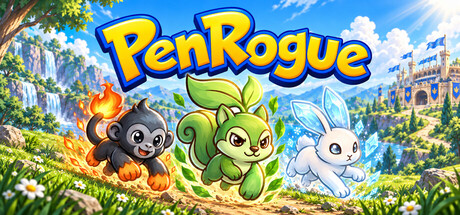
Generative AI is used throughout the development of PenRogue, including code, character artwork, backgrounds, UI assets, music, sound effects, and text. AI-generated content is reviewed, selected, and integrated by the developer.
Use of Generative AI & AI Credits
This game uses AI to generate in-game dialogue text and small gameplay extension modules ("evolution modules"). AI features consume AI credits.
You can get AI credits via small in-game purchases processed by Steam, or connect your own AI service at no extra cost — the settings menu lets you enter a custom API URL and key (any OpenAI-compatible endpoint), in which case usage is billed directly by your provider and no credits are consumed.
AI-generated code runs in a strictly sandboxed environment with a limited set of game APIs, and every output must pass the game's validation and test gates before taking effect. AI features can be disabled at any time.
AI tools were used to assist with programming and to generate some promotional artwork and marketing materials. The game does not generate AI content during gameplay or connect to external AI services.
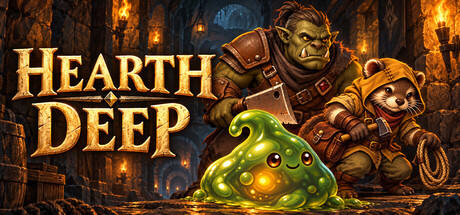
Generative AI tools were used during development to assist with some visual assets and portions of the game's code. AI-assisted artwork includes the title background, dungeon environments, monsters, adventurers, and trap visuals. All such content was created before release and integrated as fixed game assets. Hearthdeep does not generate AI content during gameplay and does not connect to external AI services while the game is running.
Some artwork, 3D models, and code in this game were created with the assistance of AI tools during development. All AI-assisted content is pre-made and included in the game files; no content or code is generated live during gameplay.
AI was used as a support tool during development (code assistance and initial image generation). All artwork was individually reworked by hand, and no content is generated live during gameplay.
This game uses generative AI to help create pre-rendered store artwork, chapter illustrations, background music, and the official trailer. Game logic was drafted with AI assistance and reviewed by the developer.
All level design, gameplay mechanics, and in-game text are hand-authored. No copyrighted third-party material was used in any AI output.
HOW THIS GAME WAS MADE
Lane Siege is a one-person project built with an AI assistant, and it seems only fair to say exactly where that line falls.
Written with AI: the game's code, the logo and store artwork, the in-game text, and the balance numbers. Every one of those was directed, reviewed and playtested by me, and the design decisions are mine.
Made by people, not AI: every 3D model, sound effect and music track in the game is the work of named human artists, used under open licences and credited in full.
And nothing is generated while you play. The opponent you fight is ordinary game AI - rules it follows and a small table of what has worked against players before. No AI model runs while the game is running, and Lane Siege never connects to an AI service.
Generative AI was used during the development of this game. It was used for some assets, coding, and translation. Any content created with generative AI was reviewed and, where necessary, modified or adjusted before being included in the game.
Generative AI tools were used during development to assist with programming, proofreading, and improving the clarity of English-language text. All player-facing text was reviewed and finalized by the developer.
Generative AI was not used to create the game’s artwork, music, sound effects, or voice acting. All artwork featured in the game and its store materials was created by human artists Iida Kiela and Paul Laane. The game design, rules, and card mechanics were also created by human designers. The game does not generate any content using AI during gameplay.
Some pre-made content was created with the help of generative AI tools and then edited by our team: parts of the key art and logo, some 3D models, some UI/ability icons, and some character voice lines. AI coding assistants were also used during development. Gameplay design and level design were done by the developers. The game does not generate any AI content live during gameplay.
※ AI was used as a supplementary tool for English translation, spell checking, and programming code writing in this game. Illustrations, pixel art, Live2D, music, and voice acting were created entirely by humans.
As a small indie team, we use generative AI to assist with coding and parts of our art workflow. All AI-assisted code is manually tested by our team before being included in the game. Our artists create the original concepts and visual direction, while AI is used as a supporting tool during the art process. All final artwork is manually refined and finished by our artists.
Hold My Cargo is made by a three-person team at Favera Studio. Like many small studios, we use AI-assisted tools as part of our production pipeline — for exploring concepts and marketing artwork, speeding up parts of 3D asset, animation and texture work, drafting text and running automated testing. Every asset, animation and line of text that ships in the game is directed, reviewed, edited and approved by the team; nothing goes in unseen. The game does not generate any content at runtime — there is no live AI in Hold My Cargo, and no player data is sent to AI services.
Portions of this game's code and dialogue were written with the assistance of AI tools and then reviewed and edited by the developer. All art, 3D models, music and sound effects are human-made assets (Quaternius, Kay Lousberg, Kenney, omfgdude and SubspaceAudio, all CC0). Nothing is generated by AI while you play.
An AI assistant (Claude) was used during development. It wrote the in-game text translations, the store page text, and the scripts that build many of the game's 3D models, animations and textures, all under the developer's direction and review. Nothing is generated by AI while you play. All sounds are real recordings from CC0 libraries.
During the development of this game, we utilized generative artificial intelligence tools—specifically Claude, Gemini, and Codex (GPT)—to assist with programming, debugging, and drafting text/documentation.
Code and Systems: AI models were used as development assistants to help write, refactor, and troubleshoot code logic.
Text and Documentation: AI assistants were used to brainstorm and draft text content, which was then thoroughly reviewed, edited, and manually integrated by our development team.
Brine & Brass is a solo project by Remoria, assisted by AI. GPT assisted with game programming, in-game writing, artwork-drawing scripts, and procedural music and sound code. The artwork is rendered from project drawing code, and the audio uses local waveform synthesis. No generative AI model or online AI service runs during gameplay.
Pre-generated content (created during development, not generated while playing):
- The ending theme song "さくら色の上履き" was created with Suno.
- The title logos were generated with an AI image tool and reviewed by the developer.
- Game artwork (scenes, character art and illustrations) was created with the help of AI image generation and upscaled with Real-ESRGAN, then selected and edited by the developer.
- AI assistants (Codex, Claude) were used to help write code and to draft/translate some text; all story text was reviewed by the developer.
The game does not generate any content with AI at runtime.
Generative AI Disclosure
As a solo developer, I used generative AI tools to assist in two specific areas of development:
Coding & Debugging: Used AI as a programming assistant for troubleshooting and debugging code, helping optimize performance and stability.
LUMENKEEP was built by a solo developer working with AI development tools. AI assisted in generating the game's code, procedural geometry, shaders, and audio during development, under direct human direction and review; there is no hand-drawn art, hand-animation, or human-recorded audio in the game. LUMENKEEP does not use AI to generate content live during gameplay, and does not connect to any third-party AI service while you play.
We used AI to generate the code, UI assets, localization, and promotional materials for this project (the reference images for the AI were sourced from *Oath of Miko*).
AI tools were used to help write the game's code and make some placeholder sprites and text. All placeholder art/text is being removed by me, and i'm getting help with the removal/cleanup of AI code.
Generative AI tools were used during development to assist with the game's code, the logo and store artwork, the in-game tournament posters, the synthesized sound effects, the store texts and the trailer edit. All content was reviewed and directed by the developer. No AI-generated content is created at runtime.
An AI coding assistant (Claude, Anthropic) was used under the developer's direction to help write the game's code, some in-game text and the note tables of its music, which is then rendered by our own synthesis code and a licensed instrument sample library. No audio-generation, image-generation or voice models were used: no AI-generated artwork, 3D models, voice or sound recordings ship in the game, on the store page or in marketing materials. Every shipped track is logged in a provenance ledger and checked against YouTube Content ID
This game uses generative AI for creating textures, assisting with coding, and localizing text. All of this was produced during development, and the game does not use AI to generate new content while you play.
Made by an ordinary person building a game for the first time, with generative AI tools helping throughout.
The card illustrations, 3D models, music and sound effects, game code, and the localized text translated from the original Korean were all produced with AI tools. I picked through the results and edited them by hand before putting them in the game.
Everything was generated ahead of time and shipped inside the build. Nothing is generated live while you play.
Generative AI tools were used as development assistants for selected visual assets, code, and localization drafts. All AI-assisted outputs were reviewed, edited, adapted, and integrated by the development team. The final creative direction, game design, implementation, and quality control were handled by humans. No content is generated by AI during gameplay.
AI coding tools help write and maintain the game's plugin code, and parts of the in-game text like NPC combinatorial string banks and translations were written with AI assistance, all being reviewed manully by the developer.
AI tools were used to assist with programming and generate a small number of textures and menu illustrations. These visual assets were adjusted by hand before being included in the game.
Clearly Cribbage is my first game as a developer. I used AI tools to help with coding, debugging, testing, and working through design ideas while I learned to build it.
The opening studio image, game logo and icon, and some Steam artwork were made with AI image generation under my direction. Some of the licensed music in the game is also identified by its creators as AI-generated. I chose what to use and made the final decisions about the game.
No generative AI creates content while you play.
Some sound effects and music were created with AI audio tools.
AI tools assisted in writing the game's code and some of its text (descriptions, hints and story notes), all reviewed and edited by the developer. The artwork is drawn procedurally by the game itself, not AI-generated, and no AI content is generated during gameplay.
Void Runners was developed with the help of AI coding tools. The game's art, music and sound effects are generated procedurally by code written with those tools; no AI model runs in the game, and no content is generated live while you play.
Generative AI tools were used extensively throughout development. Most of the game's visual content, user interface, written text, audio, narrative and localization, and program code were created with the assistance of generative AI, then selected, edited, integrated, and refined by the developer. Generative AI is used only during development. The game does not connect to AI services or generate content in real time during gameplay.
Generative AI tools were used during development to assist with the creation and iteration of some game assets and development code. AI-assisted content included in the final game is pre-generated and reviewed by the developer. The game does not generate AI content during gameplay.
This game was made by a solo developer with the help of generative AI tools. AI was used to create the store page images and videos, the in-game audio and visual assets, language translations, and the majority of the code. The game concept, design, and every gameplay decision are my own, and I reviewed and refined all AI-generated content.
Generative AI is used throughout the development of PenRogue, including code, character artwork, backgrounds, UI assets, music, sound effects, and text. AI-generated content is reviewed, selected, and integrated by the developer.
Use of Generative AI & AI Credits
This game uses AI to generate in-game dialogue text and small gameplay extension modules ("evolution modules"). AI features consume AI credits.
You can get AI credits via small in-game purchases processed by Steam, or connect your own AI service at no extra cost — the settings menu lets you enter a custom API URL and key (any OpenAI-compatible endpoint), in which case usage is billed directly by your provider and no credits are consumed.
AI-generated code runs in a strictly sandboxed environment with a limited set of game APIs, and every output must pass the game's validation and test gates before taking effect. AI features can be disabled at any time.
AI tools were used to assist with programming and to generate some promotional artwork and marketing materials. The game does not generate AI content during gameplay or connect to external AI services.
Generative AI tools were used during development to assist with some visual assets and portions of the game's code. AI-assisted artwork includes the title background, dungeon environments, monsters, adventurers, and trap visuals. All such content was created before release and integrated as fixed game assets. Hearthdeep does not generate AI content during gameplay and does not connect to external AI services while the game is running.
Some artwork, 3D models, and code in this game were created with the assistance of AI tools during development. All AI-assisted content is pre-made and included in the game files; no content or code is generated live during gameplay.
AI was used as a support tool during development (code assistance and initial image generation). All artwork was individually reworked by hand, and no content is generated live during gameplay.
This game uses generative AI to help create pre-rendered store artwork, chapter illustrations, background music, and the official trailer. Game logic was drafted with AI assistance and reviewed by the developer.
All level design, gameplay mechanics, and in-game text are hand-authored. No copyrighted third-party material was used in any AI output.
HOW THIS GAME WAS MADE
Lane Siege is a one-person project built with an AI assistant, and it seems only fair to say exactly where that line falls.
Written with AI: the game's code, the logo and store artwork, the in-game text, and the balance numbers. Every one of those was directed, reviewed and playtested by me, and the design decisions are mine.
Made by people, not AI: every 3D model, sound effect and music track in the game is the work of named human artists, used under open licences and credited in full.
And nothing is generated while you play. The opponent you fight is ordinary game AI - rules it follows and a small table of what has worked against players before. No AI model runs while the game is running, and Lane Siege never connects to an AI service.
Generative AI was used during the development of this game. It was used for some assets, coding, and translation. Any content created with generative AI was reviewed and, where necessary, modified or adjusted before being included in the game.
Generative AI tools were used during development to assist with programming, proofreading, and improving the clarity of English-language text. All player-facing text was reviewed and finalized by the developer.
Generative AI was not used to create the game’s artwork, music, sound effects, or voice acting. All artwork featured in the game and its store materials was created by human artists Iida Kiela and Paul Laane. The game design, rules, and card mechanics were also created by human designers. The game does not generate any content using AI during gameplay.
Some pre-made content was created with the help of generative AI tools and then edited by our team: parts of the key art and logo, some 3D models, some UI/ability icons, and some character voice lines. AI coding assistants were also used during development. Gameplay design and level design were done by the developers. The game does not generate any AI content live during gameplay.
※ AI was used as a supplementary tool for English translation, spell checking, and programming code writing in this game. Illustrations, pixel art, Live2D, music, and voice acting were created entirely by humans.
As a small indie team, we use generative AI to assist with coding and parts of our art workflow. All AI-assisted code is manually tested by our team before being included in the game. Our artists create the original concepts and visual direction, while AI is used as a supporting tool during the art process. All final artwork is manually refined and finished by our artists.
Hold My Cargo is made by a three-person team at Favera Studio. Like many small studios, we use AI-assisted tools as part of our production pipeline — for exploring concepts and marketing artwork, speeding up parts of 3D asset, animation and texture work, drafting text and running automated testing. Every asset, animation and line of text that ships in the game is directed, reviewed, edited and approved by the team; nothing goes in unseen. The game does not generate any content at runtime — there is no live AI in Hold My Cargo, and no player data is sent to AI services.
Portions of this game's code and dialogue were written with the assistance of AI tools and then reviewed and edited by the developer. All art, 3D models, music and sound effects are human-made assets (Quaternius, Kay Lousberg, Kenney, omfgdude and SubspaceAudio, all CC0). Nothing is generated by AI while you play.
An AI assistant (Claude) was used during development. It wrote the in-game text translations, the store page text, and the scripts that build many of the game's 3D models, animations and textures, all under the developer's direction and review. Nothing is generated by AI while you play. All sounds are real recordings from CC0 libraries.
During the development of this game, we utilized generative artificial intelligence tools—specifically Claude, Gemini, and Codex (GPT)—to assist with programming, debugging, and drafting text/documentation.
Code and Systems: AI models were used as development assistants to help write, refactor, and troubleshoot code logic.
Text and Documentation: AI assistants were used to brainstorm and draft text content, which was then thoroughly reviewed, edited, and manually integrated by our development team.
Brine & Brass is a solo project by Remoria, assisted by AI. GPT assisted with game programming, in-game writing, artwork-drawing scripts, and procedural music and sound code. The artwork is rendered from project drawing code, and the audio uses local waveform synthesis. No generative AI model or online AI service runs during gameplay.
Pre-generated content (created during development, not generated while playing):
- The ending theme song "さくら色の上履き" was created with Suno.
- The title logos were generated with an AI image tool and reviewed by the developer.
- Game artwork (scenes, character art and illustrations) was created with the help of AI image generation and upscaled with Real-ESRGAN, then selected and edited by the developer.
- AI assistants (Codex, Claude) were used to help write code and to draft/translate some text; all story text was reviewed by the developer.
The game does not generate any content with AI at runtime.
Generative AI Disclosure
As a solo developer, I used generative AI tools to assist in two specific areas of development:
Coding & Debugging: Used AI as a programming assistant for troubleshooting and debugging code, helping optimize performance and stability.
LUMENKEEP was built by a solo developer working with AI development tools. AI assisted in generating the game's code, procedural geometry, shaders, and audio during development, under direct human direction and review; there is no hand-drawn art, hand-animation, or human-recorded audio in the game. LUMENKEEP does not use AI to generate content live during gameplay, and does not connect to any third-party AI service while you play.
We used AI to generate the code, UI assets, localization, and promotional materials for this project (the reference images for the AI were sourced from *Oath of Miko*).
AI tools were used to help write the game's code and make some placeholder sprites and text. All placeholder art/text is being removed by me, and i'm getting help with the removal/cleanup of AI code.
Generative AI tools were used during development to assist with the game's code, the logo and store artwork, the in-game tournament posters, the synthesized sound effects, the store texts and the trailer edit. All content was reviewed and directed by the developer. No AI-generated content is created at runtime.
An AI coding assistant (Claude, Anthropic) was used under the developer's direction to help write the game's code, some in-game text and the note tables of its music, which is then rendered by our own synthesis code and a licensed instrument sample library. No audio-generation, image-generation or voice models were used: no AI-generated artwork, 3D models, voice or sound recordings ship in the game, on the store page or in marketing materials. Every shipped track is logged in a provenance ledger and checked against YouTube Content ID
This game uses generative AI for creating textures, assisting with coding, and localizing text. All of this was produced during development, and the game does not use AI to generate new content while you play.
Made by an ordinary person building a game for the first time, with generative AI tools helping throughout.
The card illustrations, 3D models, music and sound effects, game code, and the localized text translated from the original Korean were all produced with AI tools. I picked through the results and edited them by hand before putting them in the game.
Everything was generated ahead of time and shipped inside the build. Nothing is generated live while you play.
Generative AI tools were used as development assistants for selected visual assets, code, and localization drafts. All AI-assisted outputs were reviewed, edited, adapted, and integrated by the development team. The final creative direction, game design, implementation, and quality control were handled by humans. No content is generated by AI during gameplay.