Public Steam disclosure research25,380 disclosures tracked
Where do games disclose AI use?
Search developers’ Steam disclosures, compare classified AI use across
games, and follow recorded changes.
This index adds cross-game classifications and statistics to
statements published on individual store pages.
Groups reflect automatic analysis of public disclosures; mature records are excluded. These counts do not measure AI use across all of Steam.
Missing or unclear statements cannot establish whether a game uses AI.
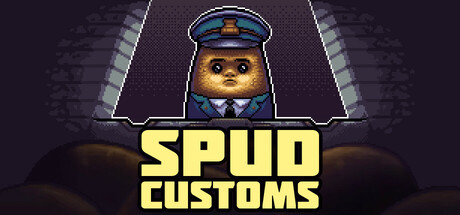
Spud Customs is made by Lost Rabbit Digital: two siblings who handle all the coding, music, writing, and playtesting ourselves, with help from one additional artist, and one musician. We're a tiny team with no outside funding. To keep up, we sometimes use AI tools to brainstorm or generate rough drafts. But nothing ships without our hands on it. Every line of code, every sprite, every track is reviewed, rewritten, and refined by us.
No AI art is used. I do use AI to help with programming sometimes. Some small functions in code were written with AI. Other times AI will give me ideas about how to approach a programming problem.
The AI content is only Windows-based content. Nothing from outside. The Functions are normal Windowsfeatures.
These Things were used:
#include
#include
#include
#include
#include
#include
#include
#include "resource.h"
In-game text creation and translation: AI is used to create and translate text within the game as well as for the store page.
Program code generation: AI is utilized to create and optimize program code for implementing game features and systems.
Some of the images used on the store page are AI-generated.
Certain images and 3D models used in the game are AI-generated.
Some of the text has been created with the assistance of AI.
Parts of the programming have been developed with the assistance of AI.
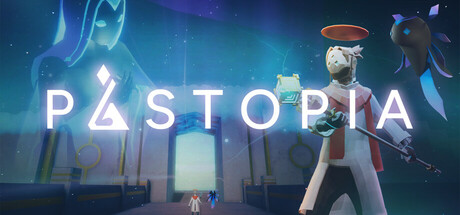
Meet Golem, your AI-trusted companion! Our Golem generates real-time coding based on your own prompts for any questions or coding challenges you encounter while exploring the world of Pastopia. The only generative assets that the Golem produces in-game are MiniScript codes that we have trained ourselves and basic 3D shapes that are based off Pastopia's own in-game assets. For example, Golem will help you create lines of code that will spawn a structure of a bridge using either cubes, spheres or prisms from the game.
- Most sound effects but never music
- Some images such as backgrounds and card faces before being transformed in photoshop
- General coding assistance
The developers make use of agentic coding tools like Claude Code in their work process.
In-game and store descriptions have been translated using ai-tools in the localization process.
Some in-game images are generated using AI. We would like to replace this images with an artist when we can afford it, but for now it is there.
Some of the code was assisted VIA AI for teaching and troubleshooting.
AI helps me with texts on the Steam page (grammar correction, translations, and texts).
AI helps me correct errors in the game code and optimize it (Integrated Microsoft Copilot in the Visual Studio environment).
I don't use AI at all for music and sound creation.
I don't use AI at all for 3D or 2D graphics creation.
Our game uses GenAI at run time in our game engine to power various gameplay mechanics so that the game can respond to whatever players say and do in the moment.
We're excited to build on both known game dev tools and also develop new capabilities, all to be able to build games that are more improvisational and responsive to player creativity and agency.
We did not use AI generation for any of our art assets, nor for the NPC customer motivations, personalities, or quests.
LLMs were used to assist with the text descriptions for the store page. LLMs were used to assist with the coding and coding research for scripts. Art background and character models are at least partially AI.
This game utilizes AI assistance in code development, marketing materials including Steam descriptions and promotional text, and translation of in-game and promotional texts.
The game includes an unholy amount of AI-generated content, including:
- Textures
- Images
- Music
- Audio effects
- Voice lines
- Facial and body animations
- Code
Game allows player to use voice as a main input tool. To achieve great quality of speech to text, a base version of openai's whisper model is used.
The content seen in the game is not live-generated. The player's input is embedded into a vector through a small model with 278M parameters.
Model:
paraphrase-multilingual-mpnet-base-v2
(Used primarily for wide support of languages)
Then, the game uses Faiss to match the player's input to known, predefined inputs. Each of those describes a reaction and change in the state of the game.
Icon was made with local diffusion model.
In my game development process, I used GitHub Copilot to enhance coding efficiency.
During the creation of promotional images and videos, I may have used images generated by Stable Diffusion or music generated by Suno.
But these assets will NOT appear in the actual game!
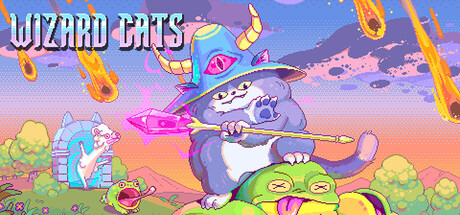
In Wizard Cats, AI is used to write the code that powers spells created from runes. No art is generated using AI - all art is hand-drawn by our talented team of artists.
AI played a key role in the development of this game, enhancing both the creative and technical aspects. From generating detailed textures to assisting in the creation of 3D models, AI helped bring the game world to life with greater efficiency and precision. Additionally, AI contributed to coding and the creation of promotional materials, ensuring a high-quality experience both in-game and on the store page.
AI generated content is used for voice audio, generation of concept art for inspiration, and GitHub Copilot AI assistant is used to aid with gameplay coding.
Yes, we used AI tools in a limited capacity during the development of our game. Specifically, AI was utilized for certain aspects of the game's text, such as crafting the Steam page description, and for some pieces of code. However, the core development, design, and creative processes were driven by our team(me). The use of AI was supplementary, aimed at enhancing productivity and efficiency, rather than shaping the core elements of the game.
AI tools were used during development for coding assistance, icon concepts, and marketing materials. All in-game 3D environments and gameplay are handcrafted.
AI is used in this game in the following ways:
- code generation and code error checking via LLMs
- AI is used to create reference images.
- The "generative fill" feature in Photoshop is used occasionally to create in detail on the stage artwork.
- AI generated images may be woven into certain stages.
Neuro-prompt engineering is the profession of the future, enabling the structuring of queries based on experience so that the subject matter fully matches the task. I use my initial knowledge of programming and integrated AI assistants in various applications to optimize the code development process. This allows me to automate many repetitive tasks, such as code refactoring and formatting, enabling me to focus on more complex and creative aspects of development. My ideas remain unique and original, with AI helping to shape them as a framework, preserving my creative decisions.
Spud Customs is made by Lost Rabbit Digital: two siblings who handle all the coding, music, writing, and playtesting ourselves, with help from one additional artist, and one musician. We're a tiny team with no outside funding. To keep up, we sometimes use AI tools to brainstorm or generate rough drafts. But nothing ships without our hands on it. Every line of code, every sprite, every track is reviewed, rewritten, and refined by us.
No AI art is used. I do use AI to help with programming sometimes. Some small functions in code were written with AI. Other times AI will give me ideas about how to approach a programming problem.
The AI content is only Windows-based content. Nothing from outside. The Functions are normal Windowsfeatures.
These Things were used:
#include
#include
#include
#include
#include
#include
#include
#include "resource.h"
In-game text creation and translation: AI is used to create and translate text within the game as well as for the store page.
Program code generation: AI is utilized to create and optimize program code for implementing game features and systems.
Some of the images used on the store page are AI-generated.
Certain images and 3D models used in the game are AI-generated.
Some of the text has been created with the assistance of AI.
Parts of the programming have been developed with the assistance of AI.
Meet Golem, your AI-trusted companion! Our Golem generates real-time coding based on your own prompts for any questions or coding challenges you encounter while exploring the world of Pastopia. The only generative assets that the Golem produces in-game are MiniScript codes that we have trained ourselves and basic 3D shapes that are based off Pastopia's own in-game assets. For example, Golem will help you create lines of code that will spawn a structure of a bridge using either cubes, spheres or prisms from the game.
- Most sound effects but never music
- Some images such as backgrounds and card faces before being transformed in photoshop
- General coding assistance
The developers make use of agentic coding tools like Claude Code in their work process.
In-game and store descriptions have been translated using ai-tools in the localization process.
Some in-game images are generated using AI. We would like to replace this images with an artist when we can afford it, but for now it is there.
Some of the code was assisted VIA AI for teaching and troubleshooting.
AI helps me with texts on the Steam page (grammar correction, translations, and texts).
AI helps me correct errors in the game code and optimize it (Integrated Microsoft Copilot in the Visual Studio environment).
I don't use AI at all for music and sound creation.
I don't use AI at all for 3D or 2D graphics creation.
Our game uses GenAI at run time in our game engine to power various gameplay mechanics so that the game can respond to whatever players say and do in the moment.
We're excited to build on both known game dev tools and also develop new capabilities, all to be able to build games that are more improvisational and responsive to player creativity and agency.
We did not use AI generation for any of our art assets, nor for the NPC customer motivations, personalities, or quests.
LLMs were used to assist with the text descriptions for the store page. LLMs were used to assist with the coding and coding research for scripts. Art background and character models are at least partially AI.
This game utilizes AI assistance in code development, marketing materials including Steam descriptions and promotional text, and translation of in-game and promotional texts.
The game includes an unholy amount of AI-generated content, including:
- Textures
- Images
- Music
- Audio effects
- Voice lines
- Facial and body animations
- Code
Game allows player to use voice as a main input tool. To achieve great quality of speech to text, a base version of openai's whisper model is used.
The content seen in the game is not live-generated. The player's input is embedded into a vector through a small model with 278M parameters.
Model:
paraphrase-multilingual-mpnet-base-v2
(Used primarily for wide support of languages)
Then, the game uses Faiss to match the player's input to known, predefined inputs. Each of those describes a reaction and change in the state of the game.
Icon was made with local diffusion model.
In my game development process, I used GitHub Copilot to enhance coding efficiency.
During the creation of promotional images and videos, I may have used images generated by Stable Diffusion or music generated by Suno.
But these assets will NOT appear in the actual game!
In Wizard Cats, AI is used to write the code that powers spells created from runes. No art is generated using AI - all art is hand-drawn by our talented team of artists.
AI played a key role in the development of this game, enhancing both the creative and technical aspects. From generating detailed textures to assisting in the creation of 3D models, AI helped bring the game world to life with greater efficiency and precision. Additionally, AI contributed to coding and the creation of promotional materials, ensuring a high-quality experience both in-game and on the store page.
AI generated content is used for voice audio, generation of concept art for inspiration, and GitHub Copilot AI assistant is used to aid with gameplay coding.
Yes, we used AI tools in a limited capacity during the development of our game. Specifically, AI was utilized for certain aspects of the game's text, such as crafting the Steam page description, and for some pieces of code. However, the core development, design, and creative processes were driven by our team(me). The use of AI was supplementary, aimed at enhancing productivity and efficiency, rather than shaping the core elements of the game.
AI tools were used during development for coding assistance, icon concepts, and marketing materials. All in-game 3D environments and gameplay are handcrafted.
AI is used in this game in the following ways:
- code generation and code error checking via LLMs
- AI is used to create reference images.
- The "generative fill" feature in Photoshop is used occasionally to create in detail on the stage artwork.
- AI generated images may be woven into certain stages.
Neuro-prompt engineering is the profession of the future, enabling the structuring of queries based on experience so that the subject matter fully matches the task. I use my initial knowledge of programming and integrated AI assistants in various applications to optimize the code development process. This allows me to automate many repetitive tasks, such as code refactoring and formatting, enabling me to focus on more complex and creative aspects of development. My ideas remain unique and original, with AI helping to shape them as a framework, preserving my creative decisions.