Public Steam disclosure research25,380 disclosures tracked
Where do games disclose AI use?
Search developers’ Steam disclosures, compare classified AI use across
games, and follow recorded changes.
This index adds cross-game classifications and statistics to
statements published on individual store pages.
Groups reflect automatic analysis of public disclosures; mature records are excluded. These counts do not measure AI use across all of Steam.
Missing or unclear statements cannot establish whether a game uses AI.
In this game, we have utilized generative AI technology to enhance the player experience. Specifically, we used ChatGPT to generate some images, story descriptions, and certain text elements within the game. Additionally, some game scripts were also assisted by AI. Our goal is to provide players with a richer narrative and interactive experience through the use of AI technology.
Our game utilizes AI in several ways. We generated some concept art using AI, which helped shape the visual direction of the game. Additionally, we partially used AI for translation tasks to ensure a broader audience can enjoy the game. AI also assisted us in some coding tasks, streamlining development and allowing us to focus on crafting a better gameplay experience.
We used AI as a tool during development to help generate some parts of the code and certain visual assets. However, there is no active or functional AI system used within the game itself. AI was only used in the production process, not as part of the gameplay or game mechanics.
The development of this game was greatly supported by AI tools, such as ChatGPT for coding, image recognition, and drafting the store description. Additionally, AI-generated portraits (originally published and downloadable on Bilibili) are used as background images in the AI Portraits series.
Players are able to have free-form conversations with NPCs. We also use generative AI for item data, quest generation, NPC memory and decision-making, crafting recipes, in-game events, game logic, and more.
AI tools were used to assist with dialogue writing and software development. All AI-generated content was reviewed and curated by developers before inclusion in the final game.
Generative AI products such as Github Co-pilot and ChatGPT were used to assist in the debugging and testing of code. However, all creative aspects of programming were manually written.
Generative AI with open-source public licensing was used to create concept art and draft marketing material which was then manually modified for production with Aesprite, Photoshop, and Canva. None of the content used within the game or marketing materials violate existing copyright or impersonate living persons.
We utilize AI technology to enhance development efficiency and provide a broader experience for our players. Our use of AI is categorized as follows:
Art & Visuals: AI tools are used strictly for initial concept generation and as reference material. No AI-generated visual assets are used "as-is" in the final game. Every image is manually refined, repainted, and finalized by our artists to ensure a unique and high-quality aesthetic.
Translation & Localization: To provide immediate accessibility to a global audience, the initial game text and localization have been generated using AI. While this allows us to support multiple languages from day one, we recognize that it may lack perfect nuance. Following the release, we plan to actively refine and improve these translations through community feedback and collaborative proofreading.
Sound & Coding: We utilize AI-assisted tools to optimize backend code performance and assist in sound engineering, allowing us to focus on core gameplay stability and mechanics.
In all areas, we are committed to transparency and will continue to update and polish the game's content based on player input and professional review.
Flag Clicker utilizes advanced artificial intelligence to assist in content creation and programming. Through the use of AI algorithms, certain aspects of the game are optimized. This technology allows us to continually enhance the player experience and introduce innovative features while leveraging the creativity and expertise of our development team.
As a team of 2 we have utilized AI in our early development stages, including some concepts, logo design, coding, 3D models and music.
Most of these assets are considered placeholder content, helping us get the fastest ideas in while we work on other subjects. Most AI generated content have/will be replaced or reworked into more refined pieces for the final product.
I use AI-enhanced programming for game scripts and shaders. I do not use AI generation for audio or visual assets. I do use 3rd party assets that may themselves contain other AI generated assets.
Use Buildbox 4's AI Assistant to create your own game! The AI Assistant can help design your world, select and place assets, and even write code to bring your ideas to life!
Generative AI is used solely during development for supplemental, non-essential purposes, including unit testing or the creation of certain art elements. These AI-generated outputs are limited in scope, reviewed by our development team, and never substituted human creative or technical decision-making. All final core assets and game content are created entirely by Wargaming’s artists and developers.
Only a small amount of non-core code and the melody of the opening theme in this game are generated by AI; no AI technology is used for the core creative content including core code, gameplay logic and the lyrics composition of the opening theme.
This game makes limited use of generative artificial intelligence during development.
Generative AI was used to help create some game music and sound effects, to generate the store page thumbnail artwork, and as a support tool for brainstorming ideas and coding auto-completion.
All gameplay, design, and final creative decisions were made by the developer.
AI was used in research to fix/improve the code for the originally buggy rhythm mini games.
That aside, every aspect of Necrophobia (art, story, music, code, etc.) was created by my own human hands, and developed by my own human brain.
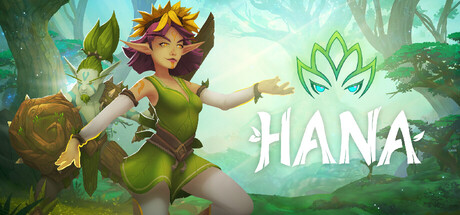
We use AI during our production process to facilitate quest integration through our in-house tool, HanaCore.
It allows us to synthesize, correct, and integrate quests while fully respecting the existing lore.
We also use AI to assist with code generation, helping us save valuable development time.
I am proud of the fact that everything you see and hear in the game is made by humans. Work by talented artists and human creativity created all the assets, soundtracks and story elements you experience in the game. For full transparency I do want to disclose that Language Models were used for assisting while coding and for translating the game in the wide number of languages using DeepL. However through community effort we continuously refine these translations to be the most fitting they can be.
I leverage AI technologies for code suggestions in Godot and image generation. Although, most of the art is hand-drawn. These AI tools assist development workflows and enhance visual quality. While AI aids my process, the development remains predominantly driven by me.
Generative AI was used during the development phase of this game to assist with programming and content creation, strictly for internal developer use.
The final version of the game does not contain any real-time AI-generated content.
I only got javascript code support. I got help with general game performance and code optimization. In no way was the whole or a large part of the game made by artificial intelligence. I just got help at some points where I got stuck and used it to speed up my work. All games have been tested many times by real players. We definitely do not publish games without testing them and seeing their errors.
Sanguine does not use AI to generate gameplay, dialogue, or dynamic content for players. The game experience is fully authored and designed.
AI was used in development in three ways:
-Coding assistance: GitHub Copilot was used as a tool to speed up writing code, with all implementations reviewed and customized by the developer.
-Small artwork elements: A limited number of in-game framed paintings, Steam Achievement Artwork, and Newspaper Artwork were created with AI and then curated/edited by the developer for use.
-Additionally, AI was used to assist with Localization Translations.
All story, characters, environments, music, voice performances, live VHS-style footage, 3D models, cutscenes, and overall production were created directly and originally for Sanguine, or were purchased for use, or are royalty-free for use.
Code: Only when I was absolutely stuck on something and needed help troubleshooting. All the actual development and implementation was hands-on.
Music: The in-game songs were created using AI generation tools.
In this game, we have utilized generative AI technology to enhance the player experience. Specifically, we used ChatGPT to generate some images, story descriptions, and certain text elements within the game. Additionally, some game scripts were also assisted by AI. Our goal is to provide players with a richer narrative and interactive experience through the use of AI technology.
Our game utilizes AI in several ways. We generated some concept art using AI, which helped shape the visual direction of the game. Additionally, we partially used AI for translation tasks to ensure a broader audience can enjoy the game. AI also assisted us in some coding tasks, streamlining development and allowing us to focus on crafting a better gameplay experience.
We used AI as a tool during development to help generate some parts of the code and certain visual assets. However, there is no active or functional AI system used within the game itself. AI was only used in the production process, not as part of the gameplay or game mechanics.
The development of this game was greatly supported by AI tools, such as ChatGPT for coding, image recognition, and drafting the store description. Additionally, AI-generated portraits (originally published and downloadable on Bilibili) are used as background images in the AI Portraits series.
Players are able to have free-form conversations with NPCs. We also use generative AI for item data, quest generation, NPC memory and decision-making, crafting recipes, in-game events, game logic, and more.
AI tools were used to assist with dialogue writing and software development. All AI-generated content was reviewed and curated by developers before inclusion in the final game.
Generative AI products such as Github Co-pilot and ChatGPT were used to assist in the debugging and testing of code. However, all creative aspects of programming were manually written.
Generative AI with open-source public licensing was used to create concept art and draft marketing material which was then manually modified for production with Aesprite, Photoshop, and Canva. None of the content used within the game or marketing materials violate existing copyright or impersonate living persons.
We utilize AI technology to enhance development efficiency and provide a broader experience for our players. Our use of AI is categorized as follows:
Art & Visuals: AI tools are used strictly for initial concept generation and as reference material. No AI-generated visual assets are used "as-is" in the final game. Every image is manually refined, repainted, and finalized by our artists to ensure a unique and high-quality aesthetic.
Translation & Localization: To provide immediate accessibility to a global audience, the initial game text and localization have been generated using AI. While this allows us to support multiple languages from day one, we recognize that it may lack perfect nuance. Following the release, we plan to actively refine and improve these translations through community feedback and collaborative proofreading.
Sound & Coding: We utilize AI-assisted tools to optimize backend code performance and assist in sound engineering, allowing us to focus on core gameplay stability and mechanics.
In all areas, we are committed to transparency and will continue to update and polish the game's content based on player input and professional review.
Flag Clicker utilizes advanced artificial intelligence to assist in content creation and programming. Through the use of AI algorithms, certain aspects of the game are optimized. This technology allows us to continually enhance the player experience and introduce innovative features while leveraging the creativity and expertise of our development team.
As a team of 2 we have utilized AI in our early development stages, including some concepts, logo design, coding, 3D models and music.
Most of these assets are considered placeholder content, helping us get the fastest ideas in while we work on other subjects. Most AI generated content have/will be replaced or reworked into more refined pieces for the final product.
I use AI-enhanced programming for game scripts and shaders. I do not use AI generation for audio or visual assets. I do use 3rd party assets that may themselves contain other AI generated assets.
Use Buildbox 4's AI Assistant to create your own game! The AI Assistant can help design your world, select and place assets, and even write code to bring your ideas to life!
Generative AI is used solely during development for supplemental, non-essential purposes, including unit testing or the creation of certain art elements. These AI-generated outputs are limited in scope, reviewed by our development team, and never substituted human creative or technical decision-making. All final core assets and game content are created entirely by Wargaming’s artists and developers.
Only a small amount of non-core code and the melody of the opening theme in this game are generated by AI; no AI technology is used for the core creative content including core code, gameplay logic and the lyrics composition of the opening theme.
This game makes limited use of generative artificial intelligence during development.
Generative AI was used to help create some game music and sound effects, to generate the store page thumbnail artwork, and as a support tool for brainstorming ideas and coding auto-completion.
All gameplay, design, and final creative decisions were made by the developer.
AI was used in research to fix/improve the code for the originally buggy rhythm mini games.
That aside, every aspect of Necrophobia (art, story, music, code, etc.) was created by my own human hands, and developed by my own human brain.
We use AI during our production process to facilitate quest integration through our in-house tool, HanaCore.
It allows us to synthesize, correct, and integrate quests while fully respecting the existing lore.
We also use AI to assist with code generation, helping us save valuable development time.
I am proud of the fact that everything you see and hear in the game is made by humans. Work by talented artists and human creativity created all the assets, soundtracks and story elements you experience in the game. For full transparency I do want to disclose that Language Models were used for assisting while coding and for translating the game in the wide number of languages using DeepL. However through community effort we continuously refine these translations to be the most fitting they can be.
I leverage AI technologies for code suggestions in Godot and image generation. Although, most of the art is hand-drawn. These AI tools assist development workflows and enhance visual quality. While AI aids my process, the development remains predominantly driven by me.
Generative AI was used during the development phase of this game to assist with programming and content creation, strictly for internal developer use.
The final version of the game does not contain any real-time AI-generated content.
I only got javascript code support. I got help with general game performance and code optimization. In no way was the whole or a large part of the game made by artificial intelligence. I just got help at some points where I got stuck and used it to speed up my work. All games have been tested many times by real players. We definitely do not publish games without testing them and seeing their errors.
Sanguine does not use AI to generate gameplay, dialogue, or dynamic content for players. The game experience is fully authored and designed.
AI was used in development in three ways:
-Coding assistance: GitHub Copilot was used as a tool to speed up writing code, with all implementations reviewed and customized by the developer.
-Small artwork elements: A limited number of in-game framed paintings, Steam Achievement Artwork, and Newspaper Artwork were created with AI and then curated/edited by the developer for use.
-Additionally, AI was used to assist with Localization Translations.
All story, characters, environments, music, voice performances, live VHS-style footage, 3D models, cutscenes, and overall production were created directly and originally for Sanguine, or were purchased for use, or are royalty-free for use.
Code: Only when I was absolutely stuck on something and needed help troubleshooting. All the actual development and implementation was hands-on.
Music: The in-game songs were created using AI generation tools.