Public Steam disclosure research25,508 disclosures tracked
Where do games disclose AI use?
Search developers’ Steam disclosures, compare classified AI use across
games, and follow recorded changes.
This index adds cross-game classifications and statistics to
statements published on individual store pages.
Groups reflect automatic analysis of public disclosures; mature records are excluded. These counts do not measure AI use across all of Steam.
Missing or unclear statements cannot establish whether a game uses AI.
The following languages are supported using AI translation, with final proofreading and adjustments by the developer.
English · Simplified Chinese · Traditional Chinese
Some text added in updates for other languages also uses AI translation.
This game used artificial intelligence tools during the development process to create some text, music, sound effects, and 3D models. All content generated by artificial intelligence is not subject to copyright. However, artificial intelligence is not used to generate content or code in real time during gameplay.
This game uses generative AI tools to create certain 3D models, 2D visuals, audio, localization, and the intro video. All content has been reviewed and edited.
Following is generated using AI:
AI is used only to generate some pre-created assets. No AI-generated content is produced during gameplay.
Store Page
*The game icon was created with the help of AI tools.
*The store page description was rewritten using AI assistance.
In-Game Content
*The tutorial voice-overs are generated using the text-to-speech service TTSFree.
*The tutorial narration text was originally written in German and translated into English with DeepL, with developer review and adjustments.
Players interview AI-generated startup founders through free-form text dialogue. All conversations are single-player and confined to fictional investment scenarios within the game.
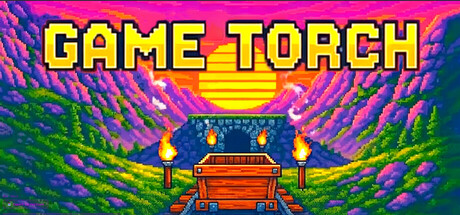
Game Torch includes pre-generated AI content created with generative AI tools during development (e.g., some audiovisual assets and text, plus copy drafted for marketing/internal curation). All outputs are reviewed by a human. Game Torch does not use live-generated AI content during gameplay (nothing is generated at runtime in response to player input).
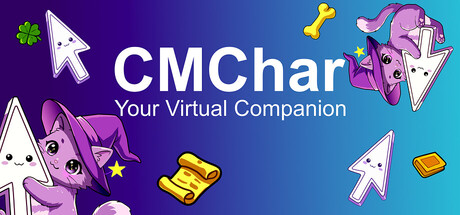
This game utilizes Artificial Intelligence to generate dynamic text-based conversations with virtual desktop mascots, allowing them to react primarily to user input. The application supports for now local offline AI (via Ollama) A comprehensive local safety filter is implemented to prevent the generation of harmful or illegal content.
The text and materials of the community store were modified using AI. The cover images were also adjusted and referenced by AI. AI was also used to detect code errors. The assets in the game were all manually created by humans.
During development, an AI writing assistant was used to draft and polish in-game text, including item descriptions, dialogues, and system logs. All text was then manually proofread, edited, and verified by the developers.
This game uses AI-assisted tools during development
for tasks such as text drafting and iteration support.
All gameplay systems, content design, and final assets
are created and curated by the developer.
AI is not used for real-time gameplay decision-making.
Upgrade names based on player progress
Short functional descriptions for power-ups
Lore quotes from "Ancient Penguin Spirits"
How it works:
When players level up during gameplay, the AI creates contextual narrative elements based on the player's current level, recent performance, and the type of upgrade being offered. This content is generated in real-time and adapts to the language setting (English or Traditional Chinese).
Player experience:
AI-generated content is limited to optional narrative flavor text only. All core gameplay, mechanics, weapons, enemies, and progression systems are pre-designed by the developer. The AI does not affect game balance, difficulty, or player outcomes.
The translations in this game (excluding English and Polish) were prepared with the assistance of artificial intelligence. Each text has been verified and edited by the developer.
In Coffee Coffin, AI is used behind the scenes to enhance dialogue and audiovisual presentation for the player:
Reactive Dialogue:
AI is primarily used to generate real-time, context-aware dialogue lines between the player and in-game characters (wandering souls). These lines are created within fixed narrative frameworks and safety filters; players do not enter free-form prompts.
Art & Media Asset Generation:
Outside of dialogue, AI is mainly used to create and vary game art assets, including:
Character and illustration variants
Backgrounds and visual effects
Music and ambient soundscapes
Sound effects
Voice-over lines
Short in-game videos / cutscenes
All of these are delivered to the player as finished in-game content. Players never access AI models directly, cannot upload their own media, and do not interact with raw prompts or generation tools.
I created achievement logos with AI and store logos with Ai, all in game images are created with actual game play and does not use Ai, game privacy and manual were formatted and verified using Ai.
Parts of the background image of characters are generated by AI. All the Localizations are generated by AI. Others assets like character image/UI/voice are hand-made.
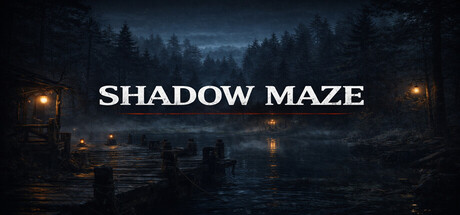
During the development of "SHADOW MAZE Descent into Fear", AI tools were used in the following ways:
1. **Design & planning**: ChatGPT was used as a brainstorming assistant for game design ideas, mechanics, and narrative concepts.
2. **Visual concepts**: One initial store capsule image was generated using an AI image tool (Midjourney/DALL-E) during early prototyping. This image has since been replaced with original, human-created artwork and in-game screenshots.
3. **Code assistance**: ChatGPT provided examples and explanations for basic scripting and debugging.
All AI-generated visual content has been removed from the final store page and game build. The current store assets are original or gameplay screenshots. No AI-generated content remains in the publicly available version of the game.
No AI is used in core development. We use AI sparingly for some initial aspects such as toy mock ups - all final models are made by our team. We also use to aid in ideation, some social media graphics, voices, sound track and renders. All core aspects, such as development work, maps, VFX, final toy models and code are done by hand and our development team of 30.
The images used in the game are created using generative AI.
The names of the characters are also created using generative AI.
The shop text is created using AI.
Uses AI to determine minimum system requirements.
The game utilizes pre-generated AI content during the development process. Specifically, we use Adobe Photoshop's AI features to assist in editing, retouching 2D images, and creating specific visual text elements. All AI-assisted assets are manually reviewed and modified by the development team before implementation.
No image in this game is used exactly as produced by an AI without human editing; all images have been modified, reworked, or supplemented manually. The in-game texts and the store page description were partially written with the help of AI tools, then proofread and corrected by a human.
This game features an optional AI integration known as "The Oracle," which utilizes generative text technology to provide dynamic narrative commentary and sarcastic tactical analysis based on your real-time gameplay actions. This feature is powered by the Gemini API and operates on a "Bring Your Own Key" (BYOK) architecture, meaning users must provide their own personal API Key to enable this specific functionality. The AI generation is strictly cosmetic, text-based, and completely optional, ensuring that the core gameplay experience, mechanics, and balance remain fully intact and enjoyable whether or not the feature is active.
We use AI as a creative assistant to refine our English descriptions and ensure they are easy to read and engaging (since we are not native speakers). In addition, some of the game’s illustrations were created with the help of generative AI tools and later refined by human artists.
This game is created by a solo developer with a limited budget and some AI-assisted tools were used during production.
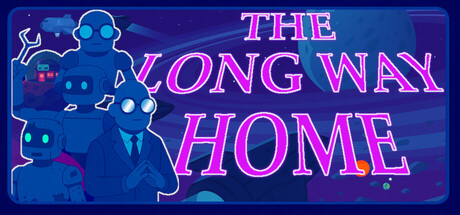
– All robot voices are based on AI-generated voice lines that were then hand-edited, processed and mixed.
– Some background images and visual effects were created or enhanced using AI-assisted art tools.
– All game design, code, gameplay systems and written story/content were created by hand by the developer.
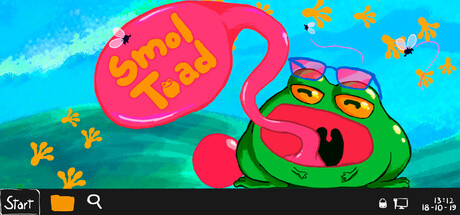
Smol Toad uses generative AI only for interface text translation into additional languages.
No generative AI is used for gameplay, art, hats/cosmetics, assets, character behavior, or any other content.
In LOW VALUE JOB, certain aspects of the production process make use of generative AI technologies.
The areas in which AI tools were utilized include:
- Assisted generation of code
- Creation and processing of music and sound effects
- Generation of character voices and voice lines
- Text generation and translation support
All AI-generated content is used in accordance with the terms of service and commercial-use licenses of the respective tools.
All final content is reviewed, edited, and approved by the development team, which remains fully responsible for the game’s behavior and overall quality.
This application uses local AI technologies to enable interactive conversations with your desktop pet:
• Text Generation: The pet uses a local Large Language Model running entirely offline to generate conversational responses.
• Speech Recognition (STT): Voice input is processed locally using AI speech-to-text models to understand what you say to your pet.
• Speech Synthesis (TTS): The pet's voice responses are generated locally using AI text-to-speech models, supporting multiple languages.
All AI processing runs offline on your device. No internet connection required. No AI-generated content was used in creating game assets, artwork, or marketing materials.
I am leveraging AI in a few ways. Firstly, in Coding and Debugging. I am also using AI as placeholders for art assets to be then contracted for professionals to iterate on the vision and tone. Thirdly, I am using AI for some story elements and to modulate my voice to aid in Dialogue.
The following languages are supported using AI translation, with final proofreading and adjustments by the developer.
English · Simplified Chinese · Traditional Chinese
Some text added in updates for other languages also uses AI translation.
This game used artificial intelligence tools during the development process to create some text, music, sound effects, and 3D models. All content generated by artificial intelligence is not subject to copyright. However, artificial intelligence is not used to generate content or code in real time during gameplay.
This game uses generative AI tools to create certain 3D models, 2D visuals, audio, localization, and the intro video. All content has been reviewed and edited.
Following is generated using AI:
AI is used only to generate some pre-created assets. No AI-generated content is produced during gameplay.
Store Page
*The game icon was created with the help of AI tools.
*The store page description was rewritten using AI assistance.
In-Game Content
*The tutorial voice-overs are generated using the text-to-speech service TTSFree.
*The tutorial narration text was originally written in German and translated into English with DeepL, with developer review and adjustments.
Players interview AI-generated startup founders through free-form text dialogue. All conversations are single-player and confined to fictional investment scenarios within the game.
Game Torch includes pre-generated AI content created with generative AI tools during development (e.g., some audiovisual assets and text, plus copy drafted for marketing/internal curation). All outputs are reviewed by a human. Game Torch does not use live-generated AI content during gameplay (nothing is generated at runtime in response to player input).
This game utilizes Artificial Intelligence to generate dynamic text-based conversations with virtual desktop mascots, allowing them to react primarily to user input. The application supports for now local offline AI (via Ollama) A comprehensive local safety filter is implemented to prevent the generation of harmful or illegal content.
The text and materials of the community store were modified using AI. The cover images were also adjusted and referenced by AI. AI was also used to detect code errors. The assets in the game were all manually created by humans.
During development, an AI writing assistant was used to draft and polish in-game text, including item descriptions, dialogues, and system logs. All text was then manually proofread, edited, and verified by the developers.
This game uses AI-assisted tools during development
for tasks such as text drafting and iteration support.
All gameplay systems, content design, and final assets
are created and curated by the developer.
AI is not used for real-time gameplay decision-making.
Upgrade names based on player progress
Short functional descriptions for power-ups
Lore quotes from "Ancient Penguin Spirits"
How it works:
When players level up during gameplay, the AI creates contextual narrative elements based on the player's current level, recent performance, and the type of upgrade being offered. This content is generated in real-time and adapts to the language setting (English or Traditional Chinese).
Player experience:
AI-generated content is limited to optional narrative flavor text only. All core gameplay, mechanics, weapons, enemies, and progression systems are pre-designed by the developer. The AI does not affect game balance, difficulty, or player outcomes.
The translations in this game (excluding English and Polish) were prepared with the assistance of artificial intelligence. Each text has been verified and edited by the developer.
In Coffee Coffin, AI is used behind the scenes to enhance dialogue and audiovisual presentation for the player:
Reactive Dialogue:
AI is primarily used to generate real-time, context-aware dialogue lines between the player and in-game characters (wandering souls). These lines are created within fixed narrative frameworks and safety filters; players do not enter free-form prompts.
Art & Media Asset Generation:
Outside of dialogue, AI is mainly used to create and vary game art assets, including:
Character and illustration variants
Backgrounds and visual effects
Music and ambient soundscapes
Sound effects
Voice-over lines
Short in-game videos / cutscenes
All of these are delivered to the player as finished in-game content. Players never access AI models directly, cannot upload their own media, and do not interact with raw prompts or generation tools.
I created achievement logos with AI and store logos with Ai, all in game images are created with actual game play and does not use Ai, game privacy and manual were formatted and verified using Ai.
Parts of the background image of characters are generated by AI. All the Localizations are generated by AI. Others assets like character image/UI/voice are hand-made.
During the development of "SHADOW MAZE Descent into Fear", AI tools were used in the following ways:
1. **Design & planning**: ChatGPT was used as a brainstorming assistant for game design ideas, mechanics, and narrative concepts.
2. **Visual concepts**: One initial store capsule image was generated using an AI image tool (Midjourney/DALL-E) during early prototyping. This image has since been replaced with original, human-created artwork and in-game screenshots.
3. **Code assistance**: ChatGPT provided examples and explanations for basic scripting and debugging.
All AI-generated visual content has been removed from the final store page and game build. The current store assets are original or gameplay screenshots. No AI-generated content remains in the publicly available version of the game.
No AI is used in core development. We use AI sparingly for some initial aspects such as toy mock ups - all final models are made by our team. We also use to aid in ideation, some social media graphics, voices, sound track and renders. All core aspects, such as development work, maps, VFX, final toy models and code are done by hand and our development team of 30.
The images used in the game are created using generative AI.
The names of the characters are also created using generative AI.
The shop text is created using AI.
Uses AI to determine minimum system requirements.
The game utilizes pre-generated AI content during the development process. Specifically, we use Adobe Photoshop's AI features to assist in editing, retouching 2D images, and creating specific visual text elements. All AI-assisted assets are manually reviewed and modified by the development team before implementation.
No image in this game is used exactly as produced by an AI without human editing; all images have been modified, reworked, or supplemented manually. The in-game texts and the store page description were partially written with the help of AI tools, then proofread and corrected by a human.
This game features an optional AI integration known as "The Oracle," which utilizes generative text technology to provide dynamic narrative commentary and sarcastic tactical analysis based on your real-time gameplay actions. This feature is powered by the Gemini API and operates on a "Bring Your Own Key" (BYOK) architecture, meaning users must provide their own personal API Key to enable this specific functionality. The AI generation is strictly cosmetic, text-based, and completely optional, ensuring that the core gameplay experience, mechanics, and balance remain fully intact and enjoyable whether or not the feature is active.
We use AI as a creative assistant to refine our English descriptions and ensure they are easy to read and engaging (since we are not native speakers). In addition, some of the game’s illustrations were created with the help of generative AI tools and later refined by human artists.
This game is created by a solo developer with a limited budget and some AI-assisted tools were used during production.
– All robot voices are based on AI-generated voice lines that were then hand-edited, processed and mixed.
– Some background images and visual effects were created or enhanced using AI-assisted art tools.
– All game design, code, gameplay systems and written story/content were created by hand by the developer.
Smol Toad uses generative AI only for interface text translation into additional languages.
No generative AI is used for gameplay, art, hats/cosmetics, assets, character behavior, or any other content.
In LOW VALUE JOB, certain aspects of the production process make use of generative AI technologies.
The areas in which AI tools were utilized include:
- Assisted generation of code
- Creation and processing of music and sound effects
- Generation of character voices and voice lines
- Text generation and translation support
All AI-generated content is used in accordance with the terms of service and commercial-use licenses of the respective tools.
All final content is reviewed, edited, and approved by the development team, which remains fully responsible for the game’s behavior and overall quality.
This application uses local AI technologies to enable interactive conversations with your desktop pet:
• Text Generation: The pet uses a local Large Language Model running entirely offline to generate conversational responses.
• Speech Recognition (STT): Voice input is processed locally using AI speech-to-text models to understand what you say to your pet.
• Speech Synthesis (TTS): The pet's voice responses are generated locally using AI text-to-speech models, supporting multiple languages.
All AI processing runs offline on your device. No internet connection required. No AI-generated content was used in creating game assets, artwork, or marketing materials.
I am leveraging AI in a few ways. Firstly, in Coding and Debugging. I am also using AI as placeholders for art assets to be then contracted for professionals to iterate on the vision and tone. Thirdly, I am using AI for some story elements and to modulate my voice to aid in Dialogue.