Public Steam disclosure research25,393 disclosures tracked
Where do games disclose AI use?
Search developers’ Steam disclosures, compare classified AI use across
games, and follow recorded changes.
This index adds cross-game classifications and statistics to
statements published on individual store pages.
Groups reflect automatic analysis of public disclosures; mature records are excluded. These counts do not measure AI use across all of Steam.
Missing or unclear statements cannot establish whether a game uses AI.
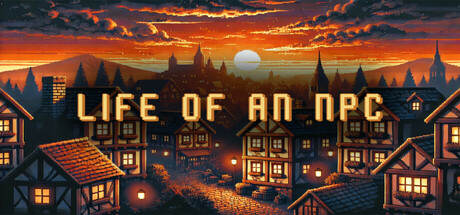
Everything in the game (every line of code, every 2d, 3d, and audio asset) is written/made by either Kiyasui-Hito (the solo indie developer of this game) or a third-party entity as credited in the game's credits screen, without any assistance/use of AI.
Text translations (in-game menus, store page descriptions) were done using AI.
The temporary capsule image art on the store page is also AI generated.
AI is used in this way because I have a low budget and my friend who is an artist is quite busy these days.
Artificial intelligence was used to enhance various aspects of the game. Narrations were generated with AI to provide an immersive experience. AI also assisted in editing and formatting the store texts, ensuring clarity and impact. Additionally, promotional images and the game video were created using AI technology, resulting in engaging and high-quality visual content. Translations were also performed with AI, enabling accessible communication for different audiences.
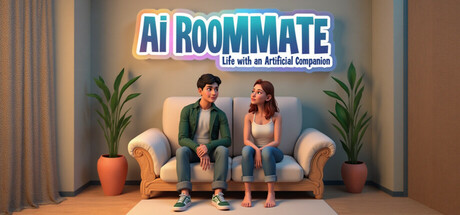
AI Roommate uses advanced open-source AI models to power interactive NPCs that simulate natural and engaging conversations. Players can interact with their virtual roommate and neighbors in a dynamic way, exploring various topics and creating personalized experiences. The AI ensures a unique and immersive interaction in every session, enhancing the realism and replayability of the game.
Some logos, text, in-game translations, and character voices were created with AI assistance. All other gameplay content, including characters, animations, and code, is handcrafted.
We use Adobe® Photoshop® software and Adobe® Generative AI image-editing software as part of our 2D icon generation pipeline.
We use machine translation as the first step of our Localization in order to bring the game to as many players as possible in their native language
The use of AI in Battleline is minimal, including ChatGPT for weapon specifications and AI-assisted edits for game cover designs, all reviewed and refined for accuracy and originality.
Some promotional artwork was created by the developer or commissioned from artists, and later enhanced using AI-assisted tools before being edited and finalized by the developer. AI tools were also used to assist with localization and translation.
Used AI for spellchecking and text formatting; Used AI during code development for the purpose of suggesting code completion and generating code snippets;
In the development of this game, I used AI as a supportive tool to optimize certain workflows, enhance the creative process, and explore new possibilities. While all of the art, coding, and writing were created by me, AI helped streamline repetitive tasks, refine assets, and provide coding insights. My aim was to use AI as an assistant that added value without overshadowing the personal, hands-on approach that defines this game.
We have used generative AI to create some individual assets (graphics) in eHUB cities and to support the writing of the code. The AI characters in the game are also spoken by AI voices.
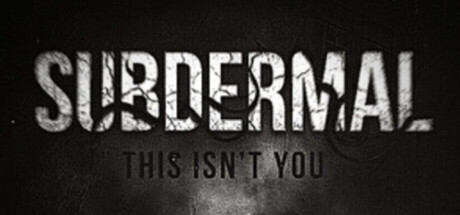
SUBDERMAL does not use generative AI during gameplay or while the game is running.
No images, audio, text, dialogue, or gameplay content is generated dynamically via AI during play. All assets—including visuals, audio, writing, voice acting, and gameplay systems—are fully authored, fixed, and shipped as part of the final build.
What AI Is Not Used For
• No real-time AI text generation
• No real-time AI image or video generation
• No real-time AI voice synthesis
• No adaptive AI narrative systems
• No AI-based player interaction or chat
What AI Was Used During Development
Placeholder assets or ideas were assisted during development (concept art drafts, placeholder imagery, writing refinement), but all final in-game content is original, human-authored, and fully static except a small minority of AI-generated textures that appear on certain objects.
This development-phase AI usage does not affect gameplay and does not generate new content for players.
The game also contains textures which were upscaled using AI, but were originally human-authored.
Guardrails
Because the game does not include any generative systems during runtime, no special guardrails are required. Players cannot trigger or create AI-generated output of any kind.
A-Genro is an AI-powered rover that learns from the way you play. Whether it’s your strategy, movement, or combat style, it picks up on your habits and adapts to help you play smarter. Over time, it becomes a personal assistant in the game, giving you support when things get tough and even taking over in auto-pilot mode when needed.
The more you play, the better A-Genro gets—becoming a powerful ally that matches your skills and helps you level up your game. Train it, trust it, and let it take your gameplay to the next level!
I use Deepseek to generate AI dialogues in character dialogues in the game, but the story background is my own original creation. Others did not use AI
Several songs in the game are generated using generative AI. It is the goal to work together with artists and license also player requested music as soon as the game proves viable.
AI in the form of chatbots was also used during ideation, design and programming as an auxiliary tool.
NO GRAPHICAL ASSETS in the game have been AI generated!
ChatGPT was used to assist in rewriting text/descriptions, generating game logic, debugging and refactoring code for the game. No live-generated AI content has been used.
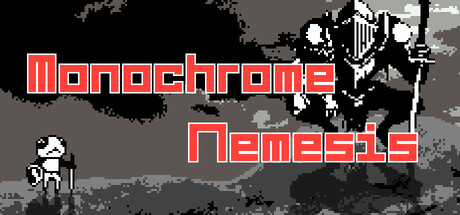
We use artificial intelligence to generate pre-rendered content for Monochrome Nemesis, including its store page, marketing materials, and community resources. AI helps us optimize and personalize these elements to offer an engaging and unique experience.
Our small indie team has responsibly used generative AI tools to accelerate our development while maintaining full creative control.
We used MidJourney to generate base visual assets, which were then carefully edited, customized, and rendered by our artists to match the game’s artistic direction. These AI-generated elements are part of the final visual content, but were not used “as-is” and underwent human refinement.
For localization, we used AI-based tools to assist with proofreading and translation consistency, ensuring clearer communication across languages.
No AI systems are used during gameplay or in real-time content generation. All interactive and gameplay logic was developed by our team.
We fully comply with Steam’s policies regarding AI use, and all assets were created and integrated within the scope of ethical and legal use.
Transparency and player trust are at the heart of our approach.
This game includes an experiment about the perception of human-made and AI art in a multimedia context. To that purpose some of the graphic, music and text assets of the game are generated with the help of AI, while others are human-made. The player is asked at the end of the game to guess which parts were made by AI and which were not.
Our game features an AI-driven narrative system utilized during the opening cutscene. This AI is used exclusively to generate a dynamic, cinematic introduction that adapts based on the player's initial choices or in-game context. It does not influence gameplay mechanics or decision-making beyond the cutscene, but it helps create a unique and immersive storytelling experience.
Used to create additional concept art which inspired our artists
Used to help create an initial draft the narrative of the game.
Used to create various code snippets and check the quality of the games code base.
AI was used for text translation into multiple languages and for generating small placeholder images, such as icons and minor UI elements.
All core creative assets, gameplay systems, and design decisions were made by the developer, and AI-generated placeholders may be replaced in future updates.
AI tools were used during development for non-interactive assets: ChatGPT for translation support, Suno for music generation, and Hotpot.ai for some graphic assets. These assets are fixed and do not change during gameplay. No AI is used at runtime or for any user-generated content.
Some portions of the textual content in English, French, Russian, and German in this game were pre-generated using artificial intelligence. Additionally, some of the original concept art in the game was generated with the assistance of artificial intelligence. The AI-generated elements contain no illegal, prohibited, or infringing material and align with the representations shown in the game's marketing materials.
Our game utilizes AI in various aspects.
Code: AI algorithms are applied to optimize the game's code, ensuring smoother gameplay and better performance. This includes improving character pathfinding and adjusting in-game parameters for an ideal difficulty level.
Text: We use AI-driven natural language processing to assist in text-related tasks, like ensuring consistency and grammar in the in-game text for items, locations, and descriptions.
Textures: AI, such as generative adversarial networks, helps in creating high-quality textures for different surfaces in the game, enhancing the visual appeal.
Sound Effects: AI is used to analyze and manipulate sound effects, making them more realistic and in tune with in-game actions and events.
Music: AI algorithms analyze musical styles to compose original music that sets the right mood for different game scenes.
As a solo indie dev with very limited resources, and also not a native English speaker. I use AI to assist with writing for both in-game and store page content, and translate the game to other languages.
We make use of co-pilot for code checking. We also make use of various tools during development for UV-wrapping & animation. We will use our own in-house proprietary mini-LLM that is packaged within the game to generate some parts of the dialogue.
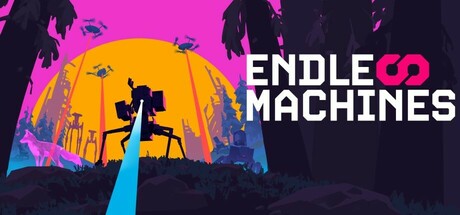
We use AI to let our robots express themselves!
If a robot became alive, it wouldn’t come pre-programmed with the perfect way to express its thoughts or emotions — it would have to figure it out along the way. That’s why the hero robots in Endless Machines use AI to give voice to their thoughts and feelings.
What they say isn’t always polished or logical. It's quirky, weird, funny, and sometimes unexpectedly touching. It’s not a scripted, perfect dialogue. It’s more like a robot trying to make sense of the world — and itself — in real time.
This approach makes their personalities dynamic and unpredictable. For us, that’s what makes AI-driven dialogue a perfect fit for the game: It’s about learning, exploring, and growing — just like the robots themselves.
Under the hood, the game runs a small language model that has been custom fine-tuned for each robot's personality. It is instructed to speak through prompt engineering, ensuring the robot stays in character and relates to the game's lore. The model does not require online access.
We chose to use SmolLM because we were looking for a language model where the training background, technical setup, and use of data are transparent (open source and based on publicly available texts), and where the model can be run locally. We use this locally hosted language model (LLM) to generate text content during gameplay.
What the robots say in the game is defined and moderated by us. We have written a set of foundational texts that form the basis for each robot’s personality, tone, and way of expressing itself. From that foundation, they “build” further and develop over time. Endless Machines does not and cannot collect any data from the person playing the game.
All outputs are guided by custom prompt engineering, custom fine-tuning, and are controlled by local code at runtime to ensure appropriate content. More details on the model architecture and dataset can be found here:
🔗 https://huggingface.co/datasets/HuggingFaceTB/smoltalk
In the development of this game, generative AI tools were utilized to assist in the creation of a few textures, images, and translations. As a solo developer, this approach aimed to enhance the visual and linguistic quality of the game, ensuring a more immersive experience for players. All AI-generated content was carefully reviewed and refined to align with the game's artistic vision and maintain high-quality standards.
Everything in the game (every line of code, every 2d, 3d, and audio asset) is written/made by either Kiyasui-Hito (the solo indie developer of this game) or a third-party entity as credited in the game's credits screen, without any assistance/use of AI.
Text translations (in-game menus, store page descriptions) were done using AI.
The temporary capsule image art on the store page is also AI generated.
AI is used in this way because I have a low budget and my friend who is an artist is quite busy these days.
Artificial intelligence was used to enhance various aspects of the game. Narrations were generated with AI to provide an immersive experience. AI also assisted in editing and formatting the store texts, ensuring clarity and impact. Additionally, promotional images and the game video were created using AI technology, resulting in engaging and high-quality visual content. Translations were also performed with AI, enabling accessible communication for different audiences.
AI Roommate uses advanced open-source AI models to power interactive NPCs that simulate natural and engaging conversations. Players can interact with their virtual roommate and neighbors in a dynamic way, exploring various topics and creating personalized experiences. The AI ensures a unique and immersive interaction in every session, enhancing the realism and replayability of the game.
Some logos, text, in-game translations, and character voices were created with AI assistance. All other gameplay content, including characters, animations, and code, is handcrafted.
We use Adobe® Photoshop® software and Adobe® Generative AI image-editing software as part of our 2D icon generation pipeline.
We use machine translation as the first step of our Localization in order to bring the game to as many players as possible in their native language
The use of AI in Battleline is minimal, including ChatGPT for weapon specifications and AI-assisted edits for game cover designs, all reviewed and refined for accuracy and originality.
Some promotional artwork was created by the developer or commissioned from artists, and later enhanced using AI-assisted tools before being edited and finalized by the developer. AI tools were also used to assist with localization and translation.
Used AI for spellchecking and text formatting; Used AI during code development for the purpose of suggesting code completion and generating code snippets;
In the development of this game, I used AI as a supportive tool to optimize certain workflows, enhance the creative process, and explore new possibilities. While all of the art, coding, and writing were created by me, AI helped streamline repetitive tasks, refine assets, and provide coding insights. My aim was to use AI as an assistant that added value without overshadowing the personal, hands-on approach that defines this game.
We have used generative AI to create some individual assets (graphics) in eHUB cities and to support the writing of the code. The AI characters in the game are also spoken by AI voices.
SUBDERMAL does not use generative AI during gameplay or while the game is running.
No images, audio, text, dialogue, or gameplay content is generated dynamically via AI during play. All assets—including visuals, audio, writing, voice acting, and gameplay systems—are fully authored, fixed, and shipped as part of the final build.
What AI Is Not Used For
• No real-time AI text generation
• No real-time AI image or video generation
• No real-time AI voice synthesis
• No adaptive AI narrative systems
• No AI-based player interaction or chat
What AI Was Used During Development
Placeholder assets or ideas were assisted during development (concept art drafts, placeholder imagery, writing refinement), but all final in-game content is original, human-authored, and fully static except a small minority of AI-generated textures that appear on certain objects.
This development-phase AI usage does not affect gameplay and does not generate new content for players.
The game also contains textures which were upscaled using AI, but were originally human-authored.
Guardrails
Because the game does not include any generative systems during runtime, no special guardrails are required. Players cannot trigger or create AI-generated output of any kind.
A-Genro is an AI-powered rover that learns from the way you play. Whether it’s your strategy, movement, or combat style, it picks up on your habits and adapts to help you play smarter. Over time, it becomes a personal assistant in the game, giving you support when things get tough and even taking over in auto-pilot mode when needed.
The more you play, the better A-Genro gets—becoming a powerful ally that matches your skills and helps you level up your game. Train it, trust it, and let it take your gameplay to the next level!
I use Deepseek to generate AI dialogues in character dialogues in the game, but the story background is my own original creation. Others did not use AI
Several songs in the game are generated using generative AI. It is the goal to work together with artists and license also player requested music as soon as the game proves viable.
AI in the form of chatbots was also used during ideation, design and programming as an auxiliary tool.
NO GRAPHICAL ASSETS in the game have been AI generated!
ChatGPT was used to assist in rewriting text/descriptions, generating game logic, debugging and refactoring code for the game. No live-generated AI content has been used.
We use artificial intelligence to generate pre-rendered content for Monochrome Nemesis, including its store page, marketing materials, and community resources. AI helps us optimize and personalize these elements to offer an engaging and unique experience.
Our small indie team has responsibly used generative AI tools to accelerate our development while maintaining full creative control.
We used MidJourney to generate base visual assets, which were then carefully edited, customized, and rendered by our artists to match the game’s artistic direction. These AI-generated elements are part of the final visual content, but were not used “as-is” and underwent human refinement.
For localization, we used AI-based tools to assist with proofreading and translation consistency, ensuring clearer communication across languages.
No AI systems are used during gameplay or in real-time content generation. All interactive and gameplay logic was developed by our team.
We fully comply with Steam’s policies regarding AI use, and all assets were created and integrated within the scope of ethical and legal use.
Transparency and player trust are at the heart of our approach.
This game includes an experiment about the perception of human-made and AI art in a multimedia context. To that purpose some of the graphic, music and text assets of the game are generated with the help of AI, while others are human-made. The player is asked at the end of the game to guess which parts were made by AI and which were not.
Our game features an AI-driven narrative system utilized during the opening cutscene. This AI is used exclusively to generate a dynamic, cinematic introduction that adapts based on the player's initial choices or in-game context. It does not influence gameplay mechanics or decision-making beyond the cutscene, but it helps create a unique and immersive storytelling experience.
Used to create additional concept art which inspired our artists
Used to help create an initial draft the narrative of the game.
Used to create various code snippets and check the quality of the games code base.
AI was used for text translation into multiple languages and for generating small placeholder images, such as icons and minor UI elements.
All core creative assets, gameplay systems, and design decisions were made by the developer, and AI-generated placeholders may be replaced in future updates.
AI tools were used during development for non-interactive assets: ChatGPT for translation support, Suno for music generation, and Hotpot.ai for some graphic assets. These assets are fixed and do not change during gameplay. No AI is used at runtime or for any user-generated content.
Some portions of the textual content in English, French, Russian, and German in this game were pre-generated using artificial intelligence. Additionally, some of the original concept art in the game was generated with the assistance of artificial intelligence. The AI-generated elements contain no illegal, prohibited, or infringing material and align with the representations shown in the game's marketing materials.
Our game utilizes AI in various aspects.
Code: AI algorithms are applied to optimize the game's code, ensuring smoother gameplay and better performance. This includes improving character pathfinding and adjusting in-game parameters for an ideal difficulty level.
Text: We use AI-driven natural language processing to assist in text-related tasks, like ensuring consistency and grammar in the in-game text for items, locations, and descriptions.
Textures: AI, such as generative adversarial networks, helps in creating high-quality textures for different surfaces in the game, enhancing the visual appeal.
Sound Effects: AI is used to analyze and manipulate sound effects, making them more realistic and in tune with in-game actions and events.
Music: AI algorithms analyze musical styles to compose original music that sets the right mood for different game scenes.
As a solo indie dev with very limited resources, and also not a native English speaker. I use AI to assist with writing for both in-game and store page content, and translate the game to other languages.
We make use of co-pilot for code checking. We also make use of various tools during development for UV-wrapping & animation. We will use our own in-house proprietary mini-LLM that is packaged within the game to generate some parts of the dialogue.
We use AI to let our robots express themselves!
If a robot became alive, it wouldn’t come pre-programmed with the perfect way to express its thoughts or emotions — it would have to figure it out along the way. That’s why the hero robots in Endless Machines use AI to give voice to their thoughts and feelings.
What they say isn’t always polished or logical. It's quirky, weird, funny, and sometimes unexpectedly touching. It’s not a scripted, perfect dialogue. It’s more like a robot trying to make sense of the world — and itself — in real time.
This approach makes their personalities dynamic and unpredictable. For us, that’s what makes AI-driven dialogue a perfect fit for the game: It’s about learning, exploring, and growing — just like the robots themselves.
Under the hood, the game runs a small language model that has been custom fine-tuned for each robot's personality. It is instructed to speak through prompt engineering, ensuring the robot stays in character and relates to the game's lore. The model does not require online access.
We chose to use SmolLM because we were looking for a language model where the training background, technical setup, and use of data are transparent (open source and based on publicly available texts), and where the model can be run locally. We use this locally hosted language model (LLM) to generate text content during gameplay.
What the robots say in the game is defined and moderated by us. We have written a set of foundational texts that form the basis for each robot’s personality, tone, and way of expressing itself. From that foundation, they “build” further and develop over time. Endless Machines does not and cannot collect any data from the person playing the game.
All outputs are guided by custom prompt engineering, custom fine-tuning, and are controlled by local code at runtime to ensure appropriate content. More details on the model architecture and dataset can be found here:
🔗 https://huggingface.co/datasets/HuggingFaceTB/smoltalk
In the development of this game, generative AI tools were utilized to assist in the creation of a few textures, images, and translations. As a solo developer, this approach aimed to enhance the visual and linguistic quality of the game, ensuring a more immersive experience for players. All AI-generated content was carefully reviewed and refined to align with the game's artistic vision and maintain high-quality standards.