Public Steam disclosure research27,822 disclosures tracked
Where do games disclose AI use?
Search developers’ Steam disclosures, compare classified AI use across
games, and follow recorded changes.
This index adds cross-game classifications and statistics to
statements published on individual store pages.
Groups reflect automatic analysis of public disclosures; mature records are excluded. These counts do not measure AI use across all of Steam.
Missing or unclear statements cannot establish whether a game uses AI.
This game is a generative text adventure. Its text contents are generated by AI in response to the player’s text input. Players enjoy their own unique story experience by inputting texts in response to the generated contents. Furthermore, this game does not perform image generation using generative AI.
Some functions of the game‘s source code were implemented using AI tools, such as Cursor AI, to generate code.
Multiple languages' localizations also used AI for translation.
All visual art, gameplay assets, music and written narrative were created by humans. No AI is used to generate content during gameplay. The game uses AI-generated voice acting for cinematic and in-game character dialogue.
Drawing of vertical drawing using AI drawing. (Manual modification later)
Use AI for assisted text generation. (Manual proofreading later)
No Live-Generated AI content is used.
AI was used to translate the game into certain languages. When selecting one of these languages for the first time, a notification appears. Additionally, a marker is displayed next to the language name in the options menu.
We use generative AI to simulate the real-world lives of in-game NPCs, giving each their own personality, preferences, memories, and relationship with the player.
We also use generative AI to reason about conversations and trigger specific in-game events based on what is said during open-ended conversations.
We also use generative AI to further flesh out the world by generating documents and files on each NPC's computer, which the player can browse through.
This game uses generated AI for the following purposes
- To generate some of the game's program code
- To format text in the store to make it easier to read
- To translate text into languages other than Japanese
- However, the text rarely appears in the game
- No content or code is generated live during gameplay
Murder In Complex utilizes AI to create dynamic NPC interactions, allowing players to engage in realistic conversations with in-game characters. The AI-driven dialogue system ensures each investigation is unique, with suspects responding naturally based on their roles and the player's inquiries. This enhances immersion and replayability, making every case feel fresh and unpredictable.
This single - handedly developed game features AI - generated sounds from suno.ai, which add a unique auditory experience.
AI played a key role in the initial art concept phase by assisting with sketch design. I then translated these AI - inspired sketches into the final hand - drawn artworks.
To provide multilingual support, AI translation technology was employed to ensure a seamless localized experience.
Everything in the game (every line of code, every 2d, 3d, and audio asset) is written/made by either Kiyasui-Hito (the solo indie developer of this game) or a third-party entity as credited in the game's credits screen, without any assistance/use of AI.
Text translations (in-game menus, store page descriptions) were done using AI.
The temporary capsule image art on the store page is also AI generated.
AI is used in this way because I have a low budget and my friend who is an artist is quite busy these days.
Artificial intelligence was used to enhance various aspects of the game. Narrations were generated with AI to provide an immersive experience. AI also assisted in editing and formatting the store texts, ensuring clarity and impact. Additionally, promotional images and the game video were created using AI technology, resulting in engaging and high-quality visual content. Translations were also performed with AI, enabling accessible communication for different audiences.
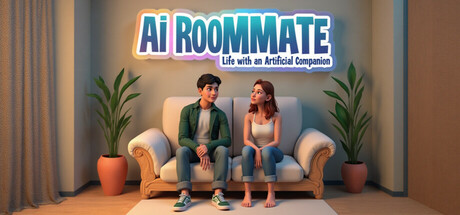
AI Roommate uses advanced open-source AI models to power interactive NPCs that simulate natural and engaging conversations. Players can interact with their virtual roommate and neighbors in a dynamic way, exploring various topics and creating personalized experiences. The AI ensures a unique and immersive interaction in every session, enhancing the realism and replayability of the game.
Some logos, text, in-game translations, and character voices were created with AI assistance. All other gameplay content, including characters, animations, and code, is handcrafted.
We use Adobe® Photoshop® software and Adobe® Generative AI image-editing software as part of our 2D icon generation pipeline.
We use machine translation as the first step of our Localization in order to bring the game to as many players as possible in their native language
The use of AI in Battleline is minimal, including ChatGPT for weapon specifications and AI-assisted edits for game cover designs, all reviewed and refined for accuracy and originality.
Some promotional artwork was created by the developer or commissioned from artists, and later enhanced using AI-assisted tools before being edited and finalized by the developer. AI tools were also used to assist with localization and translation.
Used AI for spellchecking and text formatting; Used AI during code development for the purpose of suggesting code completion and generating code snippets;
In the development of this game, I used AI as a supportive tool to optimize certain workflows, enhance the creative process, and explore new possibilities. While all of the art, coding, and writing were created by me, AI helped streamline repetitive tasks, refine assets, and provide coding insights. My aim was to use AI as an assistant that added value without overshadowing the personal, hands-on approach that defines this game.
This game uses generative AI for procedurally generated content (images for in-game objects, text for what the NPCs should do next, etc).
Connects to 3rd-Party Service for AI Content Generation: Google Gemini
We have used generative AI to create some individual assets (graphics) in eHUB cities and to support the writing of the code. The AI characters in the game are also spoken by AI voices.
SUBDERMAL does not use generative AI during gameplay or while the game is running.
No images, audio, text, dialogue, or gameplay content is generated dynamically via AI during play. All assets—including visuals, audio, writing, voice acting, and gameplay systems—are fully authored, fixed, and shipped as part of the final build.
What AI Is Not Used For
• No real-time AI text generation
• No real-time AI image or video generation
• No real-time AI voice synthesis
• No adaptive AI narrative systems
• No AI-based player interaction or chat
What AI Was Used During Development
Placeholder assets or ideas were assisted during development (concept art drafts, placeholder imagery, writing refinement), but all final in-game content is original, human-authored, and fully static except a small minority of AI-generated textures that appear on certain objects.
This development-phase AI usage does not affect gameplay and does not generate new content for players.
The game also contains textures which were upscaled using AI, but were originally human-authored.
Guardrails
Because the game does not include any generative systems during runtime, no special guardrails are required. Players cannot trigger or create AI-generated output of any kind.
A-Genro is an AI-powered rover that learns from the way you play. Whether it’s your strategy, movement, or combat style, it picks up on your habits and adapts to help you play smarter. Over time, it becomes a personal assistant in the game, giving you support when things get tough and even taking over in auto-pilot mode when needed.
The more you play, the better A-Genro gets—becoming a powerful ally that matches your skills and helps you level up your game. Train it, trust it, and let it take your gameplay to the next level!
I use Deepseek to generate AI dialogues in character dialogues in the game, but the story background is my own original creation. Others did not use AI
This game is primarily human-made. AI was used for some coding assistance in late stage of production, text proofreading, and as a starting point for a few 3D meshes and textures in creation process.
Several songs in the game are generated using generative AI. It is the goal to work together with artists and license also player requested music as soon as the game proves viable.
AI in the form of chatbots was also used during ideation, design and programming as an auxiliary tool.
NO GRAPHICAL ASSETS in the game have been AI generated!
ChatGPT was used to assist in rewriting text/descriptions, generating game logic, debugging and refactoring code for the game. No live-generated AI content has been used.
We use artificial intelligence to generate pre-rendered content for Monochrome Nemesis, including its store page, marketing materials, and community resources. AI helps us optimize and personalize these elements to offer an engaging and unique experience.
Our small indie team has responsibly used generative AI tools to accelerate our development while maintaining full creative control.
We used MidJourney to generate base visual assets, which were then carefully edited, customized, and rendered by our artists to match the game’s artistic direction. These AI-generated elements are part of the final visual content, but were not used “as-is” and underwent human refinement.
For localization, we used AI-based tools to assist with proofreading and translation consistency, ensuring clearer communication across languages.
No AI systems are used during gameplay or in real-time content generation. All interactive and gameplay logic was developed by our team.
We fully comply with Steam’s policies regarding AI use, and all assets were created and integrated within the scope of ethical and legal use.
Transparency and player trust are at the heart of our approach.
This game includes an experiment about the perception of human-made and AI art in a multimedia context. To that purpose some of the graphic, music and text assets of the game are generated with the help of AI, while others are human-made. The player is asked at the end of the game to guess which parts were made by AI and which were not.