Public Steam disclosure research25,519 disclosures tracked
Where do games disclose AI use?
Search developers’ Steam disclosures, compare classified AI use across
games, and follow recorded changes.
This index adds cross-game classifications and statistics to
statements published on individual store pages.
Groups reflect automatic analysis of public disclosures; mature records are excluded. These counts do not measure AI use across all of Steam.
Missing or unclear statements cannot establish whether a game uses AI.
This game uses generative AI to assist with the creation of some visual, audio, text, and localization assets. All AI-assisted content is reviewed and edited by the development team before being included in the game.
FragMend is a local video-conversion utility. The application itself contains no AI-generated content and uses no generative AI at runtime, your recordings are processed entirely on your own PC by ffmpeg, with no AI involved and nothing uploaded.
Some of the text on this store page and related marketing copy was drafted with the help of a generative AI writing assistant, then reviewed and edited by the developer for accuracy. The app's logo and capsule/library artwork are generated programmatically by the developer's own code (procedural rendering), not by generative AI.
This game uses generative AI during development to assist with selected visual and written content, such as concept art, placeholder materials, localization drafts, and marketing assets. All content included in the game and store materials is reviewed, edited, and approved by the development team before publication.
Generative AI was used during parts of the production process for the game’s graphics, music, and narrative content.
AI-generated outputs were edited, revised, and restructured by the developer and were not used in the game without modification.
The final gameplay experience, narrative structure, character portrayal, and presentation were designed, curated, and supervised by the developer.
Generative AI tools are used to assist the development process, including concept art generation, programming support, and localization. All final content is reviewed and edited by the developer.
Generative AI tools were used during development to assist with visual asset creation, programming support, background music generation, and writing/editing structured script data such as dialogue and localization files.
AI tools were used during development as coding and asset-pipeline assistants (writing the procedural generation code for models, textures and music) and to help draft store page text. All content was reviewed by the developer. The game does not generate content with AI at runtime.
As a small, two-person independent development team, we have used generative AI to help create a limited number of pre-generated assets during development. This includes portions of the store capsule artwork, a number of UI elements and icons, and approximately three lines of dialogue for a single enemy.
The AI-generated visual content is used solely as placeholder artwork to support our Early Access proof of concept. These assets allow us to focus our limited resources on gameplay, systems, balance, and overall game quality while we continue development. Replacing these placeholder assets with original, commissioned artwork is a planned and intentional part of our Early Access development roadmap.
No generative AI was or will be used to create gameplay, game logic, programming, level design, music, sound effects, visual effects, or any live-generated in-game content.
The creative direction and design of this game are the work of the developer. All code, copywriting, artwork, background images, and non-Chinese translations were AI-assisted.
This game uses generative artificial intelligence to create dynamic content during gameplay. AI systems may generate political advice, news articles, speeches, social media posts, events, narrative responses, and other text-based content based on player actions and the current game state. AI-generated content is intended to enhance replayability and create unique gameplay experiences. Some store, library, and character artwork was created with the assistance of generative AI image tools.
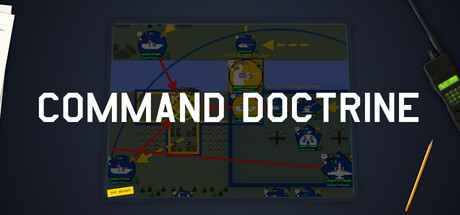
Command Doctrine uses generative AI to create some of the content you play. When you generate a scenario or a campaign, an AI model produces the map, the opposing forces, the objectives, and the written mission briefing from your prompt. AI is also used to write narrative battle reports, to create the images that accompany them, and to interpret the natural-language orders you give your units. This content is generated live by third-party AI services. We apply content moderation and input filtering to guard against inappropriate or unsafe output.
This game uses generative AI assistance in the creation of some art, audio, text, or marketing materials, and all related content is reviewed, edited, and approved by the development team before release.
Most of the images used in the narrative mode scenes were initially generated using generative AI and subsequently refined through manual editing. Generative AI was also employed to assist with the translation of the narrative text.
Generative AI was used as an assistive tool for proofreading in-game text and store page text, as well as for English and Korean localization. All final content was reviewed and edited by the developer.
No AI-generated images, audio, or 3D models are used. The game does not use generative AI to create content in real time during gameplay.
This game used generative AI tools during development to assist with: (1) some artwork such as the title illustration, (2) in-game text including newspaper headlines and stock descriptions, and (3) Korean/English localization. All AI-assisted output was reviewed and edited by the developer. The game does not generate any AI content at runtime (all pre-generated).
Whisper running locally on your machine is used for the speech-to-text dictation and transcribing of your own footage alone and nothing else.
No connecting to any servers, no uploading or training, and no creative decisions are handed over.
For additional languages, the UI was auto translated to bring jumpcutGG to as many people as possible. If you have any corrections, improvements, or would be interested in translating it into an additional language please contact jumpcutGG@gmail.com, thank you!
This game includes pre-generated content created with the assistance of generative AI during development. Generative AI was used to help create some in-game image assets and translations. All AI-assisted content, including AI-generated translations, was reviewed, edited, and approved by the development team before being included in the final game.
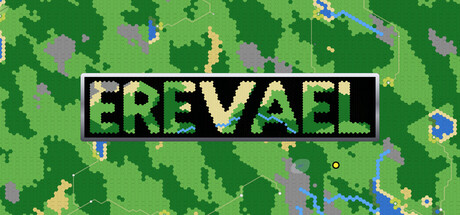
Erevael is made by a solo developer who uses generative AI as part of the development process. The following player-facing content is created with AI and reviewed by the developer before release:
- Visual art, including assets used in the procedurally generated world.
- Localization: translations are machine-generated and have not yet been professionally reviewed.
Music and sound effects are sourced from licensed, human-made libraries and are not AI-generated. AI coding assistants are also used during development.
The AI-generated art is a starting point. If the game finds an audience, the plan is to replace it with work from human artists in a free update for everyone, while keeping the original art available as an optional mod.
The artwork, background music, in-game text and story, localizations into all supported languages, and store-page text in this game were created using generative AI tools, then curated, edited, and assembled by the developer. The game contains no live AI generation — all content is fixed and produced ahead of release.
This game uses generative AI during development to assist in creating and refining certain content, including artwork, text, dialogue, and other game assets. All AI-generated content has been reviewed, edited, and approved by the development team before being included in the game. The game does not generate AI content during gameplay.
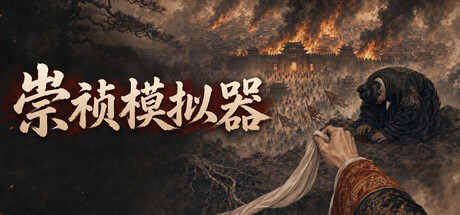
The game calls the aforementioned third-party large language model API over the network at runtime. When the player makes a decision, issues an imperial edict, or interacts with ministers in the game, the game assembles the current situation and character settings into a request and sends it to the AI service; the text returned by the service (minister dialogue, memorials to the throne, plot deduction) is presented in the game interface in real time. This process is transparent to the player and requires no player-side configuration, but an internet connection is required throughout.
Generative AI was used during the development of this game to assist with creating certain visual assets, interface concepts, and localized text. All AI-generated content was reviewed, edited, and approved by the developer before being included in the final product. No gameplay content, player interactions, or user-generated content are created by AI during gameplay.
Pre-generated content (created during development, not at runtime):
- In-game parody movie cover art: generated with AI tools and manually reviewed by the team to ensure all covers are original parodies and do not reproduce trademarked logos, brands, or copyrighted characters.
- In-game parody movie titles and descriptions: drafted with AI assistance and manually edited by the team.
- In-game UI and text translations into the 8 supported languages: produced with AI assistance and reviewed by the team.
No live generative AI is used at runtime. All AI-assisted content is baked into the game build.
Core game assets (code, gameplay design, UI art, character and shop sprites, music and sound effects) were NOT generated with AI.
LLMs were used during development as coding assistants and to help write the game's text and translations. No AI-generated images, audio, or video ship as assets, and no AI model runs during play.
Feierabend Poker is developed by a solo creator with the help of AI tools. The story and character dialogue are written with AI assistance and then reviewed and edited by the developer. The game's visuals are 2D vector graphics drawn directly in code rather than produced by image generators, and all sound is created procedurally in code. No AI generates content live while you play.
Generative AI was used as a development assistance tool for this game.
It was used to support coding, development tools for difficulty adjustment, concept and idea generation, research, localization, advice, bug detection, image creation, texture generation, and mesh generation.
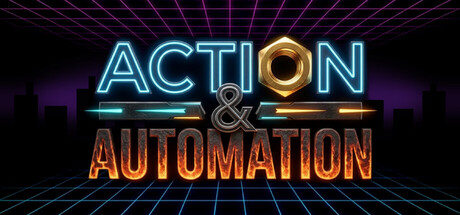
Action & Automation is not only how the game plays, it is how the game was made.
As the game’s sole human developer, game director, and system architect, I designed the core gameplay systems, software architecture, worldbuilding, narrative framework, story design, and gameplay balance. That is the Action.
For the Automation, I deliberately pushed generative AI throughout the production pipeline, with quality and player experience as the only limits. Following my direction and specifications, AI produced much of the code, artwork, animation, VFX, and UI, and was used for text polishing and localization.
No generative AI model or external AI service runs during gameplay. The game requires no AI account, API key, subscription, or token credits. Any apparent AI thinking or reasoning is scripted or driven by conventional game AI systems.
Human-designed. AI-produced. That is Action & Automation.
Netshell uses AI to power its characters. The NPCs you meet on the in-game forums and IRC read what is happening in your playthrough and respond in character, so their messages and forum posts are generated rather than pre-scripted, and each player's world unfolds differently.
All of this runs locally and offline: the AI models ship with the game and run on your machine. Netshell never connects to a third-party AI service such as ChatGPT or Claude. You can turn the AI off entirely, in which case the NPCs stop chatting and the game continues with its authored story.
Some Steam store and trailer assets were created with AI assistance and then edited/curated by the development team. During gameplay, Netshell only uses AI to generate in-character NPC text.
Penko Vox: Japanese uses local generative AI to power its immersive language learning experience. An integrated Large Language Model (LLM) acts as a native Japanese tutor, generating real-time dialogue based on user input, while a Neural Text-to-Speech (TTS) engine synthesizes high-fidelity Japanese audio for listening practice.
During the development of Crossfall, generative AI is used as an auxiliary tool for creating game content. The following materials have been created or prepared with its help:
Images. Some of the game’s visual content has been created using generative AI, including character images, as well as some sprites and icons. Other parts of the artwork were made manually.
Text. AI helps me prepare some of the text content, including drafts of item names and descriptions, text for certain in-game events, as well as translation and localization of texts into other languages.
Music. The game’s musical soundtrack was created using generative AI.
All content generated with the help of AI is reviewed, selected, and, if necessary, refined by me before being added to the game.
The game itself does not use generative AI during gameplay: no content is generated in real time on the player’s side, and the game does not require an internet connection or access to any AI services.
Some of the art, music, and voice assets that ship with this game were created with the help of generative AI tools during development, then curated,
▎ edited, and assembled by the developer. This includes character and mascot art, background and scene art, UI and logo imagery, background music tracks,
▎ and in-game voice lines. The game does not generate any AI content live at runtime. All AI-assisted assets were reviewed before inclusion, and we do not
▎ knowingly ship content that infringes third-party intellectual property.
100% human made code, art, design, and audio!
AI assistance was only used for a tiny fraction of the text localizations to fill small gaps in our community made translations and for translating the Steam store page descriptions to non English languages.
Generative AI was used to assist with writing, editing, and translating store page text and marketing copy. No generative AI content is generated in real time during gameplay.
This game uses generative AI to assist with the creation of some visual, audio, text, and localization assets. All AI-assisted content is reviewed and edited by the development team before being included in the game.
FragMend is a local video-conversion utility. The application itself contains no AI-generated content and uses no generative AI at runtime, your recordings are processed entirely on your own PC by ffmpeg, with no AI involved and nothing uploaded.
Some of the text on this store page and related marketing copy was drafted with the help of a generative AI writing assistant, then reviewed and edited by the developer for accuracy. The app's logo and capsule/library artwork are generated programmatically by the developer's own code (procedural rendering), not by generative AI.
This game uses generative AI during development to assist with selected visual and written content, such as concept art, placeholder materials, localization drafts, and marketing assets. All content included in the game and store materials is reviewed, edited, and approved by the development team before publication.
Generative AI was used during parts of the production process for the game’s graphics, music, and narrative content.
AI-generated outputs were edited, revised, and restructured by the developer and were not used in the game without modification.
The final gameplay experience, narrative structure, character portrayal, and presentation were designed, curated, and supervised by the developer.
Generative AI tools are used to assist the development process, including concept art generation, programming support, and localization. All final content is reviewed and edited by the developer.
Generative AI tools were used during development to assist with visual asset creation, programming support, background music generation, and writing/editing structured script data such as dialogue and localization files.
AI tools were used during development as coding and asset-pipeline assistants (writing the procedural generation code for models, textures and music) and to help draft store page text. All content was reviewed by the developer. The game does not generate content with AI at runtime.
As a small, two-person independent development team, we have used generative AI to help create a limited number of pre-generated assets during development. This includes portions of the store capsule artwork, a number of UI elements and icons, and approximately three lines of dialogue for a single enemy.
The AI-generated visual content is used solely as placeholder artwork to support our Early Access proof of concept. These assets allow us to focus our limited resources on gameplay, systems, balance, and overall game quality while we continue development. Replacing these placeholder assets with original, commissioned artwork is a planned and intentional part of our Early Access development roadmap.
No generative AI was or will be used to create gameplay, game logic, programming, level design, music, sound effects, visual effects, or any live-generated in-game content.
The creative direction and design of this game are the work of the developer. All code, copywriting, artwork, background images, and non-Chinese translations were AI-assisted.
This game uses generative artificial intelligence to create dynamic content during gameplay. AI systems may generate political advice, news articles, speeches, social media posts, events, narrative responses, and other text-based content based on player actions and the current game state. AI-generated content is intended to enhance replayability and create unique gameplay experiences. Some store, library, and character artwork was created with the assistance of generative AI image tools.
Command Doctrine uses generative AI to create some of the content you play. When you generate a scenario or a campaign, an AI model produces the map, the opposing forces, the objectives, and the written mission briefing from your prompt. AI is also used to write narrative battle reports, to create the images that accompany them, and to interpret the natural-language orders you give your units. This content is generated live by third-party AI services. We apply content moderation and input filtering to guard against inappropriate or unsafe output.
This game uses generative AI assistance in the creation of some art, audio, text, or marketing materials, and all related content is reviewed, edited, and approved by the development team before release.
Most of the images used in the narrative mode scenes were initially generated using generative AI and subsequently refined through manual editing. Generative AI was also employed to assist with the translation of the narrative text.
Generative AI was used as an assistive tool for proofreading in-game text and store page text, as well as for English and Korean localization. All final content was reviewed and edited by the developer.
No AI-generated images, audio, or 3D models are used. The game does not use generative AI to create content in real time during gameplay.
This game used generative AI tools during development to assist with: (1) some artwork such as the title illustration, (2) in-game text including newspaper headlines and stock descriptions, and (3) Korean/English localization. All AI-assisted output was reviewed and edited by the developer. The game does not generate any AI content at runtime (all pre-generated).
Whisper running locally on your machine is used for the speech-to-text dictation and transcribing of your own footage alone and nothing else.
No connecting to any servers, no uploading or training, and no creative decisions are handed over.
For additional languages, the UI was auto translated to bring jumpcutGG to as many people as possible. If you have any corrections, improvements, or would be interested in translating it into an additional language please contact jumpcutGG@gmail.com, thank you!
This game includes pre-generated content created with the assistance of generative AI during development. Generative AI was used to help create some in-game image assets and translations. All AI-assisted content, including AI-generated translations, was reviewed, edited, and approved by the development team before being included in the final game.
Erevael is made by a solo developer who uses generative AI as part of the development process. The following player-facing content is created with AI and reviewed by the developer before release:
- Visual art, including assets used in the procedurally generated world.
- Localization: translations are machine-generated and have not yet been professionally reviewed.
Music and sound effects are sourced from licensed, human-made libraries and are not AI-generated. AI coding assistants are also used during development.
The AI-generated art is a starting point. If the game finds an audience, the plan is to replace it with work from human artists in a free update for everyone, while keeping the original art available as an optional mod.
The artwork, background music, in-game text and story, localizations into all supported languages, and store-page text in this game were created using generative AI tools, then curated, edited, and assembled by the developer. The game contains no live AI generation — all content is fixed and produced ahead of release.
This game uses generative AI during development to assist in creating and refining certain content, including artwork, text, dialogue, and other game assets. All AI-generated content has been reviewed, edited, and approved by the development team before being included in the game. The game does not generate AI content during gameplay.
The game calls the aforementioned third-party large language model API over the network at runtime. When the player makes a decision, issues an imperial edict, or interacts with ministers in the game, the game assembles the current situation and character settings into a request and sends it to the AI service; the text returned by the service (minister dialogue, memorials to the throne, plot deduction) is presented in the game interface in real time. This process is transparent to the player and requires no player-side configuration, but an internet connection is required throughout.
Generative AI was used during the development of this game to assist with creating certain visual assets, interface concepts, and localized text. All AI-generated content was reviewed, edited, and approved by the developer before being included in the final product. No gameplay content, player interactions, or user-generated content are created by AI during gameplay.
Pre-generated content (created during development, not at runtime):
- In-game parody movie cover art: generated with AI tools and manually reviewed by the team to ensure all covers are original parodies and do not reproduce trademarked logos, brands, or copyrighted characters.
- In-game parody movie titles and descriptions: drafted with AI assistance and manually edited by the team.
- In-game UI and text translations into the 8 supported languages: produced with AI assistance and reviewed by the team.
No live generative AI is used at runtime. All AI-assisted content is baked into the game build.
Core game assets (code, gameplay design, UI art, character and shop sprites, music and sound effects) were NOT generated with AI.
LLMs were used during development as coding assistants and to help write the game's text and translations. No AI-generated images, audio, or video ship as assets, and no AI model runs during play.
Feierabend Poker is developed by a solo creator with the help of AI tools. The story and character dialogue are written with AI assistance and then reviewed and edited by the developer. The game's visuals are 2D vector graphics drawn directly in code rather than produced by image generators, and all sound is created procedurally in code. No AI generates content live while you play.
Generative AI was used as a development assistance tool for this game.
It was used to support coding, development tools for difficulty adjustment, concept and idea generation, research, localization, advice, bug detection, image creation, texture generation, and mesh generation.
Action & Automation is not only how the game plays, it is how the game was made.
As the game’s sole human developer, game director, and system architect, I designed the core gameplay systems, software architecture, worldbuilding, narrative framework, story design, and gameplay balance. That is the Action.
For the Automation, I deliberately pushed generative AI throughout the production pipeline, with quality and player experience as the only limits. Following my direction and specifications, AI produced much of the code, artwork, animation, VFX, and UI, and was used for text polishing and localization.
No generative AI model or external AI service runs during gameplay. The game requires no AI account, API key, subscription, or token credits. Any apparent AI thinking or reasoning is scripted or driven by conventional game AI systems.
Human-designed. AI-produced. That is Action & Automation.
Netshell uses AI to power its characters. The NPCs you meet on the in-game forums and IRC read what is happening in your playthrough and respond in character, so their messages and forum posts are generated rather than pre-scripted, and each player's world unfolds differently.
All of this runs locally and offline: the AI models ship with the game and run on your machine. Netshell never connects to a third-party AI service such as ChatGPT or Claude. You can turn the AI off entirely, in which case the NPCs stop chatting and the game continues with its authored story.
Some Steam store and trailer assets were created with AI assistance and then edited/curated by the development team. During gameplay, Netshell only uses AI to generate in-character NPC text.
Penko Vox: Japanese uses local generative AI to power its immersive language learning experience. An integrated Large Language Model (LLM) acts as a native Japanese tutor, generating real-time dialogue based on user input, while a Neural Text-to-Speech (TTS) engine synthesizes high-fidelity Japanese audio for listening practice.
During the development of Crossfall, generative AI is used as an auxiliary tool for creating game content. The following materials have been created or prepared with its help:
Images. Some of the game’s visual content has been created using generative AI, including character images, as well as some sprites and icons. Other parts of the artwork were made manually.
Text. AI helps me prepare some of the text content, including drafts of item names and descriptions, text for certain in-game events, as well as translation and localization of texts into other languages.
Music. The game’s musical soundtrack was created using generative AI.
All content generated with the help of AI is reviewed, selected, and, if necessary, refined by me before being added to the game.
The game itself does not use generative AI during gameplay: no content is generated in real time on the player’s side, and the game does not require an internet connection or access to any AI services.
Some of the art, music, and voice assets that ship with this game were created with the help of generative AI tools during development, then curated,
▎ edited, and assembled by the developer. This includes character and mascot art, background and scene art, UI and logo imagery, background music tracks,
▎ and in-game voice lines. The game does not generate any AI content live at runtime. All AI-assisted assets were reviewed before inclusion, and we do not
▎ knowingly ship content that infringes third-party intellectual property.
100% human made code, art, design, and audio!
AI assistance was only used for a tiny fraction of the text localizations to fill small gaps in our community made translations and for translating the Steam store page descriptions to non English languages.
Generative AI was used to assist with writing, editing, and translating store page text and marketing copy. No generative AI content is generated in real time during gameplay.