Public Steam disclosure research25,519 disclosures tracked
Where do games disclose AI use?
Search developers’ Steam disclosures, compare classified AI use across
games, and follow recorded changes.
This index adds cross-game classifications and statistics to
statements published on individual store pages.
Groups reflect automatic analysis of public disclosures; mature records are excluded. These counts do not measure AI use across all of Steam.
Missing or unclear statements cannot establish whether a game uses AI.
Music and character/dialogue voice lines in the game were created with the assistance of generative AI tools. These AI-generated assets are used for background music, atmosphere, character dialogue, and narrative audio.
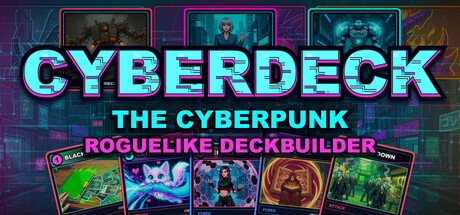
CyberDeck contains pre-generated visual art, animation frames, music, sound effects, voice audio, and written content created or assisted with generative AI tools, then curated and integrated by the development team. Generative AI also assists development, including code. No AI generates content during gameplay, and the game does not connect to external AI services while you play.
All in-game visual art assets in this title — including item icons, equipment artwork, character portraits, story illustrations, and UI decorative elements (frames, icons, and background textures) — are produced using OpenAI's ChatGPT image generation and xAI's Grok image generation API as core tools within our ink-wash and gongbi-style art pipeline. Every generated asset is reviewed, curated, manually retouched, and compositionally adjusted by the developer before being incorporated into the game. No real person's likeness has been used.
The game's source code is written by the developer, Kevin Chen, with OpenAI Codex and Anthropic Claude Code used as coding assistants during development. In-game narrative and dialogue text are written by the developer, with portions assisted by Anthropic Claude for polishing and proofreading.
Some of the text translations in this game were assisted by generative AI tools. All visual assets, artwork, and music were created entirely by human artists and composers.
Scenarios for using generative AI in games:
-Using generative AI to adjust game programs
-Using generative AI to create art assets
-Used AI tools to assist with multilingual localization translation (pre-generated text)
This game incorporates generative AI to enhance visual storytelling and character depth in the following ways:
Video Content: A portion of the ending cinematic utilizes footage generated by Sora 2, which can be identified by its watermark.
Character Illustrations: Three soldier profile photos displayed within the Personnel Search Center were created using ChatGPT (DALL-E).
We have used these tools to supplement the creative vision of our team and ensure a more immersive atmosphere for our players.
This game uses AI assistance in the following areas:
- Localization: Some translations were assisted by AI tools.
- Some promotional or UI images were partially generated or refined using AI tools.
All gameplay content, art direction, and core assets are created by human developers.
1. In-game artwork
Some visual assets (e.g., character/decor sprites, UI icons) are generated with Google Gemini and OpenAI ChatGPT
(image generation) and further edited, retouched, and composed by the developer in the final art pipeline.
2. Store page and marketing graphical assets
Capsule art, library hero, library capsule, and promotional images are generated with Google Gemini and OpenAI
ChatGPT, and further edited, retouched, and composed by the developer before upload.
3. In-game localization
Text translations are AI-assisted using Anthropic Claude, with developer review for tone and accuracy.
Runtime behavior:
- No generative AI models are bundled with or called from the shipped game binary.
- All AI-generated content is pre-rendered and baked into final assets at build time.
- No user inputs are sent to any AI service during gameplay.
This game's development used generative AI in three specific areas:
1. Source code: Portions of the source code were authored with assistance from large language model (LLM) coding tools.
2. Localization: In-game text translations for 10 languages (English, Simplified Chinese, Traditional Chinese, Korean, Russian, German, French, Spanish, Brazilian Portuguese, and Italian) were generated
using LLM-based tools from the original Japanese source text.
3. Visual assets (UI graphics and logo): Generative AI was used in some cases to assist with creating certain in-game UI icons and the game logo. These AI-assisted assets are limited to generic UI elements
(icons, indicators) and abstract logo designs, and do not depict real-world characters, brands, or copyrighted materials.
Loopfall uses generative AI for select shipped content:
• Music — created in collaboration with ElevenLabs.
• Sound effects — generated with ElevenLabs Sound Effects.
• Localization — store text and in-game UI strings are translated from English to 14 other languages via the Anthropic Claude API.
All AI-generated content is pre-rendered and baked into the build — no live AI runs at runtime. Every asset is licensed under each provider's commercial-use terms and was reviewed by the developer before release.
his game uses generative AI in the following areas:
🎵 Music: Portions of the game's original soundtrack were composed using generative AI tools.
🎙️ Voice Acting: Character dialogue is performed using AI-generated voices. All dialogue, script, and performance direction were written and directed by the development team.
All AI-generated content was reviewed, edited, and approved by the developers before inclusion in the final game.
This game uses AI to generate dynamic NPC dialogue during gameplay. NPCs respond to player actions and choices with unique, contextual conversations. All AI-generated text is filtered to ensure appropriate content.
Some graphical assets, musical assets, localization, and portions of code were partially created with the assistance of generative AI programs and large language models (LLMs).
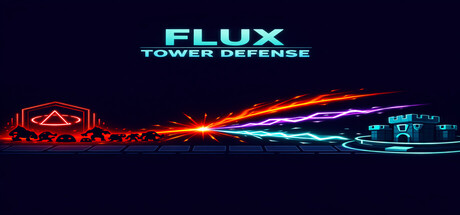
Flux Tower Defense uses generative AI in the following development areas:
• Store page artwork: Main, header, library, small, and vertical capsule images, library hero, library header, and page background were created using AI image generation tools with human direction, prompt iteration, and post-processing. The "FLUX TOWER DEFENSE" wordmark typography was added manually.
• Achievement icons: The 20 in-game achievement icons were generated with AI image tools using hand-authored prompts and manually curated selections.
• Localization: Non-English store page descriptions were translated with AI assistance and reviewed before publication.
The game's runtime contains NO generative AI. All gameplay systems (towers, enemies, traps, waves, pathfinding, damage, upgrades), UI, and in-game visuals are deterministic code rendered live via HTML5 Canvas 2D. There are no pre-rendered sprites, no AI-generated game content, and no AI inference during play.
The model creation and icon production in the game used a combination of AI and manual editing. All translations were generated by AI. The store page promotional images were generated by AI and then manually edited.
This title uses generative AI for part of its localization process.
AI-generated translation drafts are reviewed and edited by the developer before implementation.
No content is dynamically generated by generative AI during gameplay.
Some of Bitroca's visual assets, UI elements, and audio were created with the help of generative AI tools, then
reviewed and finalized by a human developer before shipping. All content is pre-rendered and baked into the build no AI content is generated during gameplay.
This game was made available in many languages thanks to generative AI. Creation of some assets was performed or aided by generative AI tools.
If you ever beat an open-world game, you probably used more power than was used to generate all the assets in this game, including the ones that went unused. If you 100%'d that game, you used much, much more.
AI-assisted tools were used in the creation of some background images included in the game.
AI-assisted translation was also used for the English and Korean localization. The translated text was reviewed and adjusted during development.
There is no content generated by AI in real time during gameplay.
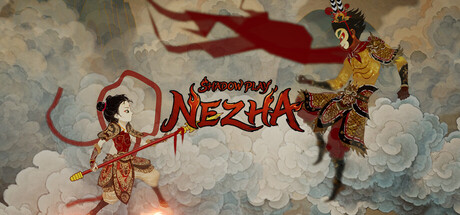
This game utilizes AI-assisted technologies in its development process. Generative AI was used to assist in writing code, refining localized text, and generating certain background ambient music and sound effects. Additionally, AI tools were used to help conceptualize and refine the unique "Shadow Puppetry" and "Ink-wash" artistic style assets to ensure a high-quality visual experience.
The game uses AI voice generation tools to create audio voiceovers for partial narrative texts and dialogue. All underlying text and story are originally created by the developer.
Generative AI is used to assist with localization/translation. All localized text is reviewed and edited by the developer.
Generative AI is used to generate steam capsule image and asset. Act as placeholder
Unitra uses AI to translate the user's own spoken voice into another language and display the result as on-screen text in real time. The translation output is generated at runtime from voice input the user themselves provides; no pre-generated AI art, audio, or text is shipped as part of the product. For details on how voice and text data are handled, please refer to our Privacy Policy linked from the store page.
- Visual art: A portion of the pixel-art tiles and select character sprites were generated using PixelLab AI (pixellab.ai), then composited, edited, and integrated by the developer.
- Audio: Background music tracks were generated with AI music tools, then exported and sequenced into the game.
- Code & narrative writing: Game code and the in-game chronicler text (Brom's journal entries) were drafted with AI assistance (Anthropic's Claude) and edited by the developer.
Generative AI tools are used to translate text into different languages and to create visual assets. All content is reviewed and manually edited before being included in the game.
AI was NOT used to generate code, text, art or music for the game itself. It was also NOT used for any artwork used on Steam.
I'm rubbish at marketing so I used it to help write the store descriptions (this is literally the only thing steam related I used it for) and to help develop a marketing plan for me.
AI tools including ChatGPT, Gemini, Meshy, Tripo, and Fish AI
were used to assist in generating some concepts, translations,
voiceovers, and distant model processing.
- Some 2D assets were generated partly with AI (with human pre and post passes).
- Some languages were localized with AI. We intend to make a full human pass on all languages before 1.0 launch.
Yes — this game uses generative AI tools to assist in the creation of certain pre-rendered content. This includes some voice acting and limited written text. All AI-generated content is reviewed, edited, and integrated by the developer. No AI-generated content is created dynamically during gameplay.
This game contains content created with the assistance of generative AI tools:
Artwork: Some visual assets were generated using AI image tools as a starting
point, then edited and refined by the developer. All final in-game artwork
has been reviewed, modified, and approved by human hands.
Music & Sound Effects: Background music and sound effects were created using
AI-based music generation tools, then selected and curated by the developer.
Localization: Translations for Japanese, Korean, Traditional Chinese, Spanish,
and Russian were produced with AI translation tools and reviewed by the
developer. Simplified Chinese and English were authored directly by the
developer.
Store Page Copy: Portions of the store page description were drafted with AI
writing assistance and finalized by the developer.
No generative AI runs during gameplay. The AI opponent in single-player mode
uses rule-based logic, not generative AI.
This game uses generative artificial intelligence to dynamically create towns, facilities, dungeons, NPCs, dialogue, event text, and some illustrations based on the player's actions and the current game state.
Rather than relying only on fixed scenarios, the game is designed so that each playthrough can produce different events, encounters, and story developments.
Some character images, backgrounds, and illustrations are also generated by AI.
Generated content is controlled according to the game's design rules and moderation systems.
Some store page artwork, marketing text, and game code were created with the assistance of AI tools (including this text), with direction, editing, and curation by the developer. All game design and creative decisions are human-made.
This game uses generative AI in the following areas:
- Some in-game background images
- Some sound effects
- Translation for some languages
All AI-generated content was reviewed and edited by the developer.
Some text content prepared in advance, including descriptions and localized text, may be created, translated, or improved with the assistance of AI-based tools.
Peter the Stash Hunter has been mostly designed and coded by hand by a single developer using traditional methods. AI tools were used in the development process only in two supporting roles:
- Translating store descriptions and in-game text into different languages
- Acting as a helper assistant during code writing
All AI outputs have been reviewed and edited by the developer. Translations are planned to be improved over time based on community feedback. None of the game's visuals, story, characters, music, sound effects, gameplay mechanics, or design decisions have been generated by AI. There is also no AI system running inside the game.
Some content in this game was created with the assistance of generative AI tools during development, including certain visual assets, store artwork, capsule art, and text. All AI-assisted content was reviewed, edited, and integrated by the developer to ensure it fits the game’s design and overall player experience.
Some art assets are sourced from the CC0 asset libraries provided by Kenney. Music and sound effects used in the game are sourced from Phat Phrog Studio and ZapSplat.
This application utilizes local, offline Artificial Intelligence (AI) models as its primary infrastructure:
1. Speech-to-Text (ASR) using the offline Glint AI engine.
2. Neural Machine Translation (NMT) using the offline Glint AI engine.
3. Optional Local AI Translation Integration: Users can optionally activate and download local LLM models (such as Gemma and Qwen via the Ollama engine) to perform offline translations.
All AI models and libraries, including the optional local LLM integrations, are executed entirely locally on the user's hardware. The application DOES NOT require or connect to any third-party cloud services or external AI generators.
Music and character/dialogue voice lines in the game were created with the assistance of generative AI tools. These AI-generated assets are used for background music, atmosphere, character dialogue, and narrative audio.
CyberDeck contains pre-generated visual art, animation frames, music, sound effects, voice audio, and written content created or assisted with generative AI tools, then curated and integrated by the development team. Generative AI also assists development, including code. No AI generates content during gameplay, and the game does not connect to external AI services while you play.
All in-game visual art assets in this title — including item icons, equipment artwork, character portraits, story illustrations, and UI decorative elements (frames, icons, and background textures) — are produced using OpenAI's ChatGPT image generation and xAI's Grok image generation API as core tools within our ink-wash and gongbi-style art pipeline. Every generated asset is reviewed, curated, manually retouched, and compositionally adjusted by the developer before being incorporated into the game. No real person's likeness has been used.
The game's source code is written by the developer, Kevin Chen, with OpenAI Codex and Anthropic Claude Code used as coding assistants during development. In-game narrative and dialogue text are written by the developer, with portions assisted by Anthropic Claude for polishing and proofreading.
Some of the text translations in this game were assisted by generative AI tools. All visual assets, artwork, and music were created entirely by human artists and composers.
Scenarios for using generative AI in games:
-Using generative AI to adjust game programs
-Using generative AI to create art assets
-Used AI tools to assist with multilingual localization translation (pre-generated text)
This game incorporates generative AI to enhance visual storytelling and character depth in the following ways:
Video Content: A portion of the ending cinematic utilizes footage generated by Sora 2, which can be identified by its watermark.
Character Illustrations: Three soldier profile photos displayed within the Personnel Search Center were created using ChatGPT (DALL-E).
We have used these tools to supplement the creative vision of our team and ensure a more immersive atmosphere for our players.
This game uses AI assistance in the following areas:
- Localization: Some translations were assisted by AI tools.
- Some promotional or UI images were partially generated or refined using AI tools.
All gameplay content, art direction, and core assets are created by human developers.
1. In-game artwork
Some visual assets (e.g., character/decor sprites, UI icons) are generated with Google Gemini and OpenAI ChatGPT
(image generation) and further edited, retouched, and composed by the developer in the final art pipeline.
2. Store page and marketing graphical assets
Capsule art, library hero, library capsule, and promotional images are generated with Google Gemini and OpenAI
ChatGPT, and further edited, retouched, and composed by the developer before upload.
3. In-game localization
Text translations are AI-assisted using Anthropic Claude, with developer review for tone and accuracy.
Runtime behavior:
- No generative AI models are bundled with or called from the shipped game binary.
- All AI-generated content is pre-rendered and baked into final assets at build time.
- No user inputs are sent to any AI service during gameplay.
This game's development used generative AI in three specific areas:
1. Source code: Portions of the source code were authored with assistance from large language model (LLM) coding tools.
2. Localization: In-game text translations for 10 languages (English, Simplified Chinese, Traditional Chinese, Korean, Russian, German, French, Spanish, Brazilian Portuguese, and Italian) were generated
using LLM-based tools from the original Japanese source text.
3. Visual assets (UI graphics and logo): Generative AI was used in some cases to assist with creating certain in-game UI icons and the game logo. These AI-assisted assets are limited to generic UI elements
(icons, indicators) and abstract logo designs, and do not depict real-world characters, brands, or copyrighted materials.
Loopfall uses generative AI for select shipped content:
• Music — created in collaboration with ElevenLabs.
• Sound effects — generated with ElevenLabs Sound Effects.
• Localization — store text and in-game UI strings are translated from English to 14 other languages via the Anthropic Claude API.
All AI-generated content is pre-rendered and baked into the build — no live AI runs at runtime. Every asset is licensed under each provider's commercial-use terms and was reviewed by the developer before release.
his game uses generative AI in the following areas:
🎵 Music: Portions of the game's original soundtrack were composed using generative AI tools.
🎙️ Voice Acting: Character dialogue is performed using AI-generated voices. All dialogue, script, and performance direction were written and directed by the development team.
All AI-generated content was reviewed, edited, and approved by the developers before inclusion in the final game.
This game uses AI to generate dynamic NPC dialogue during gameplay. NPCs respond to player actions and choices with unique, contextual conversations. All AI-generated text is filtered to ensure appropriate content.
Some graphical assets, musical assets, localization, and portions of code were partially created with the assistance of generative AI programs and large language models (LLMs).
Flux Tower Defense uses generative AI in the following development areas:
• Store page artwork: Main, header, library, small, and vertical capsule images, library hero, library header, and page background were created using AI image generation tools with human direction, prompt iteration, and post-processing. The "FLUX TOWER DEFENSE" wordmark typography was added manually.
• Achievement icons: The 20 in-game achievement icons were generated with AI image tools using hand-authored prompts and manually curated selections.
• Localization: Non-English store page descriptions were translated with AI assistance and reviewed before publication.
The game's runtime contains NO generative AI. All gameplay systems (towers, enemies, traps, waves, pathfinding, damage, upgrades), UI, and in-game visuals are deterministic code rendered live via HTML5 Canvas 2D. There are no pre-rendered sprites, no AI-generated game content, and no AI inference during play.
The model creation and icon production in the game used a combination of AI and manual editing. All translations were generated by AI. The store page promotional images were generated by AI and then manually edited.
This title uses generative AI for part of its localization process.
AI-generated translation drafts are reviewed and edited by the developer before implementation.
No content is dynamically generated by generative AI during gameplay.
Some of Bitroca's visual assets, UI elements, and audio were created with the help of generative AI tools, then
reviewed and finalized by a human developer before shipping. All content is pre-rendered and baked into the build no AI content is generated during gameplay.
This game was made available in many languages thanks to generative AI. Creation of some assets was performed or aided by generative AI tools.
If you ever beat an open-world game, you probably used more power than was used to generate all the assets in this game, including the ones that went unused. If you 100%'d that game, you used much, much more.
AI-assisted tools were used in the creation of some background images included in the game.
AI-assisted translation was also used for the English and Korean localization. The translated text was reviewed and adjusted during development.
There is no content generated by AI in real time during gameplay.
This game utilizes AI-assisted technologies in its development process. Generative AI was used to assist in writing code, refining localized text, and generating certain background ambient music and sound effects. Additionally, AI tools were used to help conceptualize and refine the unique "Shadow Puppetry" and "Ink-wash" artistic style assets to ensure a high-quality visual experience.
The game uses AI voice generation tools to create audio voiceovers for partial narrative texts and dialogue. All underlying text and story are originally created by the developer.
Generative AI is used to assist with localization/translation. All localized text is reviewed and edited by the developer.
Generative AI is used to generate steam capsule image and asset. Act as placeholder
Unitra uses AI to translate the user's own spoken voice into another language and display the result as on-screen text in real time. The translation output is generated at runtime from voice input the user themselves provides; no pre-generated AI art, audio, or text is shipped as part of the product. For details on how voice and text data are handled, please refer to our Privacy Policy linked from the store page.
- Visual art: A portion of the pixel-art tiles and select character sprites were generated using PixelLab AI (pixellab.ai), then composited, edited, and integrated by the developer.
- Audio: Background music tracks were generated with AI music tools, then exported and sequenced into the game.
- Code & narrative writing: Game code and the in-game chronicler text (Brom's journal entries) were drafted with AI assistance (Anthropic's Claude) and edited by the developer.
Generative AI tools are used to translate text into different languages and to create visual assets. All content is reviewed and manually edited before being included in the game.
AI was NOT used to generate code, text, art or music for the game itself. It was also NOT used for any artwork used on Steam.
I'm rubbish at marketing so I used it to help write the store descriptions (this is literally the only thing steam related I used it for) and to help develop a marketing plan for me.
AI tools including ChatGPT, Gemini, Meshy, Tripo, and Fish AI
were used to assist in generating some concepts, translations,
voiceovers, and distant model processing.
- Some 2D assets were generated partly with AI (with human pre and post passes).
- Some languages were localized with AI. We intend to make a full human pass on all languages before 1.0 launch.
Yes — this game uses generative AI tools to assist in the creation of certain pre-rendered content. This includes some voice acting and limited written text. All AI-generated content is reviewed, edited, and integrated by the developer. No AI-generated content is created dynamically during gameplay.
This game contains content created with the assistance of generative AI tools:
Artwork: Some visual assets were generated using AI image tools as a starting
point, then edited and refined by the developer. All final in-game artwork
has been reviewed, modified, and approved by human hands.
Music & Sound Effects: Background music and sound effects were created using
AI-based music generation tools, then selected and curated by the developer.
Localization: Translations for Japanese, Korean, Traditional Chinese, Spanish,
and Russian were produced with AI translation tools and reviewed by the
developer. Simplified Chinese and English were authored directly by the
developer.
Store Page Copy: Portions of the store page description were drafted with AI
writing assistance and finalized by the developer.
No generative AI runs during gameplay. The AI opponent in single-player mode
uses rule-based logic, not generative AI.
This game uses generative artificial intelligence to dynamically create towns, facilities, dungeons, NPCs, dialogue, event text, and some illustrations based on the player's actions and the current game state.
Rather than relying only on fixed scenarios, the game is designed so that each playthrough can produce different events, encounters, and story developments.
Some character images, backgrounds, and illustrations are also generated by AI.
Generated content is controlled according to the game's design rules and moderation systems.
Some store page artwork, marketing text, and game code were created with the assistance of AI tools (including this text), with direction, editing, and curation by the developer. All game design and creative decisions are human-made.
This game uses generative AI in the following areas:
- Some in-game background images
- Some sound effects
- Translation for some languages
All AI-generated content was reviewed and edited by the developer.
Some text content prepared in advance, including descriptions and localized text, may be created, translated, or improved with the assistance of AI-based tools.
Peter the Stash Hunter has been mostly designed and coded by hand by a single developer using traditional methods. AI tools were used in the development process only in two supporting roles:
- Translating store descriptions and in-game text into different languages
- Acting as a helper assistant during code writing
All AI outputs have been reviewed and edited by the developer. Translations are planned to be improved over time based on community feedback. None of the game's visuals, story, characters, music, sound effects, gameplay mechanics, or design decisions have been generated by AI. There is also no AI system running inside the game.
Some content in this game was created with the assistance of generative AI tools during development, including certain visual assets, store artwork, capsule art, and text. All AI-assisted content was reviewed, edited, and integrated by the developer to ensure it fits the game’s design and overall player experience.
Some art assets are sourced from the CC0 asset libraries provided by Kenney. Music and sound effects used in the game are sourced from Phat Phrog Studio and ZapSplat.
This application utilizes local, offline Artificial Intelligence (AI) models as its primary infrastructure:
1. Speech-to-Text (ASR) using the offline Glint AI engine.
2. Neural Machine Translation (NMT) using the offline Glint AI engine.
3. Optional Local AI Translation Integration: Users can optionally activate and download local LLM models (such as Gemma and Qwen via the Ollama engine) to perform offline translations.
All AI models and libraries, including the optional local LLM integrations, are executed entirely locally on the user's hardware. The application DOES NOT require or connect to any third-party cloud services or external AI generators.