Public Steam disclosure research25,380 disclosures tracked
Where do games disclose AI use?
Search developers’ Steam disclosures, compare classified AI use across
games, and follow recorded changes.
This index adds cross-game classifications and statistics to
statements published on individual store pages.
Groups reflect automatic analysis of public disclosures; mature records are excluded. These counts do not measure AI use across all of Steam.
Missing or unclear statements cannot establish whether a game uses AI.
This game uses an on-device AI model to generate NPC dialogue and quest flavor text. AI runs offline, never sends data to servers, and is constrained to the game’s own lore and rules. The system includes strict filters and refusals to block illegal, explicit, or copyrighted content.
- This game progresses through a pseudo-smartphone chat app that appears within the game. Some messages and choices in the chat are generated by AI, and the story changes depending on the player’s selections.
- Some character images and backgrounds are created using AI-generated images
Experience the power of AI: create clothing, 3D models, and custom scenes with ease, interact with your personal AI companion through natural conversations, and build your own AI avatar to explore the world together.
Haze uses AI to generate unique, procedural game content that ensures no two playthroughs are identical.
AI-Generated Content:
- Scene Imagery: Scenes are generated using Replicate's imagen-4 model, creating unique visual environments as players explore
- Narrative & Dialogue: Google Gemini generates scene descriptions, story text, and contextual responses based on player
actions
- Interactive Elements: AI analyzes scenes to determine clickable areas, available actions, and discoverable items
How It Works:
When players explore the game world, AI services generate new scenes and narrative content in real-time based on the current
story context and player choices. This creates a dynamic, branching experience where the horror unfolds differently for each
player.
Data Usage:
Player interactions are processed to generate contextually appropriate content during gameplay. No player data is used to train
AI models. Game content is generated on-demand and stored locally on the player's device.
AI-Generated Content Disclosure
AI is used in the puzzle gameplay to reinterpret and redraw in-game snapshot images.
AI is used in in-game chat to help players understand different languages.
This game uses Google Gemini AI to provide real-time educational information about locations on Earth. The AI assistant responds to player questions about geography, history, culture, and natural phenomena. All AI-generated content is educational and factual, with responses converted to speech using Google Text-to-Speech. The AI does not generate user-created content or allow custom prompts - it only provides informative responses to predefined question categories about Earth exploration.
This game uses AI to create a dynamic relationship simulation. The AI remembers your past conversations, adapts to your choices, and generates natural dialogue in real time. The character can start conversations, send you messages, and react emotionally based on your actions, creating a unique bond that evolves over time. Players provide their own API key to enable AI features.
Sidekick AI is a live AI gaming companion, so most of what your sidekick says is generated on the fly — it is not pre-scripted.
Some artwork / marketing images were created with AI assistance.
This game uses AI technology to dynamically generate narrative text, aiming to provide you with a vast number of unique adventure stories. Please note:
AI-Generated: Specific in-game plots, options, and event outcomes.
Human-Designed: The game's world, rules, core gameplay, and interaction model.
We have placed the AI within a secure "narrative framework" and look forward to exploring the infinite storytelling possibilities driven by AI with you.
AI generates text during party gameplay: creating fake answers that mimic player styles in Two Truths & AI, describing player drawings in AI Telephone, analyzing photos into percentage breakdowns in AI See It, and delivering verdict explanations in Judge, Jury & AI. All AI text generation happens locally on the host computer in response to player inputs during local multiplayer sessions. AI is also used for narration.
Speak Boy!
Legal Beagll: Justice is Argued uses novel dialogue mechanics to bring your arguments into the courtroom. Characters respond with their own logic and reasoning. Creating dynamic and realistic character interactions.
Voice2Action uses artificial intelligence to enhance voice command recognition. While the application works fully offline, the AI mode allows more natural commands to be understood, even if spoken with variations or errors. The AI system does not create copyrighted or harmful content; it is only used to improve usability and provide more flexible, accurate voice-to-action interactions.
Diagram Awesome includes an AI image generator that enables users to create images for their diagrams. Users are solely responsible for ensuring that generated content complies with Steam guidelines and copyright laws.
MSI DigiME uses AI to enhance player interaction. AI enables personalized avatars and light-hearted, MSI-related responses while fully respecting intellectual property and privacy policies.
English Version:
This game uses artificial intelligence (AI) technologies in limited ways to enhance creativity and player interaction.
AI is used as follows:
Text and Dialogue: Some character dialogue, mission descriptions, or narrative content are partially assisted by OpenAI’s GPT model (ChatGPT / GPT-5) during development or runtime.
Content Review: All AI-generated content is reviewed and filtered by humans to ensure it complies with Steam’s content policies and copyright standards.
Non-Infringement Assurance: The AI model is not instructed to reproduce or imitate any copyrighted works (such as books, films, music, or games).
Player Interaction: During gameplay, AI may generate adaptive responses to player input, but all outputs are monitored and filtered through built-in safety systems.
The use of AI in this game is intended solely for creative assistance and interactive storytelling. All final content is reviewed and approved by the development team.
FLAIR uses generative AI to bring your ideas to life. Players can describe characters, items, buildings, or world elements, and the game will generate them directly in-game. Your creativity shapes the world.
Generated images for some paintings and photographs using AI.
The AI processes the phrases you speak into the microphone to determine whether they are an appeal to God.
This game uses generative artificial intelligence to create dynamic narrative descriptions and battle outcomes during gameplay.
Player-provided words and choices are processed by an AI system to generate contextual text that reflects in-game actions, abilities, and events. All AI output is constrained by predefined game rules and moderation systems, and no AI is used to generate artwork, audio, or other visual assets.
Generative AI in this game is used strictly as a gameplay and narrative logic component, not as a chat system or content creation tool.
The user can freely interact with NPCs in the game world through voice chat.
The sister’s voice is generated in real time using a TTS model.
Some 3D game objects are initially generated using AI tools and are then retouched by the developers. All AI-generated content is reviewed and modified by human creators before being used in the game.
We do not collect or store any user voice data under any circumstances.
This game uses AI to generate dynamic, branching conversations with in-game characters, allowing each player to experience unique story interactions.
The AI system adapts dialogue to the player’s choices, creating personalized comedic and narrative moments while staying within safe and curated content boundaries.
All AI outputs are filtered and moderated to maintain a safe and enjoyable experience.
In addition, some design assets were created with the assistance of AI tools, and were reviewed and refined by human artists before inclusion in the game.
Escape the Maze was developed by a solo developer. Some elements of the game, including store page visuals and text, were created using generative AI tools during development. All final assets have been carefully reviewed and manually refined to ensure accuracy, quality, and full compliance with Steam’s content guidelines.
The game also features AI-controlled enemy behavior, such as a zombie that chases players in the maze. However, no live-generated AI content is used during gameplay.
In our game, we use AI to generate textures dynamically, allowing for more diverse and detailed environments. This AI-driven approach enables the creation of unique visual assets without relying entirely on manual design, saving time while enhancing the game's aesthetic.
Players can generate unique lines for stories based on their text input within their adventure. Additionally, the actions and thoughts of the NPCs players interacted with are controlled through Lattice AI Technology, enabling more engaging and intuitive interactions.
This game uses AI to enable real-time conversations and interactions with a desktop companion. It features speech recognition powered by Kyutai ASR, language understanding and generation using Meta’s LLaMA model, and expressive voice responses through Sesame CSM’s text-to-speech system. All AI runs locally on your device, with no internet connection required.
All 2D characters in the game are fully created by our 2D artist. Currently, the interactions between characters are generated with the help of ChatGPT. Additionally, the book story has been edited for grammar improvements using ChatGPT. In the future, once we secure funding or generate income from the project, our artist will create all character interactions manually to ensure the highest quality and authenticity.
This app uses AI model to generate anime-like artworks, to help artists and players make their ideas and original characters or pets into anime just from describing them.
Some visual assets, including banners and promotional materials, were created with the assistance of artificial intelligence. All dialogue is generated in real time by artificial intelligence, making each interaction unique and dynamic.
The game requires the use of large language models. Players need to purchase APIs of various brand-specific large language models through other channels at their own expense, or deploy large language models locally on their own devices via Ollama to power the game.
In Banana of Doom, AI takes the cards you play, pits them against each other, and generates funny, creative text reasons for the outcome then reveals them to the player
WilderLands uses AI to simulate NPC behavior and societies through reinforcement and deep learning.
AI agents adapt to the environment, form communities, make decisions, and learn over time.
They are not controlled by the player but evolve independently, creating personalized gameplay and unpredictable outcomes.
Quick Translate uses generative AI technology to provide its core functionality. When you capture a screen region or input text, the content is sent to cloud-based AI models that perform text recognition and translation. No AI-generated content is pre-packaged with the application, all translations are generated in real-time based on user input.
The AI is used for two purposes:
1. Text Recognition
When you capture a screen region, AI models analyze the image to identify and extract any text present, regardless of font, style, or language.
2. Translation
The recognized or user-provided text is processed by AI language models to generate accurate, context-aware translations in your chosen target language.
All AI processing occurs on secure remote servers. Your captured images and text are transmitted securely, used solely for generating translations, and are not stored or used for training purposes. Each translation request requires credits, which can be purchased through Steam.
Our game features AI-powered character interactions using advanced language models. Players can engage in dynamic, natural conversations with in-game characters, making each experience unique and immersive."
Through the chat system, players can talk and interact with their closest companion pets in real-time.
To ensure a safe experience, this pet conversation feature applies both DeepSeek’s filtering system and an in-game keyword moderation system during the content generation process. These safeguards are designed to ensure compliance with Steam’s guidelines—preventing content that promotes hate or discrimination, incites violence, depicts real individuals in explicit ways, or infringes on copyrights.
Kayotica includes a unique AI-driven detective system. During certain scenes, players talk to the AI who takes a role of a characters. The AI is limited to the story world and cannot go outside the game’s narrative. Player choices in these moments influence relationships and the upcoming story choices.
Some images in the game are AI-generated but are consistent with our characters and our color chart.
AI is used to power the in-game assistant character, providing dynamic dialogue and context-aware guidance during gameplay. The AI generates helpful hints, tutorial information, and gameplay tips based on your current situation. All AI-generated content is limited to gameplay assistance only and cannot produce inappropriate or copyrighted material.
Our game uses AI to create dynamic NPC dialogues based on player prompts.
All inputs are filtered by OpenAI’s moderation model, and generated content stays inside the game.
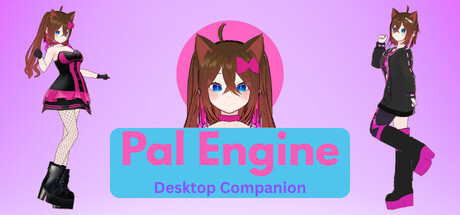
Pal Engine offers an optional AI chat powered by Google Gemini, letting your 3D desktop companion respond with personalized, real-time conversations. Each character has its own personality and memory, creating unique interactions. Built-in content filters block harmful or copyrighted outputs.
Sketch Play includes an in-game assistant called Scholia. When you ask her to look at a page, she reads your drawing and writes back her impressions, a few things to try next, and an experience-point reward. That written feedback is generated by Gemma 4 E2B, a small open-weights AI model.
Scholia cannot draw. She has no ability to generate images, alter your artwork, or add anything to the page. Everything in your sketchbook is drawn by you and the people you invite.
The model runs entirely on your own computer. No account or internet connection is required, nothing you draw is uploaded, and none of your work is used to train anything.
Her notes are one opinion, and she has biases.
This game uses generative AI to create real-time in-game content such as character dialogue and ambient sound. All AI-generated content is moderated and filtered to prevent inappropriate or infringing material. Players can report content directly through in-game tools or the Steam interface.
This game uses an on-device AI model to generate NPC dialogue and quest flavor text. AI runs offline, never sends data to servers, and is constrained to the game’s own lore and rules. The system includes strict filters and refusals to block illegal, explicit, or copyrighted content.
- This game progresses through a pseudo-smartphone chat app that appears within the game. Some messages and choices in the chat are generated by AI, and the story changes depending on the player’s selections.
- Some character images and backgrounds are created using AI-generated images
Experience the power of AI: create clothing, 3D models, and custom scenes with ease, interact with your personal AI companion through natural conversations, and build your own AI avatar to explore the world together.
Haze uses AI to generate unique, procedural game content that ensures no two playthroughs are identical.
AI-Generated Content:
- Scene Imagery: Scenes are generated using Replicate's imagen-4 model, creating unique visual environments as players explore
- Narrative & Dialogue: Google Gemini generates scene descriptions, story text, and contextual responses based on player
actions
- Interactive Elements: AI analyzes scenes to determine clickable areas, available actions, and discoverable items
How It Works:
When players explore the game world, AI services generate new scenes and narrative content in real-time based on the current
story context and player choices. This creates a dynamic, branching experience where the horror unfolds differently for each
player.
Data Usage:
Player interactions are processed to generate contextually appropriate content during gameplay. No player data is used to train
AI models. Game content is generated on-demand and stored locally on the player's device.
AI-Generated Content Disclosure
AI is used in the puzzle gameplay to reinterpret and redraw in-game snapshot images.
AI is used in in-game chat to help players understand different languages.
This game uses Google Gemini AI to provide real-time educational information about locations on Earth. The AI assistant responds to player questions about geography, history, culture, and natural phenomena. All AI-generated content is educational and factual, with responses converted to speech using Google Text-to-Speech. The AI does not generate user-created content or allow custom prompts - it only provides informative responses to predefined question categories about Earth exploration.
This game uses AI to create a dynamic relationship simulation. The AI remembers your past conversations, adapts to your choices, and generates natural dialogue in real time. The character can start conversations, send you messages, and react emotionally based on your actions, creating a unique bond that evolves over time. Players provide their own API key to enable AI features.
Sidekick AI is a live AI gaming companion, so most of what your sidekick says is generated on the fly — it is not pre-scripted.
Some artwork / marketing images were created with AI assistance.
This game uses AI technology to dynamically generate narrative text, aiming to provide you with a vast number of unique adventure stories. Please note:
AI-Generated: Specific in-game plots, options, and event outcomes.
Human-Designed: The game's world, rules, core gameplay, and interaction model.
We have placed the AI within a secure "narrative framework" and look forward to exploring the infinite storytelling possibilities driven by AI with you.
AI generates text during party gameplay: creating fake answers that mimic player styles in Two Truths & AI, describing player drawings in AI Telephone, analyzing photos into percentage breakdowns in AI See It, and delivering verdict explanations in Judge, Jury & AI. All AI text generation happens locally on the host computer in response to player inputs during local multiplayer sessions. AI is also used for narration.
Speak Boy!
Legal Beagll: Justice is Argued uses novel dialogue mechanics to bring your arguments into the courtroom. Characters respond with their own logic and reasoning. Creating dynamic and realistic character interactions.
Voice2Action uses artificial intelligence to enhance voice command recognition. While the application works fully offline, the AI mode allows more natural commands to be understood, even if spoken with variations or errors. The AI system does not create copyrighted or harmful content; it is only used to improve usability and provide more flexible, accurate voice-to-action interactions.
Diagram Awesome includes an AI image generator that enables users to create images for their diagrams. Users are solely responsible for ensuring that generated content complies with Steam guidelines and copyright laws.
MSI DigiME uses AI to enhance player interaction. AI enables personalized avatars and light-hearted, MSI-related responses while fully respecting intellectual property and privacy policies.
English Version:
This game uses artificial intelligence (AI) technologies in limited ways to enhance creativity and player interaction.
AI is used as follows:
Text and Dialogue: Some character dialogue, mission descriptions, or narrative content are partially assisted by OpenAI’s GPT model (ChatGPT / GPT-5) during development or runtime.
Content Review: All AI-generated content is reviewed and filtered by humans to ensure it complies with Steam’s content policies and copyright standards.
Non-Infringement Assurance: The AI model is not instructed to reproduce or imitate any copyrighted works (such as books, films, music, or games).
Player Interaction: During gameplay, AI may generate adaptive responses to player input, but all outputs are monitored and filtered through built-in safety systems.
The use of AI in this game is intended solely for creative assistance and interactive storytelling. All final content is reviewed and approved by the development team.
FLAIR uses generative AI to bring your ideas to life. Players can describe characters, items, buildings, or world elements, and the game will generate them directly in-game. Your creativity shapes the world.
Generated images for some paintings and photographs using AI.
The AI processes the phrases you speak into the microphone to determine whether they are an appeal to God.
This game uses generative artificial intelligence to create dynamic narrative descriptions and battle outcomes during gameplay.
Player-provided words and choices are processed by an AI system to generate contextual text that reflects in-game actions, abilities, and events. All AI output is constrained by predefined game rules and moderation systems, and no AI is used to generate artwork, audio, or other visual assets.
Generative AI in this game is used strictly as a gameplay and narrative logic component, not as a chat system or content creation tool.
The user can freely interact with NPCs in the game world through voice chat.
The sister’s voice is generated in real time using a TTS model.
Some 3D game objects are initially generated using AI tools and are then retouched by the developers. All AI-generated content is reviewed and modified by human creators before being used in the game.
We do not collect or store any user voice data under any circumstances.
This game uses AI to generate dynamic, branching conversations with in-game characters, allowing each player to experience unique story interactions.
The AI system adapts dialogue to the player’s choices, creating personalized comedic and narrative moments while staying within safe and curated content boundaries.
All AI outputs are filtered and moderated to maintain a safe and enjoyable experience.
In addition, some design assets were created with the assistance of AI tools, and were reviewed and refined by human artists before inclusion in the game.
Escape the Maze was developed by a solo developer. Some elements of the game, including store page visuals and text, were created using generative AI tools during development. All final assets have been carefully reviewed and manually refined to ensure accuracy, quality, and full compliance with Steam’s content guidelines.
The game also features AI-controlled enemy behavior, such as a zombie that chases players in the maze. However, no live-generated AI content is used during gameplay.
In our game, we use AI to generate textures dynamically, allowing for more diverse and detailed environments. This AI-driven approach enables the creation of unique visual assets without relying entirely on manual design, saving time while enhancing the game's aesthetic.
Players can generate unique lines for stories based on their text input within their adventure. Additionally, the actions and thoughts of the NPCs players interacted with are controlled through Lattice AI Technology, enabling more engaging and intuitive interactions.
This game uses AI to enable real-time conversations and interactions with a desktop companion. It features speech recognition powered by Kyutai ASR, language understanding and generation using Meta’s LLaMA model, and expressive voice responses through Sesame CSM’s text-to-speech system. All AI runs locally on your device, with no internet connection required.
All 2D characters in the game are fully created by our 2D artist. Currently, the interactions between characters are generated with the help of ChatGPT. Additionally, the book story has been edited for grammar improvements using ChatGPT. In the future, once we secure funding or generate income from the project, our artist will create all character interactions manually to ensure the highest quality and authenticity.
This app uses AI model to generate anime-like artworks, to help artists and players make their ideas and original characters or pets into anime just from describing them.
Some visual assets, including banners and promotional materials, were created with the assistance of artificial intelligence. All dialogue is generated in real time by artificial intelligence, making each interaction unique and dynamic.
The game requires the use of large language models. Players need to purchase APIs of various brand-specific large language models through other channels at their own expense, or deploy large language models locally on their own devices via Ollama to power the game.
In Banana of Doom, AI takes the cards you play, pits them against each other, and generates funny, creative text reasons for the outcome then reveals them to the player
WilderLands uses AI to simulate NPC behavior and societies through reinforcement and deep learning.
AI agents adapt to the environment, form communities, make decisions, and learn over time.
They are not controlled by the player but evolve independently, creating personalized gameplay and unpredictable outcomes.
Quick Translate uses generative AI technology to provide its core functionality. When you capture a screen region or input text, the content is sent to cloud-based AI models that perform text recognition and translation. No AI-generated content is pre-packaged with the application, all translations are generated in real-time based on user input.
The AI is used for two purposes:
1. Text Recognition
When you capture a screen region, AI models analyze the image to identify and extract any text present, regardless of font, style, or language.
2. Translation
The recognized or user-provided text is processed by AI language models to generate accurate, context-aware translations in your chosen target language.
All AI processing occurs on secure remote servers. Your captured images and text are transmitted securely, used solely for generating translations, and are not stored or used for training purposes. Each translation request requires credits, which can be purchased through Steam.
Our game features AI-powered character interactions using advanced language models. Players can engage in dynamic, natural conversations with in-game characters, making each experience unique and immersive."
Through the chat system, players can talk and interact with their closest companion pets in real-time.
To ensure a safe experience, this pet conversation feature applies both DeepSeek’s filtering system and an in-game keyword moderation system during the content generation process. These safeguards are designed to ensure compliance with Steam’s guidelines—preventing content that promotes hate or discrimination, incites violence, depicts real individuals in explicit ways, or infringes on copyrights.
Kayotica includes a unique AI-driven detective system. During certain scenes, players talk to the AI who takes a role of a characters. The AI is limited to the story world and cannot go outside the game’s narrative. Player choices in these moments influence relationships and the upcoming story choices.
Some images in the game are AI-generated but are consistent with our characters and our color chart.
AI is used to power the in-game assistant character, providing dynamic dialogue and context-aware guidance during gameplay. The AI generates helpful hints, tutorial information, and gameplay tips based on your current situation. All AI-generated content is limited to gameplay assistance only and cannot produce inappropriate or copyrighted material.
Our game uses AI to create dynamic NPC dialogues based on player prompts.
All inputs are filtered by OpenAI’s moderation model, and generated content stays inside the game.
Pal Engine offers an optional AI chat powered by Google Gemini, letting your 3D desktop companion respond with personalized, real-time conversations. Each character has its own personality and memory, creating unique interactions. Built-in content filters block harmful or copyrighted outputs.
Sketch Play includes an in-game assistant called Scholia. When you ask her to look at a page, she reads your drawing and writes back her impressions, a few things to try next, and an experience-point reward. That written feedback is generated by Gemma 4 E2B, a small open-weights AI model.
Scholia cannot draw. She has no ability to generate images, alter your artwork, or add anything to the page. Everything in your sketchbook is drawn by you and the people you invite.
The model runs entirely on your own computer. No account or internet connection is required, nothing you draw is uploaded, and none of your work is used to train anything.
Her notes are one opinion, and she has biases.
This game uses generative AI to create real-time in-game content such as character dialogue and ambient sound. All AI-generated content is moderated and filtered to prevent inappropriate or infringing material. Players can report content directly through in-game tools or the Steam interface.