Public Steam disclosure research25,380 disclosures tracked
Where do games disclose AI use?
Search developers’ Steam disclosures, compare classified AI use across
games, and follow recorded changes.
This index adds cross-game classifications and statistics to
statements published on individual store pages.
Groups reflect automatic analysis of public disclosures; mature records are excluded. These counts do not measure AI use across all of Steam.
Missing or unclear statements cannot establish whether a game uses AI.
Some visual assets in this game (such as illustrations, icons, and background images) were created with the assistance of generative AI tools. All AI-generated content was reviewed, edited, and curated by our development team before being included in the game.
AI tools were used as supportive tools during the development process, including assistance with code, visual assets, and music. All AI-assisted content was reviewed, edited, and integrated by our development team before being included in the game.
This game uses generative AI tools (including Canva AI) to create some visual assets, such as the logo, menu backgrounds, and promotional artwork. In-game text localization into multiple languages was produced with AI assistance and reviewed by the development team. The trailer's background music was created using a generative AI music tool, licensed for commercial use. No content is generated by AI during gameplay, and the game does not connect to any external AI service.
AI writing tools were used to assist in drafting store page descriptions and marketing copy. All game content, code, artwork, and audio were created without generative AI.
AI was used as the main tool to code this game, generate assets, and navigate the release processes.
This is the core model of Shadow Games Software. Leveraging AI to do the busy work to free up creative teams to focus more on design, taste, and producing a quality product.
As the 2nd real project for the studio, Idle Energy, heavily used AI during development.
The developer used generative AI tools to assist in creating certain 2D environmental textures and concept artwork used during development. Additionally, AI voice generation software was used to synthesize specific voice lines for characters within the game. AI coding assistants were also utilized to aid in writing and optimizing standard gameplay scripts
This game uses AI assistance as a support tool for efficient development.
Scope of AI Use
- Assistance with programming and code implementation
- Drafting and style adjustment for English localization
- Drafting and editing of some in-game text, including Observation Records in the Anomaly Codex, command reaction text, countermeasure procedures, and other text related to gameplay explanations and strategy
- Drafting, editing, and proofreading of general text such as social media announcements, descriptions, and notices
Scope Where AI Is Not Used
Character images, Anomaly images, background images, Steam capsule images, audio, and BGM are created by the developer or use licensed distributed assets.
No AI-generated assets are used for these materials.
Content Created and Managed by the Developer
The story, worldbuilding, characters, basic Anomaly concepts, and the folklore and supplementary materials related to the Anomalies are independently created by the developer.
Game design and various specifications are also determined by the developer.
For any content created with AI assistance, the final decision on whether to use the text, as well as quality control, is handled by the developer.
The art, music, and writing in this game were created with AI tools during development, directed by the developer through written prompts. The development process is documented publicly, prompt by prompt. The shipped game contains no live or runtime AI generation — the in-game assistant “Aya” is a hand-authored, deterministic simulation, and the game makes no network or model calls during play.
Some visual assets used in the game, including selected 2D artwork and UI graphics, were created with the assistance of generative AI. All AI-generated content has been reviewed, edited, and integrated by the developer to ensure consistency with the game's artistic vision.
SonderSoft uses generative AI for localization to make Arena Bot Manager accessible to more players worldwide. ABM features an optional AI voice-commentator for arena events that can be disabled as per player preference.
SonderSoft pays artists to participate in the creative process, and some artists may choose on their own to use generative AI as part of their workflow; SonderSoft respects the creative tools artists choose in order to realize their own artistic vision.
Whenever possible, SonderSoft prioritizes paying artists, creators, and actors.
Generative AI was used solely to assist in the creation of promotional materials, including some Steam store banners. All in-game assets, gameplay, and content were created without the use of generative AI.
This game uses AI-generated content, created during development and included as fixed, pre-generated assets in the shipped game (not generated live or dynamically during gameplay).
3D models: Unit, structure, and Titan models are generated using Meshy, an AI text/image-to-3D generation tool.
Music: The game's background soundtrack (16 tracks) is generated using Suno, an AI music generation tool.
AI was used to create some textures that were applied to custom 3D models such as environmental items, clothing, weapons, 3 of the player faces, and some of the 2D UI background.
A small number of icons and minor graphical assets currently used in the game are temporary placeholders created with the help of AI. These assets will be replaced with original, custom-made artwork as development progresses. Our goal is to use fully original content in the final version.
Generative AI was used only to assist in editing and enhancing certain 2D images used in the game, such as improving quality, refining details, or making visual adjustments. All gameplay, programming, game design, and the final implementation of assets were created and reviewed by the developer. No generative AI is used to create gameplay content or player interactions during gameplay.
AI tools were used strictly as a minor supplementary aid for light editing of select images and textures. Additionally, AI was partially utilized to generate specific ambient sound effects and assist with voiceover processing. All core game mechanics, 3D models, and primary assets were created manually by the developer.
Pre-generated content (created during development, not at runtime):
- In-game parody movie cover art: generated with AI tools and manually reviewed by the team to ensure all covers are original parodies and do not reproduce trademarked logos, brands, or copyrighted characters.
- In-game parody movie titles and descriptions: drafted with AI assistance and manually edited by the team.
- In-game UI and text translations into the 8 supported languages: produced with AI assistance and reviewed by the team.
No live generative AI is used at runtime. All AI-assisted content is baked into the game build.
Core game assets (code, gameplay design, UI art, character and shop sprites, music and sound effects) were NOT generated with AI.
This game was developed with the assistance of generative AI. Generative AI was used to help create portions of the game's source code and some game assets (including certain artwork and prototype assets). All AI-generated content has been reviewed, modified, or integrated by the developer before being included in the game.
Some of the images in the game were generated using AI during the prototype stage. Such assets may be present in the game up until the release of the demo (inclusive). During the development process, we gradually get rid of generated assets and replace them with hand-made ones. By the time of the official release, all generated content will be removed. This is a normal process for developing an indie game.
Store page artwork (capsule images and header) was created with
the assistance of AI image generation tools (Stable Diffusion /
Flux). All in-game content, text, and gameplay logic is
human-authored. No AI is used to generate content during gameplay.
This game contains some pre-generated AI-created artwork. AI-assisted images are used for certain visual assets, such as event illustrations (for example, cup draw graphics), news imagery, and other decorative artwork. These images are pre-generated during development and are not created dynamically during gameplay. All gameplay, mechanics, and player decisions are authored by the developer.
AI has been used to refine the game balance, produce the graphics and the code for Conglomerate. As a solo indie dev, AI is used to bounce ideas and support the game development, replicating having a development partner.
This game uses generative AI as part of its asset production workflow. AI tools were used to help create and iterate on certain visual materials, including pixel-art characters, enemies, effects, music, and promotional images. These outputs were reviewed, selected, and integrated by the developer to match the game’s intended style and experience.
Generative AI is not used to produce personalized content from player input during gameplay, and the game does not rely on AI-generated responses or live AI systems while running.
A pre-rendered promotional cinematic/trailer used in marketing materials was created with generative AI cinematic tools. The game itself does not include live generative AI features, and players cannot generate AI content in-game.
Artificial intelligence is used exclusively as a tool to assist the developer in editing the source code structure (optimizing Unity script logic), checking compilation errors, and assisting with stylistic design. The AI is not constantly loaded during gameplay.
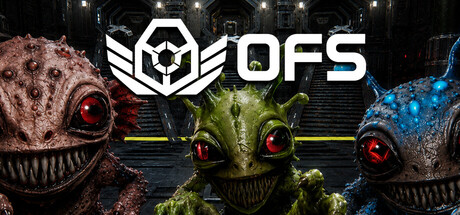
OFS is made by a solo developer using a hybrid, human-led production pipeline.
Some of the game's content was produced with the help of several generative AI tools — for instance to assist with certain complex 3D meshes, textures, and visual elements. These tools are used for one purpose only: to augment and accelerate human creativity, never to replace it.
Every artistic direction, every gameplay decision, and every final creative call is made by a human. All AI-assisted assets — meshes, textures, visuals, objects and anything else — are hand-reviewed, edited, and finalized by a human before they ever make it into the game.
As a solo developer, this hybrid approach simply unlocks far more creative possibilities than would otherwise be feasible without a full team — while keeping full human authorship over the final result.
Generative AI tools were used during development to assist with the creation of some pre-generated visual assets, audio, written content, and localization. All AI-assisted content was reviewed and edited by the developer before being included in the game. The game does not generate content during gameplay.
Some game assets were created with the help of AI tools during development. No AI runs during gameplay and no player data is sent to external services.
Some of this game's 2D art/images and in-game text were created with the help of generative AI tools during development, then reviewed and edited by the developer. Some of the game's code was also written with the assistance of AI coding tools. The game does not generate any content using AI while you play.
Keep Drawing was developed by HuDoes Interactive with AI-assisted tools used as part of our workflow — not as a fully automated production pipeline.
Some in-game visuals and UI elements were created or refined with generative AI during development. All such assets were reviewed, edited, and integrated by the developer before release. Store and marketing graphics (including Steam capsule artwork) were also created with AI assistance and then manually adjusted for quality and consistency.
AI-assisted coding tools were used to help write and refactor parts of the game's source code. The design, game systems, balance, and final implementation remain developer-directed.
This game uses pre-generated AI only for certain UI background images and promotional store visuals. These assets were created before release and remain fixed. The game does not include any live AI generation during gameplay.
Cellula was developed with the assistance of generative AI tools. The developer used AI to help write C++ code, generate 3D organelle models from text descriptions, and create UI button artwork. No AI-generated content appears in the final game without human modification, curation, and integration.
This project is itself a demonstration of how AI can democratize game development — allowing a single developer with domain expertise but limited programming experience to build something that previously required a full studio.
All game design, biological accuracy, educational content, and creative direction were provided by a human physician and educator.
We used advanced AI language models (Claude and Gemini) to help translate
SERVICE DESK SIM into 8 languages: French, German, Spanish, Italian, Hindi,
Urdu, Japanese, and English (UK). The AI handled the initial translation of
all in-game text from UI menus to dialogue, story sequences, and thousands
of unique support tickets. Every translation was then carefully reviewed and
tested by humans to ensure quality and cultural accuracy across all languages.
Some visual assets in this game (such as illustrations, icons, and background images) were created with the assistance of generative AI tools. All AI-generated content was reviewed, edited, and curated by our development team before being included in the game.
AI tools were used as supportive tools during the development process, including assistance with code, visual assets, and music. All AI-assisted content was reviewed, edited, and integrated by our development team before being included in the game.
This game uses generative AI tools (including Canva AI) to create some visual assets, such as the logo, menu backgrounds, and promotional artwork. In-game text localization into multiple languages was produced with AI assistance and reviewed by the development team. The trailer's background music was created using a generative AI music tool, licensed for commercial use. No content is generated by AI during gameplay, and the game does not connect to any external AI service.
AI writing tools were used to assist in drafting store page descriptions and marketing copy. All game content, code, artwork, and audio were created without generative AI.
AI was used as the main tool to code this game, generate assets, and navigate the release processes.
This is the core model of Shadow Games Software. Leveraging AI to do the busy work to free up creative teams to focus more on design, taste, and producing a quality product.
As the 2nd real project for the studio, Idle Energy, heavily used AI during development.
The developer used generative AI tools to assist in creating certain 2D environmental textures and concept artwork used during development. Additionally, AI voice generation software was used to synthesize specific voice lines for characters within the game. AI coding assistants were also utilized to aid in writing and optimizing standard gameplay scripts
This game uses AI assistance as a support tool for efficient development.
Scope of AI Use
- Assistance with programming and code implementation
- Drafting and style adjustment for English localization
- Drafting and editing of some in-game text, including Observation Records in the Anomaly Codex, command reaction text, countermeasure procedures, and other text related to gameplay explanations and strategy
- Drafting, editing, and proofreading of general text such as social media announcements, descriptions, and notices
Scope Where AI Is Not Used
Character images, Anomaly images, background images, Steam capsule images, audio, and BGM are created by the developer or use licensed distributed assets.
No AI-generated assets are used for these materials.
Content Created and Managed by the Developer
The story, worldbuilding, characters, basic Anomaly concepts, and the folklore and supplementary materials related to the Anomalies are independently created by the developer.
Game design and various specifications are also determined by the developer.
For any content created with AI assistance, the final decision on whether to use the text, as well as quality control, is handled by the developer.
The art, music, and writing in this game were created with AI tools during development, directed by the developer through written prompts. The development process is documented publicly, prompt by prompt. The shipped game contains no live or runtime AI generation — the in-game assistant “Aya” is a hand-authored, deterministic simulation, and the game makes no network or model calls during play.
Some visual assets used in the game, including selected 2D artwork and UI graphics, were created with the assistance of generative AI. All AI-generated content has been reviewed, edited, and integrated by the developer to ensure consistency with the game's artistic vision.
SonderSoft uses generative AI for localization to make Arena Bot Manager accessible to more players worldwide. ABM features an optional AI voice-commentator for arena events that can be disabled as per player preference.
SonderSoft pays artists to participate in the creative process, and some artists may choose on their own to use generative AI as part of their workflow; SonderSoft respects the creative tools artists choose in order to realize their own artistic vision.
Whenever possible, SonderSoft prioritizes paying artists, creators, and actors.
Generative AI was used solely to assist in the creation of promotional materials, including some Steam store banners. All in-game assets, gameplay, and content were created without the use of generative AI.
This game uses AI-generated content, created during development and included as fixed, pre-generated assets in the shipped game (not generated live or dynamically during gameplay).
3D models: Unit, structure, and Titan models are generated using Meshy, an AI text/image-to-3D generation tool.
Music: The game's background soundtrack (16 tracks) is generated using Suno, an AI music generation tool.
AI was used to create some textures that were applied to custom 3D models such as environmental items, clothing, weapons, 3 of the player faces, and some of the 2D UI background.
A small number of icons and minor graphical assets currently used in the game are temporary placeholders created with the help of AI. These assets will be replaced with original, custom-made artwork as development progresses. Our goal is to use fully original content in the final version.
Generative AI was used only to assist in editing and enhancing certain 2D images used in the game, such as improving quality, refining details, or making visual adjustments. All gameplay, programming, game design, and the final implementation of assets were created and reviewed by the developer. No generative AI is used to create gameplay content or player interactions during gameplay.
AI tools were used strictly as a minor supplementary aid for light editing of select images and textures. Additionally, AI was partially utilized to generate specific ambient sound effects and assist with voiceover processing. All core game mechanics, 3D models, and primary assets were created manually by the developer.
Pre-generated content (created during development, not at runtime):
- In-game parody movie cover art: generated with AI tools and manually reviewed by the team to ensure all covers are original parodies and do not reproduce trademarked logos, brands, or copyrighted characters.
- In-game parody movie titles and descriptions: drafted with AI assistance and manually edited by the team.
- In-game UI and text translations into the 8 supported languages: produced with AI assistance and reviewed by the team.
No live generative AI is used at runtime. All AI-assisted content is baked into the game build.
Core game assets (code, gameplay design, UI art, character and shop sprites, music and sound effects) were NOT generated with AI.
This game was developed with the assistance of generative AI. Generative AI was used to help create portions of the game's source code and some game assets (including certain artwork and prototype assets). All AI-generated content has been reviewed, modified, or integrated by the developer before being included in the game.
Some of the images in the game were generated using AI during the prototype stage. Such assets may be present in the game up until the release of the demo (inclusive). During the development process, we gradually get rid of generated assets and replace them with hand-made ones. By the time of the official release, all generated content will be removed. This is a normal process for developing an indie game.
Store page artwork (capsule images and header) was created with
the assistance of AI image generation tools (Stable Diffusion /
Flux). All in-game content, text, and gameplay logic is
human-authored. No AI is used to generate content during gameplay.
This game contains some pre-generated AI-created artwork. AI-assisted images are used for certain visual assets, such as event illustrations (for example, cup draw graphics), news imagery, and other decorative artwork. These images are pre-generated during development and are not created dynamically during gameplay. All gameplay, mechanics, and player decisions are authored by the developer.
AI has been used to refine the game balance, produce the graphics and the code for Conglomerate. As a solo indie dev, AI is used to bounce ideas and support the game development, replicating having a development partner.
This game uses generative AI as part of its asset production workflow. AI tools were used to help create and iterate on certain visual materials, including pixel-art characters, enemies, effects, music, and promotional images. These outputs were reviewed, selected, and integrated by the developer to match the game’s intended style and experience.
Generative AI is not used to produce personalized content from player input during gameplay, and the game does not rely on AI-generated responses or live AI systems while running.
A pre-rendered promotional cinematic/trailer used in marketing materials was created with generative AI cinematic tools. The game itself does not include live generative AI features, and players cannot generate AI content in-game.
Artificial intelligence is used exclusively as a tool to assist the developer in editing the source code structure (optimizing Unity script logic), checking compilation errors, and assisting with stylistic design. The AI is not constantly loaded during gameplay.
OFS is made by a solo developer using a hybrid, human-led production pipeline.
Some of the game's content was produced with the help of several generative AI tools — for instance to assist with certain complex 3D meshes, textures, and visual elements. These tools are used for one purpose only: to augment and accelerate human creativity, never to replace it.
Every artistic direction, every gameplay decision, and every final creative call is made by a human. All AI-assisted assets — meshes, textures, visuals, objects and anything else — are hand-reviewed, edited, and finalized by a human before they ever make it into the game.
As a solo developer, this hybrid approach simply unlocks far more creative possibilities than would otherwise be feasible without a full team — while keeping full human authorship over the final result.
Generative AI tools were used during development to assist with the creation of some pre-generated visual assets, audio, written content, and localization. All AI-assisted content was reviewed and edited by the developer before being included in the game. The game does not generate content during gameplay.
Some game assets were created with the help of AI tools during development. No AI runs during gameplay and no player data is sent to external services.
Some of this game's 2D art/images and in-game text were created with the help of generative AI tools during development, then reviewed and edited by the developer. Some of the game's code was also written with the assistance of AI coding tools. The game does not generate any content using AI while you play.
Keep Drawing was developed by HuDoes Interactive with AI-assisted tools used as part of our workflow — not as a fully automated production pipeline.
Some in-game visuals and UI elements were created or refined with generative AI during development. All such assets were reviewed, edited, and integrated by the developer before release. Store and marketing graphics (including Steam capsule artwork) were also created with AI assistance and then manually adjusted for quality and consistency.
AI-assisted coding tools were used to help write and refactor parts of the game's source code. The design, game systems, balance, and final implementation remain developer-directed.
This game uses pre-generated AI only for certain UI background images and promotional store visuals. These assets were created before release and remain fixed. The game does not include any live AI generation during gameplay.
Cellula was developed with the assistance of generative AI tools. The developer used AI to help write C++ code, generate 3D organelle models from text descriptions, and create UI button artwork. No AI-generated content appears in the final game without human modification, curation, and integration.
This project is itself a demonstration of how AI can democratize game development — allowing a single developer with domain expertise but limited programming experience to build something that previously required a full studio.
All game design, biological accuracy, educational content, and creative direction were provided by a human physician and educator.
We used advanced AI language models (Claude and Gemini) to help translate
SERVICE DESK SIM into 8 languages: French, German, Spanish, Italian, Hindi,
Urdu, Japanese, and English (UK). The AI handled the initial translation of
all in-game text from UI menus to dialogue, story sequences, and thousands
of unique support tickets. Every translation was then carefully reviewed and
tested by humans to ensure quality and cultural accuracy across all languages.