Public Steam disclosure research25,380 disclosures tracked
Where do games disclose AI use?
Search developers’ Steam disclosures, compare classified AI use across
games, and follow recorded changes.
This index adds cross-game classifications and statistics to
statements published on individual store pages.
Groups reflect automatic analysis of public disclosures; mature records are excluded. These counts do not measure AI use across all of Steam.
Missing or unclear statements cannot establish whether a game uses AI.
AI was used only for creating a small number of store page promotional images (capsule and marketing visuals).
All in-game content, including gameplay, visuals, and assets, was created manually by the developer or uses properly licensed assets.
No AI is used during gameplay.
Generative AI is used to compose the original score (instrumental VGM only. This game doesn't include vocal music) and handle the translation (primarily for Simplified Chinese version).
During the period from Early Access to Launch this title may use AI for voice in quest dialog as placeholders, prior to launch all AI elements shall be removed should they have existed and replaced.
During the early prototyping phase, I use AI tools to visualize initial concepts and create temporary placeholders. All of these have been completely replaced in the final game with hand-crafted art created by myself and talented freelancers.
Graphics (Title Screen):
AI was used to generate the base image for the title screen. This output was then manually edited, adjusted for layout, and refined to create the final visual.
Localization (Translation):
AI was used as an assistant in the translation process. Following the initial AI-generated draft, all text has been manually reviewed and edited to ensure contextual accuracy and quality.
AI tools were used during development as a programming aid and for early concept exploration. All gameplay systems were developed by the creator, and all in-game assets are original, commissioned, or licensed.
ome inventory icons, the in-game orientation map, and a few images used for signs and notes were created with AI assistance. The world itself, level design, gameplay systems, buildings, ruins, enemy placement, and environments are manually built, edited, and refined. Every mesh is placed by hand, and the world layout does not use procedural generation.
Most of the content is developed using traditional development practices.
However, AI tools were used to support the creation of certain 3D in-game assets and audio assets.
I'm a solo game developer. I use AI for checking spelling, grammar, some text generation for in-game item description, marketing material to make sure the English content is well presented to the players. Because English is not my native langue.
Some of the images and in game models and sounds are created using AI to speed up the development process and allow focus on core gameplay elements.
All elements are reviewed by devs.
No AI is running or applied during gameplay.
This game uses generative AI for its multi-language localization to provide immediate support for French, German, Spanish, Portuguese, Russian, Japanese and Korean. While we strive for accuracy, some linguistic nuances may vary.
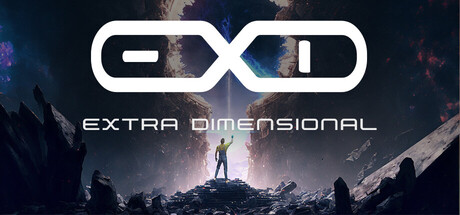
EXD was created by a small independent team over the course of more than three years of development. 99.99% of its content was made entirely by hand, including real-world objects that were physically sculpted and later digitized to be brought into the game world.
A very small number of assets (~30 out of more than 27,000 total) were created by our artists with the help of generative AI tools.
At current development stage, the AI generated pre-rendered content are only used for placeholders. Later they will be replaced by the actual hand drawn artworks.
This game includes AI-assisted content created during development. AI tools were used to support the creation of certain visual assets and/or design elements. All content has been reviewed, refined, and curated by the development team to ensure quality and consistency.
As a small indie team, we have used generative AI tools to help create temporary placeholder assets during development, including some capsule artworks, localization support, and certain in-game icons. All AI-assisted content is reviewed and integrated manually by our team.
Generative AI tools were used as part of the development process to assist with idea exploration, writing support, localization support, and the creation or refinement of some visual and marketing materials. All final content was reviewed, edited, and implemented by the developer.
Some small visuals were made using AI completely trained on my own art, since I am a solo developer, it tremendously helped the tedious tasks of icon generation and few other visuals here and there.
Limited AI-assisted processing was used for some content based on human-created material, including certain video sequences animated from hand-rendered frames.
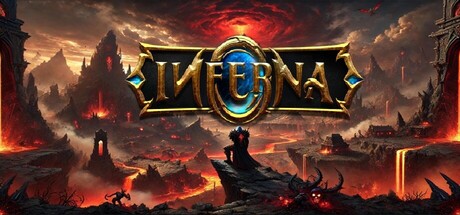
As a small independent team, we use AI as a supportive tool to help us develop and improve Inferna more efficiently.
We may use AI-assisted tools for certain visual materials, such as patch note images, announcements, and loading screens. AI may also support our localization work, including translations of some in-game texts into selected languages.
During gameplay, AI is used for live translations, making it easier for players from different countries to communicate, trade, group up, and play together. Our live translation system is hosted locally on our own infrastructure. Player messages are not sent to third-party AI providers, and player data is never used to train AI models.
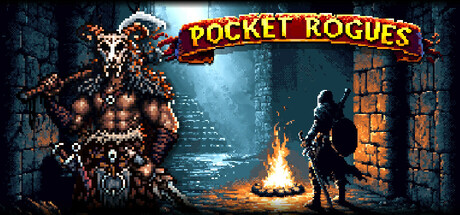
Some of the images in the game were created using neural networks, but were later significantly modified (or used only as inspiration). No image in Pocket Rogues is entirely AI generated.
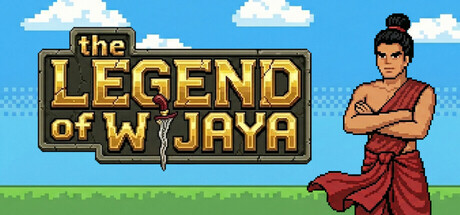
The Legend of Wijaya utilizes pre-generated AI tools strictly as an assistive foundation for a minor portion of background environmental assets and foundational music tracks. All AI-assisted content is heavily manually edited, polished, and arranged by the developer to ensure it strictly matches the handcrafted pixel-art aesthetic and historical tone of the game.
AI was used only for creating a small number of store page promotional images (capsule and marketing visuals).
All in-game content, including gameplay, visuals, and assets, was created manually by the developer or uses properly licensed assets.
No AI is used during gameplay.
Generative AI is used to compose the original score (instrumental VGM only. This game doesn't include vocal music) and handle the translation (primarily for Simplified Chinese version).
During the period from Early Access to Launch this title may use AI for voice in quest dialog as placeholders, prior to launch all AI elements shall be removed should they have existed and replaced.
During the early prototyping phase, I use AI tools to visualize initial concepts and create temporary placeholders. All of these have been completely replaced in the final game with hand-crafted art created by myself and talented freelancers.
Graphics (Title Screen):
AI was used to generate the base image for the title screen. This output was then manually edited, adjusted for layout, and refined to create the final visual.
Localization (Translation):
AI was used as an assistant in the translation process. Following the initial AI-generated draft, all text has been manually reviewed and edited to ensure contextual accuracy and quality.
AI tools were used during development as a programming aid and for early concept exploration. All gameplay systems were developed by the creator, and all in-game assets are original, commissioned, or licensed.
ome inventory icons, the in-game orientation map, and a few images used for signs and notes were created with AI assistance. The world itself, level design, gameplay systems, buildings, ruins, enemy placement, and environments are manually built, edited, and refined. Every mesh is placed by hand, and the world layout does not use procedural generation.
Most of the content is developed using traditional development practices.
However, AI tools were used to support the creation of certain 3D in-game assets and audio assets.
I'm a solo game developer. I use AI for checking spelling, grammar, some text generation for in-game item description, marketing material to make sure the English content is well presented to the players. Because English is not my native langue.
Some of the images and in game models and sounds are created using AI to speed up the development process and allow focus on core gameplay elements.
All elements are reviewed by devs.
No AI is running or applied during gameplay.
This game uses generative AI for its multi-language localization to provide immediate support for French, German, Spanish, Portuguese, Russian, Japanese and Korean. While we strive for accuracy, some linguistic nuances may vary.
EXD was created by a small independent team over the course of more than three years of development. 99.99% of its content was made entirely by hand, including real-world objects that were physically sculpted and later digitized to be brought into the game world.
A very small number of assets (~30 out of more than 27,000 total) were created by our artists with the help of generative AI tools.
At current development stage, the AI generated pre-rendered content are only used for placeholders. Later they will be replaced by the actual hand drawn artworks.
This game includes AI-assisted content created during development. AI tools were used to support the creation of certain visual assets and/or design elements. All content has been reviewed, refined, and curated by the development team to ensure quality and consistency.
As a small indie team, we have used generative AI tools to help create temporary placeholder assets during development, including some capsule artworks, localization support, and certain in-game icons. All AI-assisted content is reviewed and integrated manually by our team.
Generative AI tools were used as part of the development process to assist with idea exploration, writing support, localization support, and the creation or refinement of some visual and marketing materials. All final content was reviewed, edited, and implemented by the developer.
Some small visuals were made using AI completely trained on my own art, since I am a solo developer, it tremendously helped the tedious tasks of icon generation and few other visuals here and there.
Limited AI-assisted processing was used for some content based on human-created material, including certain video sequences animated from hand-rendered frames.
As a small independent team, we use AI as a supportive tool to help us develop and improve Inferna more efficiently.
We may use AI-assisted tools for certain visual materials, such as patch note images, announcements, and loading screens. AI may also support our localization work, including translations of some in-game texts into selected languages.
During gameplay, AI is used for live translations, making it easier for players from different countries to communicate, trade, group up, and play together. Our live translation system is hosted locally on our own infrastructure. Player messages are not sent to third-party AI providers, and player data is never used to train AI models.
Some of the images in the game were created using neural networks, but were later significantly modified (or used only as inspiration). No image in Pocket Rogues is entirely AI generated.
The Legend of Wijaya utilizes pre-generated AI tools strictly as an assistive foundation for a minor portion of background environmental assets and foundational music tracks. All AI-assisted content is heavily manually edited, polished, and arranged by the developer to ensure it strictly matches the handcrafted pixel-art aesthetic and historical tone of the game.