Public Steam disclosure research25,394 disclosures tracked
Where do games disclose AI use?
Search developers’ Steam disclosures, compare classified AI use across
games, and follow recorded changes.
This index adds cross-game classifications and statistics to
statements published on individual store pages.
Groups reflect automatic analysis of public disclosures; mature records are excluded. These counts do not measure AI use across all of Steam.
Missing or unclear statements cannot establish whether a game uses AI.
Generative AI was used to create some visual assets included in the game, as well as artwork for the Steam store page and marketing materials. These assets were created before release. The game does not generate AI content during gameplay or connect to external AI services.
Generative AI was used as a development tool for selected visual assets and concept artwork, as well as for assistance during development. All AI-assisted content was reviewed, edited, and integrated by the developer.
Generative AI was used during development to create some store page artwork and in-game icons. All generated content was reviewed before being included in the final product.
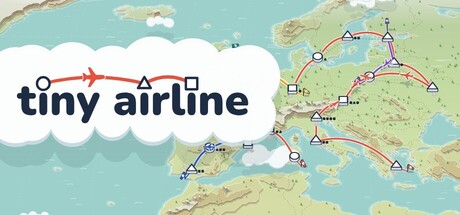
AI was used for coding, translations and achievements. The map, airports and countries come from public datasets. Nothing is generated by AI while you play.
Generative AI tools were used during development to create part of what you see and hear: the portraits of the fictional players and their faces at different ages, background illustrations, the short ambient videos, the music, the commentator's recorded calls and the surnames he calls out —a synthetic voice that does not belong to any real person— and part of the art on this page. Everything was reviewed, trimmed and edited by hand before going in, and every commentator line was checked with speech recognition to make sure it says what it should. The sound effects are real public-domain recordings. The game does not generate anything with AI while you play.
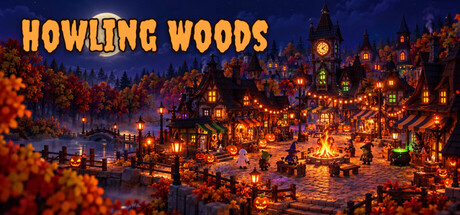
Parts of Howling Woods were made with generative AI during development: its music and sound effects, its interface icons and store art, some of its set-piece models, and parts of its code. All of it was reviewed and reworked by hand, and nothing is generated while you play.
Generative AI was used to create some art assets (the title screen background and the store capsule images). The game does not use AI to generate any content at runtime.
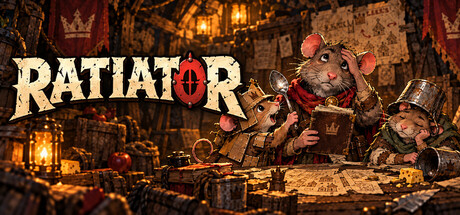
Ratiator is made by a small independent studio, and generative AI is one of the tools that lets a tiny team build a world this big. Every piece of AI-assisted content was directed, selected and refined by us to match our own art direction and design.
Artwork: backgrounds, UI elements, event illustrations, icons and key art were created with AI image tools from our concepts and art direction, then curated, edited and assembled by hand.
3D models: our rats and their household-junk weapons and armour started as AI-generated 3D models built from our concept art. We then rigged, fitted, animated and tuned them with our own tools, so every rat moves and fights the way we designed it.
Animation: a few short cinematic clips and the living light in some backgrounds (flickering lanterns, flowing water) were made with AI video tools and blended into our original paintings.
Writing: story and event texts were drafted with the help of an AI writing assistant, then edited and shaped by us to fit the world and its humour.
Nothing in the game is generated by AI while you play. Every fight, rat and story event is driven by the game's own systems, and no player data is sent to any AI service.
Generative AI tools were used during development to help with coding. All assets are 3d modeled or free to use assets. The game does not generate AI content or connect to an AI service.
The game's cases, design and text were created by the developer. Generative AI was used as an assistant when writing the text of this store page and of the game, and to translate it into 12 languages; all of it was reviewed and edited by the developer. No content is generated while you play.
Some visual assets and the music in Roadweave were created with the help of generative AI tools during development: the key art, logo, store and library artwork, icons and achievement badges were made with image tools, and the soundtrack with a music tool. Every asset was selected and edited by the developer before release.
Generative AI is not used while you play. Maps are built by the game's own procedural generator from a seed — ordinary game code, not AI.
Generative AI-assisted tools were used during development to support the creation and refinement of some pre-generated visual assets. No AI content is generated during gameplay.
We use generative AI as a reference and supporting tool during game development, while final creative decisions and implementation are made by our team.
Hero Football Manager was made by one developer working with AI tools. AI helped write the game's code, including the code that draws the pixel art and synthesizes many of the sounds and music tracks. AI also helped write and translate the in-game text and this store page. The developer directed, reviewed and tested all of it. The game does not use AI while you play.
AI writing assistants were used to draft and refine in-game text during development; all text has been manually proofread, edited, and verified by the developers.
Generative AI assisted development, including artwork, writing and translations. This includes in-game and Steam store content. The game does not generate new AI content during play.
This game includes content created with the assistance of generative AI. Specifically, the clock face and background designs available in the in-game shop were created using generative AI image tools, and the localization of the in-game interface text into several additional languages was produced with generative AI. The game's audio and other content were created without generative AI. No generative AI runs while the game is played — all such content is pre-generated and included in the build.
Generative AI was used for the cards, interface icons, translations and the store page text.
All generated content was selected and checked by hand before it went into the game. No AI is used at runtime.
Pre-generated background graphics were created using generative AI and were subsequently selected for use in the game. The game contains no live-generated AI content and no AI interactions during gameplay.
Black Banner Company is made by one person.
What is mine: the design, the rules, the balance, the world, and every decision of tone. Nothing ships that I have not read, corrected or rewritten.
What is AI-assisted:
— the illustrations and part of the interface art;
— the entire English translation;
No AI runs while you play. All content is fixed at build time. No data is sent anywhere.
The English may read awkwardly in places. Tell me where and I'll fix it.
If these tools are a problem for you, I would rather you knew before buying than after.
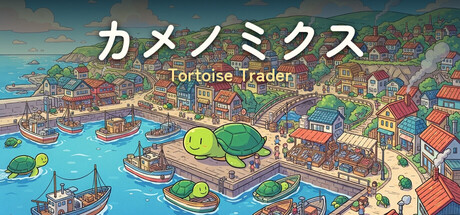
The in-game illustrations in this game were created with generative AI image tools. This covers:
- The background art for the 16 town illustrations
- The turtle and enemy character art
- The single-image art for the opening and ending
- The dojo and battle backgrounds
- The celebration art shown at gold milestones
- The application icon
The developer selected from the generated candidates and adjusted them (resizing, cropping and similar) before including them in the game.
Generative AI was also used for part of the text:
- All English text was translated from Japanese with generative AI
- In the Japanese version, the on-screen guidance, the how-to-play pages, item descriptions, the store description, and some names of goods, places and characters were written with the help of generative AI
Generative AI was not used for:
- The opening and ending text
- Music and sound effects (these are synthesized by the program's own waveform code)
- The developer's logo
The game never calls generative AI while it is running. It can be played offline; its only external communication is with the Steam client, to record Steam achievements.
This game is designed, developed, and published by an independent developer, with AI tools used to assist during development:
Written text was drafted with AI assistance and reviewed and edited by the developer.
The gameplay, the art style, and every revision were decided by the developer.
Some visuals and animations are drawn by code and were reviewed and revised version by version; no AI image-generation models were used.
Map tiles and furniture are human-created licensed assets.
Music and sound effects are human-created licensed assets.
The store capsule artwork was commissioned from a human artist; its background may contain AI-generated elements.
The game does not use AI to generate any content at runtime.
This game includes content created with the assistance of generative AI tools. Some character and UI artwork was produced using AI image generation (ChatGPT) and then edited by the developer, and the background music was generated using Suno. All AI-assisted assets were reviewed by the developer to ensure they do not infringe the intellectual property of third parties. No AI is used at runtime—all generation occurred during development (pre-generated).
The store artwork (capsules and key art) was generated with an image model and then composed, cropped and combined with our own logo by hand. The game's ambient background music tracks were generated with an AI music tool and edited afterwards.
This game uses generative AI in parts of its content: the Spanish and Italian translations were produced with AI assistance and are pending a professional human review pass; the game's icon was also created with the help of generative AI tools during development. No content is generated in real time during gameplay — everything was produced during development.
Some of Grim Island's artwork was created using generative AI image tools, working from original artwork hand-drawn by the developer and then curated and edited by the developer. No other content is AI-generated.
Rally Dynasty's illustrations were produced with generative AI image tools and then chosen, cropped and composited by hand. That covers the key art the game's branding is built on, and the side-elevation drawing of each car in the catalogue. Nothing is generated while you play: the game runs offline, connects to no AI service, and the simulation itself - the era rules, the results, and every line of text you read - is written by hand.
Most of if not all of the models / graphics / music you see in game is made by humans. Rare exceptions were made for some basic models (That we really liked and made a creative decision to keep). We support artists and will continue to do so so in this game and all future ones.
We used AI-assisted tools to help create and refine a small selection of visual assets. Each one was reviewed and adjusted by hand before it was used.
AI also helped us tidy up the grammar and wording in a small amount of in-game and store-page text. We checked and edited every final line ourselves.
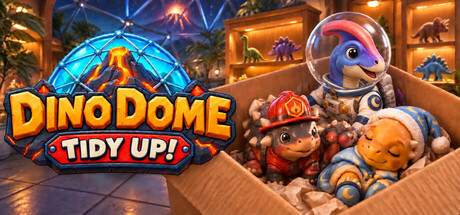
For us, AI is simply a supporting tool. Dino Dome: Tidy Up! is still shaped by our own ideas, judgement, and hands-on creative work.
Some sprite artwork was pre-generated with AI assistance, then manually selected, edited, and integrated into the shipped game. No AI-generated content is created during gameplay.
Generative AI tools were used during development to create and refine some pre-generated artwork, icons, audio, text and localization, and marketing imagery. All such content was reviewed and curated by the developer. No AI-generated content is created during gameplay.
Generative AI was used to create some visual assets included in the game, as well as artwork for the Steam store page and marketing materials. These assets were created before release. The game does not generate AI content during gameplay or connect to external AI services.
Generative AI was used as a development tool for selected visual assets and concept artwork, as well as for assistance during development. All AI-assisted content was reviewed, edited, and integrated by the developer.
Generative AI was used during development to create some store page artwork and in-game icons. All generated content was reviewed before being included in the final product.
AI was used for coding, translations and achievements. The map, airports and countries come from public datasets. Nothing is generated by AI while you play.
Generative AI tools were used during development to create part of what you see and hear: the portraits of the fictional players and their faces at different ages, background illustrations, the short ambient videos, the music, the commentator's recorded calls and the surnames he calls out —a synthetic voice that does not belong to any real person— and part of the art on this page. Everything was reviewed, trimmed and edited by hand before going in, and every commentator line was checked with speech recognition to make sure it says what it should. The sound effects are real public-domain recordings. The game does not generate anything with AI while you play.
Parts of Howling Woods were made with generative AI during development: its music and sound effects, its interface icons and store art, some of its set-piece models, and parts of its code. All of it was reviewed and reworked by hand, and nothing is generated while you play.
Generative AI was used to create some art assets (the title screen background and the store capsule images). The game does not use AI to generate any content at runtime.
Ratiator is made by a small independent studio, and generative AI is one of the tools that lets a tiny team build a world this big. Every piece of AI-assisted content was directed, selected and refined by us to match our own art direction and design.
Artwork: backgrounds, UI elements, event illustrations, icons and key art were created with AI image tools from our concepts and art direction, then curated, edited and assembled by hand.
3D models: our rats and their household-junk weapons and armour started as AI-generated 3D models built from our concept art. We then rigged, fitted, animated and tuned them with our own tools, so every rat moves and fights the way we designed it.
Animation: a few short cinematic clips and the living light in some backgrounds (flickering lanterns, flowing water) were made with AI video tools and blended into our original paintings.
Writing: story and event texts were drafted with the help of an AI writing assistant, then edited and shaped by us to fit the world and its humour.
Nothing in the game is generated by AI while you play. Every fight, rat and story event is driven by the game's own systems, and no player data is sent to any AI service.
Generative AI tools were used during development to help with coding. All assets are 3d modeled or free to use assets. The game does not generate AI content or connect to an AI service.
The game's cases, design and text were created by the developer. Generative AI was used as an assistant when writing the text of this store page and of the game, and to translate it into 12 languages; all of it was reviewed and edited by the developer. No content is generated while you play.
Some visual assets and the music in Roadweave were created with the help of generative AI tools during development: the key art, logo, store and library artwork, icons and achievement badges were made with image tools, and the soundtrack with a music tool. Every asset was selected and edited by the developer before release.
Generative AI is not used while you play. Maps are built by the game's own procedural generator from a seed — ordinary game code, not AI.
Generative AI-assisted tools were used during development to support the creation and refinement of some pre-generated visual assets. No AI content is generated during gameplay.
We use generative AI as a reference and supporting tool during game development, while final creative decisions and implementation are made by our team.
Hero Football Manager was made by one developer working with AI tools. AI helped write the game's code, including the code that draws the pixel art and synthesizes many of the sounds and music tracks. AI also helped write and translate the in-game text and this store page. The developer directed, reviewed and tested all of it. The game does not use AI while you play.
AI writing assistants were used to draft and refine in-game text during development; all text has been manually proofread, edited, and verified by the developers.
Generative AI assisted development, including artwork, writing and translations. This includes in-game and Steam store content. The game does not generate new AI content during play.
This game includes content created with the assistance of generative AI. Specifically, the clock face and background designs available in the in-game shop were created using generative AI image tools, and the localization of the in-game interface text into several additional languages was produced with generative AI. The game's audio and other content were created without generative AI. No generative AI runs while the game is played — all such content is pre-generated and included in the build.
Generative AI was used for the cards, interface icons, translations and the store page text.
All generated content was selected and checked by hand before it went into the game. No AI is used at runtime.
Pre-generated background graphics were created using generative AI and were subsequently selected for use in the game. The game contains no live-generated AI content and no AI interactions during gameplay.
Black Banner Company is made by one person.
What is mine: the design, the rules, the balance, the world, and every decision of tone. Nothing ships that I have not read, corrected or rewritten.
What is AI-assisted:
— the illustrations and part of the interface art;
— the entire English translation;
No AI runs while you play. All content is fixed at build time. No data is sent anywhere.
The English may read awkwardly in places. Tell me where and I'll fix it.
If these tools are a problem for you, I would rather you knew before buying than after.
The in-game illustrations in this game were created with generative AI image tools. This covers:
- The background art for the 16 town illustrations
- The turtle and enemy character art
- The single-image art for the opening and ending
- The dojo and battle backgrounds
- The celebration art shown at gold milestones
- The application icon
The developer selected from the generated candidates and adjusted them (resizing, cropping and similar) before including them in the game.
Generative AI was also used for part of the text:
- All English text was translated from Japanese with generative AI
- In the Japanese version, the on-screen guidance, the how-to-play pages, item descriptions, the store description, and some names of goods, places and characters were written with the help of generative AI
Generative AI was not used for:
- The opening and ending text
- Music and sound effects (these are synthesized by the program's own waveform code)
- The developer's logo
The game never calls generative AI while it is running. It can be played offline; its only external communication is with the Steam client, to record Steam achievements.
This game is designed, developed, and published by an independent developer, with AI tools used to assist during development:
Written text was drafted with AI assistance and reviewed and edited by the developer.
The gameplay, the art style, and every revision were decided by the developer.
Some visuals and animations are drawn by code and were reviewed and revised version by version; no AI image-generation models were used.
Map tiles and furniture are human-created licensed assets.
Music and sound effects are human-created licensed assets.
The store capsule artwork was commissioned from a human artist; its background may contain AI-generated elements.
The game does not use AI to generate any content at runtime.
This game includes content created with the assistance of generative AI tools. Some character and UI artwork was produced using AI image generation (ChatGPT) and then edited by the developer, and the background music was generated using Suno. All AI-assisted assets were reviewed by the developer to ensure they do not infringe the intellectual property of third parties. No AI is used at runtime—all generation occurred during development (pre-generated).
The store artwork (capsules and key art) was generated with an image model and then composed, cropped and combined with our own logo by hand. The game's ambient background music tracks were generated with an AI music tool and edited afterwards.
This game uses generative AI in parts of its content: the Spanish and Italian translations were produced with AI assistance and are pending a professional human review pass; the game's icon was also created with the help of generative AI tools during development. No content is generated in real time during gameplay — everything was produced during development.
Some of Grim Island's artwork was created using generative AI image tools, working from original artwork hand-drawn by the developer and then curated and edited by the developer. No other content is AI-generated.
Rally Dynasty's illustrations were produced with generative AI image tools and then chosen, cropped and composited by hand. That covers the key art the game's branding is built on, and the side-elevation drawing of each car in the catalogue. Nothing is generated while you play: the game runs offline, connects to no AI service, and the simulation itself - the era rules, the results, and every line of text you read - is written by hand.
Most of if not all of the models / graphics / music you see in game is made by humans. Rare exceptions were made for some basic models (That we really liked and made a creative decision to keep). We support artists and will continue to do so so in this game and all future ones.
We used AI-assisted tools to help create and refine a small selection of visual assets. Each one was reviewed and adjusted by hand before it was used.
AI also helped us tidy up the grammar and wording in a small amount of in-game and store-page text. We checked and edited every final line ourselves.
For us, AI is simply a supporting tool. Dino Dome: Tidy Up! is still shaped by our own ideas, judgement, and hands-on creative work.
Some sprite artwork was pre-generated with AI assistance, then manually selected, edited, and integrated into the shipped game. No AI-generated content is created during gameplay.
Generative AI tools were used during development to create and refine some pre-generated artwork, icons, audio, text and localization, and marketing imagery. All such content was reviewed and curated by the developer. No AI-generated content is created during gameplay.