Public Steam disclosure research25,867 disclosures tracked
Where do games disclose AI use?
Search developers’ Steam disclosures, compare classified AI use across
games, and follow recorded changes.
This index adds cross-game classifications and statistics to
statements published on individual store pages.
Groups reflect automatic analysis of public disclosures; mature records are excluded. These counts do not measure AI use across all of Steam.
Missing or unclear statements cannot establish whether a game uses AI.
AI-assisted tools were used during development to help produce some 2D art assets (character and enemy artwork, UI icons), sound effects, voice lines, and supporting code. All AI-assisted content was created before release and reviewed by the development team. The game does not generate any content or code in real time during gameplay, and it does not connect to any external AI service while playing.
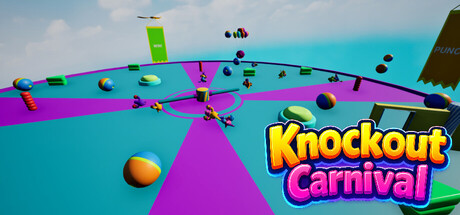
Knockout Carnival contains pre-generated AI-assisted artwork used for a limited selection of character icons, profile icons, emotes, sprays, and a chest icon. No AI content is generated during gameplay.
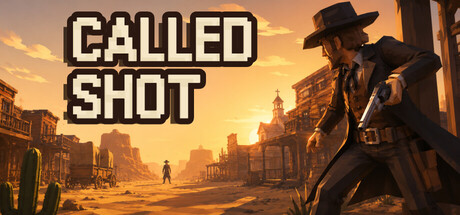
As a solo developer, I use generative image AI to assist in creating Called Shot's 2D artwork — specifically the card illustrations and the store page key art (capsule images). No content is generated by AI in real time during gameplay. All AI-assisted art is created in advance during development, then reviewed and revised before being included in the game. The in-game 3D models and environment art are not AI-generated.
Artificial intelligence was used to create certain user interface elements and to modify the Steam capsule. Although the background of the Steam capsule comes directly from the game, the image was modified using artificial intelligence.
Some of the art assets in Battle of Plans were produced with AI-assisted
tools. Specifically, a number of 3D props (weapon models) were created using
AI-assisted 3D generation and then manually retopologized, re-textured and
integrated by our team, and some promotional/store images were created with
AI image tools. Every AI-assisted asset was reviewed by a human before it
shipped.
Localization into languages other than Turkish and English was produced with
machine translation.
The game does not generate any content while you play: there is no AI chat,
no AI-generated dialogue, and no runtime asset generation. Player chat is
written by players and filtered server-side.
Pre-generated generative AI tools were used during development to assist in creating and editing some 2D visual assets, including backgrounds, character images, scene variations, and promotional artwork. AI tools were also used to assist with drafting, editing, and localization of some text. All final content was selected, reviewed, and edited by the developer before inclusion. No generative AI is used during gameplay, and players cannot generate content in the game.
Some visual assets (character sprites, portraits, marketing art) and some audio were created with the assistance of generative AI tools (PixelLab, Midjourney), then curated and edited by the developer. All game design, code, and writing are human-made. The game does not generate AI content at runtime.
The game contains content created with the assistance of AI tools. AI-assisted tools were used during development, including programming assistance and the creation of some audio and 3D assets. These assets were reviewed, edited, and integrated into the game by the developers.
AI-assisted tools are becoming part of modern game development, and we believe in being transparent about how we use them. Aviator combines AI-assisted workflows with human creative direction, design, review, and final decision-making throughout development.
Some of this game's assets were made with the assistance of generative AI tools and were reviewed, curated and hand-finished by the developer. No content is generated while you play.
Some of this game's assets were made with the assistance of generative AI tools and were reviewed, curated and hand-finished by the developer. No content is generated while you play.
Parts of this game's audio and art were produced with generative AI tools and then reviewed, edited and finished by hand before shipping:
- Music: the background tracks were generated with an AI music tool (Suno) from our own briefs, then selected, trimmed, loudness-matched and looped by hand.
- Sound effects: part of the SFX layers were generated with an AI audio tool (ElevenLabs) and combined with locally synthesised layers, then mixed and balanced by hand.
- Visual effects and some enemy animation frames were AI-assisted and then corrected frame by frame against our approved art direction.
- The marketing key art used for the store capsules and library artwork was generated with an AI image tool, using our own approved character art and real in-game screenshots as references. The trailer narration voice is AI-generated.
No generative AI runs while you play: nothing is generated at runtime, and the game never sends your data to an AI service.
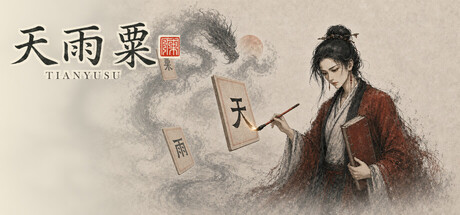
All game design, code, Chinese text, card and character data, the decomposition data behind the composing system, the interface and the calligraphy fonts are human-authored. Every screenshot and all gameplay footage is captured from the real build.
1. Game Logo (Marketing / Store Page Asset)
The game's logo was created using generative AI tools. This logo appears on the store page, marketing materials, and within the game itself
2. Player Battle Armor Voice (In-Game Audio)
The player's battle armor uses voice samples generated using the ElevenLabs AI voice synthesis platform. This voice is heard in-game when the player receives feedback from the armor system (e.g., status alerts, warnings, or interactions).
Generative AI was used in this game to assist with the creation of some character voiceovers and in the coding process. The game's visual and narrative design were created by our team.
Some store/library marketing art and some in-game art assets (character portraits, backgrounds, item icons and UI elements) were created with the assistance of AI image generation tools, followed by manual editing and integration by the developer. We have rights to use the generated images and they do not infringe third-party IP.
Nothing in GREATER FOOL is generated while you play. Every run is
deterministic code with seeded randomness, all music and sound is
synthesized live by the game itself, and no art comes from an image
generator: the pixel art, the icons, and the store images are drawn
in code, shape by shape.
AI assistance was used while drafting some of the game's written text,
which I edited and rewrote to fit the voice of the game.
AI tools were used to assist with writing and localizing store page text and some in-game text, and as a coding assistant during development. Store page marketing assets, images and the background music in the trailer were generated with AI tools and then reviewed and edited by the developer. All game design, mechanics and balance are human-made; all in-game visual art is hand-authored procedural drawing, and the game itself contains no AI-generated audio, music or voice. All AI-assisted content was reviewed and edited by the developer.
Generative AI tools assisted with portions of development, including some player-facing UI, tutorial and campaign text, and implementation code.
All output was reviewed and edited by the developer. The game does not generate AI content while running.
Maps and terrain are generated using deterministic procedural algorithms and public-domain geographic data. Audio uses licensed recordings and conventional synthesis/editing, not generative AI.
Generative AI tools were used to create most of the game’s 2D artwork, including sprites and animations for enemies, the player character, towers, relics, and other gameplay elements, as well as promotional materials.
All generated assets were reviewed, edited, refined, and integrated by the developer to maintain a consistent visual direction.
All AI-assisted content is pre-generated; no content is generated using AI during gameplay.
Some 2D artwork, including character, enemy, map, user-interface, icon, and visual-effect source images, was created with the assistance of generative AI tools during development. Every shipped asset is selected, edited, integrated, and reviewed by the development team for visual consistency, gameplay readability, and rights compliance. The game does not generate content with AI while it is running and does not send player prompts to an AI service.
Ai was used to develop the code, artwork, various events, and dialogue in the game. Most player-facing text was reviewed by humans and many of the events and conversations were approved, improved, or rewritten by humans. There is no run-time AI usage, everything was created before the game runs, only standard computer actions are done at runtime. ex. selections and randomization of existing content.
Most of the art for Hive & Harvest has been initially generated by AI models, which has then been manually edited to achieve the desired tessellation look.
Coding of the game involved AI models for the purpose of quality control.
This game uses pre-generated AI-assisted content during development. AI tools were used to assist with the creation of certain visual assets and early concept artwork. All AI-generated content has been reviewed, edited, and curated by the developer before inclusion in the final game. The game does not use live AI generation during gameplay.
Some store capsule/library images and selected in-game art assets were created with generative AI tools, then manually selected and edited by the team. No live AI generation occurs during gameplay.
Code: I'm a solo developer and I use AI coding agents. The architecture, game design, systems, and direction are mine; the agents write code to my spec, under my review. That includes the UI, which agents build from my own designs and styles.
3D art: Made by a professional artist. No AI.
Music and SFX: Currently placeholders, licensed from Ocular Sounds, who state their sounds are crafted from original source recordings by their in-house sound design team. To be replaced with commissioned work.
Writing: Written by me. AI agents help me edit and apply corrections; I approve every word that ships. A professional writer will be brought on as development continues.
Illustrations: Not in the game yet. They will be commissioned from professional artists.
Some pre-generated artwork and visual assets used in the game and its store and marketing materials were created with generative AI tools, then selected, edited, and integrated by the development team. The game does not generate AI content during gameplay and does not connect to external AI services while you play.
Portions of the game's written content (interface text, in-game help, Russian/English localization) and store page texts were created with the assistance of AI tools, directed, reviewed and edited by the developer. All graphics are hand-coded procedural visuals and all audio is procedurally synthesized in code — no AI-generated images or audio are included.
Pre-release, temporary audio and visual publicly available assets have been used that may be AI generated. Programming and localization are LLM assisted. Custom creative content (artwork, sprites, narrative, etc.) is all handcrafted.
Greenrise includes a small amount of AI-assisted content created during development (pre-generated): one sound effect and one visual asset were made with the help of generative AI tools. Generative AI was also used to help review and verify the game's localization. The game does not generate any AI content live at runtime. We hold the rights to use this content and it does not infringe on any third-party intellectual property.
Artificial Intelligence was used primarily for generating Steam capsule artwork, specific gameplay sounds, and assistance with mathematical code functions. All AI-generated content was manually edited and reviewed throughout every stage of development.
This game is being developed solo. As an independent developer working with limited resources and budget, AI tools have been used in the production of some visual and musical assets:
Some character concept art, store page marketing materials, and background/atmospheric visuals were created using AI visual generation tools, then edited and integrated by the developer to fit the game's art direction.
Some visuals are included as placeholders and will be changed during development.
Some background music tracks were created using AI music generation tools.
The game's codebase, gameplay mechanics, character design, dialogue writing, and overall creative direction were all created manually by the developer alone. AI tools were used as a tool where access to a professional art/sound team was not possible as a solo developer; final decisions, edits, and the overall creative direction of the game were shaped by the developer.
AI-assisted tools were used during development to help produce some 2D art assets (character and enemy artwork, UI icons), sound effects, voice lines, and supporting code. All AI-assisted content was created before release and reviewed by the development team. The game does not generate any content or code in real time during gameplay, and it does not connect to any external AI service while playing.
Knockout Carnival contains pre-generated AI-assisted artwork used for a limited selection of character icons, profile icons, emotes, sprays, and a chest icon. No AI content is generated during gameplay.
As a solo developer, I use generative image AI to assist in creating Called Shot's 2D artwork — specifically the card illustrations and the store page key art (capsule images). No content is generated by AI in real time during gameplay. All AI-assisted art is created in advance during development, then reviewed and revised before being included in the game. The in-game 3D models and environment art are not AI-generated.
Artificial intelligence was used to create certain user interface elements and to modify the Steam capsule. Although the background of the Steam capsule comes directly from the game, the image was modified using artificial intelligence.
Some of the art assets in Battle of Plans were produced with AI-assisted
tools. Specifically, a number of 3D props (weapon models) were created using
AI-assisted 3D generation and then manually retopologized, re-textured and
integrated by our team, and some promotional/store images were created with
AI image tools. Every AI-assisted asset was reviewed by a human before it
shipped.
Localization into languages other than Turkish and English was produced with
machine translation.
The game does not generate any content while you play: there is no AI chat,
no AI-generated dialogue, and no runtime asset generation. Player chat is
written by players and filtered server-side.
Pre-generated generative AI tools were used during development to assist in creating and editing some 2D visual assets, including backgrounds, character images, scene variations, and promotional artwork. AI tools were also used to assist with drafting, editing, and localization of some text. All final content was selected, reviewed, and edited by the developer before inclusion. No generative AI is used during gameplay, and players cannot generate content in the game.
Some visual assets (character sprites, portraits, marketing art) and some audio were created with the assistance of generative AI tools (PixelLab, Midjourney), then curated and edited by the developer. All game design, code, and writing are human-made. The game does not generate AI content at runtime.
The game contains content created with the assistance of AI tools. AI-assisted tools were used during development, including programming assistance and the creation of some audio and 3D assets. These assets were reviewed, edited, and integrated into the game by the developers.
AI-assisted tools are becoming part of modern game development, and we believe in being transparent about how we use them. Aviator combines AI-assisted workflows with human creative direction, design, review, and final decision-making throughout development.
Some of this game's assets were made with the assistance of generative AI tools and were reviewed, curated and hand-finished by the developer. No content is generated while you play.
Some of this game's assets were made with the assistance of generative AI tools and were reviewed, curated and hand-finished by the developer. No content is generated while you play.
Parts of this game's audio and art were produced with generative AI tools and then reviewed, edited and finished by hand before shipping:
- Music: the background tracks were generated with an AI music tool (Suno) from our own briefs, then selected, trimmed, loudness-matched and looped by hand.
- Sound effects: part of the SFX layers were generated with an AI audio tool (ElevenLabs) and combined with locally synthesised layers, then mixed and balanced by hand.
- Visual effects and some enemy animation frames were AI-assisted and then corrected frame by frame against our approved art direction.
- The marketing key art used for the store capsules and library artwork was generated with an AI image tool, using our own approved character art and real in-game screenshots as references. The trailer narration voice is AI-generated.
No generative AI runs while you play: nothing is generated at runtime, and the game never sends your data to an AI service.
All game design, code, Chinese text, card and character data, the decomposition data behind the composing system, the interface and the calligraphy fonts are human-authored. Every screenshot and all gameplay footage is captured from the real build.
1. Game Logo (Marketing / Store Page Asset)
The game's logo was created using generative AI tools. This logo appears on the store page, marketing materials, and within the game itself
2. Player Battle Armor Voice (In-Game Audio)
The player's battle armor uses voice samples generated using the ElevenLabs AI voice synthesis platform. This voice is heard in-game when the player receives feedback from the armor system (e.g., status alerts, warnings, or interactions).
Generative AI was used in this game to assist with the creation of some character voiceovers and in the coding process. The game's visual and narrative design were created by our team.
Some store/library marketing art and some in-game art assets (character portraits, backgrounds, item icons and UI elements) were created with the assistance of AI image generation tools, followed by manual editing and integration by the developer. We have rights to use the generated images and they do not infringe third-party IP.
Nothing in GREATER FOOL is generated while you play. Every run is
deterministic code with seeded randomness, all music and sound is
synthesized live by the game itself, and no art comes from an image
generator: the pixel art, the icons, and the store images are drawn
in code, shape by shape.
AI assistance was used while drafting some of the game's written text,
which I edited and rewrote to fit the voice of the game.
AI tools were used to assist with writing and localizing store page text and some in-game text, and as a coding assistant during development. Store page marketing assets, images and the background music in the trailer were generated with AI tools and then reviewed and edited by the developer. All game design, mechanics and balance are human-made; all in-game visual art is hand-authored procedural drawing, and the game itself contains no AI-generated audio, music or voice. All AI-assisted content was reviewed and edited by the developer.
Generative AI tools assisted with portions of development, including some player-facing UI, tutorial and campaign text, and implementation code.
All output was reviewed and edited by the developer. The game does not generate AI content while running.
Maps and terrain are generated using deterministic procedural algorithms and public-domain geographic data. Audio uses licensed recordings and conventional synthesis/editing, not generative AI.
Generative AI tools were used to create most of the game’s 2D artwork, including sprites and animations for enemies, the player character, towers, relics, and other gameplay elements, as well as promotional materials.
All generated assets were reviewed, edited, refined, and integrated by the developer to maintain a consistent visual direction.
All AI-assisted content is pre-generated; no content is generated using AI during gameplay.
Some 2D artwork, including character, enemy, map, user-interface, icon, and visual-effect source images, was created with the assistance of generative AI tools during development. Every shipped asset is selected, edited, integrated, and reviewed by the development team for visual consistency, gameplay readability, and rights compliance. The game does not generate content with AI while it is running and does not send player prompts to an AI service.
Ai was used to develop the code, artwork, various events, and dialogue in the game. Most player-facing text was reviewed by humans and many of the events and conversations were approved, improved, or rewritten by humans. There is no run-time AI usage, everything was created before the game runs, only standard computer actions are done at runtime. ex. selections and randomization of existing content.
Most of the art for Hive & Harvest has been initially generated by AI models, which has then been manually edited to achieve the desired tessellation look.
Coding of the game involved AI models for the purpose of quality control.
This game uses pre-generated AI-assisted content during development. AI tools were used to assist with the creation of certain visual assets and early concept artwork. All AI-generated content has been reviewed, edited, and curated by the developer before inclusion in the final game. The game does not use live AI generation during gameplay.
Some store capsule/library images and selected in-game art assets were created with generative AI tools, then manually selected and edited by the team. No live AI generation occurs during gameplay.
Code: I'm a solo developer and I use AI coding agents. The architecture, game design, systems, and direction are mine; the agents write code to my spec, under my review. That includes the UI, which agents build from my own designs and styles.
3D art: Made by a professional artist. No AI.
Music and SFX: Currently placeholders, licensed from Ocular Sounds, who state their sounds are crafted from original source recordings by their in-house sound design team. To be replaced with commissioned work.
Writing: Written by me. AI agents help me edit and apply corrections; I approve every word that ships. A professional writer will be brought on as development continues.
Illustrations: Not in the game yet. They will be commissioned from professional artists.
Some pre-generated artwork and visual assets used in the game and its store and marketing materials were created with generative AI tools, then selected, edited, and integrated by the development team. The game does not generate AI content during gameplay and does not connect to external AI services while you play.
Portions of the game's written content (interface text, in-game help, Russian/English localization) and store page texts were created with the assistance of AI tools, directed, reviewed and edited by the developer. All graphics are hand-coded procedural visuals and all audio is procedurally synthesized in code — no AI-generated images or audio are included.
Pre-release, temporary audio and visual publicly available assets have been used that may be AI generated. Programming and localization are LLM assisted. Custom creative content (artwork, sprites, narrative, etc.) is all handcrafted.
Greenrise includes a small amount of AI-assisted content created during development (pre-generated): one sound effect and one visual asset were made with the help of generative AI tools. Generative AI was also used to help review and verify the game's localization. The game does not generate any AI content live at runtime. We hold the rights to use this content and it does not infringe on any third-party intellectual property.
Artificial Intelligence was used primarily for generating Steam capsule artwork, specific gameplay sounds, and assistance with mathematical code functions. All AI-generated content was manually edited and reviewed throughout every stage of development.
This game is being developed solo. As an independent developer working with limited resources and budget, AI tools have been used in the production of some visual and musical assets:
Some character concept art, store page marketing materials, and background/atmospheric visuals were created using AI visual generation tools, then edited and integrated by the developer to fit the game's art direction.
Some visuals are included as placeholders and will be changed during development.
Some background music tracks were created using AI music generation tools.
The game's codebase, gameplay mechanics, character design, dialogue writing, and overall creative direction were all created manually by the developer alone. AI tools were used as a tool where access to a professional art/sound team was not possible as a solo developer; final decisions, edits, and the overall creative direction of the game were shaped by the developer.