Public Steam disclosure research25,877 disclosures tracked
Where do games disclose AI use?
Search developers’ Steam disclosures, compare classified AI use across
games, and follow recorded changes.
This index adds cross-game classifications and statistics to
statements published on individual store pages.
Groups reflect automatic analysis of public disclosures; mature records are excluded. These counts do not measure AI use across all of Steam.
Missing or unclear statements cannot establish whether a game uses AI.
Generative AI was used to create the initial artwork for the game’s shortcut icon and certain promotional graphical assets. These assets were reviewed and selected by the developer before being included. The game does not generate AI content in real time.
Generative AI was used exclusively for marketing and promotional materials. This includes the store page capsule art, translations and the background music featured in the promotional trailer.
No AI generated assets, imagery or audio are used within the actual game build, game screenshots or gameplay experience.
Monotony Idle is made by a two-person team working alongside AI tools, and we want to be straightforward about where that shows up.
Some in-game text, imagery, and data were drafted with AI assistance.
Our store page materials - capsule art, store text, and trailer - were built from the game's real assets. All screenshots and trailer footage are captures of actual gameplay, not AI-fabricated imagery.
Live-generated content: none. The game does not use AI at runtime - nothing is generated while you play, and the game never sends your data to any AI service.
Every AI-assisted asset was directed, reviewed, and approved by a human before shipping.
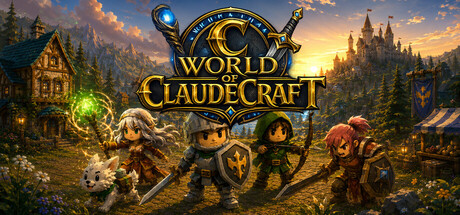
World of ClaudeCraft is, unapologetically, a game built with AI — the name is a hint. We used AI in two ways, and we want to be clear about both.
During development, the game's code was written with an AI coding assistant, and we used AI generation tools to create some of the assets that ship in the game as ordinary, fixed files:
Sound: Most in-game sound effects and all spoken NPC voice lines were generated with ElevenLabs' AI audio and text-to-speech models. The written dialogue itself is authored by us; AI produced the spoken audio.
3D models: A small number of creature models (the "Drowned Litany") were generated with Meshy AI (text-to-3D).
Everything else is either created by the game's own code (the world, towns, terrain, water, weather, and the music soundtrack are all generated procedurally at runtime) or is licensed third-party art — CC0 model, texture, and HDRI packs plus a purchased commercial icon set. That content is not AI-generated.
Critically: no generative AI runs while you play. Every AI-made asset was generated once, offline, during development and baked into the game as a static file. The running game makes no AI or LLM calls, and none of your gameplay or personal data is ever sent to an AI system. The simulation is fully deterministic — the same inputs always produce the same result.
Portions of the application code were developed with AI assistance. Some UI text translations were produced with AI tools and reviewed by the developer. All visual assets, artwork, and design are human-made.
Some visual assets, 3D models, textures, UI images, promotional images, music, sound effects, and reference material used in this game were created or assisted with using generative AI tools. These assets were reviewed, edited, adjusted, and integrated by the developer.
The game itself does not generate AI content during gameplay.
Generative AI was used to enhance marketing assets such as steam capsule & early sketch concept before offloaded & polished by Humans.
All gameplay, art, and final content remain crafted by Human.
Some audio in Fill The Bucket, including sound effects and ambient music, is procedurally generated by code using generative techniques. All such content is created during development and ships with the game; no AI content is generated live during gameplay.
Generative AI was used to assist with store copy, marketing artwork, logo/capsule concepts, and some replacement visual/audio assets. All AI-assisted content is reviewed and integrated by the developer. The game does not use live generative AI during gameplay.
During development we used generative AI tools to create some content that ships in the game:
- Visual art: Some 2D art (card illustrations, store/capsule art, boss and deity illustrations, UI seals, and marketing images) was generated with an image model, then hand-edited, composited, and curated by us.
- Music: The looping background music tracks were generated with an AI music tool, then edited and mastered (trimmed and crossfade-looped) by us before inclusion.
- Text / localization: Some in-game text and its translations (Traditional Chinese, Simplified Chinese, English) were produced with AI assistance and then reviewed and edited by us.
All AI-generated content was reviewed by a human before shipping.
We have confirmed our right to use these tools' output commercially, and have taken steps to ensure the content does not infringe third-party IP.
Our team uses generative AI tools to help develop some in game & marketing assets.
We don't use AI to replace artists and developers, but to improve our teams' productivity and offer you a more complete game at an affordable price.
Generative AI tools were used during development to assist with the creation of some 3D assets, music, and draft visual materials. Character concepts were based on human-made sketches, and AI was used only for early draft exploration; the final in-game characters were created by humans. All AI-assisted materials were reviewed, edited, and integrated into the game by the developer. AI is not used to generate content during gameplay.
Generative AI was used to create marketing assets, including store capsules, library art, and banners. The AI was used to compose and refine visual compositions based on original in-game screenshots to ensure high-quality presentation in the Steam store. All core gameplay assets, including 3D models, textures, and code, were created manually without the use of AI.
Generative AI was used during development to assist in the creation of certain visual assets, including some textures and artwork featured in story sequences. All generated assets were reviewed, modified where necessary, and curated by the development team before inclusion in the game. No AI-generated content is created during gameplay.
Generative AI was used to enhance and improve some cutscene visuals. Apart from these specific visual assets, no other parts of the game were created using generative AI.
All gameplay systems, game design, programming, writing, balancing, and the majority of visual content were created manually by the developer.
Generative AI was used during development to create a limited number of in-game images and to generate translations for multiple languages. All AI-generated content was reviewed and edited as needed by the development team.
Some visuals (backgrounds, characters, icons, interface) and sounds (music, effects) were created using generative AI tools, then selected and integrated by the developer. No generation happens in real time during play.
AI tools were used during development to assist with the creation and refinement of some visual assets. All content included in the final game was selected, edited, and integrated by the developer.
This game uses AI-generated content in two areas: background music tracks were created using Mureka AI, and some pixel art assets were generated using PixelLab. All AI-generated content was reviewed, curated, and integrated by the developer.
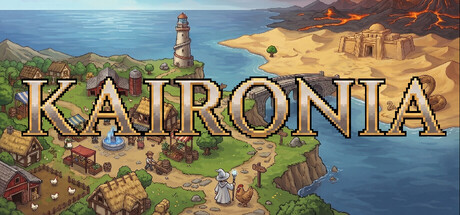
Kaironia uses generative AI tools during the development process to create pre-rendered assets. Specifically, AI-assisted tools were used to help create background music tracks, certain 2D environmental icons and images, and to assist with multi-language text localization. None of these assets are generated dynamically or live during gameplay.
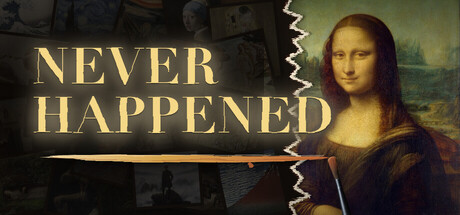
The masterpieces featured in this game are real public-domain paintings, digitized from high-resolution scans. They are not AI-generated.
Generative AI was used only in the following areas: some artwork other than the masterpieces (UI, characters, backgrounds), some sound, and localization.
The game includes pre-generated visual and audio assets created with the assistance of generative AI tools. These include character artwork, environmental backgrounds, music, and singing vocals. All lyrics were written entirely by the developer without the use of generative AI, while the music and vocals were created through a collaborative process involving human creative direction and generative AI tools. All AI-assisted outputs were reviewed, selected, edited, and integrated by the developer. The game does not generate content during gameplay and does not send player input to any AI service.
Every visual asset in the game is an open-source, licensed, open-source pixel icon, or a real in-game render. no AI image production. Some of the game codes were written with AI-assisted development tools under the direct supervision of the developer, and localization was human-inspired for all sentences after machine translation initials. There is no real-time AI creation in the game
Fish species artwork in Swimcraft is pre-rendered AI-generated imagery. All venue photography is the developer's own, and all audio, UI and game code are non-generated. No AI content is generated live during play.
The game is hanadcrafted by very talented individuals in our team. But as a small studio that is still learning and growing, we leveraged AI to aid us in production. We used AI to generate a few textures for the game. Having said that, we assure everyone that the final game is a result of the hardwork and dedication of a very talented and passionate team.
Some pre-rendered artwork and visual assets used in Retro Flight Simulator 2026 were created with the assistance of generative AI and then reviewed and edited by the developer before being included in the game. The game does not use AI-generated content during gameplay and does not rely on external AI services.
Generative AI was used for creating Store page assets and in game items. Generated content was then manually edited to remove any anomalies and match look and feel of overall game's theme.
During development, AI tools were used to assist in polishing select text descriptions, as well as providing technical support for some of the character art and music assets.
However, the core narrative, setting, and gameplay systems are 100% original, conceived and designed entirely by our team. We wanted to share this with complete transparency and genuinely thank you for your understanding and support. We welcome you to enjoy the game based on your own preferences!
AI tools were used to assist with pre-created text content: the localization of the game's UI text into 8 languages (reviewed by the developer) and the store page texts. All artwork, 3D models, animations and audio are human-made licensed assets; no AI-generated imagery or audio ships with the game. The game does not generate any AI content at runtime.
Some 2D art assets in this game were created with the assistance of generative AI tools. All assets were reviewed and edited by the developer before inclusion.
Parts of the in-game text localization were produced with the assistance of AI translation tools, then reviewed by the developer.
Generative AI was used to create the initial artwork for the game’s shortcut icon and certain promotional graphical assets. These assets were reviewed and selected by the developer before being included. The game does not generate AI content in real time.
Generative AI was used exclusively for marketing and promotional materials. This includes the store page capsule art, translations and the background music featured in the promotional trailer.
No AI generated assets, imagery or audio are used within the actual game build, game screenshots or gameplay experience.
Monotony Idle is made by a two-person team working alongside AI tools, and we want to be straightforward about where that shows up.
Some in-game text, imagery, and data were drafted with AI assistance.
Our store page materials - capsule art, store text, and trailer - were built from the game's real assets. All screenshots and trailer footage are captures of actual gameplay, not AI-fabricated imagery.
Live-generated content: none. The game does not use AI at runtime - nothing is generated while you play, and the game never sends your data to any AI service.
Every AI-assisted asset was directed, reviewed, and approved by a human before shipping.
World of ClaudeCraft is, unapologetically, a game built with AI — the name is a hint. We used AI in two ways, and we want to be clear about both.
During development, the game's code was written with an AI coding assistant, and we used AI generation tools to create some of the assets that ship in the game as ordinary, fixed files:
Sound: Most in-game sound effects and all spoken NPC voice lines were generated with ElevenLabs' AI audio and text-to-speech models. The written dialogue itself is authored by us; AI produced the spoken audio.
3D models: A small number of creature models (the "Drowned Litany") were generated with Meshy AI (text-to-3D).
Everything else is either created by the game's own code (the world, towns, terrain, water, weather, and the music soundtrack are all generated procedurally at runtime) or is licensed third-party art — CC0 model, texture, and HDRI packs plus a purchased commercial icon set. That content is not AI-generated.
Critically: no generative AI runs while you play. Every AI-made asset was generated once, offline, during development and baked into the game as a static file. The running game makes no AI or LLM calls, and none of your gameplay or personal data is ever sent to an AI system. The simulation is fully deterministic — the same inputs always produce the same result.
Portions of the application code were developed with AI assistance. Some UI text translations were produced with AI tools and reviewed by the developer. All visual assets, artwork, and design are human-made.
Some visual assets, 3D models, textures, UI images, promotional images, music, sound effects, and reference material used in this game were created or assisted with using generative AI tools. These assets were reviewed, edited, adjusted, and integrated by the developer.
The game itself does not generate AI content during gameplay.
Generative AI was used to enhance marketing assets such as steam capsule & early sketch concept before offloaded & polished by Humans.
All gameplay, art, and final content remain crafted by Human.
Some audio in Fill The Bucket, including sound effects and ambient music, is procedurally generated by code using generative techniques. All such content is created during development and ships with the game; no AI content is generated live during gameplay.
Generative AI was used to assist with store copy, marketing artwork, logo/capsule concepts, and some replacement visual/audio assets. All AI-assisted content is reviewed and integrated by the developer. The game does not use live generative AI during gameplay.
During development we used generative AI tools to create some content that ships in the game:
- Visual art: Some 2D art (card illustrations, store/capsule art, boss and deity illustrations, UI seals, and marketing images) was generated with an image model, then hand-edited, composited, and curated by us.
- Music: The looping background music tracks were generated with an AI music tool, then edited and mastered (trimmed and crossfade-looped) by us before inclusion.
- Text / localization: Some in-game text and its translations (Traditional Chinese, Simplified Chinese, English) were produced with AI assistance and then reviewed and edited by us.
All AI-generated content was reviewed by a human before shipping.
We have confirmed our right to use these tools' output commercially, and have taken steps to ensure the content does not infringe third-party IP.
Our team uses generative AI tools to help develop some in game & marketing assets.
We don't use AI to replace artists and developers, but to improve our teams' productivity and offer you a more complete game at an affordable price.
Generative AI tools were used during development to assist with the creation of some 3D assets, music, and draft visual materials. Character concepts were based on human-made sketches, and AI was used only for early draft exploration; the final in-game characters were created by humans. All AI-assisted materials were reviewed, edited, and integrated into the game by the developer. AI is not used to generate content during gameplay.
Generative AI was used to create marketing assets, including store capsules, library art, and banners. The AI was used to compose and refine visual compositions based on original in-game screenshots to ensure high-quality presentation in the Steam store. All core gameplay assets, including 3D models, textures, and code, were created manually without the use of AI.
Generative AI was used during development to assist in the creation of certain visual assets, including some textures and artwork featured in story sequences. All generated assets were reviewed, modified where necessary, and curated by the development team before inclusion in the game. No AI-generated content is created during gameplay.
Generative AI was used to enhance and improve some cutscene visuals. Apart from these specific visual assets, no other parts of the game were created using generative AI.
All gameplay systems, game design, programming, writing, balancing, and the majority of visual content were created manually by the developer.
Generative AI was used during development to create a limited number of in-game images and to generate translations for multiple languages. All AI-generated content was reviewed and edited as needed by the development team.
Some visuals (backgrounds, characters, icons, interface) and sounds (music, effects) were created using generative AI tools, then selected and integrated by the developer. No generation happens in real time during play.
AI tools were used during development to assist with the creation and refinement of some visual assets. All content included in the final game was selected, edited, and integrated by the developer.
This game uses AI-generated content in two areas: background music tracks were created using Mureka AI, and some pixel art assets were generated using PixelLab. All AI-generated content was reviewed, curated, and integrated by the developer.
Kaironia uses generative AI tools during the development process to create pre-rendered assets. Specifically, AI-assisted tools were used to help create background music tracks, certain 2D environmental icons and images, and to assist with multi-language text localization. None of these assets are generated dynamically or live during gameplay.
The masterpieces featured in this game are real public-domain paintings, digitized from high-resolution scans. They are not AI-generated.
Generative AI was used only in the following areas: some artwork other than the masterpieces (UI, characters, backgrounds), some sound, and localization.
The game includes pre-generated visual and audio assets created with the assistance of generative AI tools. These include character artwork, environmental backgrounds, music, and singing vocals. All lyrics were written entirely by the developer without the use of generative AI, while the music and vocals were created through a collaborative process involving human creative direction and generative AI tools. All AI-assisted outputs were reviewed, selected, edited, and integrated by the developer. The game does not generate content during gameplay and does not send player input to any AI service.
Every visual asset in the game is an open-source, licensed, open-source pixel icon, or a real in-game render. no AI image production. Some of the game codes were written with AI-assisted development tools under the direct supervision of the developer, and localization was human-inspired for all sentences after machine translation initials. There is no real-time AI creation in the game
Fish species artwork in Swimcraft is pre-rendered AI-generated imagery. All venue photography is the developer's own, and all audio, UI and game code are non-generated. No AI content is generated live during play.
The game is hanadcrafted by very talented individuals in our team. But as a small studio that is still learning and growing, we leveraged AI to aid us in production. We used AI to generate a few textures for the game. Having said that, we assure everyone that the final game is a result of the hardwork and dedication of a very talented and passionate team.
Some pre-rendered artwork and visual assets used in Retro Flight Simulator 2026 were created with the assistance of generative AI and then reviewed and edited by the developer before being included in the game. The game does not use AI-generated content during gameplay and does not rely on external AI services.
Generative AI was used for creating Store page assets and in game items. Generated content was then manually edited to remove any anomalies and match look and feel of overall game's theme.
During development, AI tools were used to assist in polishing select text descriptions, as well as providing technical support for some of the character art and music assets.
However, the core narrative, setting, and gameplay systems are 100% original, conceived and designed entirely by our team. We wanted to share this with complete transparency and genuinely thank you for your understanding and support. We welcome you to enjoy the game based on your own preferences!
AI tools were used to assist with pre-created text content: the localization of the game's UI text into 8 languages (reviewed by the developer) and the store page texts. All artwork, 3D models, animations and audio are human-made licensed assets; no AI-generated imagery or audio ships with the game. The game does not generate any AI content at runtime.
Some 2D art assets in this game were created with the assistance of generative AI tools. All assets were reviewed and edited by the developer before inclusion.
Parts of the in-game text localization were produced with the assistance of AI translation tools, then reviewed by the developer.