Public Steam disclosure research25,383 disclosures tracked
Where do games disclose AI use?
Search developers’ Steam disclosures, compare classified AI use across
games, and follow recorded changes.
This index adds cross-game classifications and statistics to
statements published on individual store pages.
Groups reflect automatic analysis of public disclosures; mature records are excluded. These counts do not measure AI use across all of Steam.
Missing or unclear statements cannot establish whether a game uses AI.
### Use of Generative Artificial Intelligence
During the development of this game, I used generative artificial intelligence tools to assist me with various aspects of its creation.
AI was mainly used to create and/or improve certain visual elements of the game, including images and PNG files used in different graphical elements.
It also assisted me in creating the game’s trailer, as well as with certain scripts and technical elements that were particularly complex to implement. In these situations, AI was used as an assistance tool to help me develop, adapt, and finalize certain elements.
The use of artificial intelligence does not mean that the game was entirely created by AI. The game’s design, artistic direction, gameplay, development, and final integration of the different elements were carried out and supervised by me.
I want to be transparent with players regarding the use of these technologies in the creation of the game.
AI was used in the coding and content creation for this game. That should not take away from this project the thousands of hours spent on its creation, honing and reshaping its style, direction and gameplay which was all done by a human.
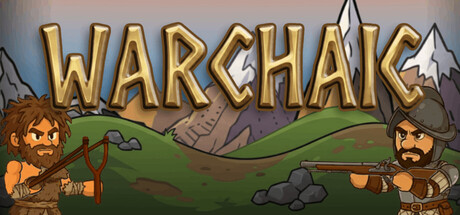
Generative AI was used to assist in the creation of some visual assets, UI elements, sound effects, and music featured in Warchaic. Software development was handled by our development team, while animations and visual effects (VFX) were either created by our team or sourced from licensed asset packages.
This game uses generative AI tools during development to assist with some content creation, including concept art, visual references, promotional materials, text drafts, and placeholder voice or sound assets. All content used in the game and on the store page is manually reviewed, edited, integrated, and approved by the developer. The game does not use real-time AI generation during gameplay and does not connect to external AI services while the player is playing.
Some of this game's content was created with the assistance of generative AI tools, always under human direction and review. Portions of the painted environment artwork and the store/marketing artwork began as AI-generated images that were then curated, edited, and integrated by hand. The music was generated with a licensed AI music tool, then curated and edited. Nothing is generated by AI while you play — everything you see and hear ships as fixed, human-reviewed content.
Some art assets in the game and on the store page (story character portraits, some icons, backgrounds, and capsule images) were created with AI image generation tools, then manually curated and edited by the developer. All gameplay, code, and written story content is human-made. No AI content is generated at runtime.
Some of the placeholder unit and terrain sprites that I'm using while the game is in development were generated with the help of AI (with a lot of manual curation and editing... I promise that you will not be confronted by any noticeably ugly slop).
Initial sales will contribute toward creating hand-drawn, unique sprites for as many units as possible.
AI was primarily used in two sections of the game. To aid and assist with turning 2d sprites that were created into animated variations of them.
Steam store page pictures use AI to create variants of my logo. The background itself is AI the logo was designed by me and AI was used to adjust it in the photo.
The game is primarily developed using Houdini, VEX and Godot. Generative AI assists with concept/reference artwork, initial 3D asset generation, and programming. Assets are further processed, optimized, rigged and animated in Houdini before integration into the game.
Standard C++ game code, written during development with the assistance of an AI programming assistant, used as a pair-programming tool. This includes gameplay systems (crafting, inventory, world simulation), rendering and UI code, and development tooling. It is ordinary, static game logic.
AI assistance was used only during development, directed by myself through specific requests, with every change reviewed, tested, and committed to version control by myself.
The shipped game contains no AI models and does not execute or generate any code or content via AI at runtime. The game is a fully offline, single-player experience.
Generative AI was used for programming assistance and to create some BGM. The generated music was edited and remastered by the developer. All visual assets were created manually without generative AI. No live-generated AI is used during gameplay.
During development we used generative AI tools to create the some of this game's assets. This includes 2D art and audios. All AI-generated assets were produced during development, reviewed by us, and ship as fixed files in the build. Some were hand-edited, recoloured, composited or retimed afterwards. Game code, design, writing and dialogue are authored by us.
Generative AI was used to create portions of the promotional trailer. The game itself does not contain AI-generated 3D assets; its 3D assets are commercially licensed assets.
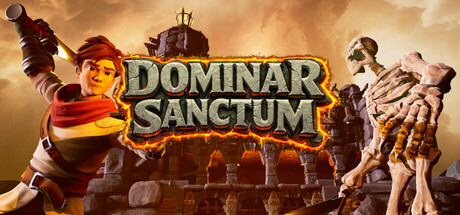
The vast majority of Dominar Sanctum has been created and developed without generative AI. Generative AI has only been used selectively for a small number of 2D icons, slide narration and a narrative voiceover, primarily for early prototyping and development. Even those icons have been manually reworked.
These few AI-assisted assets are not representative of the game's overall art, design, programming, or development process. They may be replaced or further refined before the full release.
Certain visual assets incorporated into the final product were subject to a multi-stage development, revision, and production process involving, at intermediate stages of asset preparation, generative AI-assisted material, together with subsequent developer-directed editing, alteration, reconstruction, and final implementation.
Pixel art assets (characters, monsters, bosses, projectiles, spirits, tiles) were created with PixelLab, an AI pixel-art tool, and then edited by hand to fit the game. No AI is used at runtime. All code, game design, sound effects and music are human-authored (audio is synthesized in code).
All artwork (characters, monsters, environments, visual effects) and much of the game's code were created with generative AI tools. No content is AI-generated while the game runs.
This game was developed with the assistance of generative AI tools. Some graphical assets were created using AI and then reviewed, edited, and integrated by the developer. AI tools were also used to assist with writing code. All game design, gameplay mechanics, and final content decisions were made by the developer. The game does not generate AI content at runtime.
Some artwork and visual assets in this game were created with the assistance of generative AI tools during development. All such content was reviewed, edited, and integrated into the game by the developer.
This game uses generative AI tools in the creation of some of its pre-rendered content, including parts of its artwork and store page assets. All AI-assisted material was reviewed, edited, and approved by the development team before being included in the final product. No content is generated by AI during gameplay, and the game does not connect to any external AI service while running.
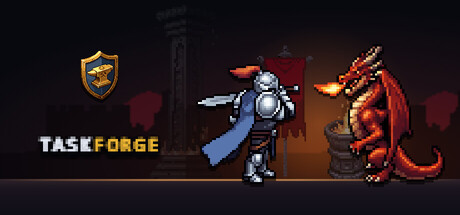
The pixel art in Taskforge — character and enemy sprites, animation frames, item and UI icons, scenery pieces and the game's emblem — was produced with the help of an AI image generation tool during development. Every generated asset was reviewed, selected, edited and assembled by hand, and ships as a fixed image file. Nothing is generated while you play: the game contains only static assets and never calls an AI service at runtime. Code, game design, balance data and all written text were made by the developer.
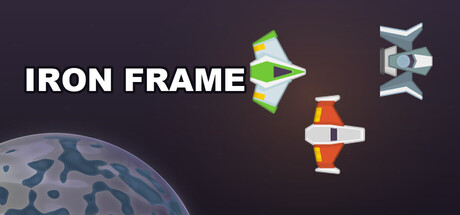
All art, sound and music in Iron Frame are human-made. The sprites and sound
effects are CC0 assets by Kenney, the music is CC0 work by nene, and the store
capsules are composed from those same sprites — nothing you see or hear was
generated by AI.
Generative AI was used as a writing assistant for some in-game text: weapon,
frame and enemy names and their one-line descriptions, and this store page.
Everything was reviewed and edited by the developer, and no content is generated
while you play.
During development, generative tools were used for selected textures and supporting visual elements in the game and store artwork. These assets were reviewed and integrated by the developer. All content is fixed in the shipped game; nothing is generated during gameplay.
Generative AI tools were used during development to assist in creating some pre-generated promotional artwork and 2D art assets. No AI-generated content is created during gameplay.
This game includes AI-generated voice performances for certain characters. Players have the option to disable AI-generated voices in the game settings. During development, AI-assisted tools were also used as part of the concept and reference creation process for some visual assets. Final in-game artwork has been substantially modified or created by the development team and is not presented as raw AI-generated content.
Some of this game's pre-generated assets were created by Meridian Studios using generative AI tools, from our own prompts and under our licenses: 2D art (illustrations, backgrounds, character and enemy tokens, icons, and store art) generated with FLUX via the Replicate API, and a portion of the sound effects generated with ElevenLabs. All AI-assisted assets were reviewed, curated, and integrated by the studio. No AI-generated content is produced live during gameplay, and no player data is sent to any AI service.
Generative AI tools were utilized for auxiliary purposes in the production of some assets. These assets were modified and supplemented by professional art personnel and were finally applied to the game.
All shipped assets are first-party or CC0/OFL-licensed human-made packs. Some 3D
meshes (enemy armor fused onto CC0 base rigs, the drone, weapon models) and the
entire soundtrack are produced by deterministic, first-party procedural build
scripts; those scripts were written with the help of an AI code assistant. No
image-, audio- or voice-generation model produced any shipped asset. The game's
written text — squad comms, item and mission descriptions, narrative screens —
and this store page's copy were drafted with AI assistance under developer
direction, then reviewed and edited by the developer. The game contains no
runtime or live AI generation.
Generative AI tools were used during development to assist with programming and in the creation of certain pre-generated game assets. All AI-assisted content was reviewed, selected, edited when necessary, and manually integrated by the developer. No AI-generated content is produced in real time during gameplay.
Portions of the in-game codex (character biographies, historical battle summaries) were drafted with the assistance of a large language model based on the developer's own lore notes and edited by hand. A subset of pixel-art tile and prop textures were procedurally generated from developer-written Python scripts. All content is reviewed and finalized by the developer; no generative image models (e.g. Stable Diffusion, Midjourney) were used to produce in-game art.
This game makes extensive use of generative AI in the creation of most game assets, including 3D modeling, voice, sound, video, images, textures, scenario and narrative writing, and translation/localization. As a result, various content and assets included in the game may be generated or assisted using generative AI.
### Use of Generative Artificial Intelligence
During the development of this game, I used generative artificial intelligence tools to assist me with various aspects of its creation.
AI was mainly used to create and/or improve certain visual elements of the game, including images and PNG files used in different graphical elements.
It also assisted me in creating the game’s trailer, as well as with certain scripts and technical elements that were particularly complex to implement. In these situations, AI was used as an assistance tool to help me develop, adapt, and finalize certain elements.
The use of artificial intelligence does not mean that the game was entirely created by AI. The game’s design, artistic direction, gameplay, development, and final integration of the different elements were carried out and supervised by me.
I want to be transparent with players regarding the use of these technologies in the creation of the game.
AI was used in the coding and content creation for this game. That should not take away from this project the thousands of hours spent on its creation, honing and reshaping its style, direction and gameplay which was all done by a human.
Generative AI was used to assist in the creation of some visual assets, UI elements, sound effects, and music featured in Warchaic. Software development was handled by our development team, while animations and visual effects (VFX) were either created by our team or sourced from licensed asset packages.
This game uses generative AI tools during development to assist with some content creation, including concept art, visual references, promotional materials, text drafts, and placeholder voice or sound assets. All content used in the game and on the store page is manually reviewed, edited, integrated, and approved by the developer. The game does not use real-time AI generation during gameplay and does not connect to external AI services while the player is playing.
Some of this game's content was created with the assistance of generative AI tools, always under human direction and review. Portions of the painted environment artwork and the store/marketing artwork began as AI-generated images that were then curated, edited, and integrated by hand. The music was generated with a licensed AI music tool, then curated and edited. Nothing is generated by AI while you play — everything you see and hear ships as fixed, human-reviewed content.
Some art assets in the game and on the store page (story character portraits, some icons, backgrounds, and capsule images) were created with AI image generation tools, then manually curated and edited by the developer. All gameplay, code, and written story content is human-made. No AI content is generated at runtime.
Some of the placeholder unit and terrain sprites that I'm using while the game is in development were generated with the help of AI (with a lot of manual curation and editing... I promise that you will not be confronted by any noticeably ugly slop).
Initial sales will contribute toward creating hand-drawn, unique sprites for as many units as possible.
AI was primarily used in two sections of the game. To aid and assist with turning 2d sprites that were created into animated variations of them.
Steam store page pictures use AI to create variants of my logo. The background itself is AI the logo was designed by me and AI was used to adjust it in the photo.
The game is primarily developed using Houdini, VEX and Godot. Generative AI assists with concept/reference artwork, initial 3D asset generation, and programming. Assets are further processed, optimized, rigged and animated in Houdini before integration into the game.
Standard C++ game code, written during development with the assistance of an AI programming assistant, used as a pair-programming tool. This includes gameplay systems (crafting, inventory, world simulation), rendering and UI code, and development tooling. It is ordinary, static game logic.
AI assistance was used only during development, directed by myself through specific requests, with every change reviewed, tested, and committed to version control by myself.
The shipped game contains no AI models and does not execute or generate any code or content via AI at runtime. The game is a fully offline, single-player experience.
Generative AI was used for programming assistance and to create some BGM. The generated music was edited and remastered by the developer. All visual assets were created manually without generative AI. No live-generated AI is used during gameplay.
During development we used generative AI tools to create the some of this game's assets. This includes 2D art and audios. All AI-generated assets were produced during development, reviewed by us, and ship as fixed files in the build. Some were hand-edited, recoloured, composited or retimed afterwards. Game code, design, writing and dialogue are authored by us.
Generative AI was used to create portions of the promotional trailer. The game itself does not contain AI-generated 3D assets; its 3D assets are commercially licensed assets.
The vast majority of Dominar Sanctum has been created and developed without generative AI. Generative AI has only been used selectively for a small number of 2D icons, slide narration and a narrative voiceover, primarily for early prototyping and development. Even those icons have been manually reworked.
These few AI-assisted assets are not representative of the game's overall art, design, programming, or development process. They may be replaced or further refined before the full release.
Certain visual assets incorporated into the final product were subject to a multi-stage development, revision, and production process involving, at intermediate stages of asset preparation, generative AI-assisted material, together with subsequent developer-directed editing, alteration, reconstruction, and final implementation.
Pixel art assets (characters, monsters, bosses, projectiles, spirits, tiles) were created with PixelLab, an AI pixel-art tool, and then edited by hand to fit the game. No AI is used at runtime. All code, game design, sound effects and music are human-authored (audio is synthesized in code).
All artwork (characters, monsters, environments, visual effects) and much of the game's code were created with generative AI tools. No content is AI-generated while the game runs.
This game was developed with the assistance of generative AI tools. Some graphical assets were created using AI and then reviewed, edited, and integrated by the developer. AI tools were also used to assist with writing code. All game design, gameplay mechanics, and final content decisions were made by the developer. The game does not generate AI content at runtime.
Some artwork and visual assets in this game were created with the assistance of generative AI tools during development. All such content was reviewed, edited, and integrated into the game by the developer.
This game uses generative AI tools in the creation of some of its pre-rendered content, including parts of its artwork and store page assets. All AI-assisted material was reviewed, edited, and approved by the development team before being included in the final product. No content is generated by AI during gameplay, and the game does not connect to any external AI service while running.
The pixel art in Taskforge — character and enemy sprites, animation frames, item and UI icons, scenery pieces and the game's emblem — was produced with the help of an AI image generation tool during development. Every generated asset was reviewed, selected, edited and assembled by hand, and ships as a fixed image file. Nothing is generated while you play: the game contains only static assets and never calls an AI service at runtime. Code, game design, balance data and all written text were made by the developer.
All art, sound and music in Iron Frame are human-made. The sprites and sound
effects are CC0 assets by Kenney, the music is CC0 work by nene, and the store
capsules are composed from those same sprites — nothing you see or hear was
generated by AI.
Generative AI was used as a writing assistant for some in-game text: weapon,
frame and enemy names and their one-line descriptions, and this store page.
Everything was reviewed and edited by the developer, and no content is generated
while you play.
During development, generative tools were used for selected textures and supporting visual elements in the game and store artwork. These assets were reviewed and integrated by the developer. All content is fixed in the shipped game; nothing is generated during gameplay.
Generative AI tools were used during development to assist in creating some pre-generated promotional artwork and 2D art assets. No AI-generated content is created during gameplay.
This game includes AI-generated voice performances for certain characters. Players have the option to disable AI-generated voices in the game settings. During development, AI-assisted tools were also used as part of the concept and reference creation process for some visual assets. Final in-game artwork has been substantially modified or created by the development team and is not presented as raw AI-generated content.
Some of this game's pre-generated assets were created by Meridian Studios using generative AI tools, from our own prompts and under our licenses: 2D art (illustrations, backgrounds, character and enemy tokens, icons, and store art) generated with FLUX via the Replicate API, and a portion of the sound effects generated with ElevenLabs. All AI-assisted assets were reviewed, curated, and integrated by the studio. No AI-generated content is produced live during gameplay, and no player data is sent to any AI service.
Generative AI tools were utilized for auxiliary purposes in the production of some assets. These assets were modified and supplemented by professional art personnel and were finally applied to the game.
All shipped assets are first-party or CC0/OFL-licensed human-made packs. Some 3D
meshes (enemy armor fused onto CC0 base rigs, the drone, weapon models) and the
entire soundtrack are produced by deterministic, first-party procedural build
scripts; those scripts were written with the help of an AI code assistant. No
image-, audio- or voice-generation model produced any shipped asset. The game's
written text — squad comms, item and mission descriptions, narrative screens —
and this store page's copy were drafted with AI assistance under developer
direction, then reviewed and edited by the developer. The game contains no
runtime or live AI generation.
Generative AI tools were used during development to assist with programming and in the creation of certain pre-generated game assets. All AI-assisted content was reviewed, selected, edited when necessary, and manually integrated by the developer. No AI-generated content is produced in real time during gameplay.
Portions of the in-game codex (character biographies, historical battle summaries) were drafted with the assistance of a large language model based on the developer's own lore notes and edited by hand. A subset of pixel-art tile and prop textures were procedurally generated from developer-written Python scripts. All content is reviewed and finalized by the developer; no generative image models (e.g. Stable Diffusion, Midjourney) were used to produce in-game art.
This game makes extensive use of generative AI in the creation of most game assets, including 3D modeling, voice, sound, video, images, textures, scenario and narrative writing, and translation/localization. As a result, various content and assets included in the game may be generated or assisted using generative AI.