Public Steam disclosure research25,383 disclosures tracked
Where do games disclose AI use?
Search developers’ Steam disclosures, compare classified AI use across
games, and follow recorded changes.
This index adds cross-game classifications and statistics to
statements published on individual store pages.
Groups reflect automatic analysis of public disclosures; mature records are excluded. These counts do not measure AI use across all of Steam.
Missing or unclear statements cannot establish whether a game uses AI.
Artificial intelligence was used in the game to process different processes for each player. Each player’s choices will shape how the game unfolds. In other words, the game’s Artificial Intelligence will produce different results each time.
AI was used to create the images, but the character sprites were redrawn by artist, and the backgrounds were edited in a graphics editor. To create the music, AI was used as a reference, and then the composer created his tracks based on it.
We use AI in early conceptual design, to figure out an appropriate background art. We then go through several iterations manually with artist modifications, to produce a good, highly polished background that gels well with our characters, story and intended art style.
Our characters are hand drawn by humans.
Our objects are hand drawn by humans.
All user interface (UI) elements are hand drawn by humans.
All animations are hand drawn and meticulously rigged (also by humans) using bone animation.
We have utilized AI-assisted design for the store materials and some 2D background images within the game. However, these are not purely AI-generated; they are based on our original photographs that were enhanced using AI technology, and subsequently refined manually to ensure quality.
"Some of the textures used in the game were created using AI-generation tools. However, these assets have been manually edited, refined, and integrated to fit the game's design."
We use AI in early conceptual design, to figure out an appropriate background art. We then go through several iterations manually with artist modifications, to produce a good, highly polished background that gels well with our characters, story and intended art style.
Our characters are hand drawn by humans.
Our objects are hand drawn by humans.
All user interface (UI) elements are hand drawn by humans.
All animations are hand drawn and meticulously rigged (also by humans) using bone animation.
Some of the visuals in this game were created with the help of AI-based tools to speed up the art process and visualize ideas more efficiently.
However, all final designs were edited, refined, and color-corrected by artists to match the game tone and atmosphere.
The goal was never to let AI make the art, but to use it as a creative tool like an extra brush in the process.
Artificial intelligence was used during the pre-production phase to assist in concept design, reference generation, and the creation of a few 3D models and textures.
No AI-generated content is created or modified during gameplay, and players do not directly interact with any AI systems within the game.
Echoes of the Rest uses AI to enhance the player experience. AI is used to generate in-game character voices, environmental textures, and certain narrative elements, making each playthrough feel dynamic and immersive.
Some visual, audio, and writing assets in this game were created with the help of generative AI tools during development. Every AI-assisted element was carefully reviewed, manually edited, and significantly refined by the development team before being added to the final game or its marketing materials. No AI systems generate or alter content while the game is running.
I utilized generative artificial intelligence (AI) tools during the development of this game. The specific applications are as follows:
Art & Visual Assets: Generative AI was used to create a portion of the in-game images, textures, and visual concept art. All such assets were subsequently refined and optimized manually.
Music & Sound Effects: Certain background music and audio assets were generated using AI tools to enhance the overall auditory experience.
Programming & Development: AI-generated code snippets were integrated into the development process, and AI tools were utilized to assist in code optimization and troubleshooting of game logic.
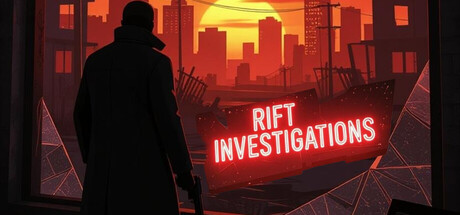
Rift Investigations uses AI in three core ways: First, every mystery case is procedurally generated by AI,
creating unique investigations with original characters, clues, and solutions—no two cases are ever the same.
Second, you can interrogate NPCs using natural language questions; an AI system generates contextual, believable
responses based on what each character knows and their relationship to the crime. Third, all character portraits
and location backgrounds are AI-generated to visually bring each procedurally-created case to life. The power of AI enables infinite replayability
with genuinely different detective stories each time you play.
We use AI in early conceptual design, to figure out an appropriate background art. We then go through several iterations manually with artist modifications, to produce a good, highly polished background that gels well with our characters, story and intended art style.
Our characters are hand drawn by humans.
Our objects are hand drawn by humans.
All user interface (UI) elements are hand drawn by humans.
All animations are hand drawn and meticulously rigged (also by humans) using bone animation.
There is an optional 100% local and open source AI to create an antagonistic voice taunting the player based on their actions, which can be disabled entirely.
We use AI in early conceptual design, to figure out an appropriate background art. We then go through several iterations manually with artist modifications, to produce a good, highly polished background that gels well with our characters, story and intended art style.
Our characters are hand drawn by humans.
Our objects are hand drawn by humans.
All user interface (UI) elements are hand drawn by humans.
All animations are hand drawn and meticulously rigged (also by humans) using bone animation.
During the development of this game, we used generative AI tools to assist in creating two types of core content: first, game-related graphical materials, including capsule images required for store promotion (such as Header Capsule, Small Capsule, etc.), in-game scene illustrations, character design reference images, and other visual assets; second, game audio materials, including background music for scenes, operational interaction sound effects, and other musical content. All AI-generated materials have undergone screening, modification, and compliance review by the development team to ensure they meet Steam's graphical asset rules and content guidelines. The final presentation is highly consistent with the game's overall style and core gameplay, and does not involve any non-compliant or infringing content.
Some visual and audio assets in Somnolence were created or enhanced using AI-assisted tools during development, such as generative image and voice synthesis software.
All content has been manually reviewed, edited, and integrated by the developer to fit the game’s narrative and aesthetic design.
The game itself does not generate or modify content in real time.
Artificial intelligence (AI) was leveraged for key aspects of the game's development, including in-game logic, support systems, and certain artistic assets.
As a solo developer, I've used AI to generate a number of 3d models, textures, and images. Most have been modified after their generation to some extent.
This game may include some visual art or background music created with generative AI tools for prototyping purposes. All assets were reviewed, edited, and curated by the developer, and to the best of our knowledge contain no copyrighted or protected third-party material. No user-generated or live AI content is created while the game is running.
The developer describes how their game utilizes AI-generated content as follows:
Here’s how I use AI in this game: to generate images, music, and sound effects—mainly these three.
This game uses generative AI tools to create pre-rendered content during development, specifically applied in the following aspects:
Art assets: Scene concept art, character design sketches, and basic UI icon materials. All AI-generated visual content has undergone manual review, modification, and optimization to ensure consistent style and no infringement risks.
Marketing and community assets: Some background images on the store page, auxiliary elements of promotional posters, and non-core visual materials for community sharing, all complying with Steam's content guidelines.
Development assistance: Prototypes of certain sound effects and initial drafts of code snippets, all of which have passed manual verification and adjustment to ensure functional compliance and stability.
All AI-generated content has undergone strict intellectual property verification to ensure no illegal or infringing information is included, and the actual game presentation is consistent with marketing materials.
This game uses AI-generated images that were created during the development phase (e.g., for backgrounds, characters, or other visual assets). No AI-generated content is created or modified while the game is running.
All AI-generated content complies with Steam Store requirements, and no copyrighted or impersonating material has been used.
This game uses AI-generated images that were created during the development phase (e.g., for backgrounds, characters, or other visual assets). No AI-generated content is created or modified while the game is running.
All AI-generated content complies with Steam Store requirements, and no copyrighted or impersonating material has been used.
This game uses Chat GPT 4o, Gemini 2.0, and Stable Diffusion (Model: AnythingXL) for background drawing, cover backgrounds, some props for compositing, and a small number of character illustrations.
Some visual assets (including capsule art and promotional images) were created
using AI-assisted tools and further refined manually. No AI-generated content
appears in gameplay, and no AI is used during runtime.
Some of the promotional and storefront images were created with AI tools and then refined by hand. All of the in-game assets were designed by a 3D artist.
The core character designs are created manually, but I use AI to refine details and backgrounds. AI is not used to directly generate any in-game content during gameplay. The game’s translation was also done with the help of AI.
Artificial intelligence was used in the game to process different processes for each player. Each player’s choices will shape how the game unfolds. In other words, the game’s Artificial Intelligence will produce different results each time.
AI was used to create the images, but the character sprites were redrawn by artist, and the backgrounds were edited in a graphics editor. To create the music, AI was used as a reference, and then the composer created his tracks based on it.
We use AI in early conceptual design, to figure out an appropriate background art. We then go through several iterations manually with artist modifications, to produce a good, highly polished background that gels well with our characters, story and intended art style.
Our characters are hand drawn by humans.
Our objects are hand drawn by humans.
All user interface (UI) elements are hand drawn by humans.
All animations are hand drawn and meticulously rigged (also by humans) using bone animation.
We have utilized AI-assisted design for the store materials and some 2D background images within the game. However, these are not purely AI-generated; they are based on our original photographs that were enhanced using AI technology, and subsequently refined manually to ensure quality.
"Some of the textures used in the game were created using AI-generation tools. However, these assets have been manually edited, refined, and integrated to fit the game's design."
We use AI in early conceptual design, to figure out an appropriate background art. We then go through several iterations manually with artist modifications, to produce a good, highly polished background that gels well with our characters, story and intended art style.
Our characters are hand drawn by humans.
Our objects are hand drawn by humans.
All user interface (UI) elements are hand drawn by humans.
All animations are hand drawn and meticulously rigged (also by humans) using bone animation.
Some of the visuals in this game were created with the help of AI-based tools to speed up the art process and visualize ideas more efficiently.
However, all final designs were edited, refined, and color-corrected by artists to match the game tone and atmosphere.
The goal was never to let AI make the art, but to use it as a creative tool like an extra brush in the process.
Artificial intelligence was used during the pre-production phase to assist in concept design, reference generation, and the creation of a few 3D models and textures.
No AI-generated content is created or modified during gameplay, and players do not directly interact with any AI systems within the game.
Echoes of the Rest uses AI to enhance the player experience. AI is used to generate in-game character voices, environmental textures, and certain narrative elements, making each playthrough feel dynamic and immersive.
Some visual, audio, and writing assets in this game were created with the help of generative AI tools during development. Every AI-assisted element was carefully reviewed, manually edited, and significantly refined by the development team before being added to the final game or its marketing materials. No AI systems generate or alter content while the game is running.
I utilized generative artificial intelligence (AI) tools during the development of this game. The specific applications are as follows:
Art & Visual Assets: Generative AI was used to create a portion of the in-game images, textures, and visual concept art. All such assets were subsequently refined and optimized manually.
Music & Sound Effects: Certain background music and audio assets were generated using AI tools to enhance the overall auditory experience.
Programming & Development: AI-generated code snippets were integrated into the development process, and AI tools were utilized to assist in code optimization and troubleshooting of game logic.
Rift Investigations uses AI in three core ways: First, every mystery case is procedurally generated by AI,
creating unique investigations with original characters, clues, and solutions—no two cases are ever the same.
Second, you can interrogate NPCs using natural language questions; an AI system generates contextual, believable
responses based on what each character knows and their relationship to the crime. Third, all character portraits
and location backgrounds are AI-generated to visually bring each procedurally-created case to life. The power of AI enables infinite replayability
with genuinely different detective stories each time you play.
We use AI in early conceptual design, to figure out an appropriate background art. We then go through several iterations manually with artist modifications, to produce a good, highly polished background that gels well with our characters, story and intended art style.
Our characters are hand drawn by humans.
Our objects are hand drawn by humans.
All user interface (UI) elements are hand drawn by humans.
All animations are hand drawn and meticulously rigged (also by humans) using bone animation.
There is an optional 100% local and open source AI to create an antagonistic voice taunting the player based on their actions, which can be disabled entirely.
We use AI in early conceptual design, to figure out an appropriate background art. We then go through several iterations manually with artist modifications, to produce a good, highly polished background that gels well with our characters, story and intended art style.
Our characters are hand drawn by humans.
Our objects are hand drawn by humans.
All user interface (UI) elements are hand drawn by humans.
All animations are hand drawn and meticulously rigged (also by humans) using bone animation.
During the development of this game, we used generative AI tools to assist in creating two types of core content: first, game-related graphical materials, including capsule images required for store promotion (such as Header Capsule, Small Capsule, etc.), in-game scene illustrations, character design reference images, and other visual assets; second, game audio materials, including background music for scenes, operational interaction sound effects, and other musical content. All AI-generated materials have undergone screening, modification, and compliance review by the development team to ensure they meet Steam's graphical asset rules and content guidelines. The final presentation is highly consistent with the game's overall style and core gameplay, and does not involve any non-compliant or infringing content.
Some visual and audio assets in Somnolence were created or enhanced using AI-assisted tools during development, such as generative image and voice synthesis software.
All content has been manually reviewed, edited, and integrated by the developer to fit the game’s narrative and aesthetic design.
The game itself does not generate or modify content in real time.
Artificial intelligence (AI) was leveraged for key aspects of the game's development, including in-game logic, support systems, and certain artistic assets.
As a solo developer, I've used AI to generate a number of 3d models, textures, and images. Most have been modified after their generation to some extent.
This game may include some visual art or background music created with generative AI tools for prototyping purposes. All assets were reviewed, edited, and curated by the developer, and to the best of our knowledge contain no copyrighted or protected third-party material. No user-generated or live AI content is created while the game is running.
The developer describes how their game utilizes AI-generated content as follows:
Here’s how I use AI in this game: to generate images, music, and sound effects—mainly these three.
This game uses generative AI tools to create pre-rendered content during development, specifically applied in the following aspects:
Art assets: Scene concept art, character design sketches, and basic UI icon materials. All AI-generated visual content has undergone manual review, modification, and optimization to ensure consistent style and no infringement risks.
Marketing and community assets: Some background images on the store page, auxiliary elements of promotional posters, and non-core visual materials for community sharing, all complying with Steam's content guidelines.
Development assistance: Prototypes of certain sound effects and initial drafts of code snippets, all of which have passed manual verification and adjustment to ensure functional compliance and stability.
All AI-generated content has undergone strict intellectual property verification to ensure no illegal or infringing information is included, and the actual game presentation is consistent with marketing materials.
This game uses AI-generated images that were created during the development phase (e.g., for backgrounds, characters, or other visual assets). No AI-generated content is created or modified while the game is running.
All AI-generated content complies with Steam Store requirements, and no copyrighted or impersonating material has been used.
This game uses AI-generated images that were created during the development phase (e.g., for backgrounds, characters, or other visual assets). No AI-generated content is created or modified while the game is running.
All AI-generated content complies with Steam Store requirements, and no copyrighted or impersonating material has been used.
This game uses Chat GPT 4o, Gemini 2.0, and Stable Diffusion (Model: AnythingXL) for background drawing, cover backgrounds, some props for compositing, and a small number of character illustrations.
Some visual assets (including capsule art and promotional images) were created
using AI-assisted tools and further refined manually. No AI-generated content
appears in gameplay, and no AI is used during runtime.
Some of the promotional and storefront images were created with AI tools and then refined by hand. All of the in-game assets were designed by a 3D artist.
The core character designs are created manually, but I use AI to refine details and backgrounds. AI is not used to directly generate any in-game content during gameplay. The game’s translation was also done with the help of AI.