Public Steam disclosure research25,383 disclosures tracked
Where do games disclose AI use?
Search developers’ Steam disclosures, compare classified AI use across
games, and follow recorded changes.
This index adds cross-game classifications and statistics to
statements published on individual store pages.
Groups reflect automatic analysis of public disclosures; mature records are excluded. These counts do not measure AI use across all of Steam.
Missing or unclear statements cannot establish whether a game uses AI.
HaddyForge utilizes PixelLab AI as part of our development workflow to assist with the prototyping and production of select pixel-art sprites, character concepts, and animation frames.
AI-assisted output is primarily used as a starting point for development and is not typically considered game-ready in its initial form. Assets are reviewed, refined, edited, and iterated upon by the developer using PixelLab, Aseprite, and our broader pixel-art workflow until they meet the visual, animation, and technical requirements of the game.
As an independent studio combining pixel-art creation and software development, HaddyForge uses AI-assisted tools to accelerate experimentation and prototyping while maintaining direct creative control over the final assets included in the game.
AI-assisted development tools have also been used during software development to help review and iterate on game systems, identify potential bugs, improve testing, and increase development efficiency. All resulting game systems and implementations are reviewed, tested, and integrated by the developer before release.
Generative AI tools were used to assist with store page text localization and marketing copy drafts. All content was reviewed and edited by the developer before publication.
We have AI placeholders for audio and visual 2D placements (i.e logo, 2D art). The rest of assets are purchased through Unity or hand made as of writing this (8/14/2026)
I used generative AI in the process of creating most art/visual assets in Trouble Shooters, with touch ups made after generation. Music and sound effects were either composed without the use of generative AI or sourced from sound libraries that predate generative AI workflows. Nothing is generated on-the-fly.
Generative AI tools were used during development to assist in creating and refining some pre-generated 2D artwork and Steam store marketing assets. All AI-assisted content was reviewed and edited by the development team. The game does not generate AI content during gameplay.
Character portrait artwork in the optional modern art mode was created using generative AI tools (ChatGPT) during development. All gameplay code, world design, systems, and the retro art mode are hand-made.
Generative AI tools were used during development to assist in creating various game assets, including visual assets, UI elements, and some audio content. All AI-assisted content was reviewed, selected, and integrated by the developer as part of the game's overall creative direction. The game does not use generative AI to create content in real time during gameplay.
We use generative AI across all disciplines of game development with heavy amounts of human editing. That involves audio and visual art. We use it as a productivity tool so we can achieve a higher level of quality, faster, than we would have been able to.
Some images and translations used in the game and its marketing materials were created or assisted using generative AI tools only when necessary. The majority of the assets were created by human artists and contributors. All AI-assisted content was reviewed and integrated by the development team before inclusion.
We used AI image-generation tools to help create some 2D art assets in the game, such as in-game banners, posters, and signage. All AI-assisted content was reviewed and edited by the developer.
Some visual assets, audio, voice-over and cinematic elements were created with the assistance of generative AI tools, then selected, edited, refined and integrated by the developer. No generative AI is used live during gameplay.
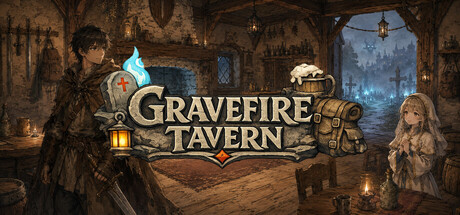
This game contains pre-generated 2D artwork and source code created with ChatGPT during development. All game source code was generated with ChatGPT, then reviewed, tested, debugged, and integrated by the developer. The artwork was generated from original prompts written for Gravefire Tavern, then reviewed, selected, edited, composited, cropped, and integrated by the developer. No generative AI runs during gameplay, and no player input is sent to an AI service.
Some 2D‑art assets in this game are created with the assistance of generative‑AI tools. These assets have been filtered, edited, composited and manually reviewed by the developer before being used in‑game. The game does not perform real‑time content generation based on player input during runtime, nor does it send any player input to generative‑AI services.
Text content only, all pre-generated during development and reviewed by the developer. AI assistance was used to write the in-game story text, the user interface translations for the 8 supported languages, the achievement names and descriptions, and the store page copy. Nothing is generated live at runtime and the game does not connect to any AI service. Art, sprites, capsule images, icons and the soundtrack are NOT AI-generated: they are produced by procedural scripts written by the developer and included in the project source.
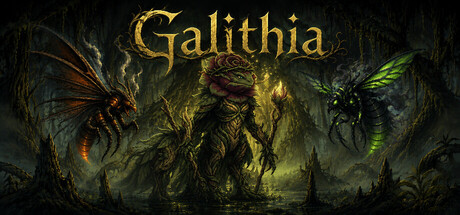
Galithia uses generative AI during development for some concepting, visual iteration, and content support. Any AI-assisted assets or materials are reviewed, modified, and integrated by the developer, with final approval and creative direction remaining fully human-led. Gameplay systems, combat balance, encounter design, and final implementation are developer-controlled.
Generative AI was used to create artwork for the in-game How to Play instructional image. All other game artwork and visual assets were created by the developer.
Generative AI tools were used during development to assist with programming and to create some pre-generated 2D visual assets, including icons and promotional artwork. All AI-assisted code and generated assets were reviewed, tested, edited, and integrated by the developer. No generative AI is used while the game is running, and no content is generated live.
Portions of this game's code were written with the assistance of an AI coding tool, working under the developer's direction, with all output reviewed, tested, and integrated by hand. All artwork, animation, music, and sound effects are human-created licensed assets — no AI-generated art or audio is used. The game does not generate any content with AI at runtime; computer opponents use traditional hand-written game logic.
We integrate artificial intelligence solely as a creative assistance tool during pre-production and artistic exploration phases.
Specifically, we use image generators to produce preliminary concept art, explore different visual directions, and accelerate iteration on our graphic ideas.
AI serves only as a source of inspiration, while the entire final content is fully created, curated, and refined by our human team.
Generated images are never used as-is in the final product.
Every visual element in the game (textures, characters, environments, illustrations, etc.) is recreated, retouched, painted, recomposed, or manually validated by our artists to ensure:
originality of the content,
respect for copyright,
artistic consistency,
and compliance with Steam/Valve guidelines.
AI does not contribute to the generation of final assets, 3D models, animations, sounds, or any other elements directly integrated into the game.
Its role is strictly limited to providing visual references, aesthetic guidance, and starting points to help our team work more efficiently.
This approach allows us to maintain a strong and authentic artistic identity while benefiting from a more fluid, inspiring, and innovative creation process — directly reflected in the quality, coherence, and originality of our game.
Some pre-rendered assets were created with the assistance of generative AI tools during development: the key art illustration, the store capsule images derived from it, and parts of the localization (translated interface text). All AI-assisted content was reviewed and curated by the developer. The game does not generate any content with AI at runtime.
Generative AI tools were used during development to assist with code and selected pre-generated game and marketing content. All shipped content was reviewed by the developer. No AI content is generated during gameplay.
I have used generative AI tools to assist in the creation of the character Elara's artwork for the capsule and for the in-game voiceover. All other aspects of the game are entirely handmade. No generative AI is used during gameplay.
Some visual assets, music, sound effects, and text used in this game and its Steam store page were created or assisted by generative AI. All AI-generated content has been reviewed, edited, and integrated by the developer to ensure it meets the artistic vision and quality standards of the game.
A large portion of visual art assets in this game are produced with generative AI tools during the development phase, including all in-game character portraits & character sprites, UI panels, functional icons, decorative interface elements, scene backgrounds, environment illustrations and promotional store page artwork.
All AI-generated draft materials have been comprehensively manually revised, redrawn, style unified, technically trimmed and fully copyright compliance verified by our internal professional art team before being packaged into the final released build.
There is NO real-time, runtime AI content generation function activated while players are running the game. All AI-assisted content is fixed pre-rendered static assets only.
A solo dev made this game. Some of the art was created or refined with AI tools; the design, code, UI, music (using fruit loops), writing, and everything the game actually does are hand-built.
Generative AI tools were used during development to create initial concepts for background music tracks and 2D loading screen artwork. These concepts were heavily reworked, re-edited, and finalized by human artists before being integrated as static files into the game build.
Players who prefer a completely traditional experience can completely disable all AI-assisted art and music via a toggle in the game's settings menu.
This game does not use any real-time or live generative AI. No content is generated dynamically during gameplay.
We used AI tools (such as ChatGPT) to assist with game descriptions, promotional materials, and conceptual design. No AI is used in real-time gameplay or for generating assets during gameplay. All in-game content is manually crafted or pre-created.
AI tools were used during development to assist with the creation of certain 2D visual assets. Specifically, AI was used to generate some images used on the Steam store page and to assist in creating character portrait artwork used in the game. These AI-generated assets were reviewed and incorporated into the final game by the development team.
During development, we used procedural and AI-assisted tools to analyze, merge, refine, and polish systems that were originally developed through years of our own experimentation, iteration, and hands-on exploration. These tools accelerated implementation and helped unify complex ideas beyond what would have been practical through manual development alone, while the underlying concepts, creative direction, design decisions, and final implementation remain the work of our development team.
HaddyForge utilizes PixelLab AI as part of our development workflow to assist with the prototyping and production of select pixel-art sprites, character concepts, and animation frames.
AI-assisted output is primarily used as a starting point for development and is not typically considered game-ready in its initial form. Assets are reviewed, refined, edited, and iterated upon by the developer using PixelLab, Aseprite, and our broader pixel-art workflow until they meet the visual, animation, and technical requirements of the game.
As an independent studio combining pixel-art creation and software development, HaddyForge uses AI-assisted tools to accelerate experimentation and prototyping while maintaining direct creative control over the final assets included in the game.
AI-assisted development tools have also been used during software development to help review and iterate on game systems, identify potential bugs, improve testing, and increase development efficiency. All resulting game systems and implementations are reviewed, tested, and integrated by the developer before release.
Generative AI tools were used to assist with store page text localization and marketing copy drafts. All content was reviewed and edited by the developer before publication.
We have AI placeholders for audio and visual 2D placements (i.e logo, 2D art). The rest of assets are purchased through Unity or hand made as of writing this (8/14/2026)
I used generative AI in the process of creating most art/visual assets in Trouble Shooters, with touch ups made after generation. Music and sound effects were either composed without the use of generative AI or sourced from sound libraries that predate generative AI workflows. Nothing is generated on-the-fly.
Generative AI tools were used during development to assist in creating and refining some pre-generated 2D artwork and Steam store marketing assets. All AI-assisted content was reviewed and edited by the development team. The game does not generate AI content during gameplay.
Character portrait artwork in the optional modern art mode was created using generative AI tools (ChatGPT) during development. All gameplay code, world design, systems, and the retro art mode are hand-made.
Generative AI tools were used during development to assist in creating various game assets, including visual assets, UI elements, and some audio content. All AI-assisted content was reviewed, selected, and integrated by the developer as part of the game's overall creative direction. The game does not use generative AI to create content in real time during gameplay.
We use generative AI across all disciplines of game development with heavy amounts of human editing. That involves audio and visual art. We use it as a productivity tool so we can achieve a higher level of quality, faster, than we would have been able to.
Some images and translations used in the game and its marketing materials were created or assisted using generative AI tools only when necessary. The majority of the assets were created by human artists and contributors. All AI-assisted content was reviewed and integrated by the development team before inclusion.
We used AI image-generation tools to help create some 2D art assets in the game, such as in-game banners, posters, and signage. All AI-assisted content was reviewed and edited by the developer.
Some visual assets, audio, voice-over and cinematic elements were created with the assistance of generative AI tools, then selected, edited, refined and integrated by the developer. No generative AI is used live during gameplay.
This game contains pre-generated 2D artwork and source code created with ChatGPT during development. All game source code was generated with ChatGPT, then reviewed, tested, debugged, and integrated by the developer. The artwork was generated from original prompts written for Gravefire Tavern, then reviewed, selected, edited, composited, cropped, and integrated by the developer. No generative AI runs during gameplay, and no player input is sent to an AI service.
Some 2D‑art assets in this game are created with the assistance of generative‑AI tools. These assets have been filtered, edited, composited and manually reviewed by the developer before being used in‑game. The game does not perform real‑time content generation based on player input during runtime, nor does it send any player input to generative‑AI services.
Text content only, all pre-generated during development and reviewed by the developer. AI assistance was used to write the in-game story text, the user interface translations for the 8 supported languages, the achievement names and descriptions, and the store page copy. Nothing is generated live at runtime and the game does not connect to any AI service. Art, sprites, capsule images, icons and the soundtrack are NOT AI-generated: they are produced by procedural scripts written by the developer and included in the project source.
Galithia uses generative AI during development for some concepting, visual iteration, and content support. Any AI-assisted assets or materials are reviewed, modified, and integrated by the developer, with final approval and creative direction remaining fully human-led. Gameplay systems, combat balance, encounter design, and final implementation are developer-controlled.
Generative AI was used to create artwork for the in-game How to Play instructional image. All other game artwork and visual assets were created by the developer.
Generative AI tools were used during development to assist with programming and to create some pre-generated 2D visual assets, including icons and promotional artwork. All AI-assisted code and generated assets were reviewed, tested, edited, and integrated by the developer. No generative AI is used while the game is running, and no content is generated live.
Portions of this game's code were written with the assistance of an AI coding tool, working under the developer's direction, with all output reviewed, tested, and integrated by hand. All artwork, animation, music, and sound effects are human-created licensed assets — no AI-generated art or audio is used. The game does not generate any content with AI at runtime; computer opponents use traditional hand-written game logic.
We integrate artificial intelligence solely as a creative assistance tool during pre-production and artistic exploration phases.
Specifically, we use image generators to produce preliminary concept art, explore different visual directions, and accelerate iteration on our graphic ideas.
AI serves only as a source of inspiration, while the entire final content is fully created, curated, and refined by our human team.
Generated images are never used as-is in the final product.
Every visual element in the game (textures, characters, environments, illustrations, etc.) is recreated, retouched, painted, recomposed, or manually validated by our artists to ensure:
originality of the content,
respect for copyright,
artistic consistency,
and compliance with Steam/Valve guidelines.
AI does not contribute to the generation of final assets, 3D models, animations, sounds, or any other elements directly integrated into the game.
Its role is strictly limited to providing visual references, aesthetic guidance, and starting points to help our team work more efficiently.
This approach allows us to maintain a strong and authentic artistic identity while benefiting from a more fluid, inspiring, and innovative creation process — directly reflected in the quality, coherence, and originality of our game.
Some pre-rendered assets were created with the assistance of generative AI tools during development: the key art illustration, the store capsule images derived from it, and parts of the localization (translated interface text). All AI-assisted content was reviewed and curated by the developer. The game does not generate any content with AI at runtime.
Generative AI tools were used during development to assist with code and selected pre-generated game and marketing content. All shipped content was reviewed by the developer. No AI content is generated during gameplay.
I have used generative AI tools to assist in the creation of the character Elara's artwork for the capsule and for the in-game voiceover. All other aspects of the game are entirely handmade. No generative AI is used during gameplay.
Some visual assets, music, sound effects, and text used in this game and its Steam store page were created or assisted by generative AI. All AI-generated content has been reviewed, edited, and integrated by the developer to ensure it meets the artistic vision and quality standards of the game.
A large portion of visual art assets in this game are produced with generative AI tools during the development phase, including all in-game character portraits & character sprites, UI panels, functional icons, decorative interface elements, scene backgrounds, environment illustrations and promotional store page artwork.
All AI-generated draft materials have been comprehensively manually revised, redrawn, style unified, technically trimmed and fully copyright compliance verified by our internal professional art team before being packaged into the final released build.
There is NO real-time, runtime AI content generation function activated while players are running the game. All AI-assisted content is fixed pre-rendered static assets only.
A solo dev made this game. Some of the art was created or refined with AI tools; the design, code, UI, music (using fruit loops), writing, and everything the game actually does are hand-built.
Generative AI tools were used during development to create initial concepts for background music tracks and 2D loading screen artwork. These concepts were heavily reworked, re-edited, and finalized by human artists before being integrated as static files into the game build.
Players who prefer a completely traditional experience can completely disable all AI-assisted art and music via a toggle in the game's settings menu.
This game does not use any real-time or live generative AI. No content is generated dynamically during gameplay.
We used AI tools (such as ChatGPT) to assist with game descriptions, promotional materials, and conceptual design. No AI is used in real-time gameplay or for generating assets during gameplay. All in-game content is manually crafted or pre-created.
AI tools were used during development to assist with the creation of certain 2D visual assets. Specifically, AI was used to generate some images used on the Steam store page and to assist in creating character portrait artwork used in the game. These AI-generated assets were reviewed and incorporated into the final game by the development team.
During development, we used procedural and AI-assisted tools to analyze, merge, refine, and polish systems that were originally developed through years of our own experimentation, iteration, and hands-on exploration. These tools accelerated implementation and helped unify complex ideas beyond what would have been practical through manual development alone, while the underlying concepts, creative direction, design decisions, and final implementation remain the work of our development team.