Public Steam disclosure research25,376 disclosures tracked
Where do games disclose AI use?
Search developers’ Steam disclosures, compare classified AI use across
games, and follow recorded changes.
This index adds cross-game classifications and statistics to
statements published on individual store pages.
Groups reflect automatic analysis of public disclosures; mature records are excluded. These counts do not measure AI use across all of Steam.
Missing or unclear statements cannot establish whether a game uses AI.
Bringing together, refining, reviewing and coordinating the different disciplines into a functional complete game. All content was integrated into the development process, tested and aligned with the overall project before becoming part of the released version.
Generative AI was used during development to create 3D models, music, sound effects, and promotional artwork, and to assist with localization, store-page text, and the implementation of game logic and code. This content and code are prepared during development. The game does not generate content or code using AI or connect to external AI services during gameplay.
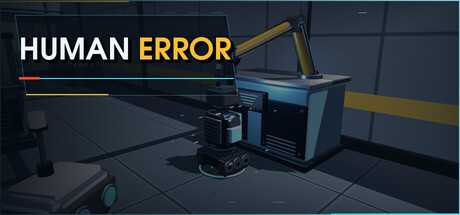
Generative AI was used during development to create some 2D artwork, including machines, enemies and environments, and to assist with in-game text, English and German localization, and store materials. These are pre-generated assets and texts.
During development we use AI assistance in certain tasks, such as generative fill to extend artist drawn artwork. All major art has been drawn by human artists.
The game has optional computer generated voice overs.
Generative AI tools were used during development to create portions of the artwork, character and environment assets, cinematic visuals, music, sound effects, voice recordings, text, localization, and store marketing materials. These assets are prepared in advance and incorporated into the game by Keke Studio. The game does not generate AI content or connect to third-party generative AI services during gameplay.
Generative AI assisted in creating some in-game and promotional assets. All such content was reviewed and edited by the developer. The game does not generate AI content during gameplay or connect to external AI services.
Some visual assets in this game were generated using AI. Specifically: planet sprites/textures are AI-generated. All other in-game art is purchased/licensed, not AI-generated, and all audio is purchased/licensed, not AI-generated.
Powered by some of the most advanced chess engines ever created. It also uses two neural networks to recognize chess positions directly from game diagrams, turning images into playable positions in seconds.
Time Traveler: Divergence uses locally running generative AI to enable dynamic NPC conversations. AI-generated dialogue is constrained by the game's predefined rules, characters, world knowledge, and simulation state. AI is also used locally to generate voice-over for these dynamic conversations. No external AI service is required during gameplay.
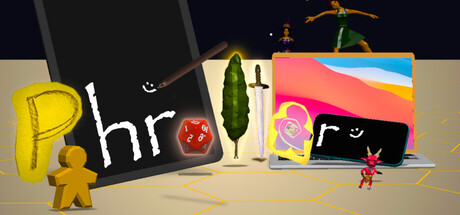
As with most VTT systems, users are welcome to import assets made anywhere. Phroller makes it easier than ever. You can just drag the image or model files into the VTT directly from your browser or file system!
I want to encourage supporting real artists where we can though. As such I do my best to collaborate with real creatives on the vast Phroller libraries. Each one of the assets in the library has a field showing the artist behind it. If you like their work, please consider checking them out. Many of them are open for commissions as well! However, I cannot guarantee that assets or part of those assets were created with no AI use at all. A large amount of the assets are made before 2022 though, so we should be safe there.
While I do my best to make Phroller as user friendly as possible, it does still require a ton of instructions and manuals. Frontier models are used to keep some of the text up to date across rapid early access development. Sorry if it sounds robotic!
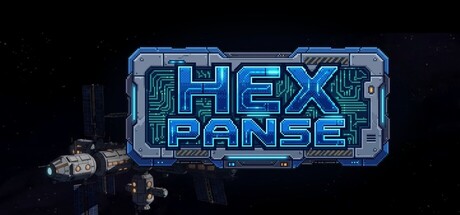
Hexpanse is a solo developer's experiment in building a game 100% with AI, and it is developed with AI assistance (including its source code). The game itself is built almost entirely from procedural, code-generated pixel art and synthesized audio — produced algorithmically by our own code, not by AI. Generative AI was used in two limited, pre-rendered ways: (1) as a starting point for some ship and station part illustrations, later cleaned up, processed and integrated by hand; and (2) to produce the neural text-to-speech voice-over of the intro cinematic. In Early Access, the community feedback I find relevant feeds the AI-assisted development. No generative AI runs while you play — nothing is generated live in-game.
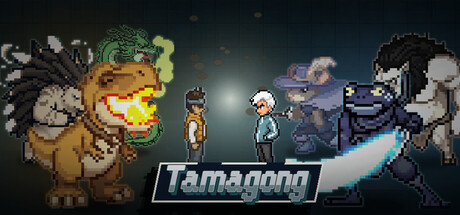
Tamagong uses generative AI in three places during development:
Translation: the game's eight languages were translated with AI assistance.
Audio: some sound effects and ambient tracks were produced with AI assisted tools.
Art & Visuals: some art work began from AI generated output, which was then edited by hand for style consistency. Concept images were also generated as reference while designing monsters and locations.
Generative AI was used during development to assist in creating and modifying some visual assets, including characters, monsters, environments, items, and promotional images for the store page. Some in-game music was also created using generative AI. These materials were selected and integrated into the game and promotional content by the development team.
Generative AI was used to create three pre-generated images used in the game: the splash screen, loading screen, and main menu background. No other game content was generated using AI, and the game does not generate AI content during gameplay.
Pre-generated AI was used to assist in creating the game's logo, some 2D UI elements (HUD icons), and the background music for the promotional teaser (using Soundraw). The game's code, 3D assets, core mechanics, and level design are developed without generative AI.
Generative AI tools were used during development to create images, textures, 3D models and music, and to assist with translations. This content is prepared in advance. The game does not generate AI content during gameplay or connect to external AI services.
Due to budget constraints, I’ve had to rely on AI to create the soundtrack and translate the game into languages I don’t speak (all languages except English and Spanish).
I know it’s not the same as working with professional musicians and translators, and I’d really like to change that in the future. If the game is well received and gets enough support, I’ll be more than happy to invest part of that support into working with professionals and replacing these AI-generated elements.
Thank you for giving the game a chance and for supporting this indie project.
Concept Art and Design:
Generative AI tools were used during the pre-production phase to brainstorm visual aesthetics and generate early concept art for the title screen and in-game graphic elements.
Final Assets:
While AI was used to establish the artistic direction and conceptual frameworks, all final assets, title screen graphics, and in-game artwork appearing in the released version of the game were manually refined to ensure a cohesive, high-quality experience.
Generative AI tools were used during development to assist with selected promotional artwork and pre-generated voice-over audio. All AI-assisted content is created and reviewed before inclusion in the game or store materials. The game does not use generative AI during gameplay and does not generate content in real time.
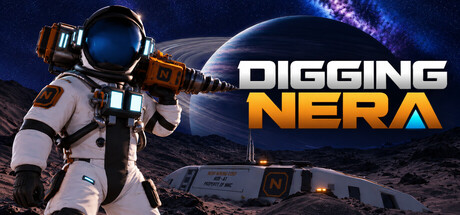
I prefer to be clear and transparent about the development of Digging Nera, without attempting to hide, downplay, or minimize my use of AI or AI-assisted tools.
I am the sole developer of Digging Nera. I work without a team, without significant resources, and without formal training in game development. What I do have is my own artistic sensibility, curiosity, creativity, and willingness to learn. AI has been one of the tools that has helped me turn that vision into a game, and I have used it as follows:
I have primarily used generative AI to assist with localization and translation across the game's supported languages, as well as with the creation or refinement of selected visual and audio elements.
For some visual elements, I have used AI-assisted content as a starting point or production aid before selecting, adapting, editing, integrating, or reworking it to fit the artistic direction I established for the game. I have also used generative AI selectively to assist with certain audio elements and development-related tasks.
Developing Digging Nera represents a substantial personal investment of time and work. I have spent many hours designing and building its environments, implementing gameplay systems, testing, correcting issues, making adjustments, optimizing performance, and polishing the overall experience. AI tools are part of my production process, but they do not replace the work I put into designing, developing, testing, and shaping the game.
I personally designed and implemented the core of Digging Nera, including its environments, level design, gameplay mechanics, progression systems, narrative structure, user interface, world building, and overall creative direction.
I review, select, adapt where necessary, and integrate all AI-assisted content that ultimately appears in the game.
No generative AI is used in real time during gameplay. Digging Nera does not dynamically generate AI-created text, images, audio, levels, dialogue, or other content while the player is playing.
AI tools were used to assist with writing and reviewing game code during development. No AI-generated art, audio, or narrative content ships in the final game.
Generative AI was used to create background images and character artwork in the game. It was also used as a writing aid for proofreading and editing the narrative. AI-assisted content was reviewed and selected by the developer.
We use AI as a production tool in areas of development, with all creative direction, concepts, and final assembly done by humans:
Code assistance: AI tools help us write and debug GDScript/shader code for our Godot 4.5 engine. All architecture, game design decisions, and systems design are human-led.
3D models and art assets: Some 3D models and textures are AI-generated or AI-assisted, then manually cleaned up, retopologized, and integrated by hand. Final visual style and direction are decided by us.
Audio: Some sound effects and audio elements are AI-generated, then curated, edited, and mixed to fit the game.
Everything else — the game concept, world design, story, gameplay systems, and the process of bringing all elements together into the final game — is entirely human-made.
Generative AI was used to help create some of this game's marketing artwork, including the store page header and capsule images, based on descriptive prompts we wrote. Generative AI was also used to assist with writing the game's English-language localization (in-game menus and interface text).
Astrovein was developed with the help of AI tools. The following content is AI-generated and was reviewed by the developer:
- Source code: partially AI-generated, reviewed and tested by the developer.
- Store artwork (capsule images and promotional art): AI-generated.
- Character portraits (captains): AI-generated.
- Store page copy: drafted with AI assistance, then edited and approved by the developer.
The in-game 3D models, sound effects, and music are licensed third-party assets (not AI-generated). No AI content is generated live while the game is running.
We cautiously use AI for extending our 2D elements such as icons. We always start with OUR art first. All in game 3D art is created by artists or uses asset packs from various asset stores.
AI tools were used during development to help with my terrible code, and to create the game’s splash screen, icon, Steam capsule artwork, and various store and marketing images. Although, I did draw up the references with my own big hands.
This game uses generative AI in the creation of the following content:
- Parts of the ending animations and still illustrations
- Parts of the scenario text
- UI artwork
- Store page assets such as the logo and key visual
- Store page text in languages other than Japanese
All generated assets were reviewed, selected and edited by our team before being included in the final build. No content is generated by AI while the game is running.
Voltwood was developed with AI assistance. Pre-generated AI content that ships in the game and on the store page includes: 3D unit, structure, and environment models generated with Meshy from our own concept art; 2D art generated with ChatGPT from the developer's direction, including store capsule art, the app icon and key art, menu artwork, and achievement icons; music generated with Mureka; sound effects and character voice lines generated with ElevenLabs; game code, UI icons, and interface and store-page translations authored with Anthropic Claude. All AI output was reviewed, curated, and integrated by the developer, and all of it is owned by the developer under the respective services' paid-tier terms.
Generative AI was used during development to create some visual artwork and background music. The generated content was reviewed by the development team before being included in the game. The game does not generate AI content during gameplay.
Generative AI was used to create the game's artwork, music, voices and sound effects, including store and promotional artwork. The game does not generate AI content during gameplay.
Pre-generated AI-assisted artwork is used for some store/marketing graphical assets. The game does not generate AI content at runtime. All assets are reviewed by the developer before release.
Generative tools were used during development to create and refine pre-generated artwork, some 3D assets, textures, audio, cinematic sequences, and store/marketing materials, including translated store descriptions. These assets are included as fixed content. The game does not generate AI content during play and does not connect to a generative AI service.
Artificial Intelligence was used to assist for the art, music, and development as this was built by a single person working a full time job. Your support is appreciated and we understand if this does not align with your values.
Generative AI tools were used during the development of the game to assist with creating parts of the game. AI was used as a development aid, while the final content and implementation were reviewed and integrated by the developer.
Bringing together, refining, reviewing and coordinating the different disciplines into a functional complete game. All content was integrated into the development process, tested and aligned with the overall project before becoming part of the released version.
Generative AI was used during development to create 3D models, music, sound effects, and promotional artwork, and to assist with localization, store-page text, and the implementation of game logic and code. This content and code are prepared during development. The game does not generate content or code using AI or connect to external AI services during gameplay.
Generative AI was used during development to create some 2D artwork, including machines, enemies and environments, and to assist with in-game text, English and German localization, and store materials. These are pre-generated assets and texts.
During development we use AI assistance in certain tasks, such as generative fill to extend artist drawn artwork. All major art has been drawn by human artists.
The game has optional computer generated voice overs.
Generative AI tools were used during development to create portions of the artwork, character and environment assets, cinematic visuals, music, sound effects, voice recordings, text, localization, and store marketing materials. These assets are prepared in advance and incorporated into the game by Keke Studio. The game does not generate AI content or connect to third-party generative AI services during gameplay.
Generative AI assisted in creating some in-game and promotional assets. All such content was reviewed and edited by the developer. The game does not generate AI content during gameplay or connect to external AI services.
Some visual assets in this game were generated using AI. Specifically: planet sprites/textures are AI-generated. All other in-game art is purchased/licensed, not AI-generated, and all audio is purchased/licensed, not AI-generated.
Powered by some of the most advanced chess engines ever created. It also uses two neural networks to recognize chess positions directly from game diagrams, turning images into playable positions in seconds.
Time Traveler: Divergence uses locally running generative AI to enable dynamic NPC conversations. AI-generated dialogue is constrained by the game's predefined rules, characters, world knowledge, and simulation state. AI is also used locally to generate voice-over for these dynamic conversations. No external AI service is required during gameplay.
As with most VTT systems, users are welcome to import assets made anywhere. Phroller makes it easier than ever. You can just drag the image or model files into the VTT directly from your browser or file system!
I want to encourage supporting real artists where we can though. As such I do my best to collaborate with real creatives on the vast Phroller libraries. Each one of the assets in the library has a field showing the artist behind it. If you like their work, please consider checking them out. Many of them are open for commissions as well! However, I cannot guarantee that assets or part of those assets were created with no AI use at all. A large amount of the assets are made before 2022 though, so we should be safe there.
While I do my best to make Phroller as user friendly as possible, it does still require a ton of instructions and manuals. Frontier models are used to keep some of the text up to date across rapid early access development. Sorry if it sounds robotic!
Hexpanse is a solo developer's experiment in building a game 100% with AI, and it is developed with AI assistance (including its source code). The game itself is built almost entirely from procedural, code-generated pixel art and synthesized audio — produced algorithmically by our own code, not by AI. Generative AI was used in two limited, pre-rendered ways: (1) as a starting point for some ship and station part illustrations, later cleaned up, processed and integrated by hand; and (2) to produce the neural text-to-speech voice-over of the intro cinematic. In Early Access, the community feedback I find relevant feeds the AI-assisted development. No generative AI runs while you play — nothing is generated live in-game.
Tamagong uses generative AI in three places during development:
Translation: the game's eight languages were translated with AI assistance.
Audio: some sound effects and ambient tracks were produced with AI assisted tools.
Art & Visuals: some art work began from AI generated output, which was then edited by hand for style consistency. Concept images were also generated as reference while designing monsters and locations.
Generative AI was used during development to assist in creating and modifying some visual assets, including characters, monsters, environments, items, and promotional images for the store page. Some in-game music was also created using generative AI. These materials were selected and integrated into the game and promotional content by the development team.
Generative AI was used to create three pre-generated images used in the game: the splash screen, loading screen, and main menu background. No other game content was generated using AI, and the game does not generate AI content during gameplay.
Pre-generated AI was used to assist in creating the game's logo, some 2D UI elements (HUD icons), and the background music for the promotional teaser (using Soundraw). The game's code, 3D assets, core mechanics, and level design are developed without generative AI.
Generative AI tools were used during development to create images, textures, 3D models and music, and to assist with translations. This content is prepared in advance. The game does not generate AI content during gameplay or connect to external AI services.
Due to budget constraints, I’ve had to rely on AI to create the soundtrack and translate the game into languages I don’t speak (all languages except English and Spanish).
I know it’s not the same as working with professional musicians and translators, and I’d really like to change that in the future. If the game is well received and gets enough support, I’ll be more than happy to invest part of that support into working with professionals and replacing these AI-generated elements.
Thank you for giving the game a chance and for supporting this indie project.
Concept Art and Design:
Generative AI tools were used during the pre-production phase to brainstorm visual aesthetics and generate early concept art for the title screen and in-game graphic elements.
Final Assets:
While AI was used to establish the artistic direction and conceptual frameworks, all final assets, title screen graphics, and in-game artwork appearing in the released version of the game were manually refined to ensure a cohesive, high-quality experience.
Generative AI tools were used during development to assist with selected promotional artwork and pre-generated voice-over audio. All AI-assisted content is created and reviewed before inclusion in the game or store materials. The game does not use generative AI during gameplay and does not generate content in real time.
I prefer to be clear and transparent about the development of Digging Nera, without attempting to hide, downplay, or minimize my use of AI or AI-assisted tools.
I am the sole developer of Digging Nera. I work without a team, without significant resources, and without formal training in game development. What I do have is my own artistic sensibility, curiosity, creativity, and willingness to learn. AI has been one of the tools that has helped me turn that vision into a game, and I have used it as follows:
I have primarily used generative AI to assist with localization and translation across the game's supported languages, as well as with the creation or refinement of selected visual and audio elements.
For some visual elements, I have used AI-assisted content as a starting point or production aid before selecting, adapting, editing, integrating, or reworking it to fit the artistic direction I established for the game. I have also used generative AI selectively to assist with certain audio elements and development-related tasks.
Developing Digging Nera represents a substantial personal investment of time and work. I have spent many hours designing and building its environments, implementing gameplay systems, testing, correcting issues, making adjustments, optimizing performance, and polishing the overall experience. AI tools are part of my production process, but they do not replace the work I put into designing, developing, testing, and shaping the game.
I personally designed and implemented the core of Digging Nera, including its environments, level design, gameplay mechanics, progression systems, narrative structure, user interface, world building, and overall creative direction.
I review, select, adapt where necessary, and integrate all AI-assisted content that ultimately appears in the game.
No generative AI is used in real time during gameplay. Digging Nera does not dynamically generate AI-created text, images, audio, levels, dialogue, or other content while the player is playing.
AI tools were used to assist with writing and reviewing game code during development. No AI-generated art, audio, or narrative content ships in the final game.
Generative AI was used to create background images and character artwork in the game. It was also used as a writing aid for proofreading and editing the narrative. AI-assisted content was reviewed and selected by the developer.
We use AI as a production tool in areas of development, with all creative direction, concepts, and final assembly done by humans:
Code assistance: AI tools help us write and debug GDScript/shader code for our Godot 4.5 engine. All architecture, game design decisions, and systems design are human-led.
3D models and art assets: Some 3D models and textures are AI-generated or AI-assisted, then manually cleaned up, retopologized, and integrated by hand. Final visual style and direction are decided by us.
Audio: Some sound effects and audio elements are AI-generated, then curated, edited, and mixed to fit the game.
Everything else — the game concept, world design, story, gameplay systems, and the process of bringing all elements together into the final game — is entirely human-made.
Generative AI was used to help create some of this game's marketing artwork, including the store page header and capsule images, based on descriptive prompts we wrote. Generative AI was also used to assist with writing the game's English-language localization (in-game menus and interface text).
Astrovein was developed with the help of AI tools. The following content is AI-generated and was reviewed by the developer:
- Source code: partially AI-generated, reviewed and tested by the developer.
- Store artwork (capsule images and promotional art): AI-generated.
- Character portraits (captains): AI-generated.
- Store page copy: drafted with AI assistance, then edited and approved by the developer.
The in-game 3D models, sound effects, and music are licensed third-party assets (not AI-generated). No AI content is generated live while the game is running.
We cautiously use AI for extending our 2D elements such as icons. We always start with OUR art first. All in game 3D art is created by artists or uses asset packs from various asset stores.
AI tools were used during development to help with my terrible code, and to create the game’s splash screen, icon, Steam capsule artwork, and various store and marketing images. Although, I did draw up the references with my own big hands.
This game uses generative AI in the creation of the following content:
- Parts of the ending animations and still illustrations
- Parts of the scenario text
- UI artwork
- Store page assets such as the logo and key visual
- Store page text in languages other than Japanese
All generated assets were reviewed, selected and edited by our team before being included in the final build. No content is generated by AI while the game is running.
Voltwood was developed with AI assistance. Pre-generated AI content that ships in the game and on the store page includes: 3D unit, structure, and environment models generated with Meshy from our own concept art; 2D art generated with ChatGPT from the developer's direction, including store capsule art, the app icon and key art, menu artwork, and achievement icons; music generated with Mureka; sound effects and character voice lines generated with ElevenLabs; game code, UI icons, and interface and store-page translations authored with Anthropic Claude. All AI output was reviewed, curated, and integrated by the developer, and all of it is owned by the developer under the respective services' paid-tier terms.
Generative AI was used during development to create some visual artwork and background music. The generated content was reviewed by the development team before being included in the game. The game does not generate AI content during gameplay.
Generative AI was used to create the game's artwork, music, voices and sound effects, including store and promotional artwork. The game does not generate AI content during gameplay.
Pre-generated AI-assisted artwork is used for some store/marketing graphical assets. The game does not generate AI content at runtime. All assets are reviewed by the developer before release.
Generative tools were used during development to create and refine pre-generated artwork, some 3D assets, textures, audio, cinematic sequences, and store/marketing materials, including translated store descriptions. These assets are included as fixed content. The game does not generate AI content during play and does not connect to a generative AI service.
Artificial Intelligence was used to assist for the art, music, and development as this was built by a single person working a full time job. Your support is appreciated and we understand if this does not align with your values.
Generative AI tools were used during the development of the game to assist with creating parts of the game. AI was used as a development aid, while the final content and implementation were reviewed and integrated by the developer.