Public Steam disclosure research27,951 disclosures tracked
Where do games disclose AI use?
Search developers’ Steam disclosures, compare classified AI use across
games, and follow recorded changes.
This index adds cross-game classifications and statistics to
statements published on individual store pages.
Groups reflect automatic analysis of public disclosures; mature records are excluded. These counts do not measure AI use across all of Steam.
Missing or unclear statements cannot establish whether a game uses AI.
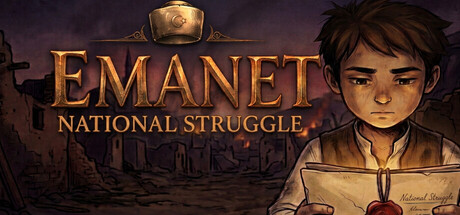
Generative AI tools were used during the development process to assist in creating and refining certain background graphics, visual concepts, and sound effects. All AI-assisted visual assets were then manually edited, curated, and fully integrated by the developer to match the game's unique art style and historical setting.
Generative AI Disclosure
Generative AI tools were used during development to help create parts of this game's content:
1. Card artwork: Character illustrations on the cards were generated with an AI image tool using text prompts only, then selected, cut out, composed and finalized by our team. The AI generation label is kept on the cards and is visible at the bottom-left corner.
2. Text & Localization: The in-game multilingual translations and the store page copy were produced with AI assistance and reviewed by our team.
3. Store & promotional assets: Created from actual in-game footage, which includes the AI-generated artwork described above.
This game does not generate any AI content at runtime, and does not connect to any external AI services during gameplay.
Some artwork, music, and multilingual translations in this game were created with the assistance of generative AI. All such content was pre-generated during development.
Generative AI was used to create the landscape artwork, store capsule artwork and Steam library artwork. Rico Trebeljahr directed and selected the artwork.
Some illustrations, marketing images, translations and musical material were created with AI assistance and reviewed by the developer. The game does not generate content with AI or connect to external AI services during gameplay.
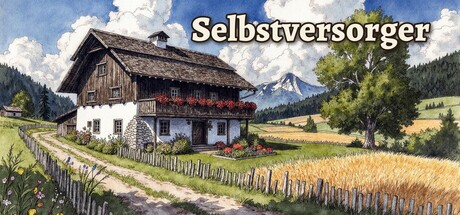
The images (places, characters, objects) were created with the image model FLUX.1 Krea and the short transition films with Wan 2.2, then selected, edited and integrated by hand. The texts, dialogue, rules and the English translation were written with the help of AI language models and specified, checked and revised by the developer; the village, characters and names come from the developer. Nothing is generated by AI while the game is running.
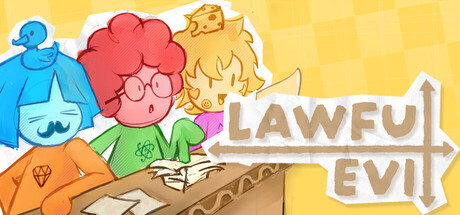
Lawful Evil uses locally running generative AI for live dialogue, speech and transcription. No third-party AI service is used. All artwork, music and sound effects were created by humans.
Generative AI assisted with artwork, text, and localization during development. Content is pre-generated; no AI generation or external AI services run during gameplay.
This game uses generative AI tools during development. In-game UI text was translated into 12 languages using AI translation tools, then reviewed and edited by the developer. Some sound effects were created with AI audio generation tools.
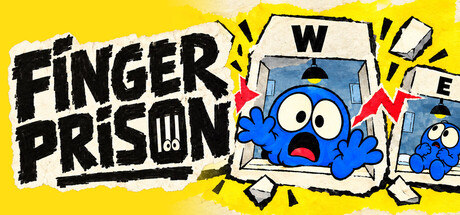
There are some temporary assets that are generated by AI. Some of the music (victory screen, boss music), as well as some level up mod icons (horns from hell, gut flora). The "fill" texture of the penguin planet is AI generated. This would not be the case in the final game.
95+% of all assets and things within the game are hand drawn and heart composed
AI assistance has been used for some game content and localization. All AI-assisted code and 3D assets were reviewed, edited, tested, and integrated by the development team. AI-assisted tools were also used for selected Steam marketing artwork. The game does not generate AI content during play or send players' typed text to an AI service.
Generative AI was used as a supporting tool for specific production tasks under the developer’s creative direction and supervision. All AI-assisted content was selected, reviewed, and edited by the developer before inclusion. No AI content is generated during gameplay.
Generative AI tools were used during development to assist with programming, bug fixes, and the creation of some in-game icons. However, the main characters, most of the skill/equipment icons, backgrounds, and world map illustrations were hand-drawn by my daughter, who was 13 years old at the time.
This game used generative AI tools during development, mainly to help with concept design for some in-game art assets, layout assistance for store page promo images, and writing and optimisation of some code. All AI-generated content was later manually edited and polished by the developers to make sure it fits the overall style of the game.
Pre-generated content: the background music was created with generative AI and selected and arranged by the team. Generative AI was also used as a writing and translation aid for the cats' dialogue, the five non-Korean localizations, and store text; all of it was reviewed and edited by the team. The game's artwork (cards, tiles, characters, rooms, furniture and UI) was created by our artists. The cats' blinking and walking animation frames were made with generative AI on top of our artists' original portraits. The localized title logos were created with generative AI based on our artist's original logo, and the Steam achievement icons were created with generative AI. No content is generated live while you play.
Some artwork in this game was created using generative AI. Steam community assets, including trading cards, may also have been created using generative AI.
Generative AI was used during the development of this game to help create some visual assets, including character and monster images, environments, UI illustrations, and skill effects. The developer reviewed, edited, and integrated these assets into the game.
The riverbank painting and the nine cats' original artwork and walk animations were painted by hand by an artist. Building on that artwork, the rest of the art in the game and on this store page, the music, the in-game text and the translations were made with the help of AI tools under the developers' direction. Nothing is generated by AI while you play.
The game's code, its English translation and the store texts were written with the help of an AI assistant. All characters, worlds and music are generated procedurally by the game's own engine code (crayon-style drawing and synthesized sound), and every piece was reviewed and approved by the developer. No content is generated by AI while you play.
Generative AI was used to assist with selected textures, text, voice, and music. All such assets were reviewed and edited by the team before release. The game does not generate AI content during gameplay.
Parts of the 2D artwork in this game were created with the help of generative AI image tools and then edited by hand. Some of this artwork also appears in the store assets and screenshots. All other content, including the game's design, rules, sound effects and text, was created without generative AI. The game does not generate any content at runtime.
This game was primarily created by the development team. AI tools were used to assist with certain aspects of programming and visual design, while AI-generated content was mainly used in video production and the creation of sound effects and music.
AI tools were used to translate the text in the game and on the Steam store page into English, Simplified Chinese, and Korean.
No AI-generated illustrations are used, and no content is generated by AI during gameplay.
During development, generative AI tools were used to assist in creating some 2D visuals, including backgrounds, cocktails, and promotional images. AI-assisted tools were also used for some writing and Japanese-English localization. All outputs were reviewed, selected, and edited by the developer before being incorporated into the game. No content is generated by AI while the game is running, and the game does not connect to any external AI services.
The subject paintings are reproductions of public-domain works whose copyright has expired. The anime-style versions were created with the help of generative AI, based on those originals. Generative AI was also used for some character art, the background music, and translation into some languages.
Generative AI tools were used during development to assist in the creation of some visual assets and artwork included in the game. The generated content was reviewed and curated by the developer before being included in the final product.
Clawuuudy uses generative AI for optional chat and task assistance. Players connect a compatible AI model service. Online services may require an API key and receive the conversation or task data needed to produce a response. The basic desktop pet can be used without an AI connection.
The game uses a local LLM vision model to power a backend, which handles sketch recognition. No data is stored or saved anywhere but locally, and any data stored is necessary to the gameplay. No analytics are performed beyond basic geometry and visual checks needed to assess drawings for specified gameplay criteria.
Some artwork in the game (garden decorations and toys, and a few small interface icons) was created with the help of AI tools. Some in-game text (tutorial hints, menu and settings labels, and parts of the English and Traditional Chinese translations) and the achievement names were written with the help of AI tools. The store page images were composed with the help of AI tools from the original game's hand-drawn artwork. The animals and the garden are hand-drawn artwork from the original 2012 game.
Generative AI tools were used during development to create some of the game's background artwork and to assist with limited programming, technical problem-solving. The AI-generated backgrounds were reviewed, selected, and edited by the developer before being included in the game. The game does not use generative AI during gameplay and does not generate content dynamically for players.
Generative AI was used during development to assist with artwork, audio, narrative text and localization, including store and marketing artwork. The resulting content is reviewed and edited before inclusion. The game does not generate AI content during play and does not connect to external AI services.
The game's illustrations — key art, terrain and building tiles, locomotive and wagon art, and achievement badges — were generated with an image model (Kwai Kolors) from the developer's prompts and then selected, cropped and cleaned up by hand. The interface icons are from the open-source Lucide set, not AI-generated. The English and German texts were translated from the Simplified Chinese original with the help of an AI language model and reviewed against a hand-written glossary; Traditional Chinese is a script conversion of the original. Nothing is generated while the game runs.
Generative AI was used during development to create some art assets and to assist with store text and localization. These materials are prepared in advance. The game does not generate AI content during gameplay or connect to external AI services.
Pre-generated: Yes. AI was used to create content before release (background animations, upscaled artwork, some character and prop art).
Live-generated: No. Nothing is generated by AI while the game is running.
This game uses generative AI only for pre-made content; nothing is generated while you play.
AI tools were used to animate Claude Monet's public-domain paintings into living background loops, to upscale artwork, and in creating some character and prop art. All AI-assisted assets were selected, edited and composed into the game by the developer. The story, game design and direction are entirely the developer's own work.
A game about building AGI, made with AI. The art and code were drafted with AI tools, then checked and tweaked by a human who still hasn't reached AGI. Nothing is generated while you play; everything you see was made and reviewed before release.
For translations within the game and on the Steam Store Page, we used a service based on machine learning.
No assets, code or other aspects of development were created using AI or similar techniques.
AI tools were used to assist with localization of the in-game text and store description (English and Chinese). All translations have been reviewed and edited by the developer.
*All illustrations, music, story, and game systems were created by the developer.
Some of the game's text, including the clients' letters and notes, and the store page text were drafted with the help of an AI language model and edited by the developer. The artwork comes from the game's own renderer and models, not from image-generating AI, and the music is played by the game's own code. Nothing is generated by AI while you play.
AI Generated Content Disclosure
The developers of LIGHT IT provide the following disclosure regarding the use of AI tools in the creation of this game. All AI-assisted content is pre-generated; the game does not generate any AI content live during gameplay.
Music: The in-game music was produced using Suno, an AI music-generation tool.
Art: Some visual assets were created with the assistance of AI image-generation tools.
Code: AI assistants were used to help brainstorm implementation ideas and to assist with debugging.
All AI-assisted content and code was reviewed, tested, and refined by the developer before being included in the final game.
The game's art (plants, items, menu illustrations, store art) was made with the help of image generation tools and then edited and assembled by the developer. No AI content is generated while you play.