Public Steam disclosure research25,376 disclosures tracked
Where do games disclose AI use?
Search developers’ Steam disclosures, compare classified AI use across
games, and follow recorded changes.
This index adds cross-game classifications and statistics to
statements published on individual store pages.
Groups reflect automatic analysis of public disclosures; mature records are excluded. These counts do not measure AI use across all of Steam.
Missing or unclear statements cannot establish whether a game uses AI.
Generative AI was used to create some pre-generated 3D models, artwork, audio, and voice assets used in the game and marketing materials. No AI-generated content is created during gameplay.
The use of generative AI in this title is limited exclusively to technical assistance for the creation of secondary environmental textures and background patterns. The art direction, the design of all main characters, and the vast majority of visual elements have been handcrafted by our development team.
This game uses generative AI for some of its assets. Character portraits and promotional illustrations were created with AI image tools (ChatGPT), 3D landmark models with Tripo3D, sound effects with ElevenLabs, and the background music and theme song with Suno. The English and Simplified Chinese localization was drafted with AI assistance. All AI-generated content was reviewed, edited and selected by the developer before shipping. Nothing is generated live during gameplay.
I’m developing FlyFuture as a solo developer and use AI tools to assist with troubleshooting, programming, design, and optimization. On top of this, there will be planes in the future that are commandable through OpenAi's Speech to command functions...similar to now and not so far future aerial combat usage of unmanned wingman jets.
I don’t agree with many of the ways AI is being used, and I understand why people have concerns about it. I believe AI should should be used as a tool and not to take over entire workloads, replace creative judgment, or become a shortcut for producing unoriginal work. Used thoughtfully, though, I think it can be a valuable tool...which is how I use it.
We use AI tools to make some of the game's art, sound, voices and writing. Every result was reviewed and edited before it went into the game.
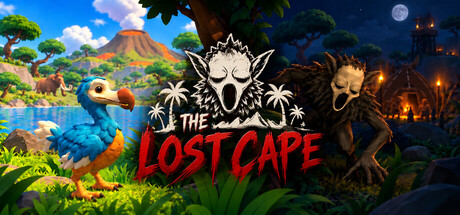
- 3D models: most creature and character bodies (dinosaurs, Ice Age animals, wildlife, the infected, the customisable human bodies, hairstyles and hats) and some props and plants were generated with Tripo through Unity AI, from reference images made with OpenAI GPT Image. They were then cleaned up, rigged and fitted to the game's style.
- Textures: the dinosaur hides and the human characters' faces, skin, clothing and infection damage were painted with the help of GPT Image.
- Illustrations: the field guide's species plates were generated with GPT Image from renders of the in-game models.
- Sound: the calls of the mammoths, giant elk, ground sloths and sauropods were generated with Unity AI sound generation.
- Voices: the radio voices (the island broadcasts, the voice on the collection frequency and the facility's recorded messages) and the skipper's two lines in the opening scene are AI voices, made with ElevenLabs Eleven v4 text-to-speech from the game's own script. Face-to-face dialogue and the tapes are not voiced.
- Writing: in-game text (dialogue, records and descriptions) and this store page were drafted with AI writing assistance and edited by the developer.
- Store art: the capsule and library artwork and the logo were generated with GPT Image. They are illustrations, not screenshots. The screenshots, trailers and About clips are in-engine footage with licensed music and sound effects; any voices, herd calls, logo or artwork in the trailers are the AI content listed above.
Buildings, vehicles, weapons, most props, the music, most sound effects and all animation come from licensed asset packs (a few animation clips are adapted from them). The interface was built for the game. The game generates no AI content while you play.
Parts of the source code and some store and marketing text were written with help from AI coding assistants during development. All terrain, water simulation, satellite imagery and map data come from real geographic datasets. No AI-generated artwork, audio or narrative ships with the app, and nothing is generated during play.
AI-assisted coding and editor automation tools were used during development for workflow efficiency.
Most of the art was hand-made by me. The remaining art generated by AI tools like icons or textures will be swapped to human-made art in the near future.
AI translation tools were used to create localization drafts, that are being reviewed by speakers of the language.
We don’t particularly like using AI.
Unfortunately, we are a small indie studio made of programmers and designers who are currently somewhere between “making a game” and “having existential crises”.
So, for now, we use AI to help us with some parts of our daily work and to bring some of our music, ideas, and inspirations to life.
But don’t worry, we haven’t handed over the steering wheel to the robots just yet.
Our project, its identity, and its originality are still created and directed by us. AI is simply one of the tools helping us survive the development process while our budget is busy pretending it doesn’t exist.
As soon as we have the resources to replace AI with our own human made work, we absolutely intend to do so.
Until then, we’re just a bunch of indie developers trying to make something cool before our refrigerators become purely decorative objects.
Use of Generative AI & AI Credits
This game uses AI to generate in-game dialogue text and small gameplay extension modules ("evolution modules"). AI features consume AI credits.
You can get AI credits via small in-game purchases processed by Steam, or connect your own AI service at no extra cost — the settings menu lets you enter a custom API URL and key (any OpenAI-compatible endpoint), in which case usage is billed directly by your provider and no credits are consumed.
AI-generated code runs in a strictly sandboxed environment with a limited set of game APIs, and every output must pass the game's validation and test gates before taking effect. AI features can be disabled at any time.
Generative AI tools were used during development to help create and refine some 2D artwork, icons and promotional images, and to assist with store-page text and translation. These assets are prepared before release and reviewed by the developer. The game does not generate AI content during gameplay or connect to an external AI service. Player-designed weapons are created with the in-game drawing and crafting tools, not generative AI.
AI-assisted tools are used throughout the development of Idle Frontier, including design, programming, content creation and marketing. Generative AI is used to generate or assist with player-facing artwork and illustrations, backgrounds, promotional images and logos, narrative and dialogue, encyclopedia text, localization and store-page copy. The developer selects and integrates the material into the released game. This is pre-generated content: the game does not generate content or code with AI during play and does not connect to external AI services.
Hold My Cargo is made by a three-person team at Favera Studio. Like many small studios, we use AI-assisted tools as part of our production pipeline — for exploring concepts and marketing artwork, speeding up parts of 3D asset, animation and texture work, drafting text and running automated testing. Every asset, animation and line of text that ships in the game is directed, reviewed, edited and approved by the team; nothing goes in unseen. The game does not generate any content at runtime — there is no live AI in Hold My Cargo, and no player data is sent to AI services.
We use generative AI tools during development to create some concept art and supporting images, as well as certain materials for the store page. All in-game content, including final assets, models, and text, is created and reviewed by hand.
AI tools were used to help write the game's code and make some placeholder sprites and text. All placeholder art/text is being removed by me, and i'm getting help with the removal/cleanup of AI code.
This game used AI to make it possible to be developed by one person in reasonable time, with the hope that more people will join later to replace the AI part.
Store page and marketing: the main capsule art was composed and rendered by the developer from in-game models, with generative AI used to repaint parts of the background (landscape, sky and lighting), then corrected by hand. Some promotional videos use an AI-generated voiceover.
AI tools are used in some parts of the development process, including translations for the Steam store page and in-game UI text, as well as assistance with some visual assets.
For languages other than Simplified Chinese, this game uses AI-assisted translation (including this notice). We will continue to improve translation quality.
Generative AI was used to create some visual assets included in the game, as well as artwork for the Steam store page and marketing materials. These assets were created before release. The game does not generate AI content during gameplay or connect to external AI services.
Generative AI was used to create some art assets (the title screen background and the store capsule images). The game does not use AI to generate any content at runtime.
The key art, store capsules and library artwork were created with an AI image generator and edited by the developer. The trailer music was generated with Suno under a paid plan. No AI-generated content is included in the game itself, and the game runs no AI generation and requires no AI service.
We use generative AI as a reference and supporting tool during game development, while final creative decisions and implementation are made by our team.
Generative AI was used during development to create 3D models, music, sound effects, and promotional artwork, and to assist with localization, store-page text, and the implementation of game logic and code. This content and code are prepared during development. The game does not generate content or code using AI or connect to external AI services during gameplay.
Generative AI tools were used to assist in creating and iterating on selected promotional artwork and graphical assets for Railwright, including materials used on the Steam store page and related marketing. Gameplay screenshots shown on the store page are captured from the actual game. Railwright does not use generative AI to generate content during gameplay.
Generative AI was used to assist with the localization of some store page content. The generated translations were reviewed and edited before publication.
This game was made possible due to generative AI coding. It uses generative AI for the code base and procedural environmental generation but is limited to that. Models and music have been manually created.
Generative AI has been used to help work with coding.
All Assets (art, models, animations, sprites/textures, sounds and music have been made by myself or have been bought)
The game engine is written with substantial AI assistance.
Some dialogues and quest texts are AI generated, and are successively replaced by human-written dialogue. Every piece of flavor text has a label that states the author (human or ai).
The 3D character models are currently generated with AI, and then transformed through a custom pipeline to work with the text-based graphics and CPU rendering. It is possible to replace them with manually crafted models.
AI-assisted tools were used during development to help create visual assets. These assets are included as finished content; the game does not use generative AI during gameplay.
The campaign's spoken dialogue is AI-generated speech. Over 650 lines were produced with ElevenLabs under a paid plan that licenses commercial use of the output. I wrote every line of that dialogue myself - the writing is mine, the performance is synthetic. I would prefer human voice actors and intend to replace these recordings when the project can afford it.
No AI-generated art ships in the game. Every ship, station and environment mesh is either licensed art or made by me. A set of AI-generated 3D models was removed from the project in July 2026.
The combat and zone music tracks are AI-generated songs I made with Suno on a paid plan that grants commercial-use rights to the output. The remaining music and all sound effects are licensed audio packs and my own work.
Some 3D models and textures in MemTown were created or converted with the assistance of generative AI during development. These assets are used for certain tools, capture capsules, resource objects, and production facilities in the territory.
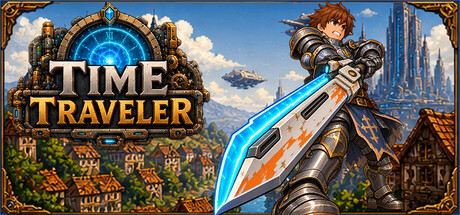
Time Traveler: Divergence uses locally running generative AI to enable dynamic NPC conversations. AI-generated dialogue is constrained by the game's predefined rules, characters, world knowledge, and simulation state. AI is also used locally to generate voice-over for these dynamic conversations. No external AI service is required during gameplay.
Generative AI was used during development to assist in the creation of some 3D models and visual assets. These assets are used alongside content created manually by the developer.
Generative AI was used to create some pre-generated 3D models, artwork, audio, and voice assets used in the game and marketing materials. No AI-generated content is created during gameplay.
The use of generative AI in this title is limited exclusively to technical assistance for the creation of secondary environmental textures and background patterns. The art direction, the design of all main characters, and the vast majority of visual elements have been handcrafted by our development team.
This game uses generative AI for some of its assets. Character portraits and promotional illustrations were created with AI image tools (ChatGPT), 3D landmark models with Tripo3D, sound effects with ElevenLabs, and the background music and theme song with Suno. The English and Simplified Chinese localization was drafted with AI assistance. All AI-generated content was reviewed, edited and selected by the developer before shipping. Nothing is generated live during gameplay.
I’m developing FlyFuture as a solo developer and use AI tools to assist with troubleshooting, programming, design, and optimization. On top of this, there will be planes in the future that are commandable through OpenAi's Speech to command functions...similar to now and not so far future aerial combat usage of unmanned wingman jets.
I don’t agree with many of the ways AI is being used, and I understand why people have concerns about it. I believe AI should should be used as a tool and not to take over entire workloads, replace creative judgment, or become a shortcut for producing unoriginal work. Used thoughtfully, though, I think it can be a valuable tool...which is how I use it.
We use AI tools to make some of the game's art, sound, voices and writing. Every result was reviewed and edited before it went into the game.
- 3D models: most creature and character bodies (dinosaurs, Ice Age animals, wildlife, the infected, the customisable human bodies, hairstyles and hats) and some props and plants were generated with Tripo through Unity AI, from reference images made with OpenAI GPT Image. They were then cleaned up, rigged and fitted to the game's style.
- Textures: the dinosaur hides and the human characters' faces, skin, clothing and infection damage were painted with the help of GPT Image.
- Illustrations: the field guide's species plates were generated with GPT Image from renders of the in-game models.
- Sound: the calls of the mammoths, giant elk, ground sloths and sauropods were generated with Unity AI sound generation.
- Voices: the radio voices (the island broadcasts, the voice on the collection frequency and the facility's recorded messages) and the skipper's two lines in the opening scene are AI voices, made with ElevenLabs Eleven v4 text-to-speech from the game's own script. Face-to-face dialogue and the tapes are not voiced.
- Writing: in-game text (dialogue, records and descriptions) and this store page were drafted with AI writing assistance and edited by the developer.
- Store art: the capsule and library artwork and the logo were generated with GPT Image. They are illustrations, not screenshots. The screenshots, trailers and About clips are in-engine footage with licensed music and sound effects; any voices, herd calls, logo or artwork in the trailers are the AI content listed above.
Buildings, vehicles, weapons, most props, the music, most sound effects and all animation come from licensed asset packs (a few animation clips are adapted from them). The interface was built for the game. The game generates no AI content while you play.
Parts of the source code and some store and marketing text were written with help from AI coding assistants during development. All terrain, water simulation, satellite imagery and map data come from real geographic datasets. No AI-generated artwork, audio or narrative ships with the app, and nothing is generated during play.
AI-assisted coding and editor automation tools were used during development for workflow efficiency.
Most of the art was hand-made by me. The remaining art generated by AI tools like icons or textures will be swapped to human-made art in the near future.
AI translation tools were used to create localization drafts, that are being reviewed by speakers of the language.
We don’t particularly like using AI.
Unfortunately, we are a small indie studio made of programmers and designers who are currently somewhere between “making a game” and “having existential crises”.
So, for now, we use AI to help us with some parts of our daily work and to bring some of our music, ideas, and inspirations to life.
But don’t worry, we haven’t handed over the steering wheel to the robots just yet.
Our project, its identity, and its originality are still created and directed by us. AI is simply one of the tools helping us survive the development process while our budget is busy pretending it doesn’t exist.
As soon as we have the resources to replace AI with our own human made work, we absolutely intend to do so.
Until then, we’re just a bunch of indie developers trying to make something cool before our refrigerators become purely decorative objects.
Use of Generative AI & AI Credits
This game uses AI to generate in-game dialogue text and small gameplay extension modules ("evolution modules"). AI features consume AI credits.
You can get AI credits via small in-game purchases processed by Steam, or connect your own AI service at no extra cost — the settings menu lets you enter a custom API URL and key (any OpenAI-compatible endpoint), in which case usage is billed directly by your provider and no credits are consumed.
AI-generated code runs in a strictly sandboxed environment with a limited set of game APIs, and every output must pass the game's validation and test gates before taking effect. AI features can be disabled at any time.
Generative AI tools were used during development to help create and refine some 2D artwork, icons and promotional images, and to assist with store-page text and translation. These assets are prepared before release and reviewed by the developer. The game does not generate AI content during gameplay or connect to an external AI service. Player-designed weapons are created with the in-game drawing and crafting tools, not generative AI.
AI-assisted tools are used throughout the development of Idle Frontier, including design, programming, content creation and marketing. Generative AI is used to generate or assist with player-facing artwork and illustrations, backgrounds, promotional images and logos, narrative and dialogue, encyclopedia text, localization and store-page copy. The developer selects and integrates the material into the released game. This is pre-generated content: the game does not generate content or code with AI during play and does not connect to external AI services.
Hold My Cargo is made by a three-person team at Favera Studio. Like many small studios, we use AI-assisted tools as part of our production pipeline — for exploring concepts and marketing artwork, speeding up parts of 3D asset, animation and texture work, drafting text and running automated testing. Every asset, animation and line of text that ships in the game is directed, reviewed, edited and approved by the team; nothing goes in unseen. The game does not generate any content at runtime — there is no live AI in Hold My Cargo, and no player data is sent to AI services.
We use generative AI tools during development to create some concept art and supporting images, as well as certain materials for the store page. All in-game content, including final assets, models, and text, is created and reviewed by hand.
AI tools were used to help write the game's code and make some placeholder sprites and text. All placeholder art/text is being removed by me, and i'm getting help with the removal/cleanup of AI code.
This game used AI to make it possible to be developed by one person in reasonable time, with the hope that more people will join later to replace the AI part.
Store page and marketing: the main capsule art was composed and rendered by the developer from in-game models, with generative AI used to repaint parts of the background (landscape, sky and lighting), then corrected by hand. Some promotional videos use an AI-generated voiceover.
AI tools are used in some parts of the development process, including translations for the Steam store page and in-game UI text, as well as assistance with some visual assets.
For languages other than Simplified Chinese, this game uses AI-assisted translation (including this notice). We will continue to improve translation quality.
Generative AI was used to create some visual assets included in the game, as well as artwork for the Steam store page and marketing materials. These assets were created before release. The game does not generate AI content during gameplay or connect to external AI services.
Generative AI was used to create some art assets (the title screen background and the store capsule images). The game does not use AI to generate any content at runtime.
The key art, store capsules and library artwork were created with an AI image generator and edited by the developer. The trailer music was generated with Suno under a paid plan. No AI-generated content is included in the game itself, and the game runs no AI generation and requires no AI service.
We use generative AI as a reference and supporting tool during game development, while final creative decisions and implementation are made by our team.
Generative AI was used during development to create 3D models, music, sound effects, and promotional artwork, and to assist with localization, store-page text, and the implementation of game logic and code. This content and code are prepared during development. The game does not generate content or code using AI or connect to external AI services during gameplay.
Generative AI tools were used to assist in creating and iterating on selected promotional artwork and graphical assets for Railwright, including materials used on the Steam store page and related marketing. Gameplay screenshots shown on the store page are captured from the actual game. Railwright does not use generative AI to generate content during gameplay.
Generative AI was used to assist with the localization of some store page content. The generated translations were reviewed and edited before publication.
This game was made possible due to generative AI coding. It uses generative AI for the code base and procedural environmental generation but is limited to that. Models and music have been manually created.
Generative AI has been used to help work with coding.
All Assets (art, models, animations, sprites/textures, sounds and music have been made by myself or have been bought)
The game engine is written with substantial AI assistance.
Some dialogues and quest texts are AI generated, and are successively replaced by human-written dialogue. Every piece of flavor text has a label that states the author (human or ai).
The 3D character models are currently generated with AI, and then transformed through a custom pipeline to work with the text-based graphics and CPU rendering. It is possible to replace them with manually crafted models.
AI-assisted tools were used during development to help create visual assets. These assets are included as finished content; the game does not use generative AI during gameplay.
The campaign's spoken dialogue is AI-generated speech. Over 650 lines were produced with ElevenLabs under a paid plan that licenses commercial use of the output. I wrote every line of that dialogue myself - the writing is mine, the performance is synthetic. I would prefer human voice actors and intend to replace these recordings when the project can afford it.
No AI-generated art ships in the game. Every ship, station and environment mesh is either licensed art or made by me. A set of AI-generated 3D models was removed from the project in July 2026.
The combat and zone music tracks are AI-generated songs I made with Suno on a paid plan that grants commercial-use rights to the output. The remaining music and all sound effects are licensed audio packs and my own work.
Some 3D models and textures in MemTown were created or converted with the assistance of generative AI during development. These assets are used for certain tools, capture capsules, resource objects, and production facilities in the territory.
Time Traveler: Divergence uses locally running generative AI to enable dynamic NPC conversations. AI-generated dialogue is constrained by the game's predefined rules, characters, world knowledge, and simulation state. AI is also used locally to generate voice-over for these dynamic conversations. No external AI service is required during gameplay.
Generative AI was used during development to assist in the creation of some 3D models and visual assets. These assets are used alongside content created manually by the developer.