Public Steam disclosure research25,995 disclosures tracked
Where do games disclose AI use?
Search developers’ Steam disclosures, compare classified AI use across
games, and follow recorded changes.
This index adds cross-game classifications and statistics to
statements published on individual store pages.
Groups reflect automatic analysis of public disclosures; mature records are excluded. These counts do not measure AI use across all of Steam.
Missing or unclear statements cannot establish whether a game uses AI.
During development, generative AI tools were used to assist in creating the following content:
Image Assets: Some enemy characters, backgrounds, and scene elements were created with the assistance of AI tools. All images have undergone extensive manual illustration, style integration, and post-processing to ensure consistency with the game's overall art direction.
Music & Sound Effects: Prototypes for some background music tracks and ambient sound effects were created with the assistance of AI tools.
AI was used in the production of this game:
• Programming — Anthropic Claude AI Code
• Music and some sound effects — Suno AI v5, Elevenlabs, Google Gemini (prompting support)
• Many graphic assets — Nano Banana Pro with Google Flow, Google Gemini (prompting support)
• Some graphic assets — Krea AI
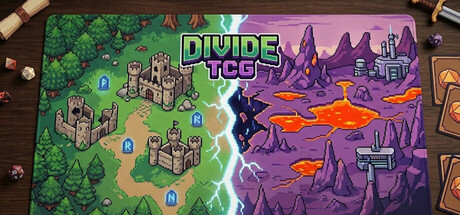
2D Visual Assets: All in-game card illustrations—including the retro pixel art items, weapons, and relics and any images, as well as the main "Divide TCG" promotional logo art, were pre-generated using AI image generation tools.
Code and UI Assistance: AI text models were used as a collaborative programming assistant to help write, structure, and troubleshoot the game's HTML and CSS user interface, including the card binder layouts, responsive grids, and visual effects.
Marketing Copy: AI text models were utilized to help draft and refine portions of the text and descriptions found on this Steam store page.
AI-assisted tools were used during development for early concept art exploration and preliminary localization drafts.
All content is being reviewed and refined by the development team, and final in-game assets and text will be fully edited before release.
As a solo indie developer, I have utilized AI-generated content to assist in the creation of certain assets within the game, including images, audio, and code. Thank you for your understanding and support.
BFM 26 uses AI-assisted tools during development, including AI-generated imagery for certain visual assets and AI code auditing during the development process. No generative AI is used to produce live or dynamic in-game content during gameplay. All AI-generated assets have been reviewed and approved by the developer before inclusion in the game.
This game uses AI-generated content in the following areas: select voice lines were produced using text-to-speech, and some store page artwork and marketing capsule images were created with the assistance of AI image generation tools. All core gameplay art, sprites, game mechanics, code, and level design were not generated by AI.
AI was utilized in the following areas of this project:
Background music (BGM) for the credits.
Programming assistance.
Proofreading in-game dialogue.
Translation into other languages
Generative AI tools were used during the development process to assist in creating some background environmental textures, atmospheric sound effects, and promotional marketing materials. All AI-generated assets have been reviewed and refined by the developer to ensure quality and originality.
This game uses generative artificial intelligence to power dynamic NPC dialogue during gameplay. NPCs can respond to player input using AI-generated text, creating unique conversations.
AI tools were also used during development to assist with creating certain assets such as character concepts and dialogue. All generated content is reviewed and integrated by the developer.
The game may connect to external AI services to generate dialogue responses during gameplay.
AI-generated responses are moderated and filtered to prevent inappropriate or harmful content.
Generative Artificial Intelligence tools were used during development to assist in the creation, proofreading, and translation of texts (including the store page and tutorial dialogue), as well as aiding in the ideation and creation of some static 2D visual assets.
This game uses generative artificial intelligence to enhance visual design and branding assets.
Specifically, AI-assisted tools were used to create promotional images such as logos, capsule art, and background illustrations. These assets were refined and directed by the developer to match the game’s theme and tone. No generative AI is used in gameplay, character behavior, or user-generated content.
This game was developed using AI-assisted tools in multiple areas of development, including programming, writing, music, and visual assets. AI tools were used during the creation process to help generate and prototype content, which was then reviewed, edited, and integrated into the game by the developer.
This game was developed with assistance from AI tools. Generative AI was used in the development of store page content and marketing materials. All in-game assets, environments, and gameplay were created using Unreal Engine 5 and licensed asset packs.
Some visual assets in this game were generated with the assistance of generative AI tools. These assets were reviewed and edited by the developer before being included in the final game.
This game utilizes generative AI tools to assist in the development process.
Illustrations: AI generation tools (such as Midjourney) were used to create and refine certain 2D graphic assets, including character illustrations and UI elements.
Dialogue: Text-generation AI models were utilized as assistive tools to draft and polish character dialogue and in-game scripts.
All AI-generated content has been heavily edited and directed by the developer to fit the game's original vision and world.
Some temporary art and sound assets were created with the assistance of AI. These are placeholder assets used to help prototype the game and will be replaced with original content in future updates.
During development, generative AI tools were used to assist in creating the following content:
Image Assets: Some enemy characters, backgrounds, and scene elements were created with the assistance of AI tools. All images have undergone extensive manual illustration, style integration, and post-processing to ensure consistency with the game's overall art direction.
Music & Sound Effects: Prototypes for some background music tracks and ambient sound effects were created with the assistance of AI tools.
AI was used in the production of this game:
• Programming — Anthropic Claude AI Code
• Music and some sound effects — Suno AI v5, Elevenlabs, Google Gemini (prompting support)
• Many graphic assets — Nano Banana Pro with Google Flow, Google Gemini (prompting support)
• Some graphic assets — Krea AI
2D Visual Assets: All in-game card illustrations—including the retro pixel art items, weapons, and relics and any images, as well as the main "Divide TCG" promotional logo art, were pre-generated using AI image generation tools.
Code and UI Assistance: AI text models were used as a collaborative programming assistant to help write, structure, and troubleshoot the game's HTML and CSS user interface, including the card binder layouts, responsive grids, and visual effects.
Marketing Copy: AI text models were utilized to help draft and refine portions of the text and descriptions found on this Steam store page.
AI-assisted tools were used during development for early concept art exploration and preliminary localization drafts.
All content is being reviewed and refined by the development team, and final in-game assets and text will be fully edited before release.
As a solo indie developer, I have utilized AI-generated content to assist in the creation of certain assets within the game, including images, audio, and code. Thank you for your understanding and support.
BFM 26 uses AI-assisted tools during development, including AI-generated imagery for certain visual assets and AI code auditing during the development process. No generative AI is used to produce live or dynamic in-game content during gameplay. All AI-generated assets have been reviewed and approved by the developer before inclusion in the game.
This game uses AI-generated content in the following areas: select voice lines were produced using text-to-speech, and some store page artwork and marketing capsule images were created with the assistance of AI image generation tools. All core gameplay art, sprites, game mechanics, code, and level design were not generated by AI.
AI was utilized in the following areas of this project:
Background music (BGM) for the credits.
Programming assistance.
Proofreading in-game dialogue.
Translation into other languages
Generative AI tools were used during the development process to assist in creating some background environmental textures, atmospheric sound effects, and promotional marketing materials. All AI-generated assets have been reviewed and refined by the developer to ensure quality and originality.
This game uses generative artificial intelligence to power dynamic NPC dialogue during gameplay. NPCs can respond to player input using AI-generated text, creating unique conversations.
AI tools were also used during development to assist with creating certain assets such as character concepts and dialogue. All generated content is reviewed and integrated by the developer.
The game may connect to external AI services to generate dialogue responses during gameplay.
AI-generated responses are moderated and filtered to prevent inappropriate or harmful content.
Generative Artificial Intelligence tools were used during development to assist in the creation, proofreading, and translation of texts (including the store page and tutorial dialogue), as well as aiding in the ideation and creation of some static 2D visual assets.
This game uses generative artificial intelligence to enhance visual design and branding assets.
Specifically, AI-assisted tools were used to create promotional images such as logos, capsule art, and background illustrations. These assets were refined and directed by the developer to match the game’s theme and tone. No generative AI is used in gameplay, character behavior, or user-generated content.
This game was developed using AI-assisted tools in multiple areas of development, including programming, writing, music, and visual assets. AI tools were used during the creation process to help generate and prototype content, which was then reviewed, edited, and integrated into the game by the developer.
This game was developed with assistance from AI tools. Generative AI was used in the development of store page content and marketing materials. All in-game assets, environments, and gameplay were created using Unreal Engine 5 and licensed asset packs.
Some visual assets in this game were generated with the assistance of generative AI tools. These assets were reviewed and edited by the developer before being included in the final game.
This game utilizes generative AI tools to assist in the development process.
Illustrations: AI generation tools (such as Midjourney) were used to create and refine certain 2D graphic assets, including character illustrations and UI elements.
Dialogue: Text-generation AI models were utilized as assistive tools to draft and polish character dialogue and in-game scripts.
All AI-generated content has been heavily edited and directed by the developer to fit the game's original vision and world.
Some temporary art and sound assets were created with the assistance of AI. These are placeholder assets used to help prototype the game and will be replaced with original content in future updates.