Public Steam disclosure research25,695 disclosures tracked
Where do games disclose AI use?
Search developers’ Steam disclosures, compare classified AI use across
games, and follow recorded changes.
This index adds cross-game classifications and statistics to
statements published on individual store pages.
Groups reflect automatic analysis of public disclosures; mature records are excluded. These counts do not measure AI use across all of Steam.
Missing or unclear statements cannot establish whether a game uses AI.
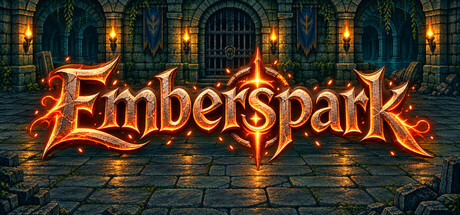
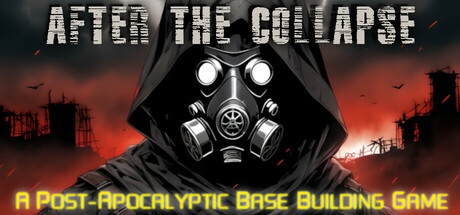
The storefront Logo for this game was created with the help of AI-assisted tools and was then further developed through manual work — modified, improved, and integrated to align with the game’s overall style and vision. No other AI generation was used in the development of this game.
Using LLM Code Agent for indie development speed up (no "VIBE CODING", it's originally human made project in 2012-2025, author starts using LLM as smart assistant code edit tool since December 2025)
The Art Director chose a composition for each background.
They were then made by professional artists or, for a few, bought on Adobe Stock.
Finally, the art director enhanced each background in Photoshop and also through LeonardoAI.
AI was used to generate the images of the characters in the default in-game database. There is also a 100% optional, opt-in only AI Chatbot assistant that can help provide booking ideas.
I use PhotoShop's generative AI, Replica Studios for some voice acting, and ChatGPT for some quest dialogue. I also use Mid Journey to generate graphics. Most AI generated content is temporary and will be replaced when/if the game ever makes enough money to hire people to replace them.
This game has used AI to partially create the following art assets:
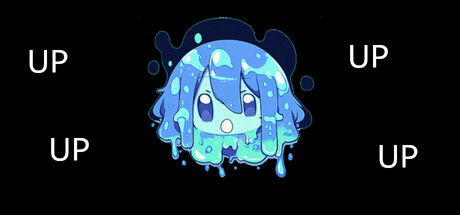
Slime character, Chain, Ball, Slime picture from the menu's and the slime imagery on steam.
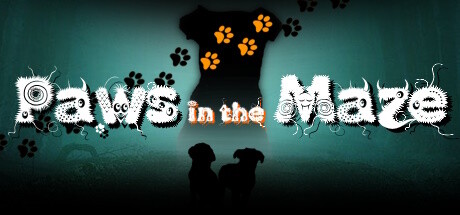
Photo of the dog for my pictures on the steam page is generated by AI. Game itself does not include any AI images or content except the dog image on the title.
By integrating OpenAI's technology, users can generate unique high-quality images that serve as components for their tabletop games. This feature requires a free external account created with your email address. The core application remains fully functional without registration.
This project did not use tools to create content from text prompts.
Because "Generative Artificial Intelligence" is inconcistently defined, following it the list all Machine Learning technologies I use. Many of them are widely used and not commonly considered AI, but meet the current dictionary definition of "computer system that has some qualities of human brain that is able to produce text, images, etc.", so I list them for full transparency:
- Generating crew portraits with artist-driven sliders for facial features.
- Creating portrait depth maps for dynamic lighting.
- Upscaling promotional images.
- Denoising rendered images.
- Enhancing in-game ads with actor face replacement for realism.
- Spell-checking, grammar-checking and rephrasing some text.
Some of the voice-over dialogs during the introduction cut-scene are computer generated. Some of the images during the introduction cut-scene were stylized using generative AI.
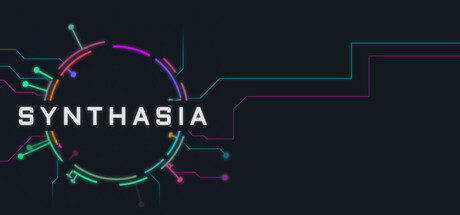
A revolutionary new era in game development and entertainment, in Synthasia users can bring to life their stories or live those designed by others.
Multiple LLM models will be responsible of bringing to life a potentially infinite number of adventures.
In Synthasia players load "World files" which include locations and descriptions and other informations pertinent to the story they want to tell, LLMs will then take those elements and create a rich text adventure around them with lively characters and unscripted consequences. .
While almost the entirety of the game is human-made, there are still some places where AI was used to speed up work, data validation or help with tedious tasks - such as converting old crafting recipes to a new format, improving wording of some in-game item descriptions, or generating placeholder thumbnails for internal use (e.g. testing GUI layout and renderer).
In order to improve game performance, some parts of the code use mathematical formulas generated with the help of AI.
AI was used to enhance several backgrounds and images that were originally hand-drawn and then used as reference material.
The storefront Logo for this game was created with the help of AI-assisted tools and was then further developed through manual work — modified, improved, and integrated to align with the game’s overall style and vision. No other AI generation was used in the development of this game.
Using LLM Code Agent for indie development speed up (no "VIBE CODING", it's originally human made project in 2012-2025, author starts using LLM as smart assistant code edit tool since December 2025)
The Art Director chose a composition for each background.
They were then made by professional artists or, for a few, bought on Adobe Stock.
Finally, the art director enhanced each background in Photoshop and also through LeonardoAI.
AI was used to generate the images of the characters in the default in-game database. There is also a 100% optional, opt-in only AI Chatbot assistant that can help provide booking ideas.
I use PhotoShop's generative AI, Replica Studios for some voice acting, and ChatGPT for some quest dialogue. I also use Mid Journey to generate graphics. Most AI generated content is temporary and will be replaced when/if the game ever makes enough money to hire people to replace them.
This game has used AI to partially create the following art assets:
Slime character, Chain, Ball, Slime picture from the menu's and the slime imagery on steam.
Photo of the dog for my pictures on the steam page is generated by AI. Game itself does not include any AI images or content except the dog image on the title.
By integrating OpenAI's technology, users can generate unique high-quality images that serve as components for their tabletop games. This feature requires a free external account created with your email address. The core application remains fully functional without registration.
This project did not use tools to create content from text prompts.
Because "Generative Artificial Intelligence" is inconcistently defined, following it the list all Machine Learning technologies I use. Many of them are widely used and not commonly considered AI, but meet the current dictionary definition of "computer system that has some qualities of human brain that is able to produce text, images, etc.", so I list them for full transparency:
- Generating crew portraits with artist-driven sliders for facial features.
- Creating portrait depth maps for dynamic lighting.
- Upscaling promotional images.
- Denoising rendered images.
- Enhancing in-game ads with actor face replacement for realism.
- Spell-checking, grammar-checking and rephrasing some text.
Some of the voice-over dialogs during the introduction cut-scene are computer generated. Some of the images during the introduction cut-scene were stylized using generative AI.
A revolutionary new era in game development and entertainment, in Synthasia users can bring to life their stories or live those designed by others.
Multiple LLM models will be responsible of bringing to life a potentially infinite number of adventures.
In Synthasia players load "World files" which include locations and descriptions and other informations pertinent to the story they want to tell, LLMs will then take those elements and create a rich text adventure around them with lively characters and unscripted consequences. .
While almost the entirety of the game is human-made, there are still some places where AI was used to speed up work, data validation or help with tedious tasks - such as converting old crafting recipes to a new format, improving wording of some in-game item descriptions, or generating placeholder thumbnails for internal use (e.g. testing GUI layout and renderer).
In order to improve game performance, some parts of the code use mathematical formulas generated with the help of AI.
AI was used to enhance several backgrounds and images that were originally hand-drawn and then used as reference material.