Public Steam disclosure research25,508 disclosures tracked
Where do games disclose AI use?
Search developers’ Steam disclosures, compare classified AI use across
games, and follow recorded changes.
This index adds cross-game classifications and statistics to
statements published on individual store pages.
Groups reflect automatic analysis of public disclosures; mature records are excluded. These counts do not measure AI use across all of Steam.
Missing or unclear statements cannot establish whether a game uses AI.
Some content was pre-generated with AI tools during development and reviewed by the developer before shipping: the store key art and capsule images, a number of surface textures used as decorative materials in the environments, and the narration, which is synthesized offline from the developer's original script with the Piper text-to-speech engine (a public-domain-derived voice). No content is generated by AI during gameplay, and the game does not connect to any external AI service. World layouts, equipment, mission logic, writing and code are project-authored.
Some artwork, character voice lines and store promotional assets were created with generative AI during development and are supplied as fixed, pre-generated content. The game does not generate AI content during play or connect to external AI services.
Some visual assets used in the game and/or its promotional materials were created with the assistance of generative AI tools and were reviewed and edited by the developer before use.
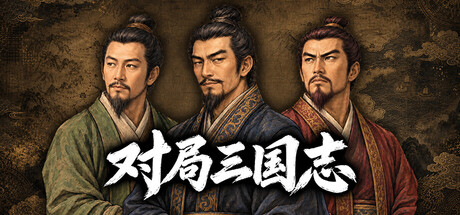
Generative AI was used during development to create officer portraits, illustrations, backgrounds and other graphical assets, translations, and background music. This content was generated in advance; no AI content is generated during gameplay.
Some of the game's artwork — item and skill icons, character portraits, and the store capsule illustrations — was created with the help of generative AI tools, then reviewed, selected, and edited by hand. Localization drafts were machine-translated and then reviewed and corrected. No AI content is generated while you play: all content ships with the game.
Generative AI tools are used during development to assist with feature development, programming, technical implementation, debugging, and testing. AI-generated artwork may also be used temporarily for certain Steam store and library promotional assets, including capsule art, library art, and icons, for the initial demo and store setup. These temporary promotional assets are intended to be replaced with human-created artwork. All AI-assisted work is directed, reviewed, and validated by the developer. The game’s in-game visual assets, UI, audio, music, and voice performances are licensed or human-created and are not AI-generated. No generative AI is used during gameplay.
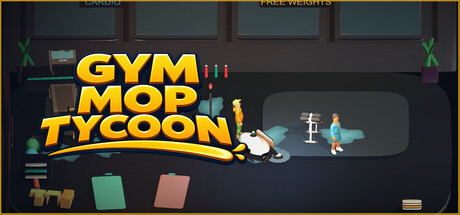
Pre-generated generative AI tools were used during development to create seven player-facing UI illustrations: two unlock-card images and five portraits used in the skill tree and event UI. The images were selected, post-processed where needed, and integrated by the developer. AI-generated visual reference art also assisted the design of the Dicker Typ character presentation and the AUTOMOP 3000 robot; their production 3D models, materials, and animations were not generated by AI. Some Steam store screenshots and trailer footage show this same in-game content. The game does not use generative AI at runtime and produces no live-generated text, images, audio, 3D assets, or other content.
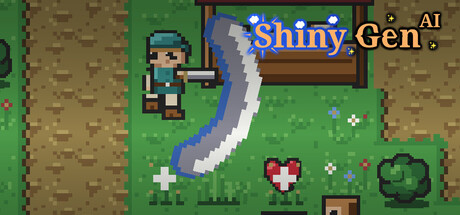
Shiny Gen ships over thirty original games and scenes. Their art, animation frames, music and sound effects were produced with the same AI generation tools the product offers to players, using the third party services listed in our Live-Generated answer. All of it was directed, reviewed and assembled by us before it shipped, and the game code itself is authored and hand edited by our team. No pre generated content in the shipping build is produced from a player's input, and none of it is generated at runtime from our side.
Shiny Gen is a game creation tool, so live generation is the product rather than a feature of it. When a player asks for something, we call third party AI services to generate game code, images, animation frames, music, sound effects and 3D models from the text they type. Generation always happens at the player's explicit request, never in the background, and always requires a free Shiny Gen account and an internet connection.
Every request goes to an established commercial AI provider: Anthropic, OpenAI, Google, OpenRouter, Cloudflare Workers AI, Runware, Retro Diffusion, Replicate and ElevenLabs. Each request is governed by that provider's usage policy and runs under the provider's own built-in safety systems at their default settings. We never disable, weaken or opt out of a provider's safety system anywhere in our product. OpenAI image generation runs under OpenAI's default moderation, and Google image generation carries Google's SynthID provenance watermarking.
Guardrails on our side:
- Our Community Rules, which are binding under our Terms of Service and published on our website, set out what may not be generated or shared. They prohibit, among other things, any sexual content involving a minor and sexual imagery of a real person without their consent, and they treat a prompt asking for prohibited content as a breach whether or not the model produces it.
- Generation requires a signed in Shiny Gen account. There is no anonymous generation, so every request is attributable to an account.
- Generation is rate limited per account and per address, and it is metered against a paid credit balance, so volume abuse is bounded rather than free.
- The prompt and the resulting asset are retained against the account that made them, which is what lets us act on a report.
- Anyone can report content to support@shinygen.ai. A person on our team reviews each report and can remove the content and close the account responsible.
- The in app feed cannot receive player made content. It is served from our own catalogue and is enforced in code: the publish endpoint refuses any caller that is not our own account. Nothing a player generates can appear in another player's feed.
- Multiplayer contains no free text channel of any kind. Communication is a closed set of eight fixed emotes, so there is no user to user text surface to moderate.
- Player made games are never separate programs. They run as interpreted scripts inside our own sandbox, which is an allowlist: it has no filesystem, network, process or operating system access, and no reflection or dynamic dispatch. A generated game cannot execute native code, start a process, reach the network or read the player's files.
We do not permit and do not support the generation of Adult Only sexual content, and we will act on reports received through Steam's in game reporting system and at support@shinygen.ai.
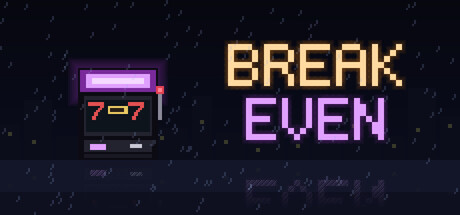
Break Even was built with an AI coding assistant working under the developer's direction and review. That includes the game's code and, with it, the pixel maps its sprites are drawn from, its synthesized sound, its dialogue and ending text, the scripts that draw the store images, and drafts of this store page. The game ships no image or audio files of its own — every picture is drawn and every sound synthesized by its own code while you play — and the one bundled file is an open-licence pixel font. No AI runs during play, and the game contacts no AI service.
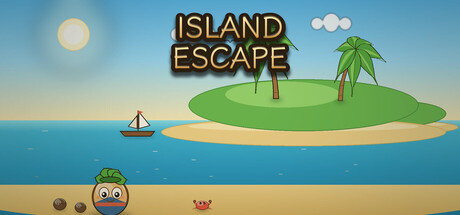
Generative AI was used as a development assistant on Island Escape: primarily to help write and review the game's source code, and to help draft and localize in-game text (Simplified Chinese, English, Japanese, Russian, Spanish, Brazilian Portuguese, German). All of that output was reviewed and edited by the developer.
Everything you see and hear is generated procedurally by the game's own code, shaders and audio tools at runtime — the project uses no AI-generated images, 3D models, textures or voice acting.
The game does not use generative AI while you play. No player data is sent anywhere.
All output was reviewed and hand-edited by our artists before shipping. Every 3D model and character in the game was sculpted by human artists. We also use AI coding assistants during development; no AI-generated content is produced while the game is running.
During the development of this game, generative AI was used to assist in the creation of some 2D art assets and pre-generated sound effects. All AI-assisted content underwent manual review, modification, and integration by the developers. No content will be generated by generative AI during gameplay.
Some of this game's content was created with generative AI and then reworked and adjusted by hand by the developer. This applies in particular to code, the 3D models and textures, and the music and sound effects. Animations, game rules, simulation, balance and the structure of the game come entirely from the developer.
Generative AI tools were used during the development process to assist in the conceptualization and creation of character sprites and visual assets. All AI-generated content was pre-rendered and manually refined to fit the game's art style
Generative AI was used during development to assist in the creation of some of the game's pre-generated illustrations and visual assets. No generative AI is used to create content during gameplay.
This game's art and some of its text content were created with AI-assisted tools during development and reviewed by the developer before shipping. Nothing is created live during gameplay by GenAI, and the game makes no AI-related network calls.
Generative AI was used to assist in creating some of the game’s art assets, including character portraits and illustrations, as well as background music. These assets were modified by the developer before being incorporated into the game.
Our team uses AI tools to assist development of some in-game content. The final product reflects the creativity and expression of our own development team.
Some of the image and audio assets were created with the help of generative AI.
All final design adjustments and processing were done by hand by the developer.
Generative AI was used to assist in the creation of some in-game graphical assets and to generate or process some voice audio. All AI-assisted content was created and reviewed during development. The game does not generate AI content during gameplay.
Generative AI was used only to create pre-generated background artwork for the Steam store and library images. The official logo, text, user interface, and gameplay screenshots were created separately. The game does not generate content during gameplay and does not connect to any third-party AI service.
Lost Gaijin uses generative AI during development and gameplay. Selected pre-generated visual and audio assets used in the game and its Steam materials were created or edited with generative AI tools and reviewed by the developer. During play, text-generating AI responds to player input and game state to create dynamic story content and personalized Japanese-language coaching. Live-generated text is provided through OpenRouter and may vary between playthroughs.
Some background music and visual assets included with the game or used in its marketing materials were created using generative AI and selected or edited by the developer. Generative AI is not used during gameplay, and no player input is sent to an AI service.
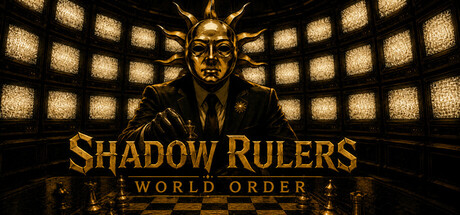
Shadow Rulers: World Order uses generative AI tools during development to help create certain visual assets, including faction icons for the game's Ruling Families, background and UI elements, and some in-game and promotional artwork. All AI-generated content is reviewed and curated by the developer before being included in the game. No content is generated live during gameplay, and the game does not connect to any external AI service during play.
During the development process, we may use procedural- and AI-based tools to assist with content creation. In all such cases, the final product reflects the creativity and expression of our own development team.
Some auxiliary art assets (the overworld map background) used AI tools for concept assistance in the early stage of creation. The developer then conducted extensive manual secondary design and reconstruction, including hand-drawn routes, level node layout, color unification, and UI interaction design.
The core gameplay, unit system, combat numerical balance, battle log system, and all strategic logic are purely hand-designed by the developer and do not use AI generation. This is a solo-developed strategy game; AI was only used to improve the efficiency of specific art assets. Thank you for your understanding
The store and library capsule images and the logo were created with AI image generation tools and edited by hand; AI also assisted with the store description and the in-game translations. The game itself contains no AI-generated content and generates nothing while you play. All screenshots and trailer footage come from the actual game.
Some 3D props, textures and ambient voice audio were pre-generated with AI tools during development and then edited by hand. The game does not generate any content with AI while you play.
I built every environment, HUD and system in MOGGED by hand over months. I even placed the individual pingpong balls and the patches of grass myself.
But two things did involve AI: A few decals and icons, made for comedic effect. And several voice lines: narrator and NPC barks. If the game does well, I'm hiring proper voice acting.
Everything I did not make myself is properly licensed and credited to the people who did.
Some 2D sprites, sound effects, and music tracks were created with the assistance of generative AI tools during development and were manually reviewed and edited by the developer.
Generative AI tools were used during development to assist with programming, localization, and the creation or refinement of some 3D models and animations. All AI-assisted content is reviewed, edited, and integrated by the developer before being included in the game. The game does not use generative AI at runtime or generate live content for players.
-- Store page capsule art was created in a comprehensive workflow with OpenArt.ai, using Blender and Windows Paint3D, and by employing painstakingly crafted text prompts over dozens of A.I. generations, while incorporating thousands of my own brushstrokes and adhering to my own artistic vision for composition and mood.
-- The game’s main logo texture was refined with OpenArt.ai.
-- 30+ characters may be heard with distinct voices speaking in the background, commenting generally about the situation at hand with any of dozens of phrases, or hundreds of snippets of phrases. The things they say are my creation, but as an early development budget consideration the voices were generated using OpenArt.ai. Clerk P.A. announcements are also an A.I.-generated voice.
-- Some vehicle sounds and background activity sound loops were generated using A.I. from OpenArt.ai or freesound.org.
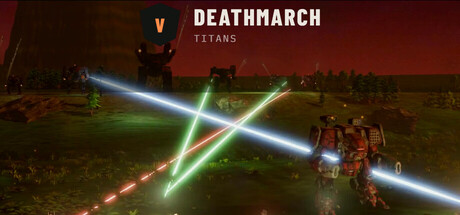
AI was used to create write parts of the game code and scripting, to refine mech textures, and for voiceover and audio content - to be used as placeholders while in playtests.
Some content was pre-generated with AI tools during development and reviewed by the developer before shipping: the store key art and capsule images, a number of surface textures used as decorative materials in the environments, and the narration, which is synthesized offline from the developer's original script with the Piper text-to-speech engine (a public-domain-derived voice). No content is generated by AI during gameplay, and the game does not connect to any external AI service. World layouts, equipment, mission logic, writing and code are project-authored.
Some artwork, character voice lines and store promotional assets were created with generative AI during development and are supplied as fixed, pre-generated content. The game does not generate AI content during play or connect to external AI services.
Some visual assets used in the game and/or its promotional materials were created with the assistance of generative AI tools and were reviewed and edited by the developer before use.
Generative AI was used during development to create officer portraits, illustrations, backgrounds and other graphical assets, translations, and background music. This content was generated in advance; no AI content is generated during gameplay.
Some of the game's artwork — item and skill icons, character portraits, and the store capsule illustrations — was created with the help of generative AI tools, then reviewed, selected, and edited by hand. Localization drafts were machine-translated and then reviewed and corrected. No AI content is generated while you play: all content ships with the game.
Generative AI tools are used during development to assist with feature development, programming, technical implementation, debugging, and testing. AI-generated artwork may also be used temporarily for certain Steam store and library promotional assets, including capsule art, library art, and icons, for the initial demo and store setup. These temporary promotional assets are intended to be replaced with human-created artwork. All AI-assisted work is directed, reviewed, and validated by the developer. The game’s in-game visual assets, UI, audio, music, and voice performances are licensed or human-created and are not AI-generated. No generative AI is used during gameplay.
Pre-generated generative AI tools were used during development to create seven player-facing UI illustrations: two unlock-card images and five portraits used in the skill tree and event UI. The images were selected, post-processed where needed, and integrated by the developer. AI-generated visual reference art also assisted the design of the Dicker Typ character presentation and the AUTOMOP 3000 robot; their production 3D models, materials, and animations were not generated by AI. Some Steam store screenshots and trailer footage show this same in-game content. The game does not use generative AI at runtime and produces no live-generated text, images, audio, 3D assets, or other content.
Shiny Gen ships over thirty original games and scenes. Their art, animation frames, music and sound effects were produced with the same AI generation tools the product offers to players, using the third party services listed in our Live-Generated answer. All of it was directed, reviewed and assembled by us before it shipped, and the game code itself is authored and hand edited by our team. No pre generated content in the shipping build is produced from a player's input, and none of it is generated at runtime from our side.
Shiny Gen is a game creation tool, so live generation is the product rather than a feature of it. When a player asks for something, we call third party AI services to generate game code, images, animation frames, music, sound effects and 3D models from the text they type. Generation always happens at the player's explicit request, never in the background, and always requires a free Shiny Gen account and an internet connection.
Every request goes to an established commercial AI provider: Anthropic, OpenAI, Google, OpenRouter, Cloudflare Workers AI, Runware, Retro Diffusion, Replicate and ElevenLabs. Each request is governed by that provider's usage policy and runs under the provider's own built-in safety systems at their default settings. We never disable, weaken or opt out of a provider's safety system anywhere in our product. OpenAI image generation runs under OpenAI's default moderation, and Google image generation carries Google's SynthID provenance watermarking.
Guardrails on our side:
- Our Community Rules, which are binding under our Terms of Service and published on our website, set out what may not be generated or shared. They prohibit, among other things, any sexual content involving a minor and sexual imagery of a real person without their consent, and they treat a prompt asking for prohibited content as a breach whether or not the model produces it.
- Generation requires a signed in Shiny Gen account. There is no anonymous generation, so every request is attributable to an account.
- Generation is rate limited per account and per address, and it is metered against a paid credit balance, so volume abuse is bounded rather than free.
- The prompt and the resulting asset are retained against the account that made them, which is what lets us act on a report.
- Anyone can report content to support@shinygen.ai. A person on our team reviews each report and can remove the content and close the account responsible.
- The in app feed cannot receive player made content. It is served from our own catalogue and is enforced in code: the publish endpoint refuses any caller that is not our own account. Nothing a player generates can appear in another player's feed.
- Multiplayer contains no free text channel of any kind. Communication is a closed set of eight fixed emotes, so there is no user to user text surface to moderate.
- Player made games are never separate programs. They run as interpreted scripts inside our own sandbox, which is an allowlist: it has no filesystem, network, process or operating system access, and no reflection or dynamic dispatch. A generated game cannot execute native code, start a process, reach the network or read the player's files.
We do not permit and do not support the generation of Adult Only sexual content, and we will act on reports received through Steam's in game reporting system and at support@shinygen.ai.
Break Even was built with an AI coding assistant working under the developer's direction and review. That includes the game's code and, with it, the pixel maps its sprites are drawn from, its synthesized sound, its dialogue and ending text, the scripts that draw the store images, and drafts of this store page. The game ships no image or audio files of its own — every picture is drawn and every sound synthesized by its own code while you play — and the one bundled file is an open-licence pixel font. No AI runs during play, and the game contacts no AI service.
Generative AI was used as a development assistant on Island Escape: primarily to help write and review the game's source code, and to help draft and localize in-game text (Simplified Chinese, English, Japanese, Russian, Spanish, Brazilian Portuguese, German). All of that output was reviewed and edited by the developer.
Everything you see and hear is generated procedurally by the game's own code, shaders and audio tools at runtime — the project uses no AI-generated images, 3D models, textures or voice acting.
The game does not use generative AI while you play. No player data is sent anywhere.
All output was reviewed and hand-edited by our artists before shipping. Every 3D model and character in the game was sculpted by human artists. We also use AI coding assistants during development; no AI-generated content is produced while the game is running.
During the development of this game, generative AI was used to assist in the creation of some 2D art assets and pre-generated sound effects. All AI-assisted content underwent manual review, modification, and integration by the developers. No content will be generated by generative AI during gameplay.
Some of this game's content was created with generative AI and then reworked and adjusted by hand by the developer. This applies in particular to code, the 3D models and textures, and the music and sound effects. Animations, game rules, simulation, balance and the structure of the game come entirely from the developer.
Generative AI tools were used during the development process to assist in the conceptualization and creation of character sprites and visual assets. All AI-generated content was pre-rendered and manually refined to fit the game's art style
Generative AI was used during development to assist in the creation of some of the game's pre-generated illustrations and visual assets. No generative AI is used to create content during gameplay.
This game's art and some of its text content were created with AI-assisted tools during development and reviewed by the developer before shipping. Nothing is created live during gameplay by GenAI, and the game makes no AI-related network calls.
Generative AI was used to assist in creating some of the game’s art assets, including character portraits and illustrations, as well as background music. These assets were modified by the developer before being incorporated into the game.
Our team uses AI tools to assist development of some in-game content. The final product reflects the creativity and expression of our own development team.
Some of the image and audio assets were created with the help of generative AI.
All final design adjustments and processing were done by hand by the developer.
Generative AI was used to assist in the creation of some in-game graphical assets and to generate or process some voice audio. All AI-assisted content was created and reviewed during development. The game does not generate AI content during gameplay.
Generative AI was used only to create pre-generated background artwork for the Steam store and library images. The official logo, text, user interface, and gameplay screenshots were created separately. The game does not generate content during gameplay and does not connect to any third-party AI service.
Lost Gaijin uses generative AI during development and gameplay. Selected pre-generated visual and audio assets used in the game and its Steam materials were created or edited with generative AI tools and reviewed by the developer. During play, text-generating AI responds to player input and game state to create dynamic story content and personalized Japanese-language coaching. Live-generated text is provided through OpenRouter and may vary between playthroughs.
Some background music and visual assets included with the game or used in its marketing materials were created using generative AI and selected or edited by the developer. Generative AI is not used during gameplay, and no player input is sent to an AI service.
Shadow Rulers: World Order uses generative AI tools during development to help create certain visual assets, including faction icons for the game's Ruling Families, background and UI elements, and some in-game and promotional artwork. All AI-generated content is reviewed and curated by the developer before being included in the game. No content is generated live during gameplay, and the game does not connect to any external AI service during play.
During the development process, we may use procedural- and AI-based tools to assist with content creation. In all such cases, the final product reflects the creativity and expression of our own development team.
Some auxiliary art assets (the overworld map background) used AI tools for concept assistance in the early stage of creation. The developer then conducted extensive manual secondary design and reconstruction, including hand-drawn routes, level node layout, color unification, and UI interaction design.
The core gameplay, unit system, combat numerical balance, battle log system, and all strategic logic are purely hand-designed by the developer and do not use AI generation. This is a solo-developed strategy game; AI was only used to improve the efficiency of specific art assets. Thank you for your understanding
The store and library capsule images and the logo were created with AI image generation tools and edited by hand; AI also assisted with the store description and the in-game translations. The game itself contains no AI-generated content and generates nothing while you play. All screenshots and trailer footage come from the actual game.
Some 3D props, textures and ambient voice audio were pre-generated with AI tools during development and then edited by hand. The game does not generate any content with AI while you play.
I built every environment, HUD and system in MOGGED by hand over months. I even placed the individual pingpong balls and the patches of grass myself.
But two things did involve AI: A few decals and icons, made for comedic effect. And several voice lines: narrator and NPC barks. If the game does well, I'm hiring proper voice acting.
Everything I did not make myself is properly licensed and credited to the people who did.
Some 2D sprites, sound effects, and music tracks were created with the assistance of generative AI tools during development and were manually reviewed and edited by the developer.
Generative AI tools were used during development to assist with programming, localization, and the creation or refinement of some 3D models and animations. All AI-assisted content is reviewed, edited, and integrated by the developer before being included in the game. The game does not use generative AI at runtime or generate live content for players.
-- Store page capsule art was created in a comprehensive workflow with OpenArt.ai, using Blender and Windows Paint3D, and by employing painstakingly crafted text prompts over dozens of A.I. generations, while incorporating thousands of my own brushstrokes and adhering to my own artistic vision for composition and mood.
-- The game’s main logo texture was refined with OpenArt.ai.
-- 30+ characters may be heard with distinct voices speaking in the background, commenting generally about the situation at hand with any of dozens of phrases, or hundreds of snippets of phrases. The things they say are my creation, but as an early development budget consideration the voices were generated using OpenArt.ai. Clerk P.A. announcements are also an A.I.-generated voice.
-- Some vehicle sounds and background activity sound loops were generated using A.I. from OpenArt.ai or freesound.org.
AI was used to create write parts of the game code and scripting, to refine mech textures, and for voiceover and audio content - to be used as placeholders while in playtests.