Public Steam disclosure research25,877 disclosures tracked
Where do games disclose AI use?
Search developers’ Steam disclosures, compare classified AI use across
games, and follow recorded changes.
This index adds cross-game classifications and statistics to
statements published on individual store pages.
Groups reflect automatic analysis of public disclosures; mature records are excluded. These counts do not measure AI use across all of Steam.
Missing or unclear statements cannot establish whether a game uses AI.
AI is used for generating marketing material and for some in-game assets both as placeholders and as long term use assets. These could include, music, 3D models, icons, and character dialogue.
AI is also used for code optimization.
This game uses generative AI to create some visual assets. These elements make up only a minor part of the overall development. AI was used for store page images and a few thumbnail images in the in‑game scenario selection screen.
Some character portraits were created with the assistance of generative AI and subsequently edited by hand. All game systems, writing, and design are made entirely by humans.
This game includes some pre-rendered content created with AI tools (such as visual assets, text, or audio). All AI-generated content is fixed and does not change during gameplay. No live AI generation occurs while playing.
Much of the enemy graphics were made with the help of generative AI. However, none of them are simply used "as is." Getting the artwork to match Hong Kong 97's SNES graphics requires downscaling resolution and adjusting contrast, saturation etc.
In Police Chief we use AI tools to support development in creative ways, never for coding or game logic. AI helps us generate things like:
- logos and design ideas
- Randomized names, reports, and text responses
- Suggestions and advice to improve features
All core gameplay, systems, and programming are made by the development team.
AI is only used to improve content of like callouts, reaction from NPC's etc.
A.I. generation was used in the creation of promotional materials via leonardo.ai (that's TOS permits commercial use) with custom inputs and subsequent tweaking with other art tools like GIMP as well as some sounds/audio via https://elevenlabs.io/ (also permitted for commercial use) then often modified in Audacity, but all images/videos/dialog/story in game are not the product of AI generation.
All property images in the game are generated using AI. This ensures unique visuals while avoiding copyright and privacy issues associated with real-world properties.
The background art was generated using Midjourney; however, everything else has been hand drawn and coded. As the game develops, the developer is hoping to completely re-do the background art with a professional. Please help him achieve this goal!
This game’s store page text has been translated into multiple languages with the assistance of AI translation tools. We review and adjust translations manually to ensure they remain accurate to the game’s tone, style, and meaning.
AI tools were used only to assist in creating some 2D assets such as the store artwork, promotional images, and achievement icons, as well as to generate a few early design ideas.
No AI systems or models are included or executed within the game.
All logic, and final assets were verified manually. Some mechanics were configurated by AI but verified manually.
My approach to AI is that it's better for a game to come out with graphics drawn by a computer than not at all!
I have had about TWENTY projects canceled at different times due to the fault of artists!
So I'd rather lose part of an unhappy audience than lose it entirely again by relying on humans!
All images created by neural networks are included in an external module and can be disabled or replaced with a custom file via Steam Workshop if desired.
AI was used to create rough sketches of the main character, which the artist then used to create the final images.
AI was also used to check and edit the Japanese text.
Spacer used AI-generated translations for interface localization in the following languages:
French, German, Italian, Japanese, Portuguese (Brazil), Portuguese (Portugal), Russian, Simplified Chinese, Spanish (Latin America), Spanish (Spain), Traditional Chinese
Generative AI was used to create some store page promotional images. No generative AI is used to create gameplay content or generate content during gameplay.
Since we’re a small development team, we use AI-generated images and edit them for our projects. We also plan to use AI for language localization. If downloads grow steadily after launch, we hope to collaborate with professional creators in the future.
This game uses generative AI technology to assist in the creation of certain background texture maps and environmental assets. All AI-generated content has been reviewed, curated, and modified by our artists during the development process. The final assets are static (pre-rendered) and do not change in real-time based on player input.
Generative AI was used to create character and gear designs, which were then edited to create some sprites found in game. AI was also used to create some of the music.
TempusForge Studio has, wherever possible on our budget, supported creators by purchasing assets used in the project. All assets are fully licensed.
Generative AI was used to create a small portion of the in-game soundtrack. Specifically, 3-4 music tracks played via an in-game 'boombox' tool were generated using AI. All other assets, including 3D models, code, and gameplay mechanics, have been created manually without the use of AI.
As a solo developer with limited graphic design experience, I used generative AI tools to assist in creating some art assets and marketing materials for the game.
All AI-generated assets were manually edited, refined, and finalized to ensure originality and consistency with the overall art style.
AI is not used in any way during gameplay, nor does it generate any real-time or dynamic content.
The music was generated with AI. The character animations were created by AI based on hand-drawn pixel art. Localization translation was done with AI help.
We use generative AI tools to stylize and enhance pre-existing gameplay screenshots for promotional and store page visuals. No AI-generated content is used in the actual gameplay, code, or player-facing game elements.
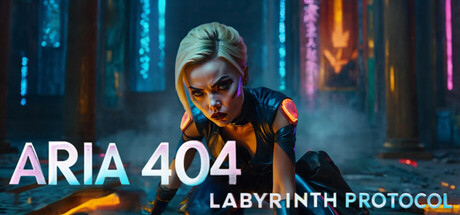
ARIA‑404: Labyrinth Protocol uses generative AI to create all pre-rendered content, including visuals, voice acting, music, world design, dialogue, & narrative. No AI is used during gameplay. Every element is crafted using a curated blend of AI tools by a solo developer to push the boundaries of interactive storytelling. This approach allows for a mythic, multimedia game experience that will evolve over time with community input.
AI-assisted tools were used during development for select artwork, marketing materials, and for code bug-checking/optimization. All gameplay, design, balance, and core assets were handcrafted by the developer. The game does not use AI to generate content during play.
The game includes some code generated with the assistance of AI during development.
AI was also used to create rough concept drafts for the key visual.
Some scenes, items, and other assets in the game were generated with the assistance of AI. During the multilingual localization process, we used AI as a supplementary translation tool to improve efficiency.
AI is used for generating marketing material and for some in-game assets both as placeholders and as long term use assets. These could include, music, 3D models, icons, and character dialogue.
AI is also used for code optimization.
This game uses generative AI to create some visual assets. These elements make up only a minor part of the overall development. AI was used for store page images and a few thumbnail images in the in‑game scenario selection screen.
Some character portraits were created with the assistance of generative AI and subsequently edited by hand. All game systems, writing, and design are made entirely by humans.
This game includes some pre-rendered content created with AI tools (such as visual assets, text, or audio). All AI-generated content is fixed and does not change during gameplay. No live AI generation occurs while playing.
Much of the enemy graphics were made with the help of generative AI. However, none of them are simply used "as is." Getting the artwork to match Hong Kong 97's SNES graphics requires downscaling resolution and adjusting contrast, saturation etc.
In Police Chief we use AI tools to support development in creative ways, never for coding or game logic. AI helps us generate things like:
- logos and design ideas
- Randomized names, reports, and text responses
- Suggestions and advice to improve features
All core gameplay, systems, and programming are made by the development team.
AI is only used to improve content of like callouts, reaction from NPC's etc.
A.I. generation was used in the creation of promotional materials via leonardo.ai (that's TOS permits commercial use) with custom inputs and subsequent tweaking with other art tools like GIMP as well as some sounds/audio via https://elevenlabs.io/ (also permitted for commercial use) then often modified in Audacity, but all images/videos/dialog/story in game are not the product of AI generation.
All property images in the game are generated using AI. This ensures unique visuals while avoiding copyright and privacy issues associated with real-world properties.
The background art was generated using Midjourney; however, everything else has been hand drawn and coded. As the game develops, the developer is hoping to completely re-do the background art with a professional. Please help him achieve this goal!
This game’s store page text has been translated into multiple languages with the assistance of AI translation tools. We review and adjust translations manually to ensure they remain accurate to the game’s tone, style, and meaning.
AI tools were used only to assist in creating some 2D assets such as the store artwork, promotional images, and achievement icons, as well as to generate a few early design ideas.
No AI systems or models are included or executed within the game.
All logic, and final assets were verified manually. Some mechanics were configurated by AI but verified manually.
My approach to AI is that it's better for a game to come out with graphics drawn by a computer than not at all!
I have had about TWENTY projects canceled at different times due to the fault of artists!
So I'd rather lose part of an unhappy audience than lose it entirely again by relying on humans!
All images created by neural networks are included in an external module and can be disabled or replaced with a custom file via Steam Workshop if desired.
AI was used to create rough sketches of the main character, which the artist then used to create the final images.
AI was also used to check and edit the Japanese text.
Spacer used AI-generated translations for interface localization in the following languages:
French, German, Italian, Japanese, Portuguese (Brazil), Portuguese (Portugal), Russian, Simplified Chinese, Spanish (Latin America), Spanish (Spain), Traditional Chinese
Generative AI was used to create some store page promotional images. No generative AI is used to create gameplay content or generate content during gameplay.
Since we’re a small development team, we use AI-generated images and edit them for our projects. We also plan to use AI for language localization. If downloads grow steadily after launch, we hope to collaborate with professional creators in the future.
This game uses generative AI technology to assist in the creation of certain background texture maps and environmental assets. All AI-generated content has been reviewed, curated, and modified by our artists during the development process. The final assets are static (pre-rendered) and do not change in real-time based on player input.
Generative AI was used to create character and gear designs, which were then edited to create some sprites found in game. AI was also used to create some of the music.
TempusForge Studio has, wherever possible on our budget, supported creators by purchasing assets used in the project. All assets are fully licensed.
Generative AI was used to create a small portion of the in-game soundtrack. Specifically, 3-4 music tracks played via an in-game 'boombox' tool were generated using AI. All other assets, including 3D models, code, and gameplay mechanics, have been created manually without the use of AI.
As a solo developer with limited graphic design experience, I used generative AI tools to assist in creating some art assets and marketing materials for the game.
All AI-generated assets were manually edited, refined, and finalized to ensure originality and consistency with the overall art style.
AI is not used in any way during gameplay, nor does it generate any real-time or dynamic content.
The music was generated with AI. The character animations were created by AI based on hand-drawn pixel art. Localization translation was done with AI help.
We use generative AI tools to stylize and enhance pre-existing gameplay screenshots for promotional and store page visuals. No AI-generated content is used in the actual gameplay, code, or player-facing game elements.
ARIA‑404: Labyrinth Protocol uses generative AI to create all pre-rendered content, including visuals, voice acting, music, world design, dialogue, & narrative. No AI is used during gameplay. Every element is crafted using a curated blend of AI tools by a solo developer to push the boundaries of interactive storytelling. This approach allows for a mythic, multimedia game experience that will evolve over time with community input.
AI-assisted tools were used during development for select artwork, marketing materials, and for code bug-checking/optimization. All gameplay, design, balance, and core assets were handcrafted by the developer. The game does not use AI to generate content during play.
The game includes some code generated with the assistance of AI during development.
AI was also used to create rough concept drafts for the key visual.
Some scenes, items, and other assets in the game were generated with the assistance of AI. During the multilingual localization process, we used AI as a supplementary translation tool to improve efficiency.