Public Steam disclosure research25,497 disclosures tracked
Where do games disclose AI use?
Search developers’ Steam disclosures, compare classified AI use across
games, and follow recorded changes.
This index adds cross-game classifications and statistics to
statements published on individual store pages.
Groups reflect automatic analysis of public disclosures; mature records are excluded. These counts do not measure AI use across all of Steam.
Missing or unclear statements cannot establish whether a game uses AI.
All of the game's art, music and sound effects were made by human artists (commercially licensed packs, credited in the game). AI tools were used to assist with programming and with writing and translating the game's text; all content was reviewed and edited by the developer. The game does not generate any AI content while you play.
Pre-generated content: the pixel art (characters, animations, tiles, props, UI frames) and the store capsule art were made with the help of an AI pixel-art tool, then selected, edited and assembled by the developer. Store page texts and their translations were drafted with AI assistance and reviewed by the developer. The game does not generate any content with AI while you play. Music, sound effects and fonts are licensed assets made by people.
Portraits of characters and creatures are generated using Stable Diffusion. They appear in-game and in store page materials. I plan to replace all generated portraits with hand-drawn art.
Some in-game labels and text descriptions are placeholders generated by an LLM. I am gradually rewriting them by hand.
Generative AI is used as a supplementary tool, primarily for partial editing of image assets and translation.
※It is not used to generate images from scratch or to create 3D models.
AI tools assisted portions of the pre-produced artwork, text, development code, and audio-production scripts. Music and sound effects use procedural synthesis. No AI content is generated during gameplay, and the Windows game does not connect to an external AI service.
Pre-generated content only. No AI generated content is produced at runtime during gameplay.
Some in-game text and its English localization were drafted with AI assistance and edited by the team.
All art, including card art, backgrounds, icons and UI, is created by our artist. AI image tools were used as visual reference during concept work only; no AI generated image ships in the game. No AI models are used for music or sound effects.
This game is a solo-developed hobby project. Generative AI tools were used as part of the production workflow, including assistance with code, audio, and base visual assets. No generative AI output is used as a final in-game asset; all assets were manually edited, and integrated by the developer. The story, dialogue, and all other written in-game content were written by the developer. All gameplay design, creative direction, balancing, and final content decisions were made by the developer.
The illustrated character portraits used as player avatars (also shown in our store and library artwork) were created with AI image generation (Google Gemini) and then cropped and adjusted by the developer. Some store text and interface translations were drafted with AI assistance. The game does not generate any AI content while you play.
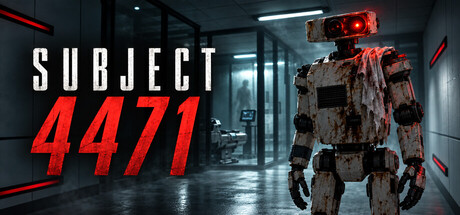
Some of the visual and audio assets in Subject 4471 were created with the assistance of generative AI tools during development. All AI-generated content was reviewed, curated, and edited by the developer to ensure it is appropriate, and the developer has taken steps to ensure it holds the rights necessary to use this content. This game does not generate any AI content in real time during gameplay.
Some UI icons were generated using AI, then refined by our artists to suit the UI. All other artwork was created by hand. No AI content is generated during gameplay.
Serv-Bot's Firewall uses AI tools in its art and media pipeline, always under human direction and review:
Sprite art. The game's original hand-authored sprites were upscaled and repainted at native resolution with an image-editing model (Qwen-Image-Edit), then reviewed, corrected and in many cases restored to the originals by hand. Concept art for the six "arsenal" enemy types, the Serv-Bot HUD portraits and the achievement icon motifs were generated with local image models (Z-Image Turbo, Qwen-Image-Edit) from our own designs and reference art, then composited and finished in code. Canon elements such as the Greeb ship in the icons are the game's own sprite art, not generated.
Cutscenes. The in-game story videos come from our SIGNAL series. Keyframes were generated with a local image model trained on our own characters, motion with a local video model (Wan 2.2), narration with a text-to-speech model (Kokoro) and music with local music models (ACE-Step, Stable Audio Open). Scripts, story, character designs, editing and direction are ours.
Localization. Interface text in 28 languages was machine-translated with an AI model from our English source and has not yet been reviewed by native speakers.
Code. Parts of the game's code were written with AI coding assistance, reviewed and tested by the developer.
Sound effects are procedurally synthesised, not AI-generated. All AI generation ran on the developer's own hardware; no copyrighted third-party works were used as inputs beyond our own assets and characters.
I use AI to assist in coding, and some skill icons for combat/talent trees; however all character sprites/animations are hand animated. Using AI allows me to make a game with all of the ideas I have and transform them into something tangible, and viewable. The goal is simple, create a fun game that people enjoy playing.
This game was made with the help of generative AI tools. The in-game relic, element, rune and skill icons are AI-generated. The tutorial illustrations were AI-generated and then edited by hand. Some sound effects, and the localization of the interface text into the game's supported languages, were produced with AI assistance. Some of the source code was also written with AI tools. All of it was reviewed and adjusted by a human before release. Nothing is generated while you play, and the game never connects to any external AI service.
Some images shipped in the game were created with generative AI during development and then selected and reviewed by the developer. No other shipped content was generated by AI.
Generative AI tools were used during the development of SCRAPBOX to assist with programming, UI design, voice acting, music, and the creation of some 3D models and other game assets. The game does not generate AI content during gameplay.
During development, generative AI tools were used to assist with portions of the game’s artwork and music. All such content was selected, edited, refined, and integrated by the developer, with final creative direction and implementation handled manually.
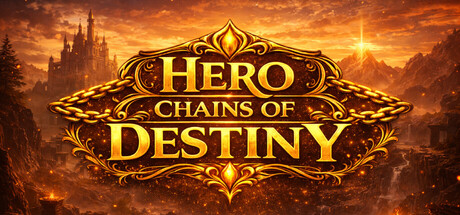
Hero Chains of Destiny includes pre-generated content created with the assistance of generative AI tools during development. This includes selected artwork, music, and sound effects. All generated content is reviewed, curated, and approved by the developer before being included in the game.
Some of the game's artwork, including characters, monsters, items and backgrounds, was created with the help of generative AI tools and then edited and refined by our team; none of it is used as raw AI output. Parts of the in-game text and translations were also produced with AI assistance. No AI content is generated during gameplay.
AI is used solely to assist with development, such as for some localization and the creation of internal tools.
The game does not include any features that automatically generate content in real-time during gameplay.
AI tools were used during development to create pre-generated character art and animations, backgrounds, interface artwork, and sound effects, as well as Steam store descriptions and promotional artwork, including the animated store banner. Assets were selected, reviewed, processed or edited as needed, and integrated into the game or its Steam presentation. Music was composed and synthesized with AI-assisted development tools. The shipped game uses these prepared assets; it does not generate AI content or connect to AI services during gameplay.
Selected visual and audio assets were created with generative AI tools. AI was also used to assist with English and Italian localization, with all localized text reviewed and edited by the developer. No generative AI is used during gameplay.
This game uses AI tools in the following ways:
Music: Composed using Suno.
Code: Written and debugged with AI assistance.
Art: Created with AI assistance.
All AI-assisted content was reviewed, edited, and finalized by the developer.
Generative AI was used to create the 2D artwork and sprites used inside the game , as well as the promotional capsule images on the store page. Additionally, AI tools were used to assist with programming and code generation during development.
AI tools assisted historical card wording, interface and rules text, Japanese translations, and original procedural game and marketing artwork. Cards include source references. No generative AI runs during gameplay.
As a solo developer, I used AI text-to-speech to voice characters. Everything else, including 3D models, textures, writing, and design, was made by me.
Generative AI was used during development to create visual assets, including illustrations and backgrounds, produce background music, and translate in-game text. Images created using generative AI are also used on the Steam store page and in promotional materials. No content is generated using AI during gameplay.
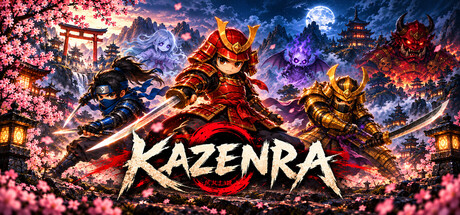
Some visual and text content in KAZENRA was created or refined with the assistance of generative AI tools during development. All such content was reviewed, selected, edited, and integrated by the developer before release. The game does not generate AI content during gameplay.
During the development of this game, we utilized AI technologies to assist with certain visual and video production processes. Specifically:
Visuals & Artwork: Some game assets and promotional images were initially generated using AI tools and have been extensively edited, refined, and integrated by our human development team.
Promotional Videos: Certain camera movements and dynamic visual effects in our trailers were created by applying AI animation tools to static artwork prepared by our artists.
We maintain rigorous quality control over all final assets to ensure the best possible experience for our players.
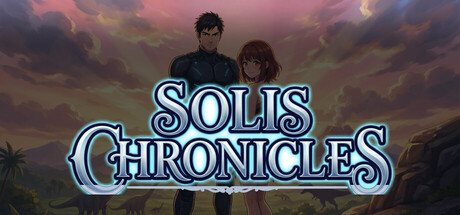
Solis Chronicles uses generative AI for pre-rendered content. Character art, backgrounds, event illustrations, video sequences, the title artwork, and the logo were created with generative AI tools (Flux, Nano Banana, Seedream, PixVerse, WAN) under human art direction, with reference-locked character designs. The music was generated locally with ACE-Step under human direction. The story, characters, and game design are human-authored. Dialogue was written with substantial AI assistance and edited by the developer. No AI content is generated during gameplay; everything is pre-rendered and human-reviewed.
Generative AI was used during development to assist in the creation of some 3D models and visual assets. These assets are used alongside content created manually by the developer.
This game used generative AI for asset creation during development. The HQ statue's 3D model was created with Meshy AI, and background music was composed with Suno AI. Most in-game icons and images were created using Google Gemini and ChatGPT.
Generative AI tools were used during the development of Clean Your Garden
for part of the 2D art (bug illustrations, backgrounds, weapon and
achievement icons, and store art), to assist with writing code, and to
assist with translating the game's text into English. All of it was
reviewed, edited and integrated by hand.
The game does not generate any content with AI while you play: no model
runs at runtime.
---
Durante el desarrollo de Clean Your Garden se han usado herramientas de IA
generativa para parte del arte 2D (ilustraciones de bichos, fondos, iconos
de armas y de logros, e imágenes de la ficha), para asistir en la escritura
del código, y para asistir en la traducción de los textos al inglés. Todo
ese material ha sido revisado, editado e integrado a mano.
El juego no genera contenido con IA durante la partida: no hay ningún
modelo ejecutándose en tiempo real.
Generative AI tools are used during development to create some 3D assets as Place Holders and assist with Art/ music Content. These materials are prepared in advance and incorporated into the game or its store page. The game does not generate content using generative AI during gameplay.
Some character voice recordings are also created using generative AI.
Generative AI was used during development to create or assist with some in-game artwork, promotional images, written content, and localization. The game does not use generative AI to generate content during gameplay.
Generative AI tools were used during development to help create portions of the artwork and promotional imagery, prerecorded voice-over, and some game text and localization. These materials are prepared in advance. The game does not generate AI content during gameplay or connect to external generative AI services.
Generative AI tool TRAE was used during development to assist in writing portions of the codebase. The visual elements presented in-game — including the target spheres, ground plane, and sky — are directly generated by this code. The generation logic for the ground texture was produced with TRAE and was reviewed and approved by the developer before shipping in the final build. All AI-assisted visual content has been reviewed by the developer to ensure it meets expectations and platform standards. This software does not include any live-generated AI content at runtime.
All of the game's art, music and sound effects were made by human artists (commercially licensed packs, credited in the game). AI tools were used to assist with programming and with writing and translating the game's text; all content was reviewed and edited by the developer. The game does not generate any AI content while you play.
Pre-generated content: the pixel art (characters, animations, tiles, props, UI frames) and the store capsule art were made with the help of an AI pixel-art tool, then selected, edited and assembled by the developer. Store page texts and their translations were drafted with AI assistance and reviewed by the developer. The game does not generate any content with AI while you play. Music, sound effects and fonts are licensed assets made by people.
Portraits of characters and creatures are generated using Stable Diffusion. They appear in-game and in store page materials. I plan to replace all generated portraits with hand-drawn art.
Some in-game labels and text descriptions are placeholders generated by an LLM. I am gradually rewriting them by hand.
Generative AI is used as a supplementary tool, primarily for partial editing of image assets and translation.
※It is not used to generate images from scratch or to create 3D models.
AI tools assisted portions of the pre-produced artwork, text, development code, and audio-production scripts. Music and sound effects use procedural synthesis. No AI content is generated during gameplay, and the Windows game does not connect to an external AI service.
Pre-generated content only. No AI generated content is produced at runtime during gameplay.
Some in-game text and its English localization were drafted with AI assistance and edited by the team.
All art, including card art, backgrounds, icons and UI, is created by our artist. AI image tools were used as visual reference during concept work only; no AI generated image ships in the game. No AI models are used for music or sound effects.
This game is a solo-developed hobby project. Generative AI tools were used as part of the production workflow, including assistance with code, audio, and base visual assets. No generative AI output is used as a final in-game asset; all assets were manually edited, and integrated by the developer. The story, dialogue, and all other written in-game content were written by the developer. All gameplay design, creative direction, balancing, and final content decisions were made by the developer.
The illustrated character portraits used as player avatars (also shown in our store and library artwork) were created with AI image generation (Google Gemini) and then cropped and adjusted by the developer. Some store text and interface translations were drafted with AI assistance. The game does not generate any AI content while you play.
Some of the visual and audio assets in Subject 4471 were created with the assistance of generative AI tools during development. All AI-generated content was reviewed, curated, and edited by the developer to ensure it is appropriate, and the developer has taken steps to ensure it holds the rights necessary to use this content. This game does not generate any AI content in real time during gameplay.
Some UI icons were generated using AI, then refined by our artists to suit the UI. All other artwork was created by hand. No AI content is generated during gameplay.
Serv-Bot's Firewall uses AI tools in its art and media pipeline, always under human direction and review:
Sprite art. The game's original hand-authored sprites were upscaled and repainted at native resolution with an image-editing model (Qwen-Image-Edit), then reviewed, corrected and in many cases restored to the originals by hand. Concept art for the six "arsenal" enemy types, the Serv-Bot HUD portraits and the achievement icon motifs were generated with local image models (Z-Image Turbo, Qwen-Image-Edit) from our own designs and reference art, then composited and finished in code. Canon elements such as the Greeb ship in the icons are the game's own sprite art, not generated.
Cutscenes. The in-game story videos come from our SIGNAL series. Keyframes were generated with a local image model trained on our own characters, motion with a local video model (Wan 2.2), narration with a text-to-speech model (Kokoro) and music with local music models (ACE-Step, Stable Audio Open). Scripts, story, character designs, editing and direction are ours.
Localization. Interface text in 28 languages was machine-translated with an AI model from our English source and has not yet been reviewed by native speakers.
Code. Parts of the game's code were written with AI coding assistance, reviewed and tested by the developer.
Sound effects are procedurally synthesised, not AI-generated. All AI generation ran on the developer's own hardware; no copyrighted third-party works were used as inputs beyond our own assets and characters.
I use AI to assist in coding, and some skill icons for combat/talent trees; however all character sprites/animations are hand animated. Using AI allows me to make a game with all of the ideas I have and transform them into something tangible, and viewable. The goal is simple, create a fun game that people enjoy playing.
This game was made with the help of generative AI tools. The in-game relic, element, rune and skill icons are AI-generated. The tutorial illustrations were AI-generated and then edited by hand. Some sound effects, and the localization of the interface text into the game's supported languages, were produced with AI assistance. Some of the source code was also written with AI tools. All of it was reviewed and adjusted by a human before release. Nothing is generated while you play, and the game never connects to any external AI service.
Some images shipped in the game were created with generative AI during development and then selected and reviewed by the developer. No other shipped content was generated by AI.
Generative AI tools were used during the development of SCRAPBOX to assist with programming, UI design, voice acting, music, and the creation of some 3D models and other game assets. The game does not generate AI content during gameplay.
During development, generative AI tools were used to assist with portions of the game’s artwork and music. All such content was selected, edited, refined, and integrated by the developer, with final creative direction and implementation handled manually.
Hero Chains of Destiny includes pre-generated content created with the assistance of generative AI tools during development. This includes selected artwork, music, and sound effects. All generated content is reviewed, curated, and approved by the developer before being included in the game.
Some of the game's artwork, including characters, monsters, items and backgrounds, was created with the help of generative AI tools and then edited and refined by our team; none of it is used as raw AI output. Parts of the in-game text and translations were also produced with AI assistance. No AI content is generated during gameplay.
AI is used solely to assist with development, such as for some localization and the creation of internal tools.
The game does not include any features that automatically generate content in real-time during gameplay.
AI tools were used during development to create pre-generated character art and animations, backgrounds, interface artwork, and sound effects, as well as Steam store descriptions and promotional artwork, including the animated store banner. Assets were selected, reviewed, processed or edited as needed, and integrated into the game or its Steam presentation. Music was composed and synthesized with AI-assisted development tools. The shipped game uses these prepared assets; it does not generate AI content or connect to AI services during gameplay.
Selected visual and audio assets were created with generative AI tools. AI was also used to assist with English and Italian localization, with all localized text reviewed and edited by the developer. No generative AI is used during gameplay.
This game uses AI tools in the following ways:
Music: Composed using Suno.
Code: Written and debugged with AI assistance.
Art: Created with AI assistance.
All AI-assisted content was reviewed, edited, and finalized by the developer.
Generative AI was used to create the 2D artwork and sprites used inside the game , as well as the promotional capsule images on the store page. Additionally, AI tools were used to assist with programming and code generation during development.
AI tools assisted historical card wording, interface and rules text, Japanese translations, and original procedural game and marketing artwork. Cards include source references. No generative AI runs during gameplay.
As a solo developer, I used AI text-to-speech to voice characters. Everything else, including 3D models, textures, writing, and design, was made by me.
Generative AI was used during development to create visual assets, including illustrations and backgrounds, produce background music, and translate in-game text. Images created using generative AI are also used on the Steam store page and in promotional materials. No content is generated using AI during gameplay.
Some visual and text content in KAZENRA was created or refined with the assistance of generative AI tools during development. All such content was reviewed, selected, edited, and integrated by the developer before release. The game does not generate AI content during gameplay.
During the development of this game, we utilized AI technologies to assist with certain visual and video production processes. Specifically:
Visuals & Artwork: Some game assets and promotional images were initially generated using AI tools and have been extensively edited, refined, and integrated by our human development team.
Promotional Videos: Certain camera movements and dynamic visual effects in our trailers were created by applying AI animation tools to static artwork prepared by our artists.
We maintain rigorous quality control over all final assets to ensure the best possible experience for our players.
Solis Chronicles uses generative AI for pre-rendered content. Character art, backgrounds, event illustrations, video sequences, the title artwork, and the logo were created with generative AI tools (Flux, Nano Banana, Seedream, PixVerse, WAN) under human art direction, with reference-locked character designs. The music was generated locally with ACE-Step under human direction. The story, characters, and game design are human-authored. Dialogue was written with substantial AI assistance and edited by the developer. No AI content is generated during gameplay; everything is pre-rendered and human-reviewed.
Generative AI was used during development to assist in the creation of some 3D models and visual assets. These assets are used alongside content created manually by the developer.
This game used generative AI for asset creation during development. The HQ statue's 3D model was created with Meshy AI, and background music was composed with Suno AI. Most in-game icons and images were created using Google Gemini and ChatGPT.
Generative AI tools were used during the development of Clean Your Garden
for part of the 2D art (bug illustrations, backgrounds, weapon and
achievement icons, and store art), to assist with writing code, and to
assist with translating the game's text into English. All of it was
reviewed, edited and integrated by hand.
The game does not generate any content with AI while you play: no model
runs at runtime.
---
Durante el desarrollo de Clean Your Garden se han usado herramientas de IA
generativa para parte del arte 2D (ilustraciones de bichos, fondos, iconos
de armas y de logros, e imágenes de la ficha), para asistir en la escritura
del código, y para asistir en la traducción de los textos al inglés. Todo
ese material ha sido revisado, editado e integrado a mano.
El juego no genera contenido con IA durante la partida: no hay ningún
modelo ejecutándose en tiempo real.
Generative AI tools are used during development to create some 3D assets as Place Holders and assist with Art/ music Content. These materials are prepared in advance and incorporated into the game or its store page. The game does not generate content using generative AI during gameplay.
Some character voice recordings are also created using generative AI.
Generative AI was used during development to create or assist with some in-game artwork, promotional images, written content, and localization. The game does not use generative AI to generate content during gameplay.
Generative AI tools were used during development to help create portions of the artwork and promotional imagery, prerecorded voice-over, and some game text and localization. These materials are prepared in advance. The game does not generate AI content during gameplay or connect to external generative AI services.
Generative AI tool TRAE was used during development to assist in writing portions of the codebase. The visual elements presented in-game — including the target spheres, ground plane, and sky — are directly generated by this code. The generation logic for the ground texture was produced with TRAE and was reviewed and approved by the developer before shipping in the final build. All AI-assisted visual content has been reviewed by the developer to ensure it meets expectations and platform standards. This software does not include any live-generated AI content at runtime.